Haiti – Citadelle Henri: a Haitian bastion at the heart of Caribbean history

Citadelle Henri

Citadelle Henri. The name sounds like an affirmation. That of a territory, a people and a region that, at the beginning of the XIXᵉ century, chose to stand up to empires. Dominating northern Haiti at an altitude of over 900 metres, the Citadelle Laferrière better known as the citadel Henri remains one of the most powerful monuments in the Caribbean. Beyond its monumentality, it embodies strategic thinking, conquered sovereignty and a message addressed to the Atlantic world.

A founding historical context for Haiti and the Caribbean

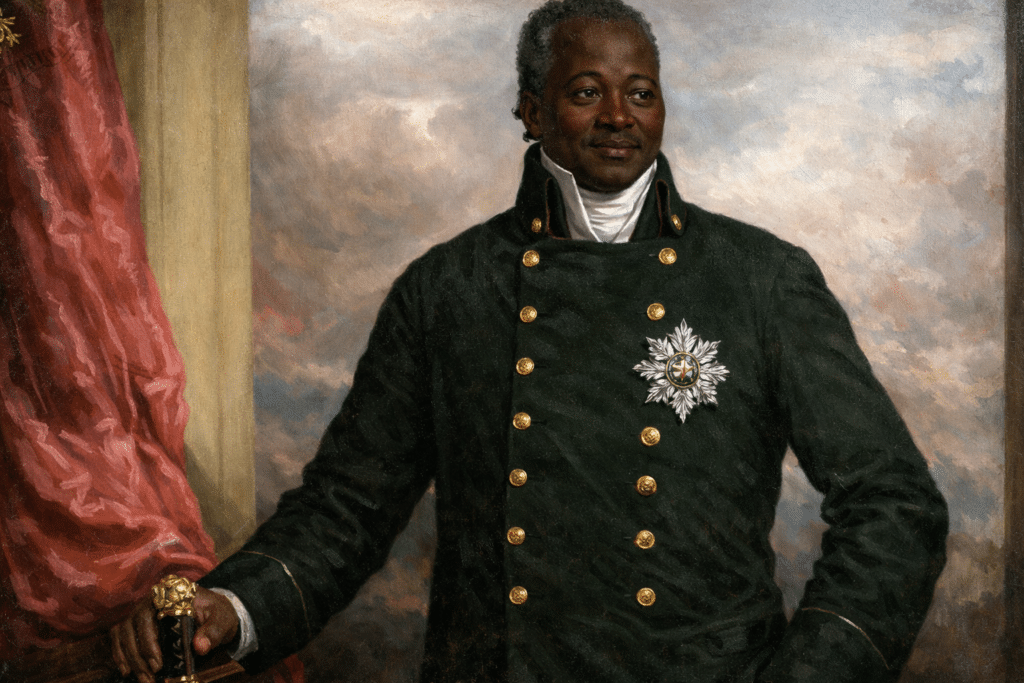
It was born in the immediate post-war period of Haitian independence (1804). At the head of the Kingdom of the North, Henri Christophe between 1805 and 1820, erected a defensive system unrivalled in the region. The aim was clear: to prevent any return of the colonial powers, particularly France, and to secure a sovereign black state in the heart of the Caribbean.

In a Caribbean region still largely dominated by European empires, the Henri citadel represents a political and symbolic breakthrough. It embodies the ability of a young state to think in terms of its defense, its territory and its future.

Citadelle Henri

An architectural and military feat

With walls sometimes reaching 40 meters in height, it is no mere fort. It was designed as a self-sufficient fortress, capable of withstanding a prolonged siege. Water reserves, food warehouses, powder magazines, dormitories, hospital: everything is designed to support several thousand men.

The figures speak for themselves:

  • – more than 365 cannons imported or salvaged from former ships,
  • – ramparts several metres thick,
  • – a strategic location making any attack from land or sea extremely complex.

In the Caribbean of the XIXᵉ century, no other military edifice had such defensive ambitions. It was a direct response to the Atlantic colonial order.

Citadelle Henri
©Historic Haïti
Citadelle Henri
©Historic Haïti

A powerful political symbol for the Black Caribbean

The significance of Citadelle Henri extends far beyond Haiti’s borders. It sends a clear message to neighboring slave-owning societies: freedom can be protected, organized and perpetuated.

At a time when servile revolts regularly rocked the region, this monument became a mental and political landmark. It proves that a black Caribbean state can produce monumental architecture, master technical know-how and assert a long-term strategic vision. It is thus part of a shared Caribbean history, marked by resistance, self-determination and the circulation of ideas of freedom.

Citadelle Henri
©Historic Haïti
Citadelle Henri
©Historic Haïti

From Henri Christophe's kingdom to world heritage

After the fall of the Northern Kingdom and the death of Henri Christophe in 1820, the citadel lost its active military function. But it was never forgotten. Its stature and natural isolation contribute to its preservation.

In 1982,UNESCO declared the Citadelle Henri, the Palais Sans-Souci and the Ramiers a World Heritage Site. This international recognition confirms what Caribbean historians have long emphasized: this site is an essential milestone in the region’s modern history.

Citadelle Henri
©Historic Haïti

A contemporary reading of Haitian heritage

Today, it occupies a central place in thinking about Caribbean heritage. It raises questions:

  • – the transmission of post-slavery history,
  • – the valorization of Caribbean narratives in the global arena,
  • – the role of heritage as an economic, cultural and educational lever.

For Haiti, it remains a strong marker of identity, often mobilized in discourses on sovereignty, memory and national reconstruction. For the Caribbean, it represents a common anchor, reminding us that the region’s history is not limited to plantations and colonial routes.

Tourism, memory and regional responsibility

Every year, Citadelle Henri attracts visitors from Haiti, the diaspora and abroad. But its potential goes far beyond tourism alone. It invites us to rethink Caribbean tourism based on knowledge, memory and respect for historic sites. The sustainable development of the citadel also raises the question of regional cooperation: how can we protect and pass on these major sites, when they tell a story shared by the entire Caribbean?

Citadelle Henri
©Historic Haïti
Citadelle Henri
©Historic Haïti / ©PHOTOGRAPHIEWS

Why is the Henri citadel still essential today?

In a world marked by debates on reparations, colonial memory and the recognition of African legacies, Citadelle Henri remains strikingly relevant. It reminds us that the Caribbean has not only suffered history: it has produced it. More than a monument, it is a political act set in stone. It embodies the ability of a Caribbean people to transform a revolutionary victory into a state project, to think in terms of security, dignity and continuity.

It is one of the few Caribbean monuments built by an independent black state in the early XIXᵉ century. It symbolizes Haiti’s ability to defend its sovereignty after the abolition of slavery, and is a political, military and cultural landmark for the entire post-colonial Caribbean.

It was built under the authority of Henri Christophe, King of Northern Haiti, between 1805 and 1820. Its purpose was to prevent any attempt at colonial reconquest, particularly by France, and to provide lasting security for Haitian independence in a regional context still dominated by European empires.

Today, the Henri citadel is a UNESCO World Heritage Site and a pillar of Caribbean memory. It plays a central role in transmitting Haitian history, reflecting on post-slavery legacies and promoting cultural tourism based on knowledge and heritage responsibility.

Leave a Reply

Your email address will not be published. Required fields are marked *

More articles from RK

French
NEWS
Tolotra

396 million people speak French: the 2026 report reveals

The Organisation internationale de la Francophonie has published a figure that reshuffles the deck in the global language debate: 396 million people now speak French. With this total, the French language in the world rises from 5th to 4th position behind English, Mandarin and Spanish, but ahead of standard Arabic. This is more than just an announcement. It marks a fundamental change in the place of French on the international stage, and confirms that the language continues to make headway in strategic areas such as education, economic exchanges, digital technology and cultural mobility. Global progress changes the narrative around French For years, French has often been portrayed as a language of great influence, but weakened in the face of global competition. The OIF’s 2026 report introduces an important corrective. The French language in the world is not only holding its own: it is gaining ground in terms of the number

Read More »
Bonaire
TOURISM
Tolotra

Bonaire, a Caribbean island built around the sea and conservation

In the southern Caribbean, off the coast of Venezuela, Bonaire is a territory in a class of its own. Less publicized than its neighbors Aruba and Curaçao, the island has built its identity around one central principle: the protection of its environment. Here, the sea structures the economy, landscapes and customs, while tourism development has been gradual and controlled. For travelers, Bonaire offers a clear picture: a compact island, visible natural areas, an accessible coastline and an organization geared towards sustainability. An island structured by its marine park Since 1979, Bonaire’s entire coastline has been protected by the Bonaire National Marine Park which completely surrounds the island. This marine area regulates nautical activities and aims to preserve the coral reefs, considered among the best preserved in the Caribbean. One of the island’s special features is the direct accessibility of its marine sites. Diving and underwater observation can be carried out

Read More »
Marcus Garvey
HISTORY & HERITAGE
Tolotra

Jamaica – Marcus Garvey, Jamaican hero of international renown

Marcus Garvey remains one of the most influential figures to emerge from the Caribbean. Born in Jamaica at the end of the 19th century, he transformed a local experience into a political and cultural project of international scope. At a time when black populations faced deeply rooted systems of exclusion, Marcus Garvey proposed a structured vision based on dignity, organization and autonomy. Recognized today as a national hero in Jamaica, he is much more than a historical symbol. His story helps us understand how the Caribbean helped shape major intellectual and political movements on a global scale. His name continues to circulate in contemporary debates on identity, memory and the development of societies born out of colonial history. From Jamaican origins to the formation of a committed conscience He was born on August 17, 1887 in St. Ann’s Bay, Jamaica, into a modest family. Very early on, he developed a

Read More »

conTACT RK

we'd love to have your feedback on your experience so far

Join The List

Join our Richès Karayib community!  Sign up for our newsletter.

Want To Maximize Your Business Presence On Riches Karayib?

Complete the form to start the application