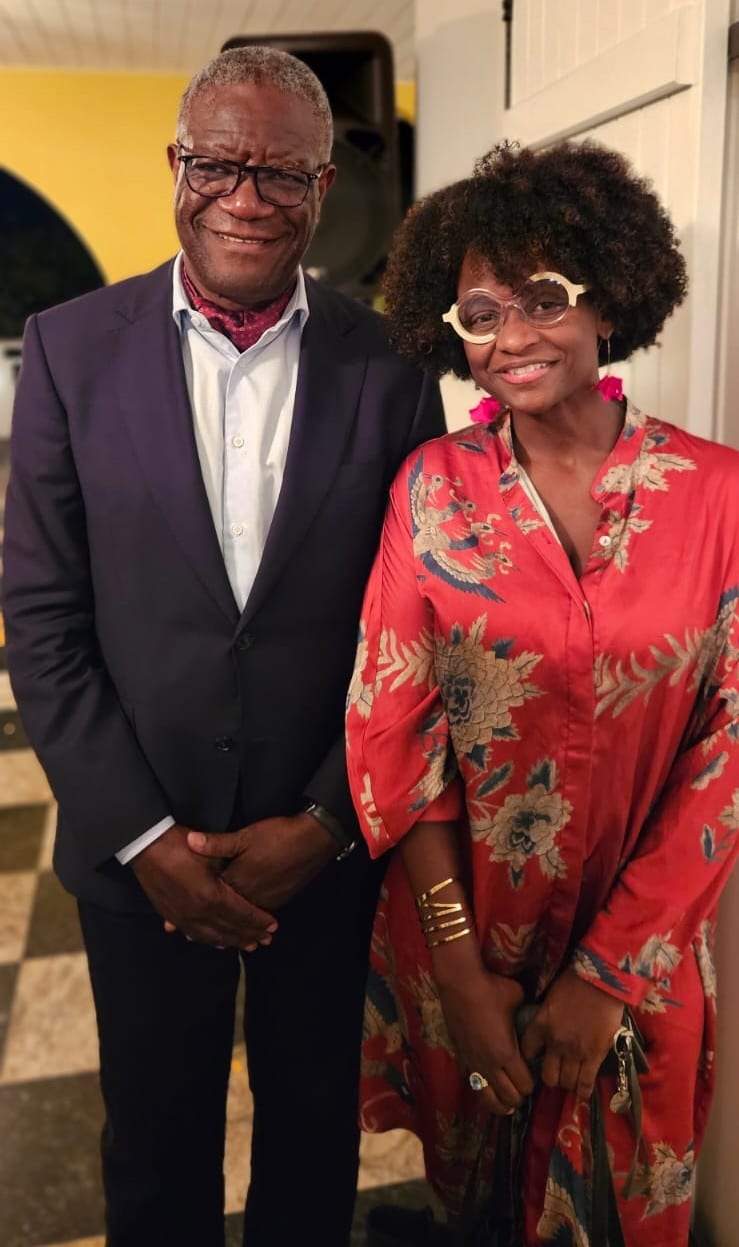
In Martinique, the visit of Denis Mukwege gave special weight to the word reparation. From May 2 to 8, 2026, the 2018 Nobel Peace Prize laureate met with residents, healthcare professionals, students and elected representatives to share a common message: treating bodies is not enough if societies leave violence against women in silence.
A week to hear a global voice
Martinique has not only welcomed a famous doctor. It welcomed a man whose name is linked to one of the great moral struggles of our time. Denis Mukwege, a Congolese gynecologist, has dedicated his life to women survivors of sexual violence in the Democratic Republic of Congo. His struggle earned him the Nobel Peace Prize in 2018, shared with Nadia Murad, for their efforts against the use of sexual violence as a weapon of war.
This visit took place as part of the Festival en Pays Rêvé, in an “hors les murs” format, with the Anses-d’Arlet and Lamentin town halls, and the Rotary Club. The chosen theme already said it all: “Repairing women, repairing the world”.

In Anses-d'Arlet, a memory inscribed in the street
On May 3, a road bearing the doctor’s name was inaugurated in Anses-d’Arlet. The gesture is symbolic, but not decorative. By naming a public space after Denis Mukwege, we are inscribing a demand for human dignity in the Martinique landscape.
The town wanted to pay tribute to its fight against sexual violence, particularly when used as a weapon of war. In front of the assembled residents, this recognition took on a local dimension. Martinique is not the Democratic Republic of Congo. But it, too, knows the power of wounded memories, of silences passed on, of struggles for dignity.

In Madiana, cinema as a place to speak out
On May 4, Martinican audiences gathered at Madiana to watch the film Muganga – He who heals. The screening, organized in the presence of Denis Mukwege and Professor Guy-Bernard Cadière, transformed the room into a place for listening.
The film recounts the struggle of women victims of sexual violence in the DRC. That evening, the emotion was not only linked to the images. It also came from the presence of the man who, for years, has been receiving these wounds in his hospital, naming them, treating them and then demanding justice. A cheque for €5,000 was also presented to the Panzi Foundation.
Repairing doesn't mean forgetting
Denis Mukwege ‘s message is based on a simple and difficult idea: repairing does not mean erasing. At Panzi, founded in Bukavu in 1999, women receive not only medical care, but also psychological, social and legal support. This approach reminds us that sexual violence destroys much more than a body. It affects a family, a community, an entire society.
That’s why the doctor talks as much about justice as he does about care. Without recognition of the crimes, without the fight against impunity, reparation remains incomplete. His message also appeals to men, institutions, families and witnesses. Silence rarely protects victims. It often protects those who want nothing to change.


Why this visit matters in Martinique
Denis Mukwege ‘s visit to Martinique raises a broader question. What does a territory do when it welcomes such a word? It can applaud, be moved, name a street, fill a room. But it can also extend this encounter with a deeper reflection on violence against women, prevention, listening, education and justice.
This is where the event goes beyond homage. It becomes a mirror. By placing reparation at its heart, Martinique reminds us that human dignity knows no borders. It is defended in Bukavu, Anses-d’Arlet, Lamentin, in families, schools, hospitals and courts. After Denis Mukwege’s departure, one question remains: how can we transform this week of meetings into lasting commitments to women, justice and dignity?
Denis Mukwege was in Martinique from May 2 to 8, 2026 as part of the Festival en Pays Rêvé – Hors les murs, with several meetings organized in Anses-d’Arlet, Lamentin, the CHU, the University and cultural venues. The aim of her visit was to share her fight for women victims of sexual violence, but also to remind us that reparation is not just a medical issue: it also concerns justice, collective memory and the responsibility of societies.
The link was built around the theme “Repairing women, repairing the world”. In Martinique, Denis Mukwege brought a universal message: violence against women is not just an individual tragedy, it also weakens families, communities and entire territories. His visit opened up a local dialogue on dignity, justice, listening to victims and combating silence. This message took on particular resonance in Anses-d’Arlet, where a road bearing his name was inaugurated.
Denis Mukwege was awarded the 2018 Nobel Peace Prize, along with Nadia Murad, for their fight against the use of sexual violence as a weapon of war and armed conflict. A Congolese gynecologist, he is known for his work with women survivors of sexual violence in the Democratic Republic of Congo, notably through the Panzi Hospital and Foundation. His work combines care, support for victims, the defense of justice and the fight against impunity.