Culture in Ouagadougou recently took on a special international dimension. From February 28 to March 3, 2026, the capital of Burkina Faso hosted Roots and Future 2026a meeting dedicated to the development of cultural and creative industries and cooperation between Africa and its diaspora. Conceived as a forum for dialogue and structuring of the cultural sector, the event brought together artists, entrepreneurs, institutions and players in the creative economy around a single ambition: to strengthen bridges between African territories and diasporic communities, particularly in the Caribbean.
For many observers, Roots and Future 2026 marks a milestone in the construction of an international cultural network where artistic and entrepreneurial exchanges become a lever for development.
A vision: linking Africa and its cultural diasporas
Under the theme “Authentic Africa and the Africa of the Diasporas”, the first edition of Roots and Future 2026 is part of a global movement to promote black cultural identities and strengthen cooperation between territories historically linked by the African diaspora. With this in mind, the event offered several formats for professional meetings: masterclasses, strategy sessions, discussions between cultural entrepreneurs and moments of exchange between artists.
These initiatives addressed key issues for the sector: financing of cultural projects, circulation of works, professionalization of players and development of new markets for African artists. Beyond the discussions, Roots and Future 2026 was distinguished above all by its willingness to create concrete collaborations between the various participants.
A strong Caribbean presence
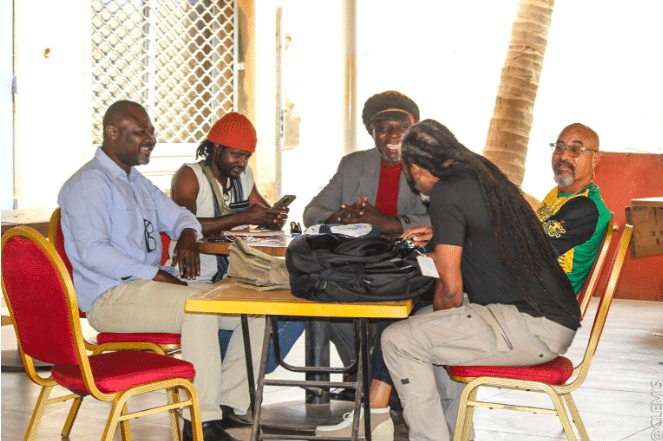
One of the most significant aspects of Roots and Future 2026 was the participation of personalities from the Caribbean, illustrating the growing importance of cultural exchanges between these two areas.
Guests included entrepreneur Davon Carty as well as Victor E. Lewis, CEO of Caribbean One Media Group and Director of the Creative Campus Eco Institute (CCEI). Through the CCEI Victor E. Lewis develops training and coaching initiatives for talent in the creative industries, sports and environmental sectors. His work aims to open up new professional perspectives for young artists and cultural entrepreneurs.
His presence at Roots and Future 2026 provided an opportunity to share the Caribbean’s experience in the creative economy, a field in which the region has recognized expertise, notably in music, events and cultural festivals. These exchanges also served as a reminder of the extent to which the cultural trajectories of Africa and the Caribbean remain deeply intertwined.
Ouagadougou, fertile ground for the cultural economy
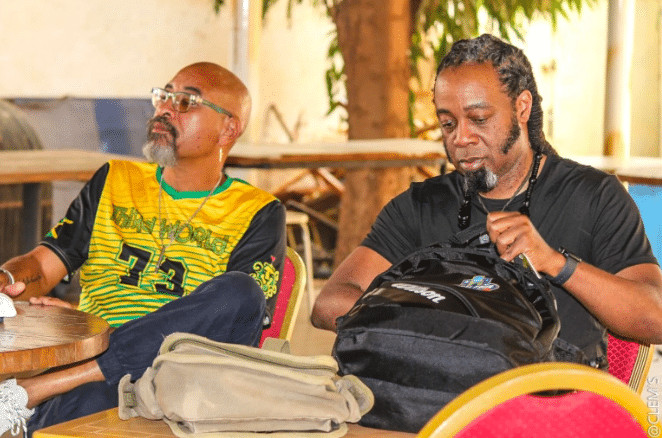
Even before the official opening of Roots and Future 2026, a strategy meeting was organized at the Centre culturel Gambidi, an emblematic venue on the Burkinabe art scene. The meeting brought together a number of international players as well as Claude Guingané, General Manager of the center and representative of the IKAM Burkina Faso focal point.
Discussions focused on consolidating the partnership established in 2019 between IKAM and the Maison des industries culturelles et créatives de Ouagadougou (MICCO). One of the projects discussed was the creation of an entrepreneurial hub dedicated to the cultural industries, designed to support artists and project leaders in developing their initiatives. Such a structure could play an essential role in structuring Burkina Faso’s cultural sector and opening it up to international networks.
Action-oriented business meetings
Highlights of Roots and Future 2026 include A media workshop at the Hotel Pacific brought together a number of professionals from the cultural sector for B2B meetings. These exchanges gave participants the opportunity to present their artistic projects, identify potential partners and explore new avenues of cooperation.
Discussions focused on the circulation of artists between Africa and the Caribbean, the co-production of cultural events and the development of transatlantic media projects. For many of the players present, these meetings represent a first step towards the creation of lasting collaborations.

Momentum set to continue
The first edition of Roots and Future 2026 ended on an encouraging note. By bringing together decision-makers, cultural entrepreneurs and artists around a common vision, the event laid the foundations for more structured international cooperation in the cultural field. In a context where the creative industries represent an important economic lever, the initiative also opens up prospects for the circulation of talent and the development of new cultural projects.
For the Caribbean, these exchanges represent an opportunity to strengthen historic ties with the African continent, while helping to build a more connected diasporic cultural space. With this first edition, Roots and Future 2026 positions Ouagadougou as a strategic meeting point between Africa and the world’s creative diasporas.
Roots and Future 2026 is an international event dedicated to the development of the cultural and creative industries, held in Ouagadougou, Burkina Faso.
The event aims to strengthen cooperation between Africa and its diaspora, particularly in the Caribbean, and to support the structuring of the cultural sector.
International guests included entrepreneur Davon Carty and Victor E. Lewis, CEO of Caribbean One Media Group and Director of the Creative Campus Eco Institute.