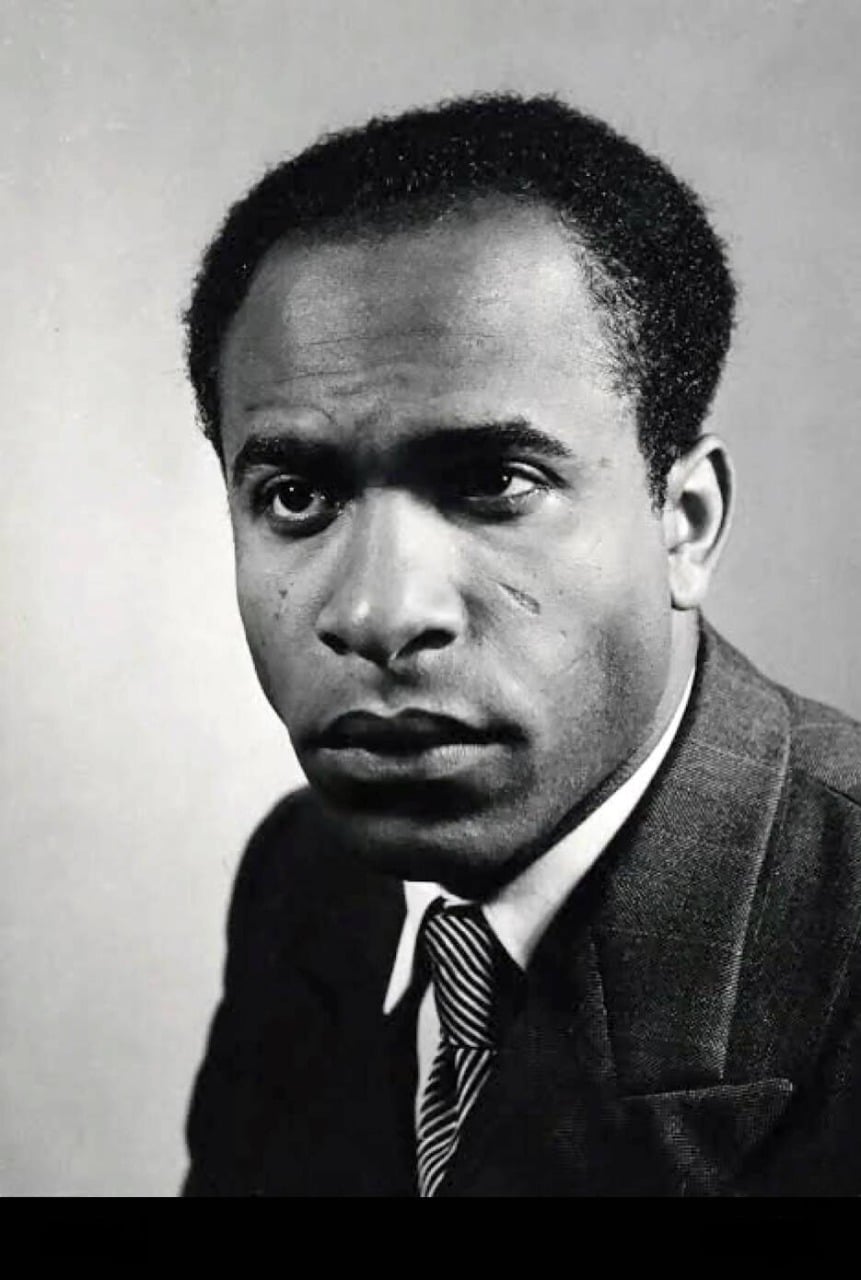
Born in Fort-de-France on July 20, 1925, Frantz Fanon remains one of the most powerful intellectual figures to emerge from Martinique. Psychiatrist, writer and political thinker, he brought together the issues of race, colonial domination, mental health and the liberation of peoples. His work, relatively brief due to his death in 1961, nevertheless left a lasting mark on postcolonial studies, anti-colonial struggles and debates on alienation.
Why does Frantz Fanon still count today?
To speak of Frantz Fanon is not simply to evoke a great Martinican name. It means returning to a way of thinking that sought to understand what colonialism produced in institutions, social relations, bodies and minds. Fanon did not study colonization as an abstraction. He observed it as a doctor, as a black man confronted with racism, and as an intellectual engaged in the struggle for Algerian independence. It is this articulation of lived experience, clinical practice and political analysis that gives his work its particular force.

From Fort-de-France to war: the first rifts
Frantz Fanon grew up in Martinique and spent part of his schooling in an environment marked by the French colonial heritage. He was a pupil of Aimé Césaire, an important factor in the formation of his political conscience, even if Fanon went on to forge his own intellectual path. During the Second World War, he enlisted in the Free French Army. This military experience, and his direct contact with racism and colonial hierarchies, were to have a profound influence on his thinking.
After the war, he continued his studies in France, training in medicine and psychiatry in Lyon. This training was more than just an academic detour: it became the basis for new thinking on the psychological suffering produced by social structures. Fanon is well known for having defended the idea that certain neuroses are socially generated. In other words, mental suffering cannot always be separated from the political system that surrounds it.
The psychiatrist who understands that colonization makes you sick
Between 1953 and 1956, Frantz Fanon headed the psychiatric department of the Blida-Joinville hospital in Algeria, then a French colony. It was here that his thinking took on a decisive dimension. Treating both Algerian victims of colonial violence and French soldiers involved in the repression, he observed that domination not only crushes economically and politically, it also disrupts psychic life.
Historical studies of his Algerian years show that Fanon never separated care from social context. In his 1956 letter of resignation, he stated that the colonial structure in Algeria made a genuine psychiatric mission impossible. This gesture is not anecdotal: it marks the moment when the doctor refused to treat symptoms without naming the system that produced them.

Black skin, white masks: a key book on alienation
Published in 1952, Peau noire, masques blancs remains one of Frantz Fanon’s major texts. This book examines the mechanisms by which the colonial gaze distorts the self-image, driving people to imitation, shame or inner splitting.
This text retains a remarkable scope because it does not simply denounce racism. It shows how racism profoundly affects language, desire, the relationship to the body and access to dignity. Fanon dismantles the logic by which the colonized is forced to adopt the colonizer’s norms if he hopes to gain recognition. This reading remains central to understanding many contemporary debates on identity, color, language and representation.

Algerian commitment: when the intellectual becomes a political player
After breaking with the colonial administration, Fanon joined the Algerian struggle and worked alongside the National Liberation Front. After his expulsion from Algeria in 1956, he joined the Provisional Government of the Algerian Republic in Tunis, where he was active in diplomacy and politics. His career then took a definitive turn towards revolutionary action.
This step is essential to understanding his work. Fanon was not a distant observer of decolonization. He became one of the most widely read and committed thinkers. His writings not only describe colonialism; they also question the responsibilities of national elites, the impasses of political mimicry and the risks of independence without real social transformation. These themes explain the lasting impact of his texts well beyond Algeria.
Les Damnés de la terre: a major text, often oversimplified
Published in 1961, Les Damnés de la terre is the other major work associated with Frantz Fanon. Written in the context of the Algerian War of Independence, it deals with the history of colonization and the crisis of decolonization. It analyzes the colonial world as a system of domination, exploitation and dispossession.
The book is often summed up in terms of violence alone. This is reductive. Fanon also talks about national bourgeoisies, culture, the pitfalls of hollow nationalism, the role of the peasantry and the reconstruction of collective being after domination. Violence appears in a precise framework: that of a colonial world already structured by violence. To understand Fanon seriously, we need to read this text in all its complexity, and not as a simple abstract call to confrontation.

An early death, an immense influence
Stricken with leukemia, Frantz Fanon died on December 6, 1961 in Bethesda, USA, aged just 36. Despite his early death, Fanon’s influence spans the decades. His criticisms have inspired several generations of thinkers and activists. His work has nourished reflections on decolonization, race relations, structural violence and the critique of imperial legacies.
In the Caribbean, his name has a special resonance. Because he is Martinican, of course, but above all because he gave the Caribbean one of its most incisive intellectual voices on human dignity. Fanon reminds us that the Caribbean is not just a cultural or tourist space: it is also a land of thought, of rupture and of political invention.
Frantz Fanon was a psychiatrist, writer and political thinker born in Martinique in 1925. He is renowned for his profound analyses of colonialism, racism and their impact on human psychology. His importance lies in the fact that, as early as the 1950s, he articulated a global reflection linking political domination, mental alienation and liberation struggles. Today, his work continues to fuel social science research, postcolonial studies and debates on identity.
Frantz Fanon’s two major works are Peau noire, masques blancs (1952) and Les Damnés de la terre (1961). The former analyzes the psychological effects of racism and the colonial gaze on individuals, particularly in societies marked by their European heritage. The second offers a broader reflection on the processes of decolonization, the political dynamics of colonized countries and the challenges of independence. These two texts remain essential references today.
Frantz Fanon was actively involved with the National Liberation Front (FLN) during the Algerian War of Independence. After working as a psychiatrist in Algeria, he left his post to denounce the destructive effects of the colonial system. He then joined the political structures of the independence movement, notably in Tunis, where he took part in strategic and diplomatic thinking. His commitment made him a direct player in the anti-colonial struggles, not just an observer.