
Martinique is taking on a new role within the Association of Caribbean States. For 2026–2027, it will join the Executive Bureau of the Special Committee on Trade Development and External Economic Relations as Rapporteur. Behind this institutional role lies a very concrete challenge: better integrating transportation, logistics, and access to markets in the Greater Caribbean.
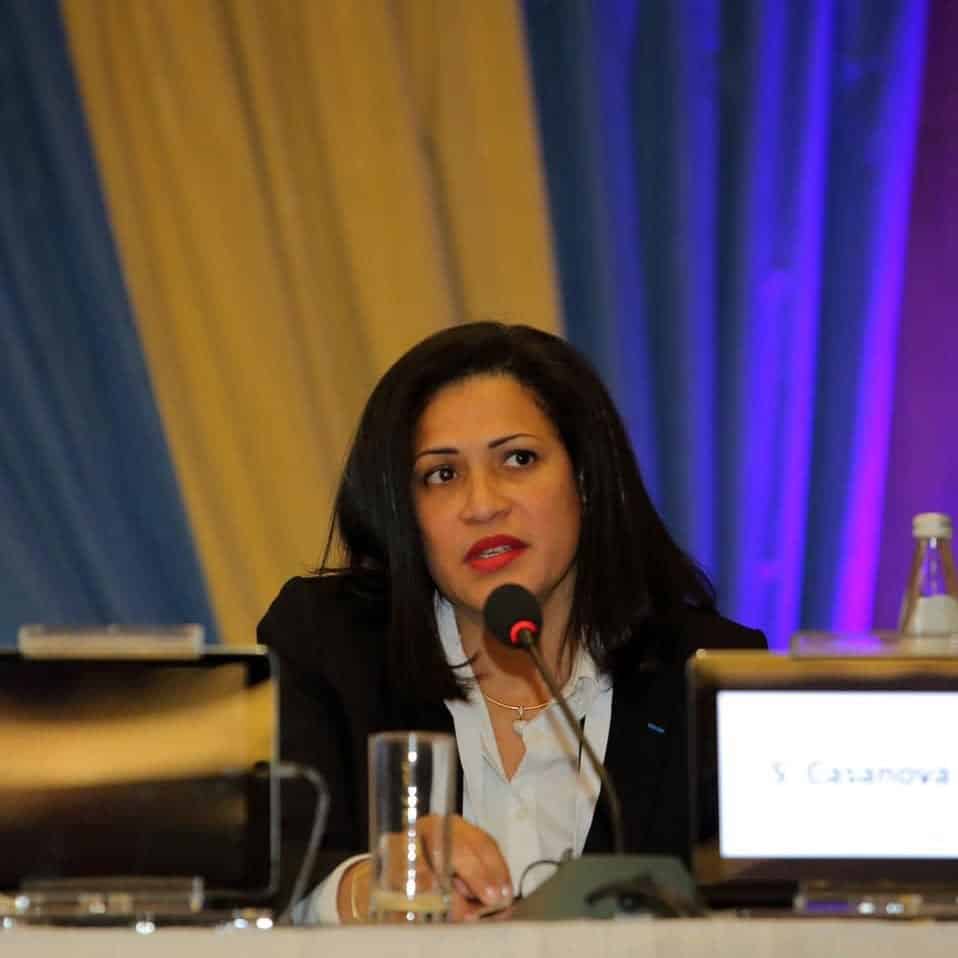
Sandra Casanova at the center of this new phase
Sandra Casanova, a member of the Martinique Assembly and chair of the territory’s Committee on Logistics Strategy, Research, and Innovation Policy, will assume this responsibility. The Executive Bureau consists of the Dominican Republic as chair, Colombia and Guatemala as vice-chairs, and Martinique as rapporteur. In this role, the territory helps to formalize the Committee’s work and to document the positions and decisions resulting from its discussions.
The Executive Committee held its first meeting on August 13, at the invitation of the ACS’s Directorate of Transportation, Trade, and Sustainable Development. The meeting provided an opportunity to review the work plan and upcoming priorities.
From transportation to commerce: the same approach
This appointment is not a first. Martinique has already served several terms on the Executive Board of the Special Committee on Transport, first as chair and then as vice chair. The most recent term ended in June 2026. Moving from transportation to trade might seem like a shift in focus. On the contrary, it reflects a sense of continuity. After all, before a product reaches a market, it must be transported.
Maritime or air transport, port operations, storage, customs, health inspections, documentation, standards, certification, distribution: each step can either facilitate or hinder access to a market. For an island territory, competitiveness therefore does not depend solely on a product’s price. It also depends on transportation costs, transit times, the reliability of the supply chain, and the efficiency of procedures.

When Geographic Proximity Isn't Enough
In the Caribbean, being neighbors does not automatically mean that trade is easy. Distances may be short, but goods still have to go through several stages before reaching the buyer. The ACS specifically aligns trade, transportation, and sustainable development under a single umbrella within its Secretariat. Its strategic plan, “Greater Caribbean 2035: A Shared Horizon,” also considers trade, external economic relations, transportation, and connectivity as interdependent priorities.
Martinique’s new role thus addresses a very practical question: How can we make regional trade flow more smoothly and facilitate businesses’ access to neighboring markets?
Caribbean in terms of geography, European in terms of status
The topic also touches on a unique aspect of Martinique. Serge Letchimy sums up this position with the following statement: Martinique is “Caribbean by geography and European by status.” This dual identity can create challenges, but the Collectivité also hopes to turn it into an economic asset. The stated goal is to better integrate the territory into the value chains of the Greater Caribbean, while continuing the work already underway in the area of logistics.
The European eFTI4ALL project, mentioned in the press release, is part of this initiative. It focuses on the digitization of regulatory information related to freight transport, a technical issue that is directly linked to the smooth flow of trade.
Association of Caribbean States (ACS): From Institutional Presence to Caribbean Markets
Founded in 1994, the Association of Caribbean States is a forum for consultation, cooperation, and concerted action in the Greater Caribbean. Martinique holds a seat there as an associate member. Its inclusion on the Executive Board for Trade now strengthens its presence in an area directly related to economic exchanges. But a seat alone does not transform trade flows.
The real challenge will therefore begin after the appointment: translating this institutional presence into simpler procedures, more reliable connections, and, above all, opportunities accessible to businesses. This is now the concrete challenge. Will Martinique be able to use its position in the ACS to serve as a true bridge between its Caribbean neighbors and the economic reality?
For 2026–2027, Martinique serves on the Executive Board of the ACS Special Committee on Trade Development and External Economic Relations as Rapporteur. In particular, it helps to formalize and document the positions and decisions resulting from the Committee’s work.
The role of Rapporteur is held by Sandra Casanova, a member of the Martinique Assembly and chair of the Committee on Territorial Logistics Strategy, Research, and Innovation Policy. The Bureau also includes the Dominican Republic as chair, as well as Colombia and Guatemala as vice-chairs.
This section is part of a broader context: transportation and logistics directly determine a country’s ability to trade. Ports, maritime and air transportation, customs, warehousing, standards, and procedures all influence costs, lead times, and businesses’ access to markets in the Greater Caribbean.