“Duppy know who fi frighten”: this Jamaican saying resonates from childhood onward, long before we fully understand its meaning.
In Jamaica, at dusk, a scene plays out across generations. Children are called back inside before night swallows the garden. There’s no need to argue the point—outside, the duppies lurk, those spirits that didn’t follow the dead to the end of their journey. A man from Old Harbour, now in his eighties, told researchers in 2021 how these stories shaped his childhood evenings—not so much to terrify as to keep the children close to home. From this inherited fear arose a saying that is still heard today throughout the island: “Duppy know who fi frighten”—the duppy knows who to frighten.
What does “Duppy know who fi frighten” mean?
The Jamaican Patwah online dictionary illustrates the expression with a typical phrase, “Him cyaa try mi, duppy know who fi frighten,” which could be translated as “He can’t do anything to me; the duppy knows who to scare.” The meaning goes far beyond folklore. The proverb asserts that a malevolent spirit, like a malevolent person, never attacks just anyone. It chooses a target it knows to be vulnerable or unable to defend itself. In other words, the bully always knows its limits, even if it won’t admit it.

A phrase that is as much a challenge as it is a warning
The phrase works in two ways at once. It serves as a warning, a way of reminding people that predators carefully choose their victims rather than attacking just anyone. It also serves as a personal affirmation, when someone uses it to say that they won’t be targeted because they know how to defend themselves. This dual purpose—balancing collective caution with individual pride—explains its constant presence in everyday conversation, far from the vigil and long after dark. You hear it just as often in a schoolyard, between two classmates, as in a conversation among adults about someone who thought they could take advantage of the situation easily.

Where does the duppy come from?
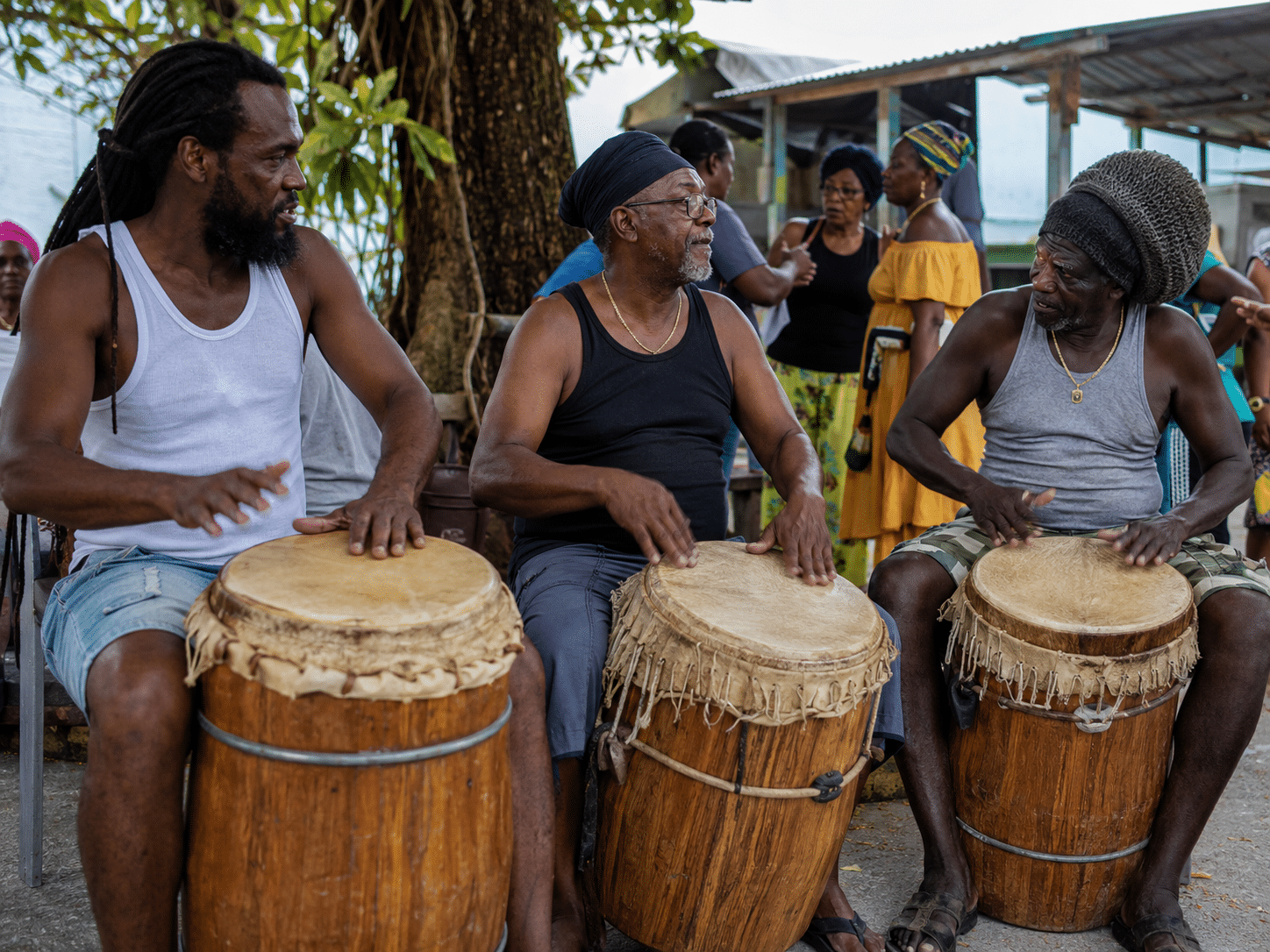
The origin of the word likely dates back to West Africa. Several scholars, including ethnographer Martha Warren Beckwith in her 1929 seminal work, *Black Roadways*, and folklorist MacEdward Leach in a study published in 1961 in the *Journal of American Folklore*, link the term to the Akan and Ga traditions of Ghana, where a funeral ritual held nine days after death bears a very similar name. This nine-night ritual, still celebrated today in Jamaica under the name “Nine Night,” marks precisely the moment when the soul is believed to leave this world for good.
According to popular belief, duppies traditionally rest beneath kapok trees—those immense trees that people in some rural areas still avoid cutting down without taking precautions. The duppy, incidentally, is not a singular entity. Jamaican folklore distinguishes several feared forms, such as the chained rolling calf, the three-legged horse, or the old woman transformed into a beast known as Ol’ Hige—proof that even in the afterlife, not all spirits inspire the same fear, nor do they target the same people. This diversity of figures may explain why popular wisdom has ultimately settled on a single, simple rule: a malevolent spirit always knows how to recognize an easy target.

From the Village to School and College
The proverb has long since moved beyond the confines of family gatherings. Scholar Candace Ward borrowed its title for an academic chapter on ghosts in Jamaican fiction—a sign that this oral wisdom continues to influence literature and research on the island. This journey from the village to the university shows just how a saying originally intended to keep children at home can become a tool for interpreting an entire society—its fears, its hierarchies, and those it leaves most vulnerable. Thus, “Duppy know who fi frighten” continues to travel far beyond the family gathering.
Knowledge that, too, chooses its target
“Duppy know who fi frighten” has never really been about ghosts. The proverb is about power, discernment, and the way intimidation always chooses specific targets rather than striking at random. Perhaps that is why it continues to circulate, from schoolyards to university classrooms, long after the children of Old Harbor have grown up. What other Caribbean saying also hides a lesson in survival behind the image of a ghost or spirit?
Literally “the duppy knows whom to frighten,” this Jamaican proverb means that a malevolent spirit, like a malevolent person, never attacks just anyone: it always chooses a target it knows to be vulnerable or unable to defend itself.
According to researchers such as Martha Warren Beckwith and MacEdward Leach, the word is believed to trace its origins to the Akan and Ga traditions of West Africa, in connection with a funeral ritual held nine days after death, which is now celebrated in Jamaica as the Nine Night.
No. Beyond folklore, “Duppy know who fi frighten” is as much a warning as it is an assertion of self: it serves as a reminder that opportunists carefully choose their targets, and it is used today in everyday conversation, from the schoolyard to academic papers.