Colombo is a spiced meat stew, a signature dish of Guadeloupean cuisine, which originated with the arrival of Indian indentured laborers beginning in 1854. Its name is believed to come from the Tamil language. Here is its history, its ingredients, and what it brings to the region.
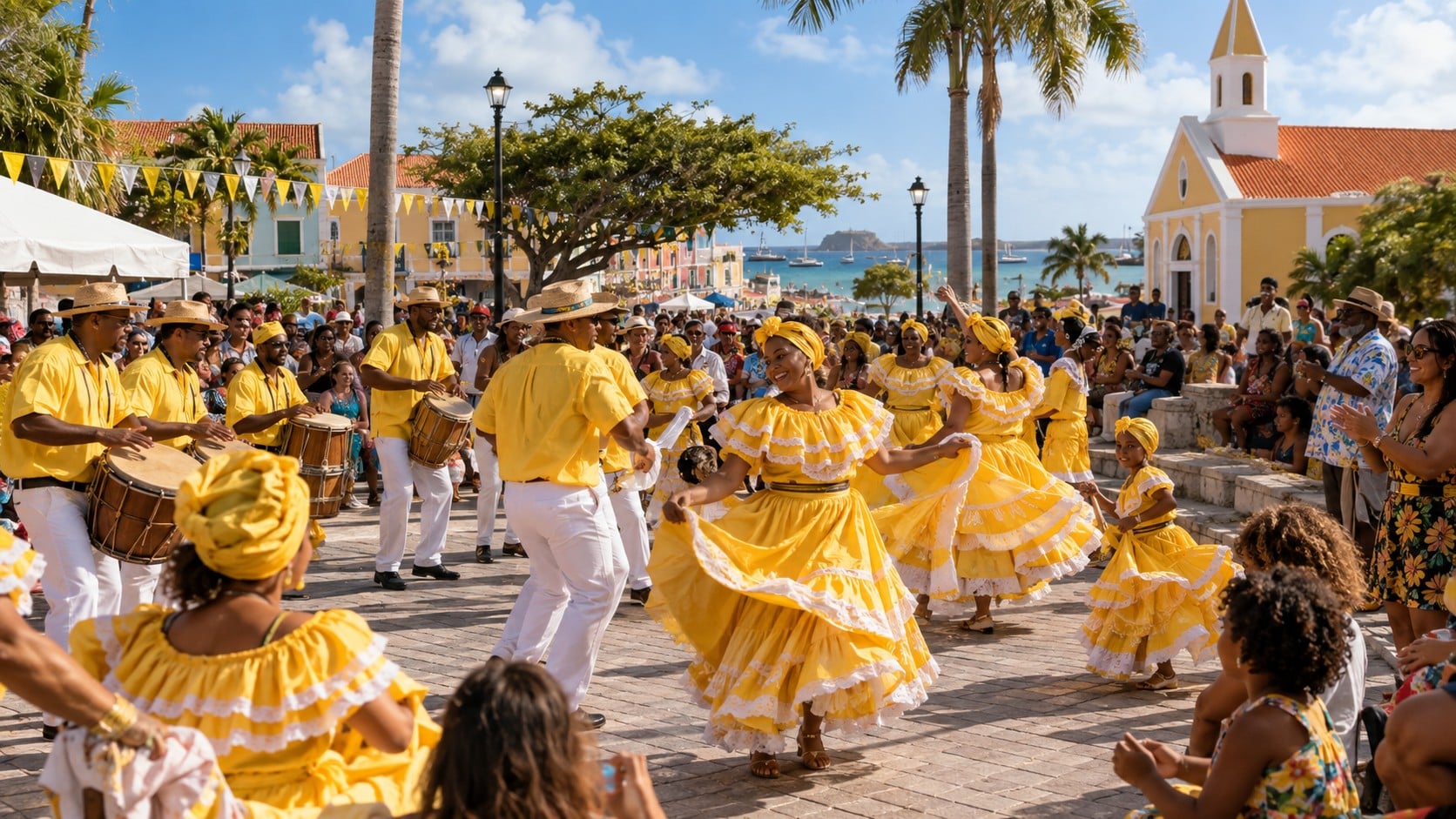
On July 26, 2025, in the parking lot of the ACTe Memorial in Pointe-à-Pitre, Guadeloupe, Roselyne Virassamy is preparing a goat and lobster colombo over a wood fire. She mixes in massalé spices. All around her, the Festival du Colombo is celebrating its fifth edition. On this day, Guadeloupe turns a family dish into a public celebration.


The origin of "colombo," a Tamil word brought over by Indian indentured laborers
The history of colombo in Guadeloupe began after the abolition of slavery in 1848. The sugarcane plantations were short on labor. They therefore recruited contract workers— known as “engagés”—for five-year terms. In late December 1854, the three-masted ship L’Aurélie docked in Pointe-à-Pitre after more than 80 days at sea, with over 300 people on board. The first arrivals were mainly Tamils, known as “Malabars” in Guadeloupe.
By 1889, more than 42,000 Indigenous people had arrived on the archipelago. For the Department of Guadeloupe, this first convoy marked the beginning of a long series of arrivals that enriched society through labor and culture. Historian Christian Schnakenbourg, however, considers their working conditions to be comparable, in several respects, to those of slavery. The history of the dish thus began in a context of coercion, before becoming a culinary tradition.

The word “colombo” is believed to come from Tamil. According to several sources, it is a corruption of “kuzhambu,” a spicy sauce served with rice. Other theories have been suggested, such as a connection to Christopher Columbus or the city of Colombo in Sri Lanka, but the Tamil origin remains the most widely accepted. In a 2017 study, Hélène Zamor notes that the Tamil language has nearly disappeared from the French West Indies under the pressure of assimilation, while culinary terms have survived, including “colombo.” The dish is said to have originated in the nineteenth century from the fusion of the cuisine of indentured laborers with local produce from Guadeloupe.
What's in a Guadeloupean colombo?
A Guadeloupean colombo combines meat, vegetables, and a spice blend of the same name. The dish is served with rice. The Guadeloupe Islands Tourism Board presents this stew as a culinary icon of the French West Indies.
Spice powder
Guadeloupe spice powder typically includes, depending on the recipe, turmeric, cilantro, cumin, fenugreek, black pepper, and mustard seeds. The Guadeloupe Islands Tourism Office adds cloves to the mix. Some Guadeloupean recipes also call for toasted rice. No single list is set in stone, as recipes vary from one kitchen to another.
The meat and the side dish
The recipe is traditionally made with goat, chicken, or pork. There are also variations using beef. Roselyne Virassamy, for her part, cooks goat and lobster together, which shows that the recipe adapts to different occasions and ingredients. In Guadeloupe, this stew is often prepared for special family occasions.

Indian Cuisine with a Creole Twist
This Guadeloupean stew is not a copy of Indian curry. The Guadeloupe Islands Tourism Board describes it as a unique blend, born from the fusion of Indian culture and Caribbean traditions. Guadeloupe received more than 42,000 Indian indentured laborers, while Martinique received 24,584. This cuisine also exists in Martinique, with its own variations, and therefore cannot be presented as exclusively Guadeloupean.
Guadeloupe’s uniqueness stems primarily from its history. There, the dish has transcended the boundaries of a single community to become part of the Creole cuisine of society as a whole. Indian indentured laborers have left their mark on other Caribbean cuisines, such as that of Trinidad and Tobago with “doubles,” a street food that incorporates spices and frying techniques from India.

What the dish brings to the region
The same study describes this stew as the most recognizable dish of Indian origin in the French West Indies. In Guadeloupe, it plays a dual role: it preserves the legacy of the indentured labor system and brings residents together around the same table. The ACTe Memorial in Pointe-à-Pitre is a center dedicated to the memory of the slave trade and slavery, which lends this connection particular significance.

The Colombo Festival, organized in 2025 by the Academy of Indo-Guadeloupean Culture and Diversity in partnership with the city of Pointe-à-Pitre, Cap Excellence, the Department, and the Region, is proof of this. Estelle Lejuez, deputy executive director of Cap Excellence, emphasized there that the Indo-Guadeloupean community is part of the territory’s cultural diversity.
Every December 24, Guadeloupe also commemorates the arrival of the Aurélie at the Esplanade du Premier Jour, near the ACTe Memorial. In 2024, to mark the 170th anniversary, a commemorative monument was unveiled there. Food and memory thus come together in this same spot in Pointe-à-Pitre, between a July festival and a December ceremony. More than 170 years after L’Aurélie, the dish is still passed from hand to hand, much like Haiti’s soup joumou, another dish that tells the story of a people. It remains to be seen how Guadeloupe will tell—alongside the recipe—the story of the indentured laborers who brought it there.
Frequently Asked Questions About Guadeloupean Colombo
Colombo is a stew made with meat, vegetables, and a spice blend of the same name, served with rice. It is associated with the arrival of Indian indentured laborers in Guadeloupe beginning in 1854 and is promoted by the tourism office as a culinary icon of the French West Indies.
According to several sources, the word “colombo” is thought to come from Tamil, and is linked to “kuzhambu,” a spicy sauce served with rice. There are also theories linking it to Christopher Columbus or the city of Colombo in Sri Lanka, but the Tamil origin is the most widely accepted.
The recipe combines goat cheese, chicken, or pork—and sometimes beef—with vegetables and a spice blend. Depending on the version, this blend includes turmeric, cilantro, cumin, fenugreek, black pepper, and mustard seeds. The dish is served with rice.