Soup joumou, the only Caribbean dish recognized by UNESCO

Soup joumou, soupe de giraumon haïtienne préparée pour le 1er janvier
In Haiti, soup joumou is the soup prepared every January 1, the country’s Independence Day. Made with pumpkin, beef, and vegetables, it became the only Caribbean dish inscribed on UNESCO’s Intangible Cultural Heritage list in 2021. However, the narrative linking it directly to the independence of 1804 remains, even today, a point of debate among some Haitian historians.

A soup made before dawn

In many Haitian households, preparations for soup joumou begin on the evening of December 31, so that it will be ready when everyone wakes up on January 1. The giraumon, a winter squash with orange flesh, is peeled and boiled before being pureed to form the base of the broth. Beef, short pasta, and chopped vegetables, carrots, leeks, celery, cabbage, are then added. This tradition, repeated every New Year’s Eve in kitchens across Haiti and throughout the Haitian diaspora, ushers in a day that Haitians directly associate with their country’s freedom.
Giraumon, légumes et ingrédients pour la soup joumou

The giraumon, the squash that gives the dish its name

The word “joumou” comes from Haitian Creole and specifically refers to “giraumon,” a type of squash grown in several rural regions of Haiti. Joumou soup, literally “giraumon soup,” derives its orange color and thick texture from this vegetable, which is mashed until it becomes the base of the broth. The giraumon remains the ingredient that gives the dish its identity, even though the recipe varies from one Haitian family to another depending on the vegetables available and the traditions passed down from generation to generation.

Saint-Domingue, a colony built on forced labor

The story of soup joumou has its roots in the French colony of Saint-Domingue, which became Haiti after 1804. At the end of the eighteenth century, Saint-Domingue was among the wealthiest colonies in the French colonial empire, a wealth built on the forced labor of hundreds of thousands of people enslaved on sugarcane and coffee plantations. It is against this backdrop of coercion and a strict social hierarchy that the founding narrative of soup joumou is rooted, a story of endurance echoed in the proverb “Dèyè mòn, gen mòn,” as recounted by Richès Karayib.

Carte d'Haïti, Port-au-Prince, ancienne colonie de Saint-Domingue

The Story Passed Down of a Colonial Taboo

The most widely told story in Haiti is that enslaved people grew giraumon in the plantation gardens but were not allowed to eat the soup made from it, which was reserved for the colonists’ table. According to this story, after Haiti’s declaration of independence on January 1, 1804, soup joumou became a symbol of a newly acquired right: the right to eat what one grows with one’s own hands. Part of the oral tradition credits Marie-Claire Heureuse Félicité, wife of Haiti’s first head of state, Jean-Jacques Dessalines, with serving this soup on that day, amid a festive atmosphere marking the break from colonial slavery.

Soup joumou servie avec une cuillère, soupe traditionnelle du 1er janvier en Haïti

A narrative that academic history has not confirmed

The account of January 1, 1804—widely reported by the press and by Haitian families themselves—has not, however, been corroborated by any historical or anthropological studies published to date. A well-documented critique, published by the writer and linguist Robert Berrouët-Oriol on the Fondas Kréyol website, notes that no peer-reviewed academic source confirms the specific scene of January 1, 1804, attributed to Marie-Claire Heureuse Félicité, and emphasizes that she was illiterate, which calls into question certain versions of the account that attribute personal writings to her.

Based on the available research, the story of joumou soup therefore remains a tale that Haitians tell one another and pass down as an expression of national identity, rather than a specific episode dated and documented by a historical institution.

The only Caribbean dish recognized by UNESCO

What can be said with certainty is that the dish itself has gained international recognition. In December 2021, UNESCO inscribed soup joumou on the Representative List of the Intangible Cultural Heritage of Humanity, under the name “soupe au giraumon.” This inscription makes soup joumou the only dish originating in the Caribbean to appear on this list today—a distinction that no other country in the region currently shares, and one that is highlighted in the RK dossier on Caribbean heritage recognized by UNESCO.

The UNESCO nomination file explicitly describes a family and community practice, driven by the women who cook, the children who help with the preparations, and the farmers who provide the giraumon.

Bol de soup joumou vu de dessus, soupe traditionnelle haïtienne

A Legacy That Lives On, in Haiti and Among the Diaspora

Every January 1, soup joumou continues to bring Haitian families together around a single bowl, both in Haiti and in Haitian communities in the diaspora—in Canada, the United States, and France. On that day, parishes and organizations hold community food drives that extend—on a neighborhood scale—a tradition that always begins in a family kitchen, in the same spirit of solidarity as konbit, the tradition of mutual aid already described by Richès Karayib.

For many young Haitians born far from Haiti, the soup joumou on January 1 remains an opportunity to learn, over a bowl of soup, what their parents tell them about the country’s history—a blend of stories passed down from generation to generation and what international institutions now confirm.

Soup joumou avec haricots, maïs et légumes, plat traditionnel haïtien

What Joumou Soup Continues to Nourish

Joumou soup needs no definitive academic proof to continue bringing Haitian families together every January 1. One question remains, one that the soup itself never quite answers, namely, how a people chooses to recount its own freedom from one generation to the next, and what this ongoing tradition continues to reveal about Haiti today.

Joumou soup is a Haitian soup made with pumpkin, beef, pasta, and vegetables, traditionally prepared and eaten on January 1, Haiti’s Independence Day.

The most widely accepted account states that enslaved people were not allowed to eat this soup during the French colonial period in Saint-Domingue, and that after independence on January 1, 1804, it became a symbol of newly gained freedom. However, this specific account has not yet been confirmed by academic sources.

Yes, UNESCO inscribed “soup joumou,” under the name “soupe au giraumon,” on the Representative List of the Intangible Cultural Heritage of Humanity in December 2021, making it the only Caribbean dish to date to receive this recognition.
Leave a Reply

Your email address will not be published. Required fields are marked *

More articles from RK

Colombo de Guadeloupe served with rice and accras
CULINARY ART
Tolotra

Colombo from Guadeloupe: What story does this dish of Indian indentured laborers tell?

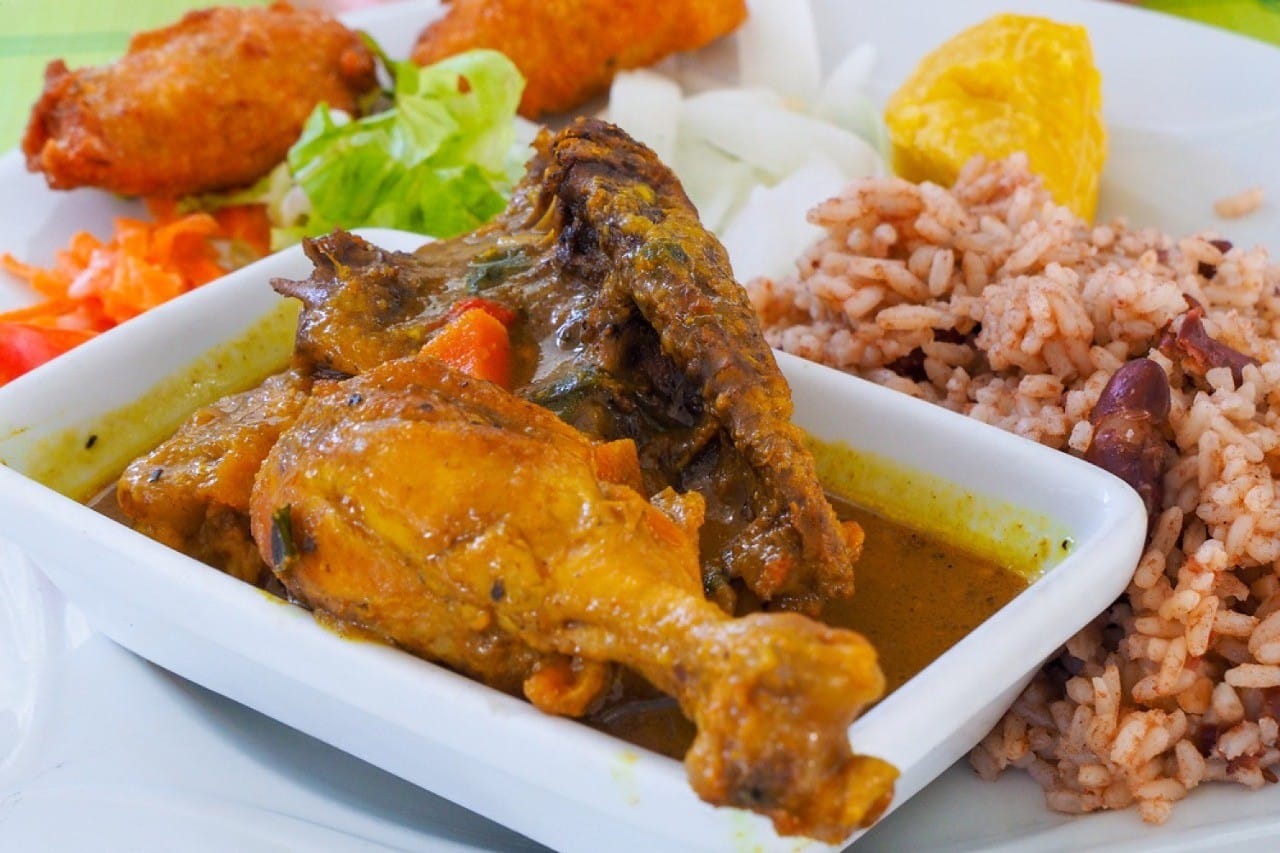
Colombo is a spiced meat stew, a signature dish of Guadeloupean cuisine, which originated with the arrival of Indian indentured laborers beginning in 1854. Its name is believed to come from the Tamil language. Here is its history, its ingredients, and what it brings to the region. On July 26, 2025, in the parking lot of the ACTe Memorial in Pointe-à-Pitre, Guadeloupe, Roselyne Virassamy is preparing a goat and lobster colombo over a wood fire. She mixes in massalé spices. All around her, the Festival du Colombo is celebrating its fifth edition. On this day, Guadeloupe turns a family dish into a public celebration. The origin of “colombo,” a Tamil word brought over by Indian indentured laborers The history of colombo in Guadeloupe began after the abolition of slavery in 1848. The sugarcane plantations were short on labor. They therefore recruited contract workers— known as “engagés”—for five-year terms. In late

Read More »
Crowd cheering in front of the main stage at Windsor Park Stadium in Roseau during the World Creole Music Festival
MUSIC
Tolotra

World Creole Music Festival 2026: Ne-Yo, Machel Montano, and Dominican bouyon

Ne-Yo, Machel Montano, and Capleton will take the stage in Roseau, but Midnight Groovers, Asa Bantan, and Shelly & The Signal Band will also be there. The 2026 World Creole Music Festival poses a simple question for Dominica: What remains of our Creole identity when the festival goes global? From October 23 to 25, 2026, Windsor Park Stadium in Roseau will host three nights of music. The official lineup features forty acts. The theme of this year’s festival is “Pulsating Rhythms.” But the event is more than just a list of names. Over the course of three nights, it brings together artists from abroad with those native to the island. Here is the program night by night, followed by what this lineup reveals. The complete lineup for the 2026 World Creole Music Festival Friday, October 23 Jamaican artist Capleton will kick things off. He’ll be joined by his compatriot Skillibeng,

Read More »
Dancers in yellow dresses and drummers on a square in Aruba during the Saint John's Day festival
HISTORY & HERITAGE
Tolotra

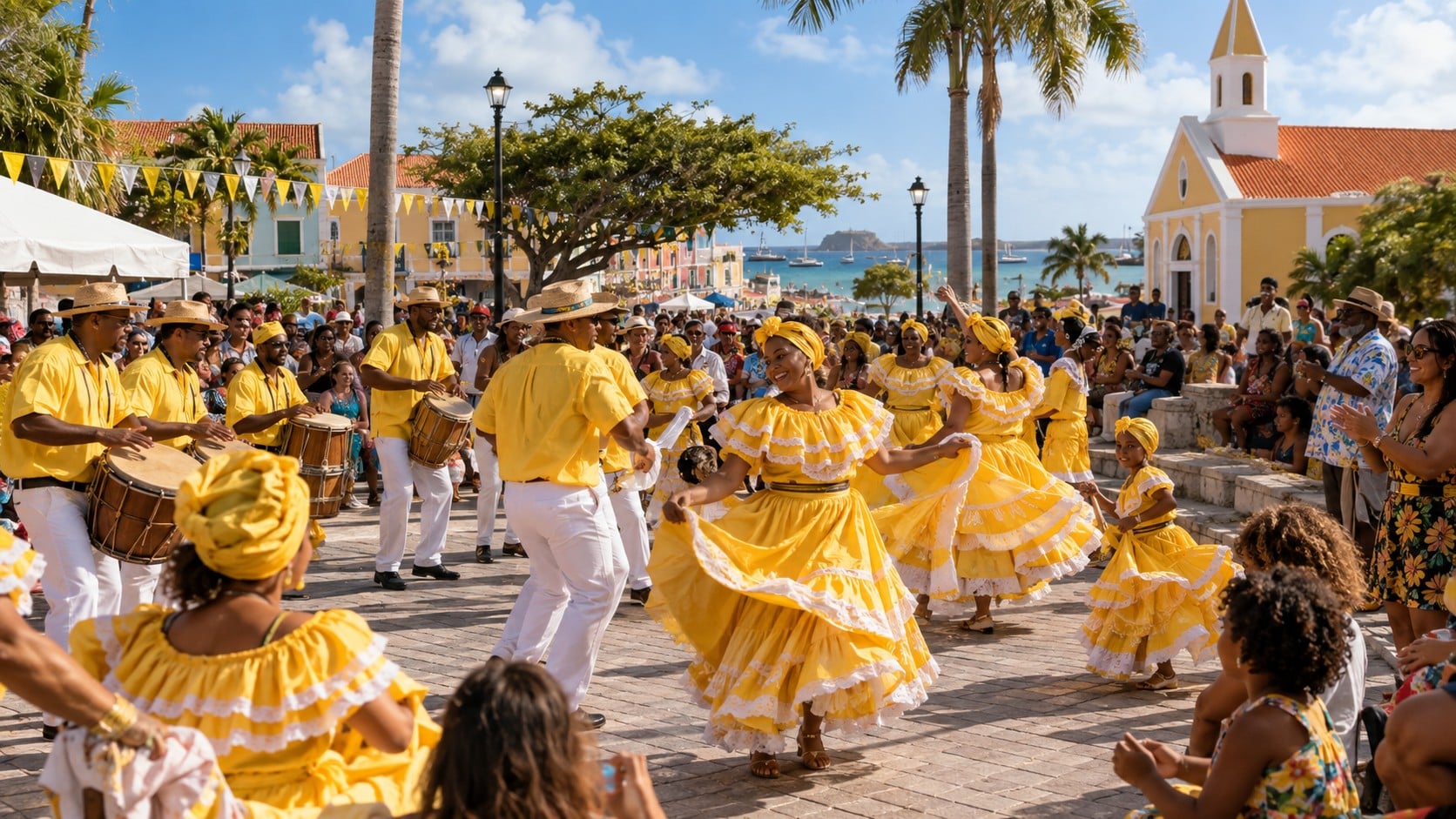
“Dera Gai” in Aruba: The buried rooster has become a gourd

“Dera Gai” translates to “burying the rooster.” However, in Aruba on June 24, the live rooster has disappeared from the ritual. A gourd has taken its place, and it is this gourd that blindfolded participants try to strike, to the rhythm of a band. This Saint John’s Day celebration illustrates how an island preserves an ancient name while changing the ritual that accompanies it. What does “Dera Gai” mean in Papiamento? Papiamento is one of the official languages of Aruba and is also spoken in Curaçao and Bonaire. The expression “Dera Gai” literally means “to bury the rooster.” It is sometimes written as “Dera Gay,” a spelling that also appears in the island’s official cultural documents. The name describes the most spectacular part of the festival—the one that made it famous. It says nothing about the music, the dances, or the fireworks, which nevertheless make up the bulk of the

Read More »

conTACT RK

we'd love to have your feedback on your experience so far

Join The List

Join our Richès Karayib community!  Sign up for our newsletter.

Want To Maximize Your Business Presence On Riches Karayib?

Complete the form to start the application