
“Dèyè mòn, gen mòn,” the proverb that inspired Paul Farmer

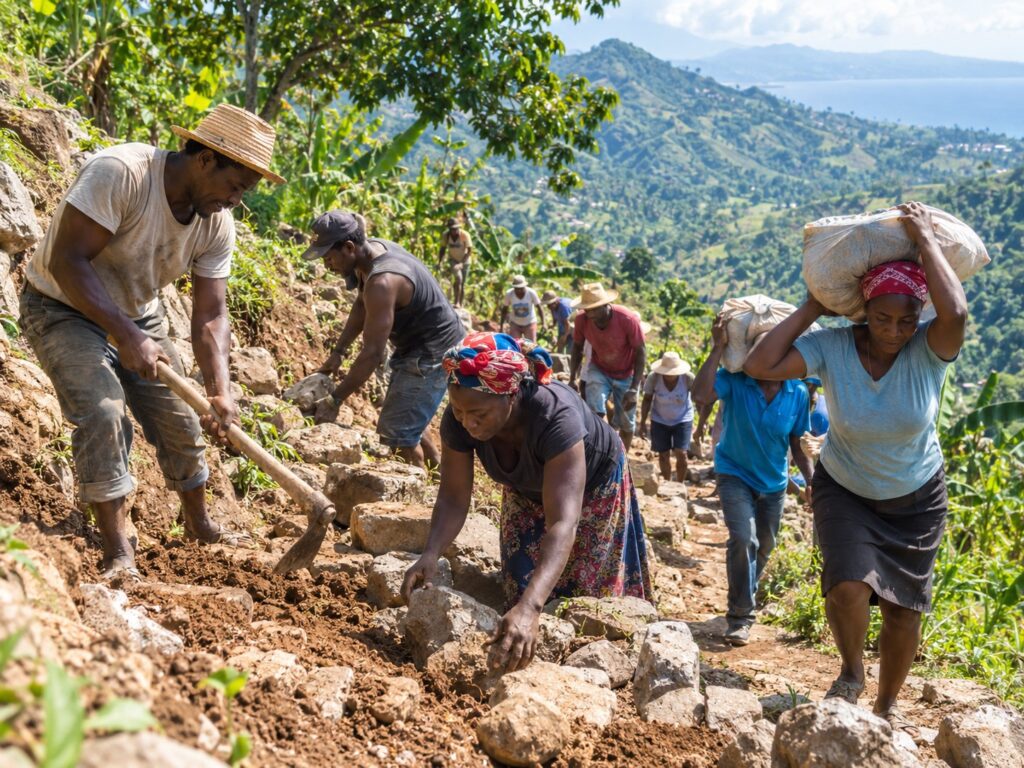
In Haiti’s Central Plateau, a mountain trail leads to Morne Michel, one of the most remote villages served by Zanmi Lasante, the health organization co-founded by American physician and anthropologist Paul Farmer. It is by taking this path, amid ridges that seem to go on forever, that writer Tracy Kidder comes to understand why an old Creole saying so aptly describes this place: “Dèyè mòn, gen mòn.” Behind the mountain, there is another mountain. Kidder would use this as the title of a book that would introduce Haiti to millions of readers around the world, far beyond the Caribbean.

What does “Dèyè mòn, gen mòn” mean?

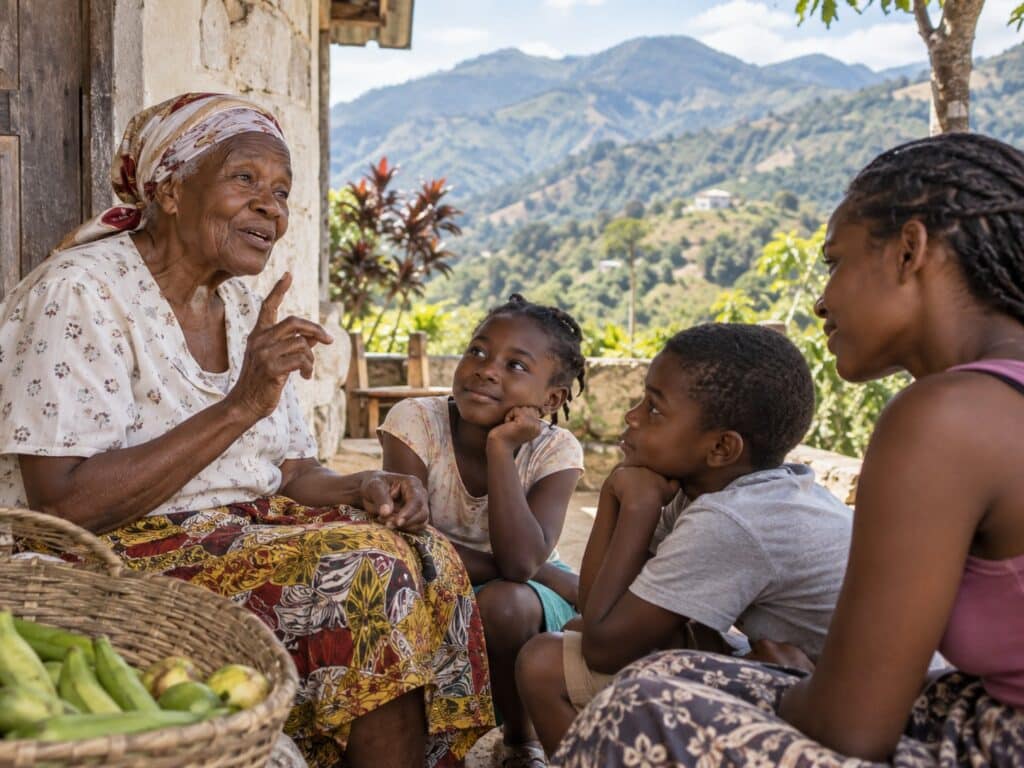
“Dèyè mòn, gen mòn” literally translates to “beyond the mountains, more mountains.” The true meaning of the proverb goes beyond a simple geographical observation: in life, once one problem is overcome, another almost always arises. It’s a way of saying that life is a series of trials, without suggesting that one should give up. The proverb has been passed down orally for generations in Haiti, long before any book picked it up and spread it far and wide.

Habitants marchant sur un chemin de montagne dans le Plateau central en Haïti

Wisdom Born of Haiti's Landscape

The proverb draws directly from the country’s landscape. Haiti—whose name is believed to derive from the Taíno word *Ayiti*, meaning “land of high mountains” according to the generally accepted etymology—is largely covered by a series of hills and mountains stretching from the coast inland. This terrain has also long isolated certain rural communities from the rest of the country. In everyday life, the phrase “Dèyè mòn, gen mòn” is used to describe everything from losing a job followed by a rent increase to one health problem piling up on top of another.

The expression never seeks to downplay the difficulty. It acknowledges it with a clarity that many Haitians claim as a national trait. It’s also used in a lighter tone among close friends and family to comment, with a resigned smile, on one difficult day following another, without the next challenge always being a serious one.

From the Morne Michel Trail to a Book Read All Over the World

In 2003, American writer Tracy Kidder published *Mountains Beyond Mountains: The Quest of Dr. Paul Farmer, A Man Who Would Cure the World* with Random House. The book opens with a quote in Creole and English: “Deye mon gen mon, Beyond mountains there are mountains.”

It tells the story of how Paul Farmer, a Harvard-trained physician, founded the organization Partners In Health in 1987 with Ophelia Dahl, Thomas J. White, Todd McCormack, and Jim Yong Kim; its Haitian counterpart, Zanmi Lasante, grew out of a small clinic opened in Cange in 1985. Zanmi Lasante, which literally means “partners in health” in Creole, has since become the country’s largest nongovernmental healthcare provider. It was there that Farmer developed his conviction that access to care should never depend on a patient’s income—a conviction he would later carry far beyond Haiti, to the ends of the earth.

Kidder’s book became a New York Times bestseller and received the Ulysses Letter Award for the Art of Reportage, turning the Haitian proverb into a title read by millions of people who had never heard of Cange or Morne Michel. Paul Farmer, for his part, continued this work until his death in Rwanda on February 21, 2022, at the age of 62.

A philosophy that is still alive today

The proverb has never fallen out of everyday use in Haiti, but it has now spread far beyond, carried by the popularity of Kidder’s book all the way to the Haitian diaspora, where it is sometimes cited to describe a resilience that remains undiminished from one generation to the next. RK has already chronicled this same collective energy through konbit, this tradition of mutual aid which turns collective work into a celebration. “Dèyè mòn, gen mòn” may be its other, more intimate side—the one that reminds us that no mountain is truly the last, and that we often have to keep walking without ever seeing the summit. Who, in Haiti or elsewhere in the Caribbean, continues to climb their own mountain today?

“Dèyè mòn, gen mòn” literally means “beyond the mountains, more mountains” and expresses the idea that, in life, once one difficulty has been overcome, another almost always arises.

This Haitian proverb provided the title for Tracy Kidder’s book, *Mountains Beyond Mountains*, published in 2003, which chronicles the journey of Dr. Paul Farmer and the organization Partners In Health in Haiti.

Zanmi Lasante, which means “partners in health” in Haitian Creole, is a health organization that grew out of a clinic opened in Cange in 1985 and has since become Haiti’s largest nongovernmental healthcare provider, according to Partners In Health.

Leave a Reply

Your email address will not be published. Required fields are marked *

More articles from RK

Colombo de Guadeloupe served with rice and accras
CULINARY ART
Tolotra

Colombo from Guadeloupe: What story does this dish of Indian indentured laborers tell?

Colombo is a spiced meat stew, a signature dish of Guadeloupean cuisine, which originated with the arrival of Indian indentured laborers beginning in 1854. Its name is believed to come from the Tamil language. Here is its history, its ingredients, and what it brings to the region. On July 26, 2025, in the parking lot of the ACTe Memorial in Pointe-à-Pitre, Guadeloupe, Roselyne Virassamy is preparing a goat and lobster colombo over a wood fire. She mixes in massalé spices. All around her, the Festival du Colombo is celebrating its fifth edition. On this day, Guadeloupe turns a family dish into a public celebration. The origin of “colombo,” a Tamil word brought over by Indian indentured laborers The history of colombo in Guadeloupe began after the abolition of slavery in 1848. The sugarcane plantations were short on labor. They therefore recruited contract workers— known as “engagés”—for five-year terms. In late

Read More »
Crowd cheering in front of the main stage at Windsor Park Stadium in Roseau during the World Creole Music Festival
MUSIC
Tolotra

World Creole Music Festival 2026: Ne-Yo, Machel Montano, and Dominican bouyon

Ne-Yo, Machel Montano, and Capleton will take the stage in Roseau, but Midnight Groovers, Asa Bantan, and Shelly & The Signal Band will also be there. The 2026 World Creole Music Festival poses a simple question for Dominica: What remains of our Creole identity when the festival goes global? From October 23 to 25, 2026, Windsor Park Stadium in Roseau will host three nights of music. The official lineup features forty acts. The theme of this year’s festival is “Pulsating Rhythms.” But the event is more than just a list of names. Over the course of three nights, it brings together artists from abroad with those native to the island. Here is the program night by night, followed by what this lineup reveals. The complete lineup for the 2026 World Creole Music Festival Friday, October 23 Jamaican artist Capleton will kick things off. He’ll be joined by his compatriot Skillibeng,
Read More »
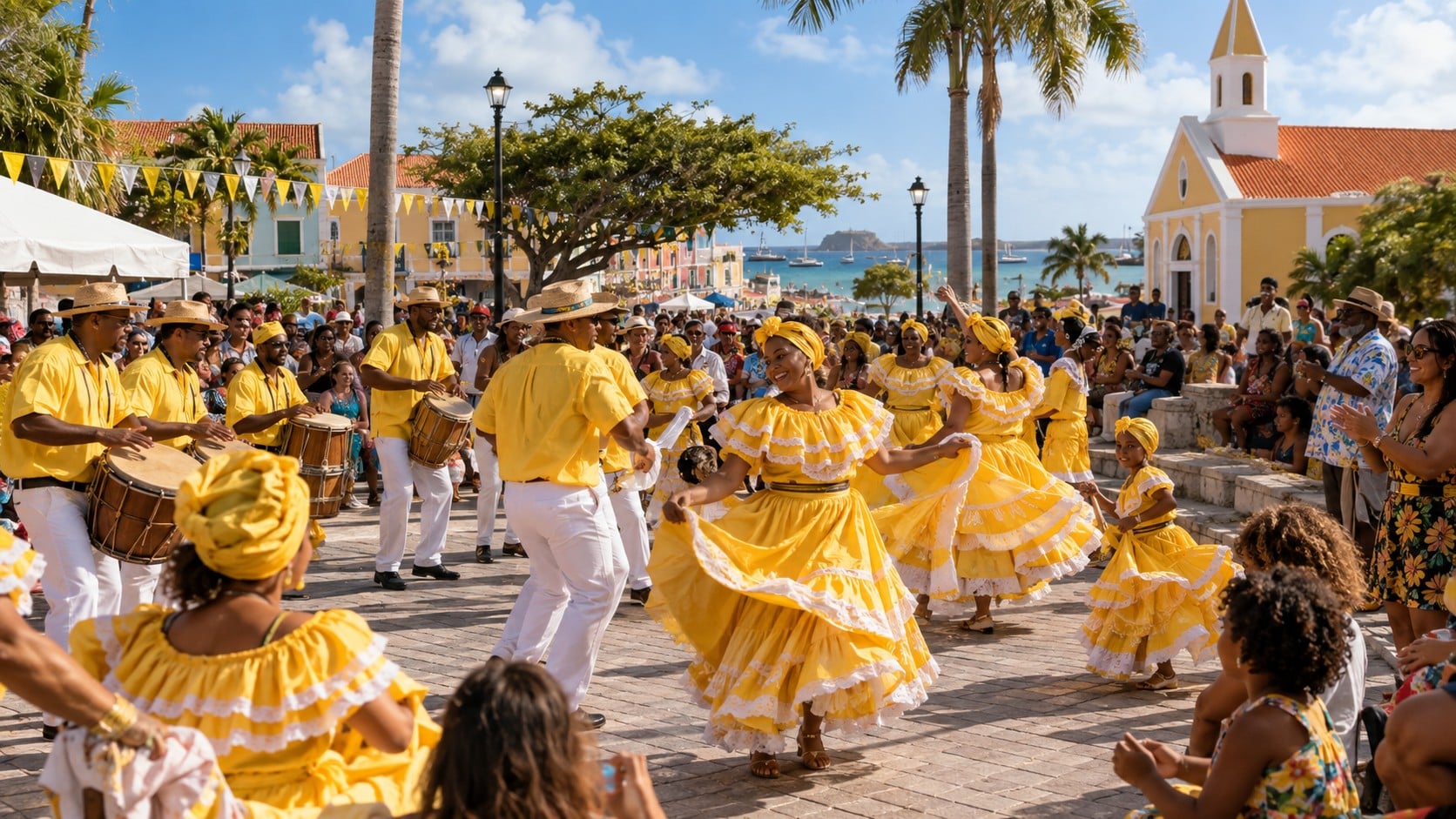
Dancers in yellow dresses and drummers on a square in Aruba during the Saint John's Day festival
HISTORY & HERITAGE
Tolotra

“Dera Gai” in Aruba: The buried rooster has become a gourd

“Dera Gai” translates to “burying the rooster.” However, in Aruba on June 24, the live rooster has disappeared from the ritual. A gourd has taken its place, and it is this gourd that blindfolded participants try to strike, to the rhythm of a band. This Saint John’s Day celebration illustrates how an island preserves an ancient name while changing the ritual that accompanies it. What does “Dera Gai” mean in Papiamento? Papiamento is one of the official languages of Aruba and is also spoken in Curaçao and Bonaire. The expression “Dera Gai” literally means “to bury the rooster.” It is sometimes written as “Dera Gay,” a spelling that also appears in the island’s official cultural documents. The name describes the most spectacular part of the festival—the one that made it famous. It says nothing about the music, the dances, or the fireworks, which nevertheless make up the bulk of the

Read More »

conTACT RK

we'd love to have your feedback on your experience so far

Join The List

Join our Richès Karayib community!  Sign up for our newsletter.

Want To Maximize Your Business Presence On Riches Karayib?

Complete the form to start the application