CHOGM 2026: The Caribbean Calls for Comprehensive Restorative Justice

Group photo of the Commonwealth Ministerial Meeting on Small States in front of the CHOGM Antigua and Barbuda 2026 screen

In Antigua and Barbuda, the CHOGM 2026 (Commonwealth Heads of Government Meeting) is bringing restorative justice back to the forefront of the debate. Philip J. Pierre, Prime Minister of Saint Lucia and current chair of CARICOM, is calling for a dialogue that goes beyond expressions of regret regarding slavery.

From November 1 to 4, 2026, Commonwealth leaders will gather in St. John’s, Antigua and Barbuda. On the agenda for this 28th meeting are trade, investment, and climate resilience. But behind the diplomatic exchanges, one question looms large in the discussions: How can we acknowledge the consequences of the transatlantic slave trade without limiting ourselves to mere words?

The Commonwealth has 56 member states, including several Caribbean nations directly affected by the history of British colonization. For Philip J. Pierre, who is leading the Saint Lucian delegation, the issue extends beyond the borders of his island. He also carries the expectations of the member states of the Caribbean Community ( CARICOM), which have for years been calling for a collective response to the injustices inherited from slavery.

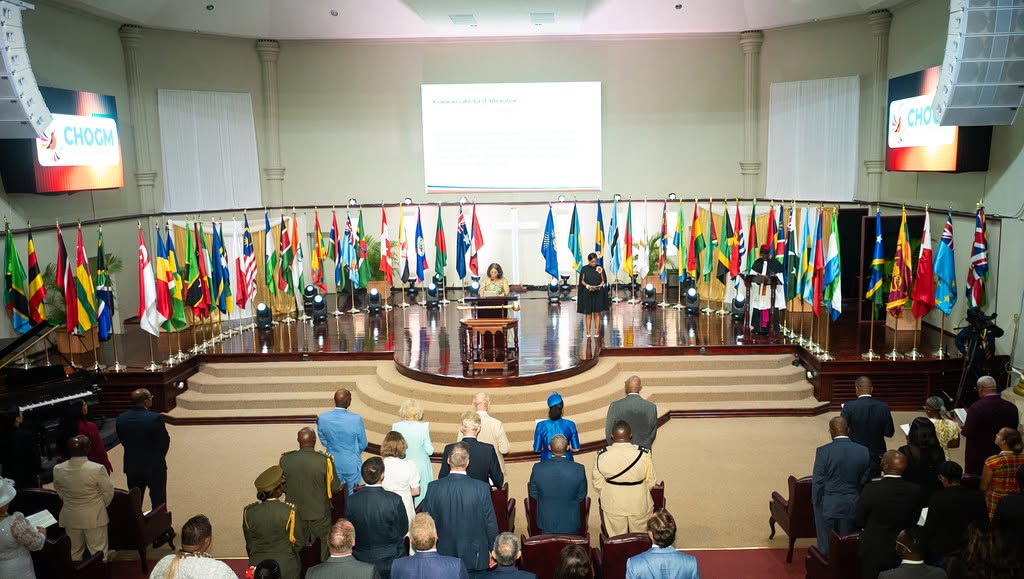
CHOGM 2026 hall decorated with the flags of Commonwealth member states, with participants standing
CHOGM 2026 hall in Antigua and Barbuda, with the flags of Commonwealth member states © Antigua and Barbuda CHOGM 2026

CHOGM 2026: Philip J. Pierre Speaks on Behalf of CARICOM

On October 31, on the eve of the summit’s opening, Philip J. Pierre issued a statement on behalf of CARICOM. He welcomed the British government’s willingness to engage in a structured dialogue with the countries concerned and to consider issuing a formal apology.

This openness is important, but in his view, it is not enough. CARICOM refuses to allow reparations to be ruled out from the outset of the discussions. It believes that historical responsibilities also extend to states and institutions, beyond the generations directly involved. Pierre’s message echoes a long-standing demand by Caribbean governments. Acknowledging the past must pave the way for a discussion of its consequences, which are still visible in the region’s societies.

Why CARICOM Won't Settle for Apologies

Restorative justice is not limited to compensation. CARICOM is guided by a ten-point plan that links historical recognition to concrete needs. It includes, among other things, official apologies, initiatives in health and education, the restitution of cultural heritage, and rehabilitation measures. It also addresses debt and financial compensation.

The Commonwealth Secretary-General holds up a publication on small states in front of the flags of member countries
The Commonwealth Secretary-General presents the publication on small states at CHOGM 2026 © Antigua and Barbuda CHOGM 2026

Cultural heritage holds a special place here. The artifacts, archives, and traces of societies shaped by slavery are not merely witnesses to the past. Restoring or highlighting them can help convey a history that has long been told from an external perspective. CARICOM calls for the injustices suffered by Indigenous peoples to be taken into account. For CARICOM, full reparations require examining the various legacies of colonization without conflating them.

A British overture—but what concrete progress has been made?

At the 2026 CHOGM, the British position has shifted on one point. London accepts the principle of a structured, time-bound dialogue conducted in good faith with the parties concerned. This openness is reflected in the communiqué issued during the summit. However, it does not amount to an official apology—which has already been offered—nor to an agreement on compensation. The British government has shown itself to be open to discussing a form of apology, while maintaining its opposition to financial reparations.

Family photo of Commonwealth leaders on stage in front of the CHOGM Antigua and Barbuda 2026 screen, November 1 to 4
Family photo of the leaders gathered at CHOGM 2026 in St. John’s © Antigua and Barbuda CHOGM 2026

On November 3, Charles III also addressed the transatlantic slave trade during the opening ceremony. The king expressed his deep sadness over this past, but did not offer a formal apology. Between the royal speech, the British government’s position, and Caribbean expectations, the disagreement therefore remains very real. The announced dialogue is a step forward, not a resolution.

A matter of memory that concerns the entire Caribbean

The debate is not limited to relations between Saint Lucia and the United Kingdom. It concerns the way Caribbean societies teach their history, preserve their memories, and view their relationships with former colonial powers. For the region, the restitution of heritage, the passing down of family stories, and the acknowledgment of the social consequences of slavery all raise the same question: Who can tell this story, and with what means?

Group of guests laughing and greeting each other on the pitch of a stadium in Antigua and Barbuda during CHOGM 2026
Warm exchanges on the pitch of the stadium in St. John’s during CHOGM 2026 © Antigua and Barbuda CHOGM 2026

CHOGM 2026 opens a dialogue, though it does not guarantee reparations. It remains to be seen whether the announced discussions will make it possible to transform this recognition into concrete commitments, defined in consultation with the affected peoples.

Four stilt walkers in colorful costumes on the pitch of a stadium in Antigua and Barbuda during CHOGM 2026
Stilt walkers on the pitch of the stadium in St. John’s during CHOGM 2026 © Antigua and Barbuda CHOGM 2026

Frequently asked questions

CHOGM stands for Commonwealth Heads of Government Meeting. The 2026 meeting will take place from November 1 to 4 in St. John’s, Antigua and Barbuda. It brings together Commonwealth leaders to discuss major economic, climate, and political issues.

CARICOM believes that the consequences of slavery and colonization continue to affect Caribbean societies. Its ten-point plan calls for, among other things, an official apology, educational and health measures, the restitution of cultural heritage, and financial compensation.

The United Kingdom has agreed in principle to a structured dialogue with the parties affected by transatlantic slavery. However, it has not announced any agreement on financial reparations. The British government remains opposed to this form of compensation.

Leave a Reply

Your email address will not be published. Required fields are marked *

More articles from RK

conTACT RK

we'd love to have your feedback on your experience so far

Join The List

Join our Richès Karayib community!  Sign up for our newsletter.

Want To Maximize Your Business Presence On Riches Karayib?

Complete the form to start the application