Limiè Kréyol 2026: A Day to Reflect on the Future of Martinican Creole

Giant Limiè Kréyol #4 letters in front of the illuminated marquee at dusk, on the Le Vauclin waterfront

What role will Martinican Creole play in ten, twenty, or fifty years? This is one of the central questions of Limiè Kréyol 2026, scheduled for this Saturday, November 7, on the Vauclin waterfront in Martinique. Now in its fourth year, the event combines discussions, music, comedy, and bèlè to reflect on a language that is being passed down but is also evolving.

Organized by Marlène Jougon, founder of Vèsion Kréyol, this event aims to foster dialogue between generations. The idea is not only to celebrate Creole, but also to ask what role it plays today and what role we hope it will play in the future.

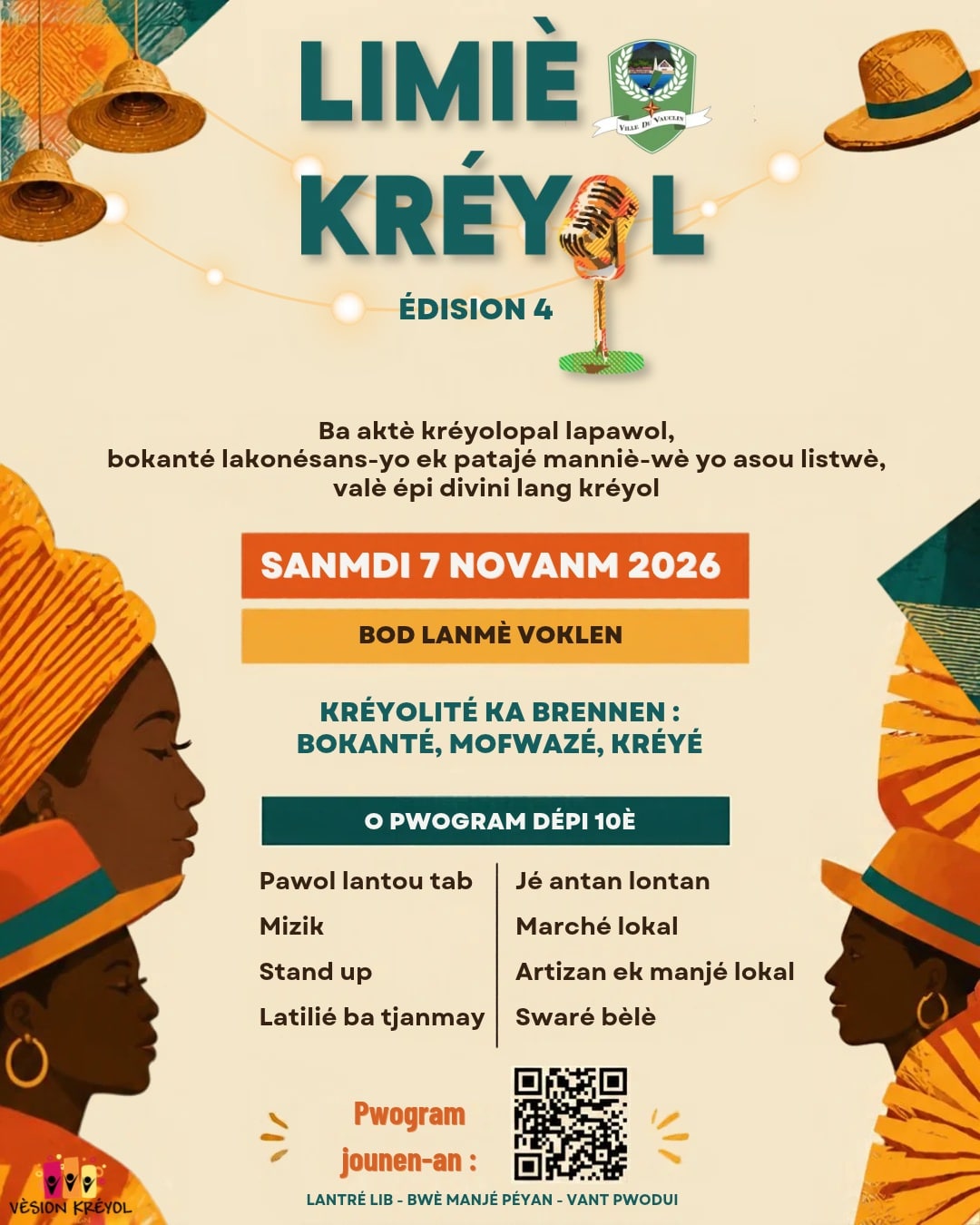
Official poster for Limiè Kréyol 2026, fourth edition, on Saturday, November 7 in Le Vauclin
Poster for the fourth edition of Limiè Kréyol, Saturday, November 7, 2026 © Limiè Kréyol

Limiè Kréyol 2026: A Fourth Edition Looking Toward the Future

This year’s announced theme is “Kréyolité ka brennen, Bokanté, mofwazé, kréyé,” which translates to “Creolity in motion: pass on, transform, create.” Three goals guide the gathering: to pass on the history and culture of Martinican Creole, to bring together its speakers to discuss its future, and to champion its richness.

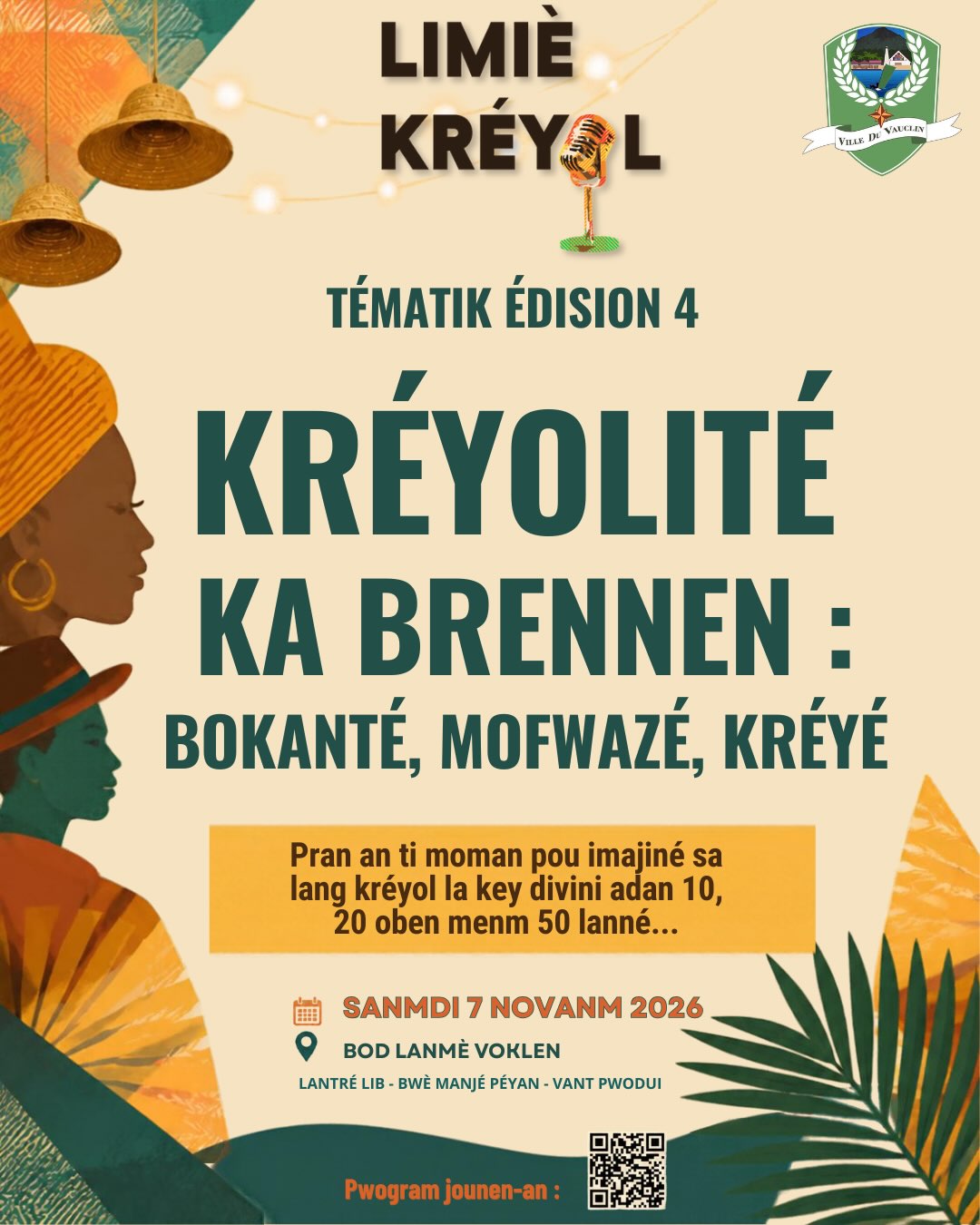
Visual of the theme Kréyolité ka brennen: bokanté, mofwazé, kréyé, of the fourth edition of Limiè Kréyol
Theme of the fourth edition: Kréyolité ka brennen © Limiè Kréyol
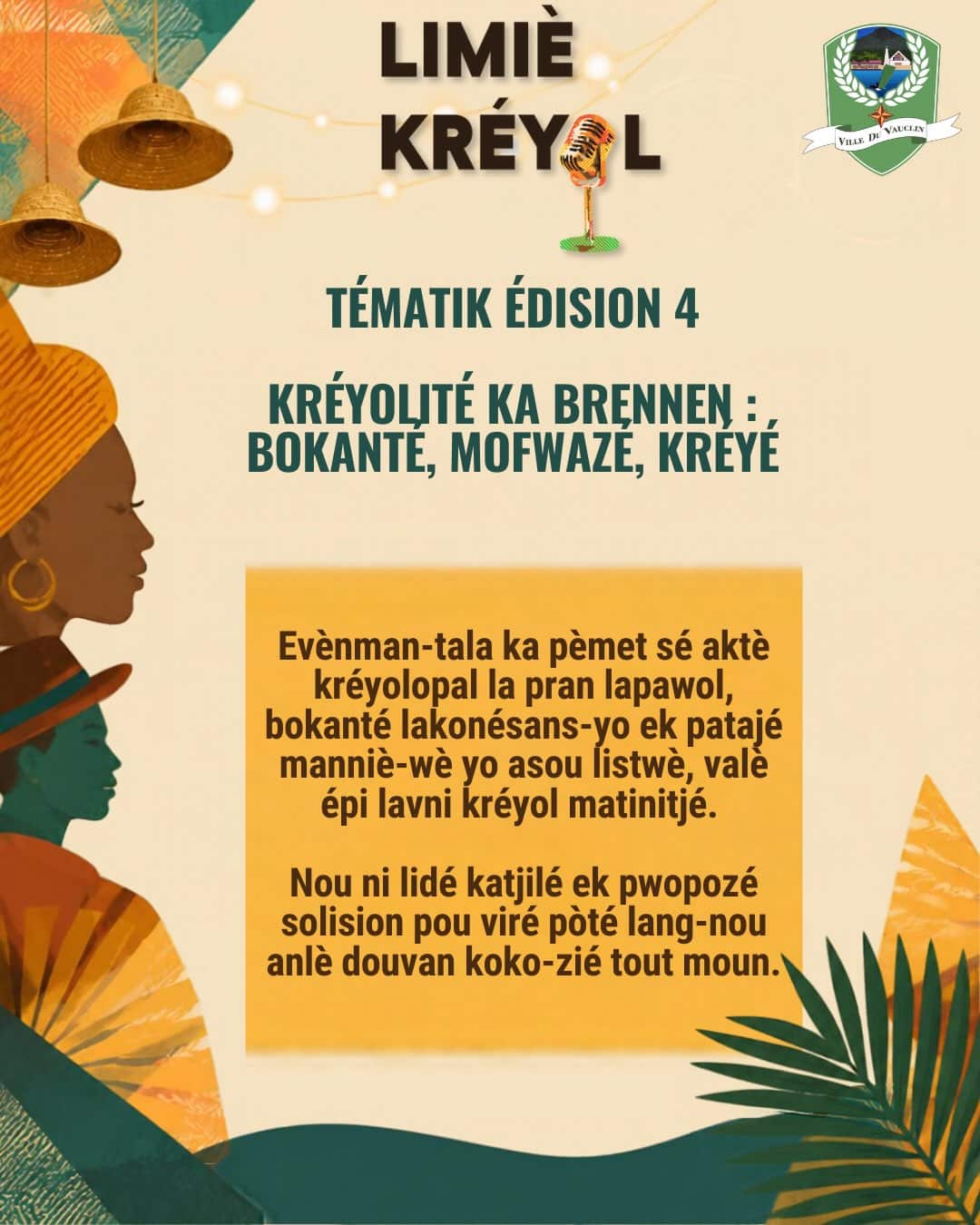
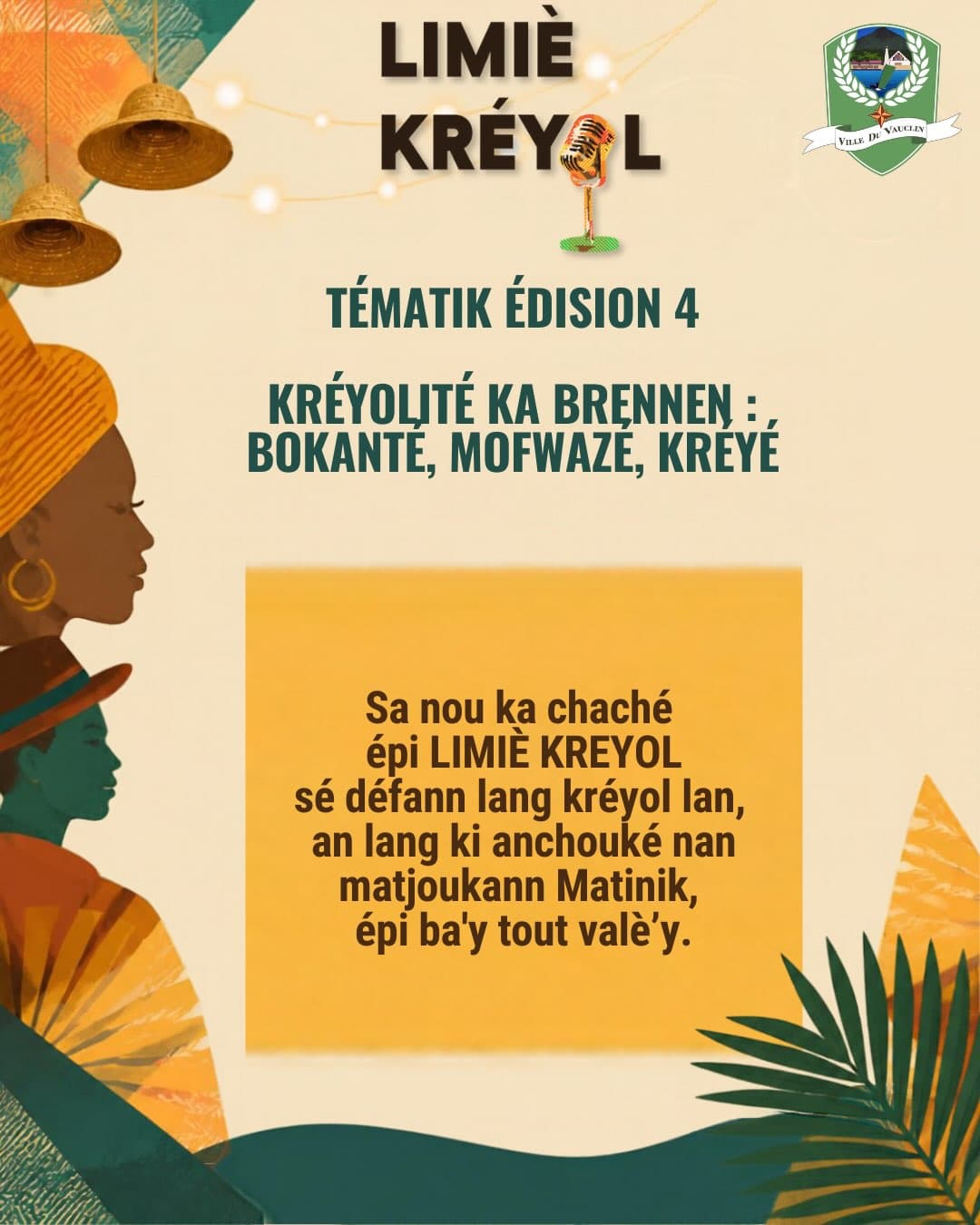
Visual presenting the goal of Limiè Kréyol 2026: bringing Creole speakers together around the history, value and future of Martinican Creole
Limiè Kréyol 2026 brings Creole speakers together around the future of the language © Limiè Kréyol

Limiè Kréyol 2026 also takes on a different rhythm. The organizers have chosen to alternate discussions with artistic performances. This choice speaks volumes. A language lives as much in conversations and songs as it does in debates about its recognition.

Visual explaining that Limiè Kréyol wants to defend the Creole language of Martinique and give it its full value
Limiè Kréyol wants to defend the Martinican Creole language © Limiè Kréyol

Three roundtable discussions to explore contemporary Creole identity

The three roundtable discussions at Limiè Kréyol 2026 will follow a structured sequence. First, we will examine how traditions are changing in Martinique. Next, we will compare the role of Creole in Caribbean societies. Finally, we will explore new forms of creative expression. Each roundtable will feature a moderator, four panelists, and time set aside for questions from the audience.

Are Carnival and the Yoles changing with the times?

From 10:00 a.m. to 11:30 a.m., the first discussion will explore the evolution of popular cultures through the lens of Carnival and the Tour des Yoles. What traditions, codes, and meanings are still being passed down? Are younger generations losing certain points of reference, or are they inventing new ways to keep these traditions alive?

The role of Creole as a language of connection and humor will be discussed, as will the influence of social media. When participants seek to film and share their experiences, does their relationship to the festival change? The discussion will also examine the role of tourism and commerce, questioning the meaning of traditions when they also become festival products.

What role does Creole play in Caribbean societies?

From 1:20 p.m. to 2:50 p.m., the second panel discussion will broaden the perspective beyond Martinique. It will examine the uses of Creole in everyday life, its transmission from parents to children, its presence in schools, and its recognition by institutions and government agencies.

Haiti, Saint Lucia, and Dominica are among the territories mentioned in the program. What can we learn from their experiences, while respecting the differences between these societies? Radio, television, the press, and social media will also be part of the discussions. This Caribbean dimension gives Limiè Kréyol 2026 a reach that extends beyond the territory of Martinique alone.

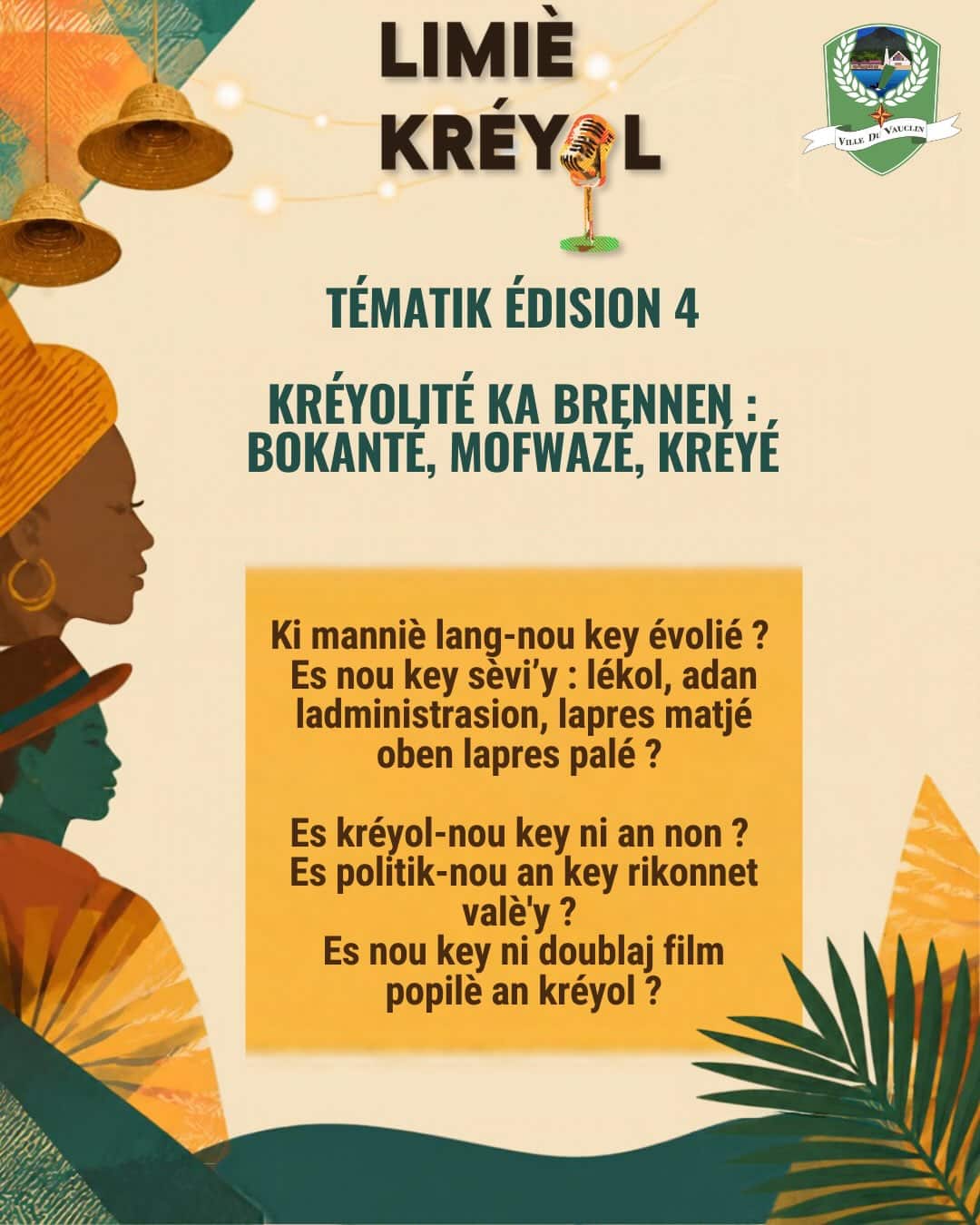
Visual listing the questions raised by Limiè Kréyol 2026 on how the Creole language evolves and is used
The questions raised by Limiè Kréyol 2026 on the future of the language © Limiè Kréyol

Creating in Creole: Passing It On or Reinventing It?

From 3:10 p.m. to 4:40 p.m., the third session will feature representatives from the creative community. Music, theater, literature, comedy, and education will be used to explore the areas where Creole continues to evolve. The discussion will focus on artists’ freedom, the audiences they address, and the transformations of the language.

To what extent can we adapt our customs without breaking with our roots? The role of schools, cultural institutions, and the media will also be examined, as well as the mixing of languages and the new codes used by younger generations.

Limiè Kréyol 2026: The Complete Schedule for November 7

Throughout the day, discussions will alternate with short musical and comedy performances. Topics suggested for the comedians include the shift between Creole and French, intergenerational relationships, social media, Carnival, the Yoles, and the customs of Martinican society. Here is the schedule provided by the organizers.

ScheduleMain Program
9:45 a.m. to 10:00 a.m.Welcome and musical opening
10:00 a.m. to 11:30 a.m.Roundtable 1: The Evolution of Creole Cultures
11:30 a.m. to 11:50 a.m.First stand-up comedy set
11:50 a.m. to 12:10 p.m.Musical interlude
12:10 p.m. to 1:00 p.m.Entertained lunch, food service, and local artisans
1:00 p.m. to 1:20 p.m.Second stand-up comedy set
1:20 p.m. to 2:50 p.m.Roundtable 2: The Role of Creole in the Caribbean
2:50 p.m. to 3:10 p.m.Slam Interlude
3:10 p.m. to 4:40 p.m.Roundtable 3: Creation and Transmission
4:40 p.m. to 5:00 p.m.Third stand-up comedy set
5:00 p.m. to 6:00 p.m.Musical intermission and dinner
6:00 p.m. to 11:00 p.m.Bèlè evening and group closing ceremony
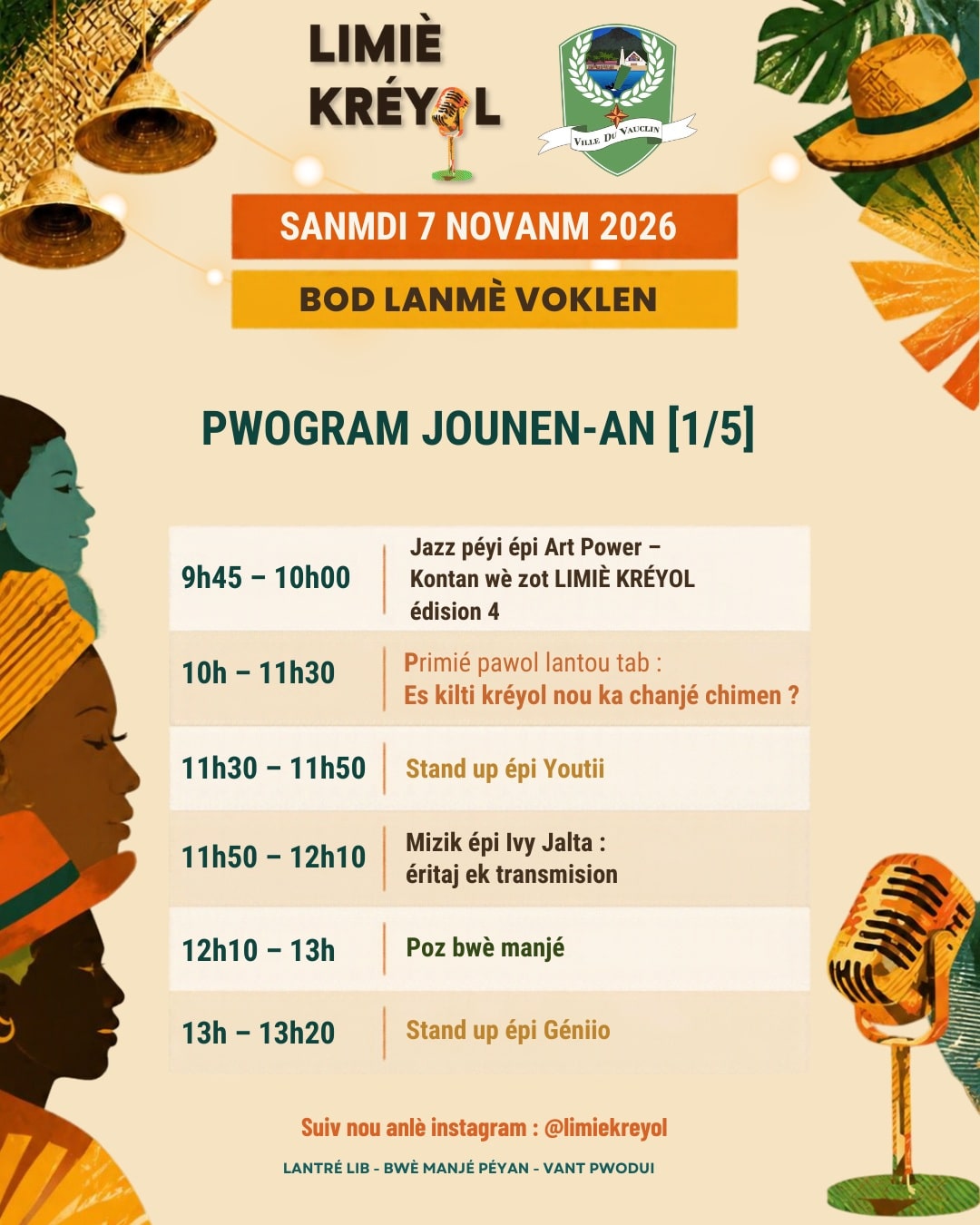
Morning schedule of Limiè Kréyol 2026 in Le Vauclin, from 9:45 a.m. to 1:20 p.m.
Morning schedule for November 7, 2026 © Limiè Kréyol
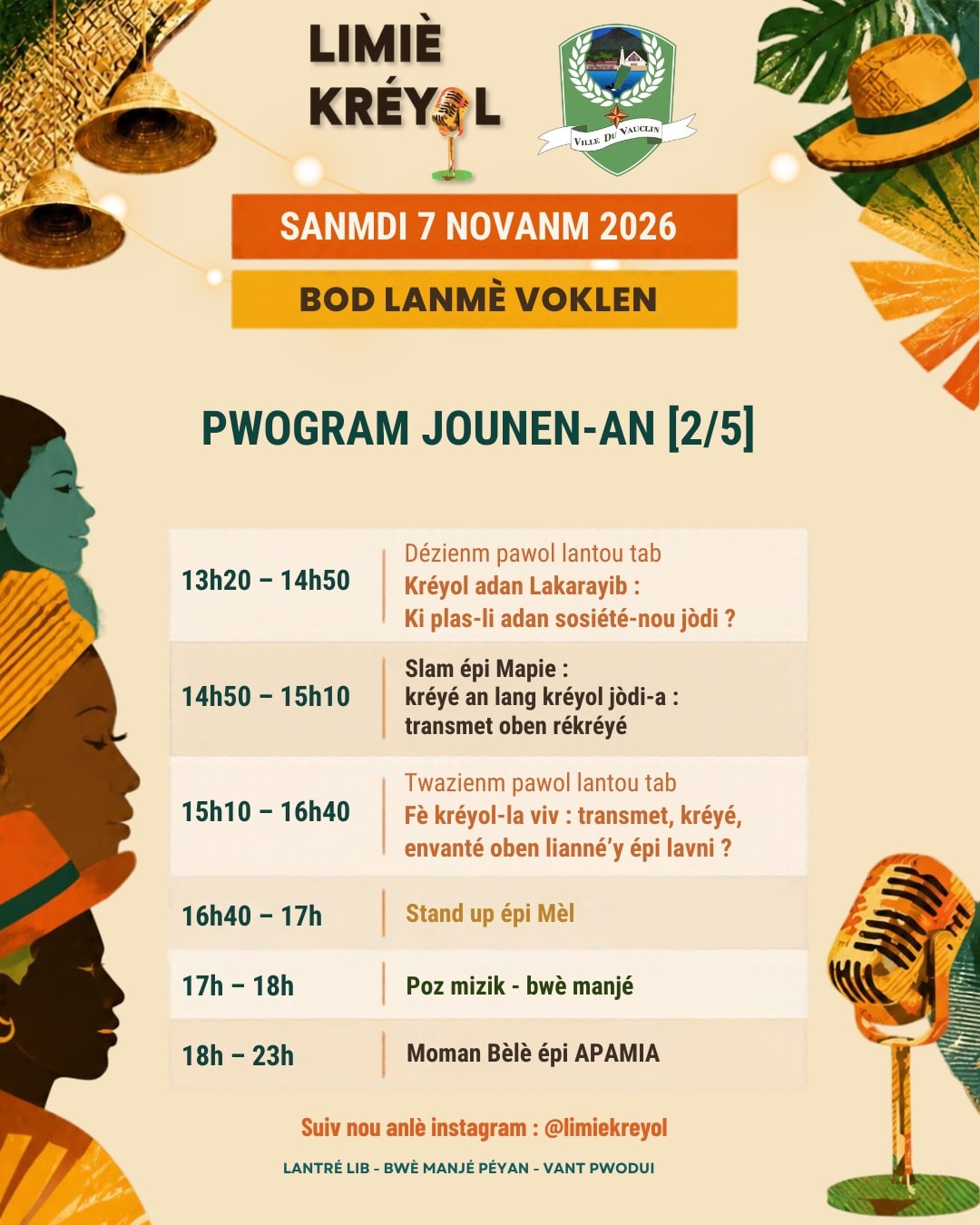
Afternoon and bèlè evening schedule of Limiè Kréyol 2026, until 11 p.m.
Afternoon and bèlè evening schedule © Limiè Kréyol

Workshops for kids and traditions to discover

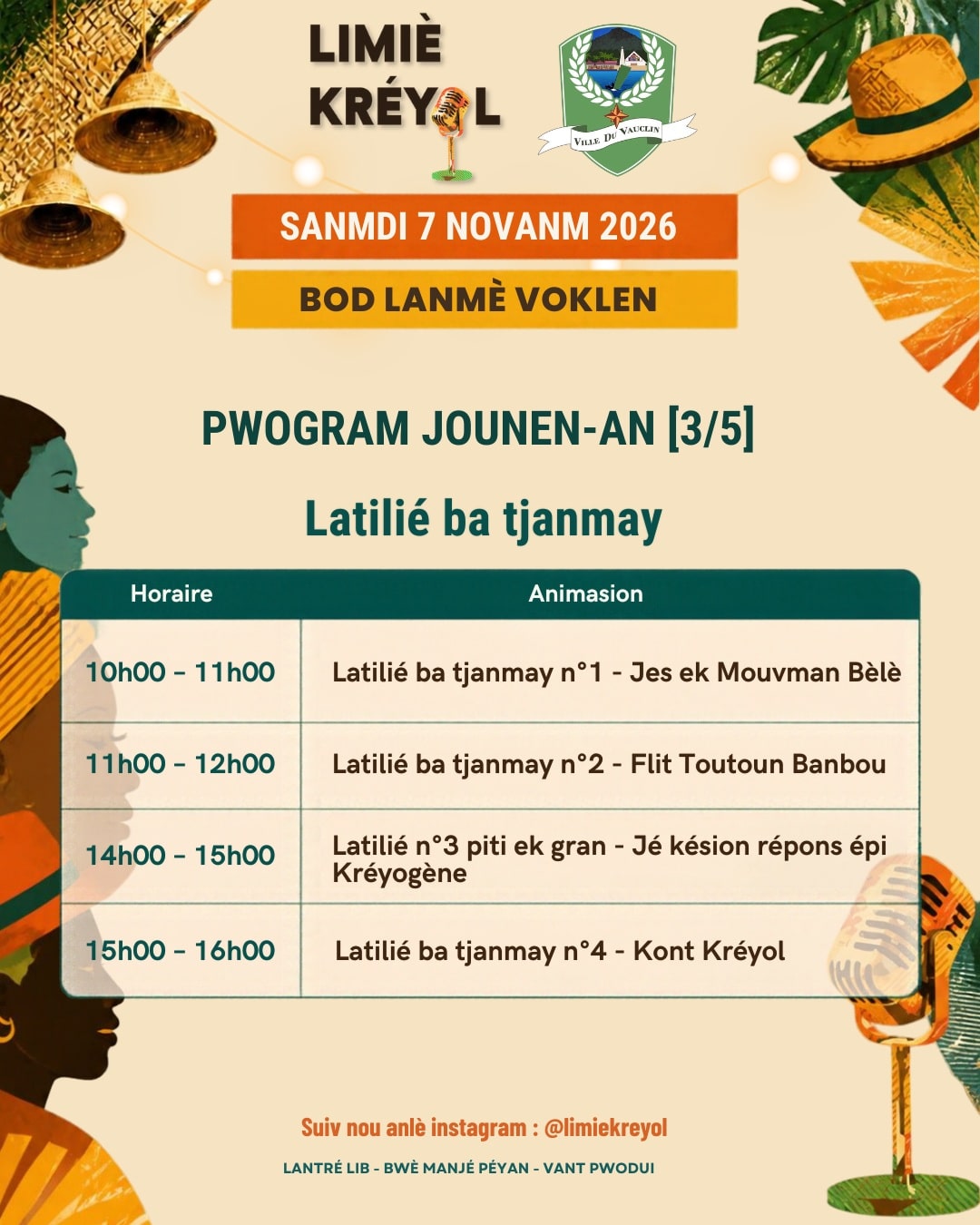
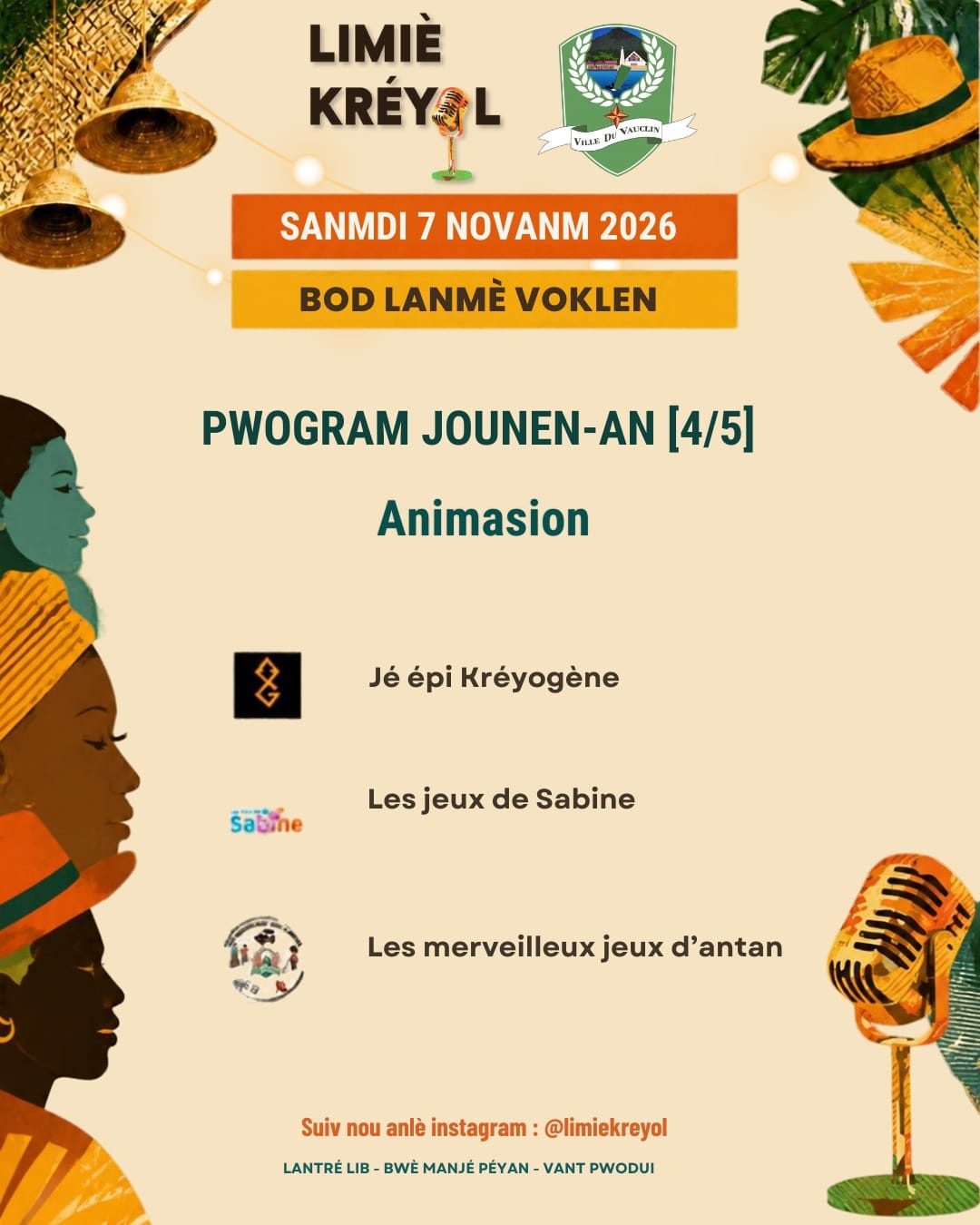
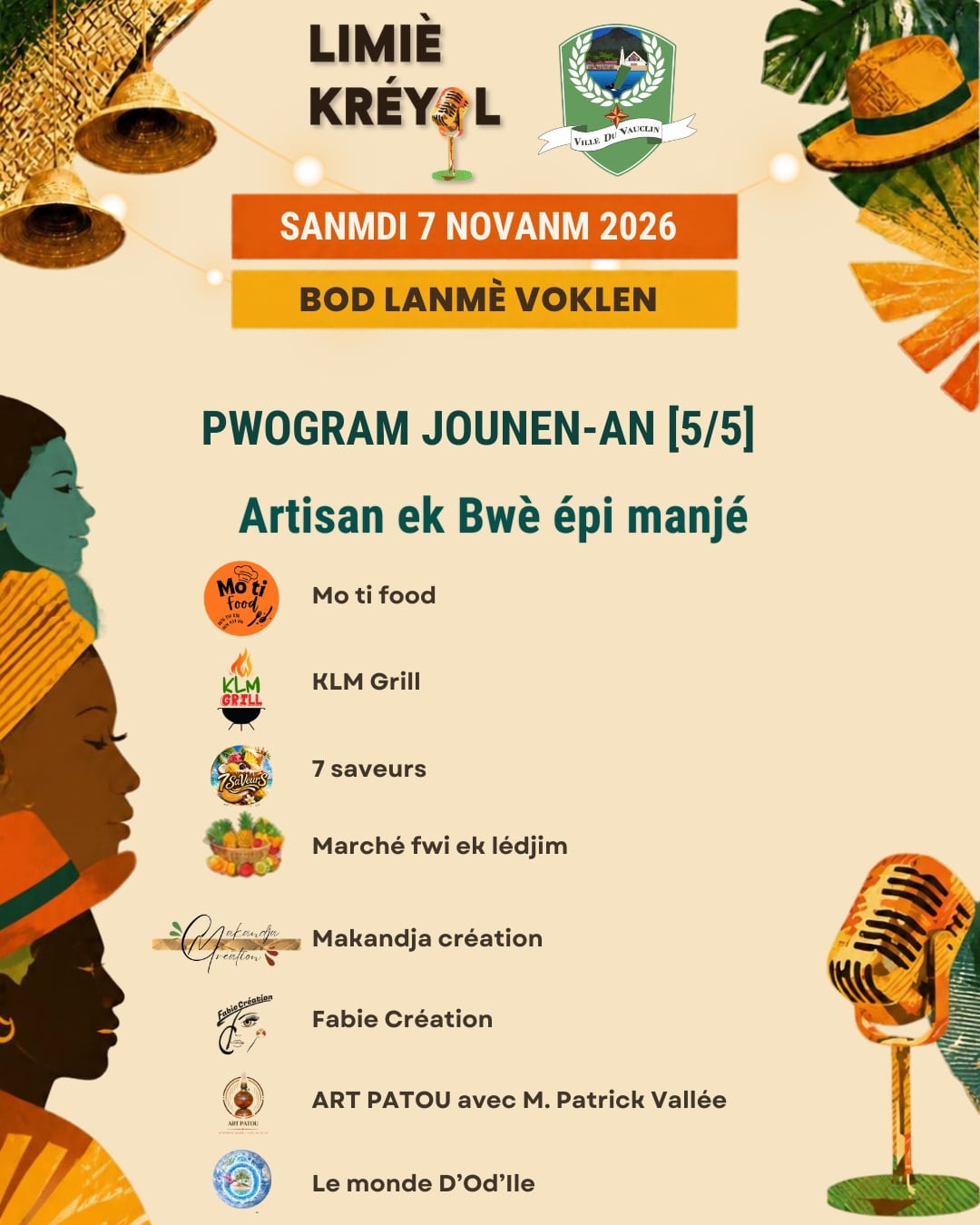
Limiè Kréyol 2026 also aims to welcome families. Four one-hour workshops are planned for children. A Chouval bwa will be available at the same time. The program also features traditional games with Kréyogène and “Les merveilleux jeux d’antan,” crafts, fruits and vegetables, as well as local cuisine. Visual aids will be provided during the roundtable discussions. These activities will allow younger children to discover the culture through play, while adults follow the discussions and performances.

HoursActivities for Children and Families
10:00 a.m. to 11:00 a.m.Kids’ Workshop 1
11 a.m. to 12 p.m.Kids’ Workshop 2
11 a.m. to 3 p.m.Chouval Bwa: Open all day
2:00 p.m. to 3:00 p.m.Kids’ Workshop 3
3:00 p.m. to 4:00 p.m.Children’s Workshop 4
Schedule of the four children’s workshops at Limiè Kréyol 2026, between 10 a.m. and 4 p.m.
The children’s workshops at Limiè Kréyol 2026 © Limiè Kréyol
Visual of the Limiè Kréyol 2026 activities: games with Kréyogène, Les jeux de Sabine and Les merveilleux jeux d’antan
Games and activities for families at Limiè Kréyol 2026 © Limiè Kréyol
Visual presenting the artisans, food stalls and fruit and vegetable market at Limiè Kréyol 2026
Artisans, food and local market at Limiè Kréyol 2026 © Limiè Kréyol

A bèlè evening to wrap up the day together

Starting at 6 p.m., the moman bèlè will add a whole new dimension to the event. The organizers aren’t presenting it as a final concert to watch, but as a gathering where everyone can participate, dance, learn, and share. After discussions about the future of Creole culture, that culture will come to life through shared movements and rhythms.

Limiè Kréyol 2026 will take place on Saturday, November 7, along the Vauclin waterfront, from 9:45 a.m. to 11:00 p.m. The times and activities listed above are from the tentative schedule and are subject to change. Ultimately, this fourth edition raises a question that extends beyond a single day: How can we ensure that Martinican Creole remains a language that is passed down, created, and, above all, kept alive?

Frequently asked questions

Limiè Kréyol 2026 is scheduled for Saturday, November 7, 2026, on the Vauclin waterfront in Martinique. The musical performances will begin at 9:45 a.m., according to the tentative schedule.

The fourth edition is dedicated to “Creolity in Motion: Transmitting, Transforming, Creating.” It explores transmission, evolution, and creation in the Martinican Creole language.

The program begins at 9:45 a.m. The three panel discussions are scheduled for 10:00 a.m., 1:20 p.m., and 3:10 p.m., with stand-up comedy and music between sessions. Four workshops for children, a Chouval bwa from 11:00 a.m. to 3:00 p.m., traditional games, crafts, and a bèlè evening from 6:00 p.m. to 11:00 p.m. round out the day.

Leave a Reply

Your email address will not be published. Required fields are marked *

More articles from RK

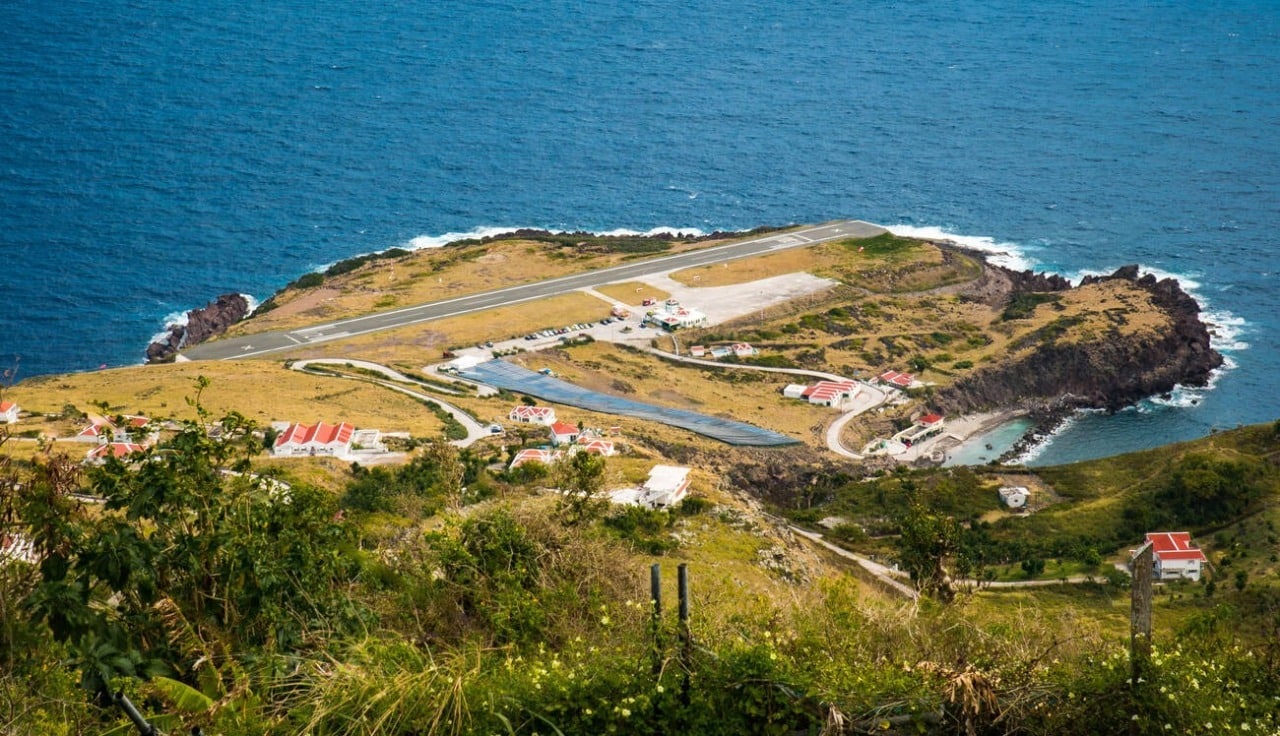
Aerial view of Juancho E. Irausquin Airport on Saba and its runway of about 400 meters between the hills and the sea
TOURISM
Tolotra

Juancho E. Irausquin Airport, a 400-meter runway to reach Saba

At Flat Point, on the island of Saba, the runway ends almost where the land meets the sea. About 400 meters long, it is part of Juancho E. Irausquin Airport, located in the Dutch Caribbean, southwest of Sint Maarten. Local authorities describe it as the airport with the world’s shortest commercial runway. But its story is not just about a record. It tells how a community established an air link where the terrain seemed to make it impossible. Why does Juancho E. Irausquin Airport have such a short runway? Saba is a small volcanic island covering about 13 square kilometers. Its steep slopes, cliffs, and scarce flat areas leave little room for infrastructure. It was at Flat Point, on the island’s coastline, that a runway was built. Official aeronautical data specify its exact length as 401 meters and its width as 18 meters. The figure commonly cited is therefore rounded.

Read More »
caribbean cinema
FILM & VIDEO
Tolotra

S10/10 – Stories of Caribbean Cinema, from Freda to Zion. Texts by Guillaume Robillard. Ciclic, 2026.

Ten episodes and more than sixty years of cinema. Since Cumbite in 1964, the series “Stories of Caribbean Cinema” has covered Cuba, Jamaica, Trinidad and Tobago, Guadeloupe, Martinique, Curaçao, Haiti, the Dominican Republic, and Antigua and Barbuda. For this final installment, Guillaume Robillard takes us to Haiti with Freda by Gessica Généus, and then to Guadeloupe with Zion by Nelson Foix. You are now watching the tenth and final episode of the series. The previous nine episodes are still available on Richès Karayib, so you can revisit the series from the beginning. 2021: HAITI – FREDA, BY GESSICA GÉNÉUS Female filmmakers are rare in Caribbean cinema. In addition to those already mentioned in this timeline, we can mention the Afro-Cuban Sara Gómez from Cuba, known for her docudrama In a way (In a certain way), released in 1977, was the very first film directed by a woman in this country,
Read More »

conTACT RK

we'd love to have your feedback on your experience so far

Join The List

Join our Richès Karayib community!  Sign up for our newsletter.

Want To Maximize Your Business Presence On Riches Karayib?

Complete the form to start the application