Félix Mérine, the embodiment of resilience

Félix Mérine

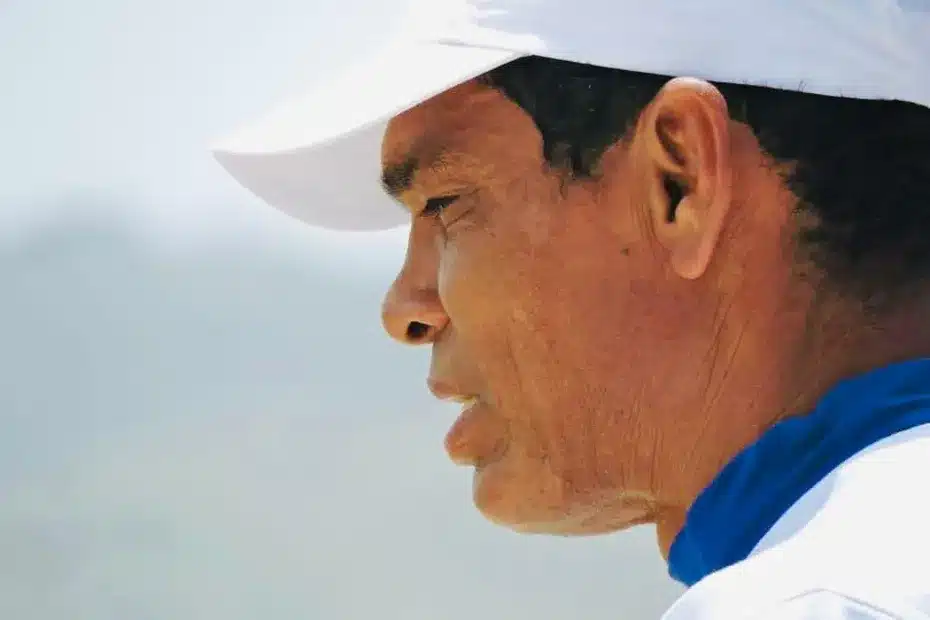
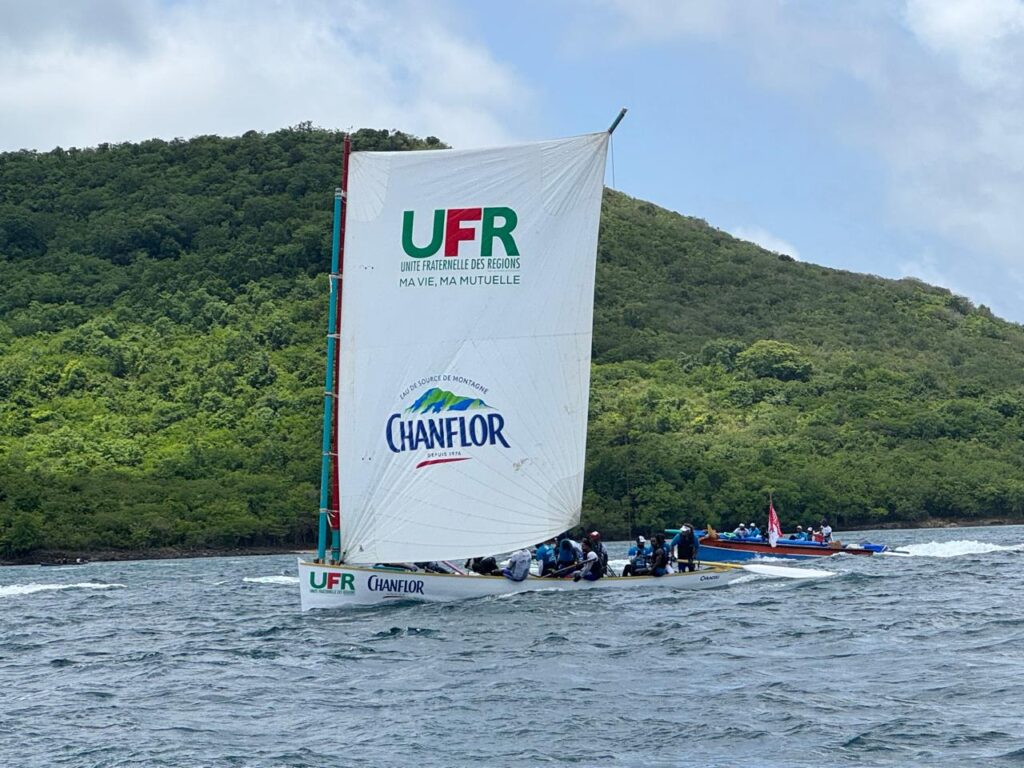
Félix Mérine grew up close to the water, in a house facing the sea. Even as a child, the yole (boat) was part of his daily life, without imagining that this traditional craft would become his lifelong companion. But it was much later, after the storms of life, that Félix Mérine came to understand the power of this craft. The yole didn’t just teach him how to sail, it gave him a path, a course, a reason to act. Today, this helmsman-turned-entrepreneur is dedicated to passing on what the sea has given him.

A child of the sea, forged by the waves

Félix Mérine grew up a stone’s throw from the sea, in Robert, in a house where water was part of everyday life. At a very young age, he discovered the world of the yole alongside his uncles. He didn’t immediately climb aboard – at first, he observed, learned and listened. He built small yoles on the street, helped wash the sails, and unknowingly took part in the life of the yole. This is where it all begins: in the repeated gestures, the exchanged glances, the silent respect for elders.

Félix Mérine
©Mady Aïssata Mérine

Adrift but not lost

At 16, Félix Mérine left school. “I didn’t listen to my mother,” he says bluntly. He entered a troubled period. Military service in Lyon had a profound effect on him. Discipline, respect, responsibility: he discovered strict rules that he applied without question.
8,000 kilometers away, his mother’s advice finally made sense.
On his return, his uncles took him back on a yole. This time, he took to it for good.

Félix Mérine
Sé pou la viktwa nou ka alé 💪🏼

Yole as a discipline, sport as a springboard

In 1987, he founded his association and imposed strict rules: regular training, zero alcohol, team spirit and respect for each other. It took time, but the results followed. The Yole became more than a sport: it became a school.

The Yole saved my life,” says Félix Mérine.

What he learns on the water, he applies to his business. Today, he runs a transport company active in the Caribbean, with over 60 employees. What was passed on to him, he in turn passes on. “What my elders passed on to me, I have a duty to pass on in my turn,” he says.

Félix Mérine
©Jérôme DESERT PASSIFOTO 1
Félix Mérine
©Jérôme DESERT PASSIFOTO
Félix Mérine
©Jérôme DESERT PASSIFOTO

Passing on to build tomorrow

Now retired from competitions, Félix Mérine devotes his time to passing on his skills. He supervises young people at risk, shares his experience and is in charge of a rehabilitation project through the Yole for prison inmates. For him, every effort counts, and can change everything. “Nothing is lost,” he says gravely, “even when everything seems to be.” What he has received from his elders has been decisive, and he knows that a well-supported young person can also find his way.

Félix Mérine’s story is that of a man who found in the sea a framework, a meaning, a strength. Today, he acts so that others can, in turn, move forward. Because sometimes, all it takes is a reference point, a listening ear, or a boat – to get things moving again.

Strong quote:

95% of what I have today, the yole gave it to me.

Watch the exclusive video interview

Leave a Reply

Your email address will not be published. Required fields are marked *

More articles from RK

Ida Does
FILM & VIDEO
Tolotra

Ida Does: Filming Affiba to Bring Forgotten Lives to Light

On August 31, 1896, in Paramaribo, Affiba Maria Magdalena Dompig rode through the city in a horse-drawn carriage, surrounded by several generations of her family. The photograph of that moment, now housed at the Rijksmuseum, became—130 years later—the starting point for*Affiba — The Eldest Woman of Paramaribo*, the new documentary by Ida Does. Through this story, the Surinamese-Caribbean director continues her ongoing work: looking at archives in a new light and bringing lives that have long remained on the margins back into the spotlight. It is in this space between traces and memory that Ida Does works. Affiba, a Face That Transcends Time In the photograph, Affiba is looking at the camera. Standing beside her are two of her children, a granddaughter, and a great-granddaughter. The Rijksmuseum dates the scene to August 31, 1896, and notes that Affiba was considered the oldest woman in Paramaribo at the time. The photographer

Read More »
Caribbean Music Awards
HISTORY & HERITAGE
Tolotra

2026 Caribbean Music Awards: Patra, Calypso Rose, Alan Cavé, and Shyne to Be Honored

Four artists, four regions, four journeys. On September 19, 2026, the National Academy for the Performing Arts in Port of Spain will host a ceremony at which Patra, Calypso Rose, Alan Cavé, and Shyne will each receive a special award. The 2026 Caribbean Music Awards will bring them together on the same stage, but their journeys tell different stories about Caribbean music and its ability to transcend borders. One Scene, Four Legacies The announcement made by the Caribbean Music Awards highlights four distinct honors. Patra will receive the Lifetime Achievement Award. Calypso Rose will be honored with the Elite Calypso Honors. Alan Cavé will receive the Elite Konpa Honors, while Shyne will be awarded the Global Ambassador Award. This selection almost maps out the region’s musical landscape. Jamaica, Trinidad and Tobago, Haiti, and Belize are thus represented by artists whose careers have taken very different paths. More than just a

Read More »
Larimar
HISTORY & HERITAGE
Tolotra

Larimar: From Barahona to the World—A Stone That Has Become Part of Our Cultural Heritage

In Barahona, in the southwestern part of the Dominican Republic, a blue stone bridges geology, craftsmanship, and national identity. Larimar is not only prized for its color: its history is tied to a specific region, to those who mine it, and to those who craft it. From the Sierra de Bahoruco to the jewelry workshops, its journey illustrates how a local resource can become cultural heritage, a symbol, and a cause for conservation. In Barahona, a stone begins its journey In 1974, Dominican artisan Miguel Méndez became interested in a blue stone known in the Barahona region. Together with geologist Norman Rilling, he helped identify its deposit and develop its use in jewelry. Méndez also gave it its name: “Larimar,” a combination of “Larissa,” his daughter’s first name, and “mar,” the Spanish word for “sea.” Behind this name, which has become familiar in the Dominican Republic, lies a history deeply

Read More »

conTACT RK

we'd love to have your feedback on your experience so far

Join The List

Join our Richès Karayib community!  Sign up for our newsletter.

Want To Maximize Your Business Presence On Riches Karayib?

Complete the form to start the application