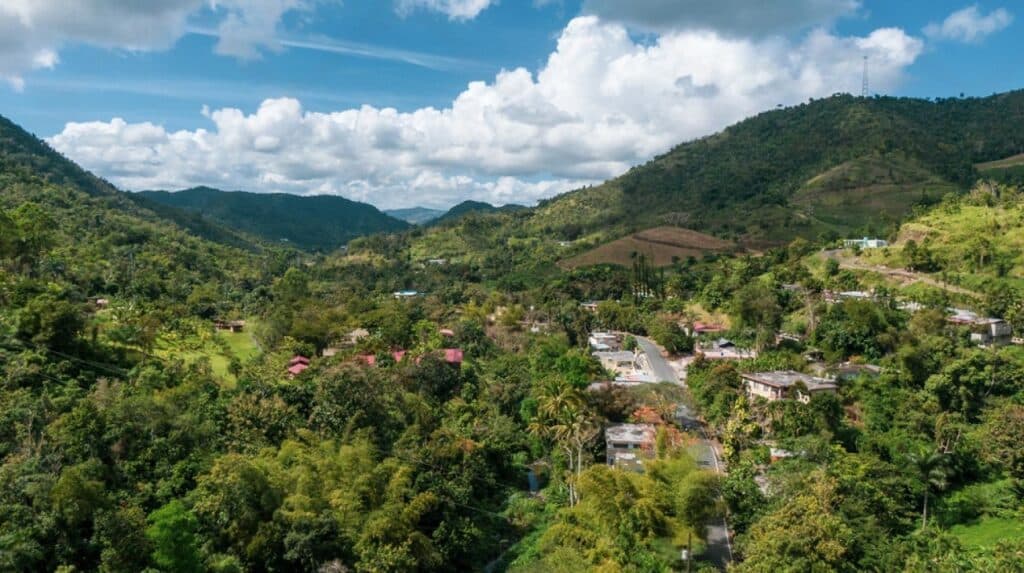
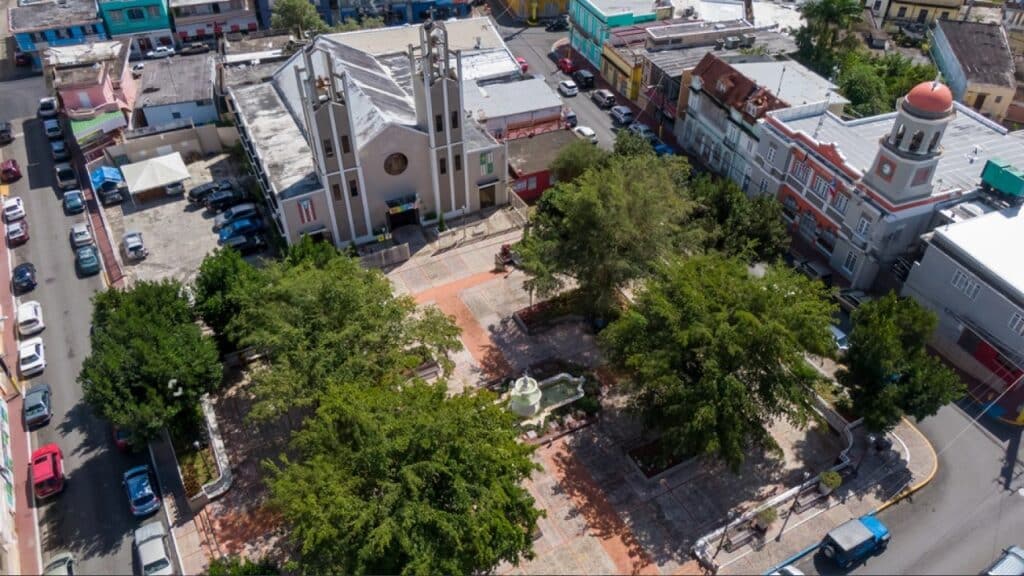
Some 40 kilometers by road from San Juan, in the Cordillera Central, Comerío doesn’t have the visibility of Puerto Rico’s major coastal destinations. The town has fewer than 19,000 inhabitants according to the latest US estimates, but it has a strong nickname: la Cuna de Trovadores, the cradle of trovadores. Every June, this mountain town turns its reputation into a cultural event with the Festival del Jíbaro Comerieño.
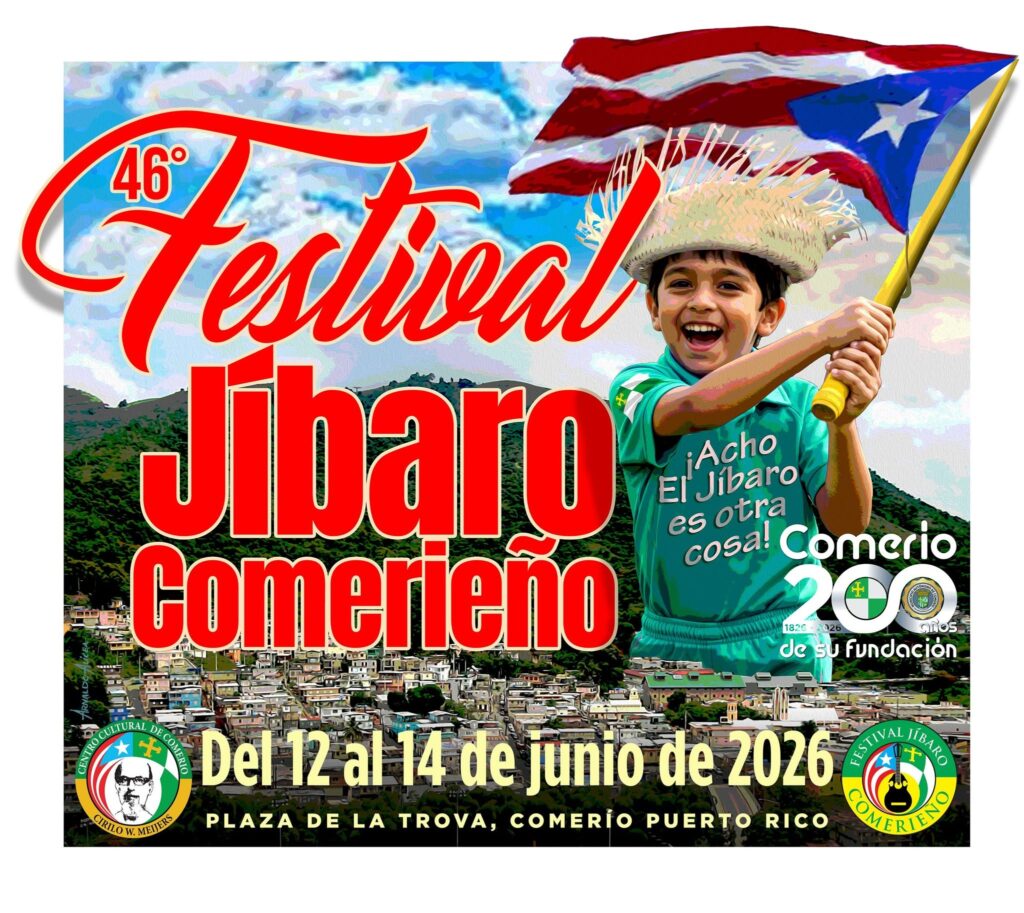
2026 edition confirmed
The Festival del Jíbaro Comerieño returns from June 12 to 14, 2026 for its 46th edition. This year’s event takes on a special significance, as Comerío also marks the 200th anniversary of its foundation. The 2025 edition of the Festival del Jíbaro Comerieño took place from June 12 to 15 in the Plaza de la Trova, with a program combining crafts, workshops, trovadores competitions, typical food, jíbaras masses, concerts and meetings around the decima. The format may vary from year to year, but the logic remains the same: to turn the public square into a space for transmission.
La trova, a language to be learned
In Comerío, tradition is not limited to festival evenings. The Escuela Cuna de Trovadores trains children and teenagers in the improvisation of the decima, a poetic art based on stanzas of ten octosyllabic verses. In the trova, one singer improvises opposite another, on a proposed theme, with a memory for the language and a precise sense of rhythm. When young people aged 8 to 16 learn this exercise, a part of rural Puerto Rican culture is passed on from one generation to the next.
What it means to be jíbaro
The word jíbaro deserves some clarification. Historically, it refers to the rural peasant of the Puerto Rican mountains, associated with the communities of the island’s interior. This figure is linked to a long cultural cross-fertilization between indigenous, Spanish and African heritages, in a society marked by centuries of Spanish colonization. Jíbara culture developed in the valleys and heights of the Cordillera Central, with its own musical forms, instruments and social codes.
The cuatro plays an essential role in this tradition. It’s not a six-string guitar, but a Puerto Rican instrument similar to the guitar, generally with five double strings, i.e. ten strings. It accompanies the música jíbara, in particular the seis and aguinaldo, two central forms of this repertoire. Guitar, güiro and other instruments of the conjunto típico are often added to these sounds. In the Festival del Jíbaro Comerieño, this sound memory remains linked to practice, not just to the stage.
Rehabilitating rural culture
This culture has not always been valued. In the 20th century, as Puerto Rico modernized and many Puerto Ricans moved to New York, Chicago, Orlando and other American cities, the Jíbara identity was sometimes portrayed as rural, poor or backward-looking. But it was much more: a relationship with the land, with words, with music and with the dignity of mountain communities.
The Festival del Jíbaro Comerieño is part of this rehabilitation effort. Its history is linked to the Centro Cultural Cirilo W. Meijers and local initiatives to support Comerieño culture, particularly around the decima. What could have remained a municipal festival has become a reference point for understanding how Puerto Rico protects a part of its rural identity without freezing it.
A collective stage at the Plaza de la Trova
The Festival del Jíbaro Comerieño program is divided into several phases. During the day, the spotlight is on artisans, workshops, kiosks and typical gastronomy, with Puerto Rican dishes such as lechón asado, arroz con gandules, pasteles and alcapurrias. In the evening, the square turns to trovadores competitions, where improvised speech becomes a moment of tension, listening and recognition. Concerts extend this memory with groups committed to the jíbaro repertoire.
Among them, Ecos de Borinquen occupies an important place. The group has been nominated for Grammy Awards and Latin Grammy Awards for its work on jíbara music. Smithsonian Folkways has also released major recordings by the group, helping to spread this tradition beyond Puerto Rico.
A small town, a bridge to the diaspora
This is precisely where the Comerieña uniqueness lies. Many Caribbean territories have folk festivals. Through the Festival del Jíbaro Comerieño, Comerío articulates a popular festival, an oral competition scene, a school of transmission and a musical recognition that goes beyond the island. For a town with a population of less than 19,000, this continuity carries real weight.
The 2026 context adds an extra dimension. June is also Caribbean American Heritage Month in the United States. In 2024, Pew Research Center estimated that there were 6.1 million people of Puerto Rican origin living in the 50 U.S. states and Washington, D.C. The Festival del Jíbaro Comerieño thus acts as a bridge between the Puerto Rican mountain and a diaspora that often keeps music, words and gestures as proof of belonging.
Protecting the transmission
The future poses several questions. How can trova be passed on to children who are growing up with social networks, reggaeton and faster-paced cultural forms? How can we maintain a popular festival in a Puerto Rican economy weakened by hurricanes Maria in 2017 and Fiona in 2022, demographic decline and successive departures? How can we prevent folklore from becoming mere decoration, stripped of its requirements and its memory?
One thing remains. As long as Comerío trains young people in the decima, as long as the Plaza de la Trova brings generations together, and as long as mountain voices continue to respond in music, jíbara culture has a future. The Festival del Jíbaro Comerieño thus reminds us of a simple Caribbean truth: traditions survive not because they are exhibited, but because they are practiced.
The Festival del Jíbaro Comerieño takes place in Comerío, a municipality in Puerto Rico’s Cordillera Central, some forty kilometers by road from San Juan. The event takes place around the Plaza de la Trova, a symbolic location for this town nicknamed the Cuna de Trovadores, the birthplace of Puerto Rican singer-improvisers. This geographical location is important, as it places the festival in the Puerto Rican mountains, where jíbara culture has found one of its strongest roots.
The Festival del Jíbaro Comerieño is important because it focuses on jíbara culture, long associated with rural communities in the interior of Puerto Rico. Through the trova, decima, cuatro and trovadores competitions, the festival doesn’t just showcase a tradition: it makes it practiced, transmitted and heard by several generations. Its cultural interest also stems from its link with the Escuela Cuna de Trovadores, which trains young people in poetic and musical improvisation.
The Festival del Jíbaro Comerieño 2026 is scheduled for June 12-14 in Comerío. The event typically features trovadores competitions, concerts, workshops, handicrafts, Puerto Rican food stalls and moments dedicated to the decima. For visitors and the Puerto Rican diaspora alike, it’s a way of understanding Jíbara culture in its native territory, between music, language, rural memory and family transmission.