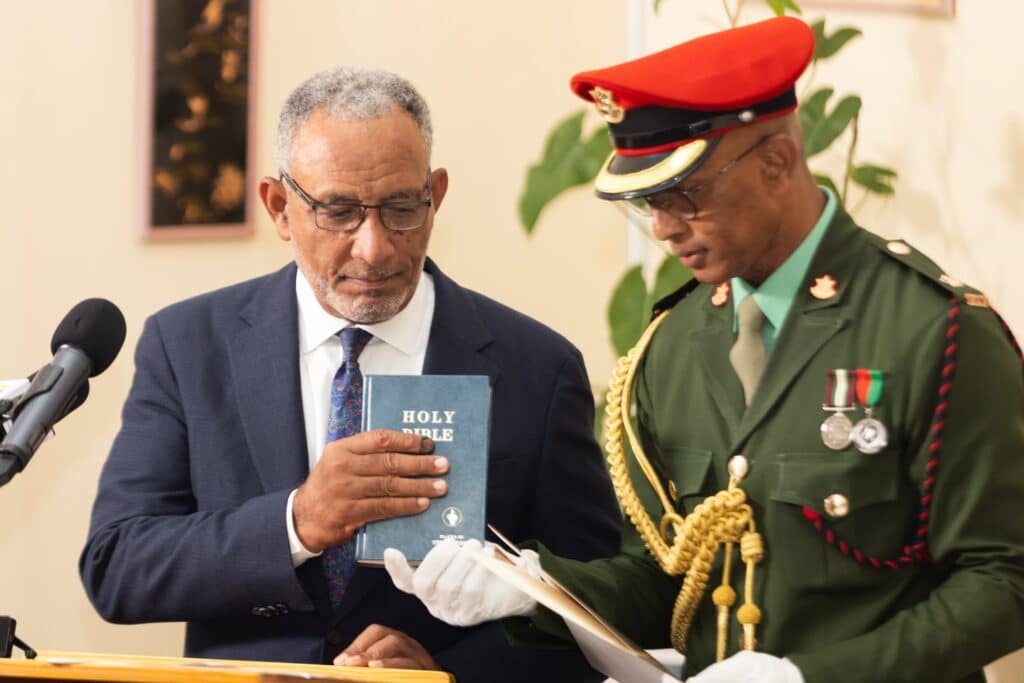
For more than two decades, political life in Saint Vincent and the Grenadines had been moving forward with the same face, the same party, the same course of action. The recent election upset this balance in a single vote. With an unprecedented result – 14 seats out of 15 – the New Democratic Party (NDP) took power and appointed Godwin Friday as Prime Minister.
For this small Caribbean state, it’s a rare moment: a real political shift in a country accustomed to continuity.From December 5 to 13, Atelier Robinot is hosting an exhibition that is as moving for its beauty as for what it reveals. With La mémoire de l’eau, Roseman Robinot, a Guyanese artist born in Martinique, brings together twenty works created between 1996 and 2019. Through them, she explores the way in which landscapes, seas and shores retain traces of a history that has often been overlooked or ignored.
A clear victory after 23 years of continuity
The Unity Labour Party (ULP), in power since 2001, failed to resist the wave of change. The outgoing party went from a solid majority to a single seat. The only member of parliament to be re-elected is Ralph Gonsalves, a leading figure in St. Vincent and the Grenadines and head of government for over twenty years. The reason for this sudden fall was a number of factors that accumulated over time: the exceptional length of Gonsalves’ mandate, the gradual lassitude of part of the population, the consequences of the vaccination mandate during the pandemic, and communication that was deemed too weak during the campaign.
This does not detract from the major role he played. Gonsalves steered Saint Vincent and the Grenadines through the global financial crisis, the Covid-19 pandemic, the eruption of La Soufrière, Hurricane Beryl and several severe weather events. Many recognize this record. However, this political experience was not enough to stop the desire for renewal expressed at the ballot box.
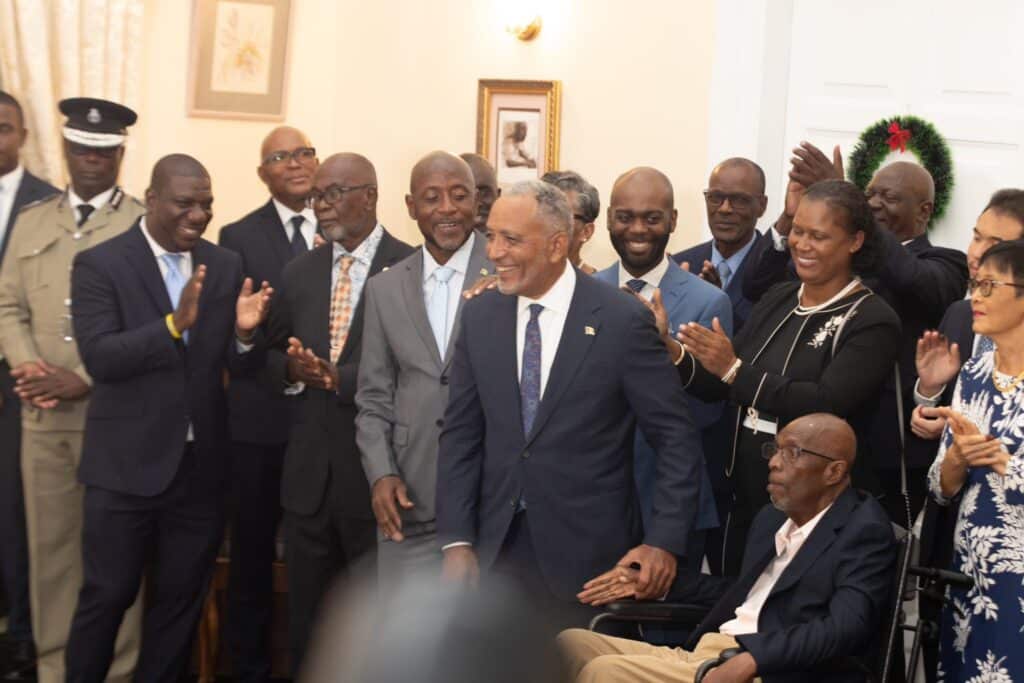
Godwin Friday: the arrival of new leadership
At 66, Godwin Friday now carries a mandate of unprecedented scope. Trained as a lawyer and a member of parliament since 2001, he took over as head of the NDP in 2016. Over the years, he has rebuilt the party’s image, consolidated its territorial roots and proposed a credible alternative. His victory reflects both the desire for change and the confidence placed in his political style: calm, direct, close to the ground.
During the campaign, the NDP focused on clear priorities: job creation, better wages, a tough response to crime, improved healthcare and investment in infrastructure. These commitments resonated strongly, particularly with young adults. The electorate sees in Godwin Friday a leader likely to bring concrete solutions to problems now at the heart of everyday life in Saint Vincent and the Grenadines.
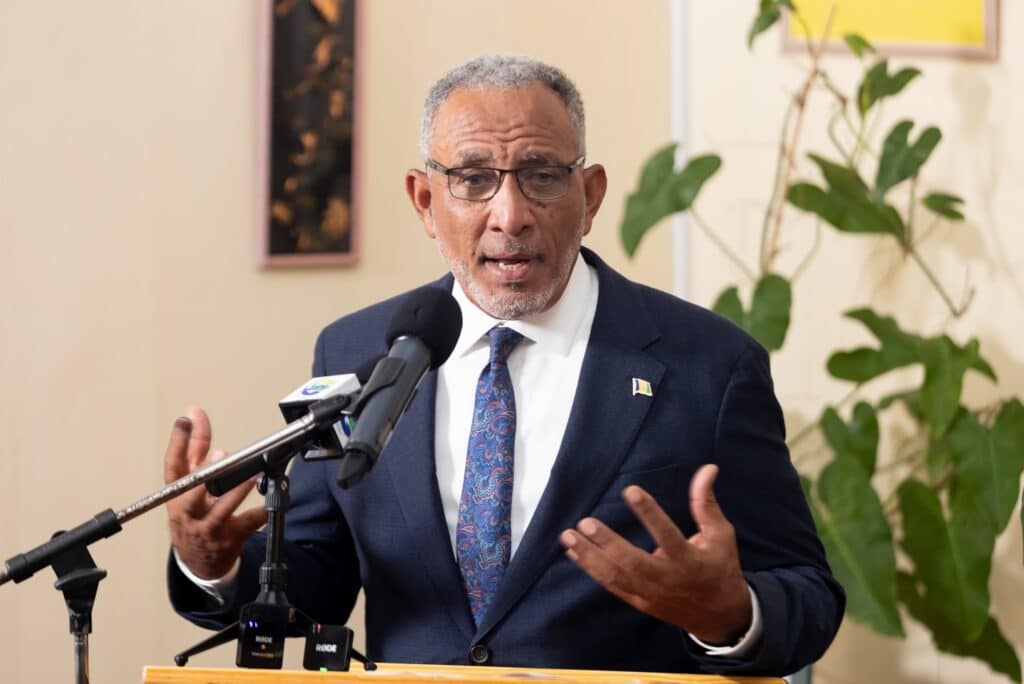
A closely watched transition in the Caribbean
The announcement of the results quickly spread beyond the country’s borders. Jamaican Prime Minister Andrew Holness congratulated Godwin Friday, underlining the importance of this moment for the Vincentian people and recalling the close ties between the two nations. In the region, political changes often influence the balance of power. That’s why this changeover in Saint Vincent and the Grenadines is being closely watched by members of the OECS and Caricom.
Internationally, Taiwan immediately welcomed the victory. The island has long enjoyed active cooperation with Saint Vincent and the Grenadines in the fields of health, infrastructure and education. Nevertheless, the subject remains sensitive: in the past, the NDP had raised the possibility of severing diplomatic relations with China. But this idea does not feature in the party’s latest manifesto, leaving the door open to cautious continuity.
A country waiting for concrete answers

Above all, the political transition ushers in a period of high expectations. Godwin Friday will have to respond rapidly to the challenges identified by the population:
– employment, essential for stabilizing the social situation;
– crime, which has become a major concern;
– access to healthcare, weakened by budget constraints ;
– infrastructure, which needs to be strengthened in a country exposed to climate risks.
The NDP has also indicated its willingness to consider a citizenship by investment program, already adopted by several neighboring states. Saint Vincent and the Grenadines is currently the only independent OECS nation not to offer such a scheme. The debate promises to be a sensitive one, but it could offer significant financial leverage if the government chooses to move in this direction.

A new era to write
The country is entering a turning point. After 23 years of political stability, the changeover ushered in a new dynamic. Godwin Friday has a strong mandate and an almost total majority. His ability to transform this confidence into concrete progress will define the trajectory of Saint Vincent and the Grenadines in the years to come.
FAQ
Godwin Friday is a Vincentian lawyer and politician, Member of Parliament since 2001 and leader of the New Democratic Party since 2016. He became Prime Minister following the NDP’s landslide victory in the general election.
Because the New Democratic Party won 14 of the 15 seats in Parliament, ending 23 years of governance by the Unity Labour Party. A transition on this scale is rare in the country’s political life.
Priorities include creating more jobs, fighting crime, strengthening infrastructure, improving access to healthcare and considering a “citizenship by investment” program.