Oil Down, Grenada’s national dish, fits into a single pot but represents much more than just a meal. Breadfruit, callaloo, coconut milk, dumplings, meats, and spices all simmer together in it. As the liquid evaporates, something else takes shape: a way of cooking, of passing on traditions, and of coming together.
A pot that brings people together
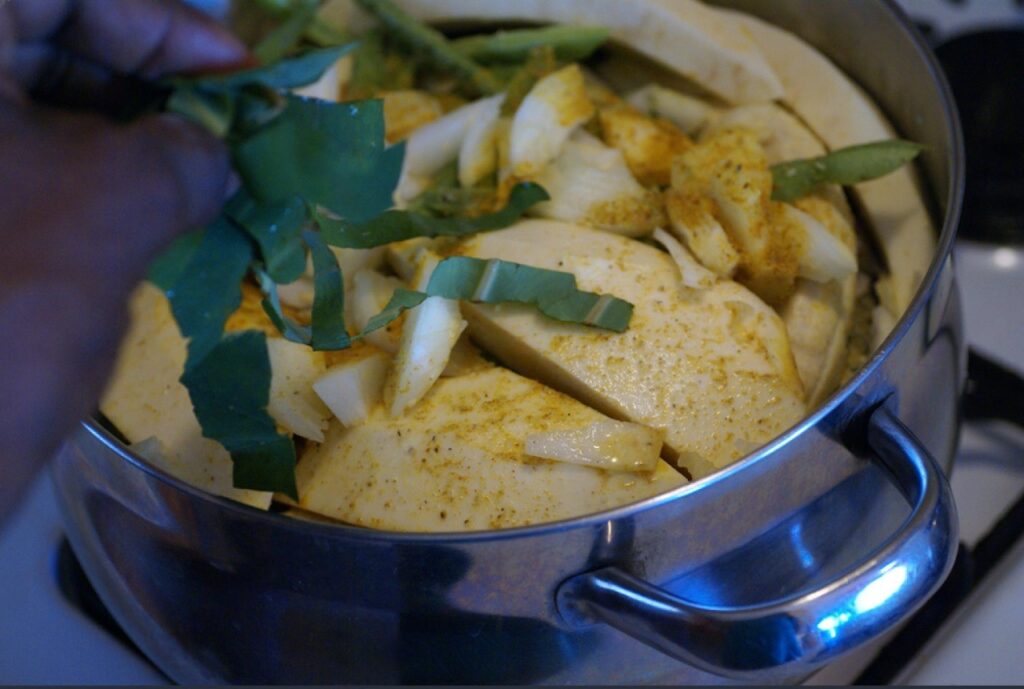
It all starts with a simple gesture. We fill the pot in layers. The breadfruit takes its place alongside the vegetables, greens, dumplings, and pieces of meat. The seasoned coconut milk envelops the whole mixture before it’s cooked slowly, without stirring. This arrangement is just as important as the ingredients. Preparing this dish isn’t just about combining ingredients. It’s about creating a dish where each element cooks alongside the others and gradually absorbs the flavors around it. The pot then becomes a reflection of the meal itself. Multiple ingredients, multiple journeys, but a single dish to share.
Grenada's national dish
In Grenada, Oil Down holds a special place. It is recognized as the country’s national dish and remains closely associated with home-cooked and community meals. However, referring to it as a national dish does not mean it is a fixed recipe. One family may prefer certain meats, while another might add salted fish, crab, or conch. Vegetarian versions also exist. The details may vary, but the essence remains the same. That’s what makes Oil Down so interesting. Its identity doesn’t rest on a fixed list of ingredients. It stems from a way of preparing, layering, cooking, and sharing.
A name that says it all
The name “Oil Down” describes what happens during cooking. The coconut milk reduces. The ingredients absorb the liquid, while the coconut’s natural oil remains in the pot. In the end, therefore, it is not a broth. The cooking process has concentrated the flavors and transformed the dish’s texture. This detail may seem simple, but it speaks volumes. The name isn’t a passing fad or a decorative label. It describes a specific culinary technique, visible right there in the pot.
Ingredients with Many Stories to Tell
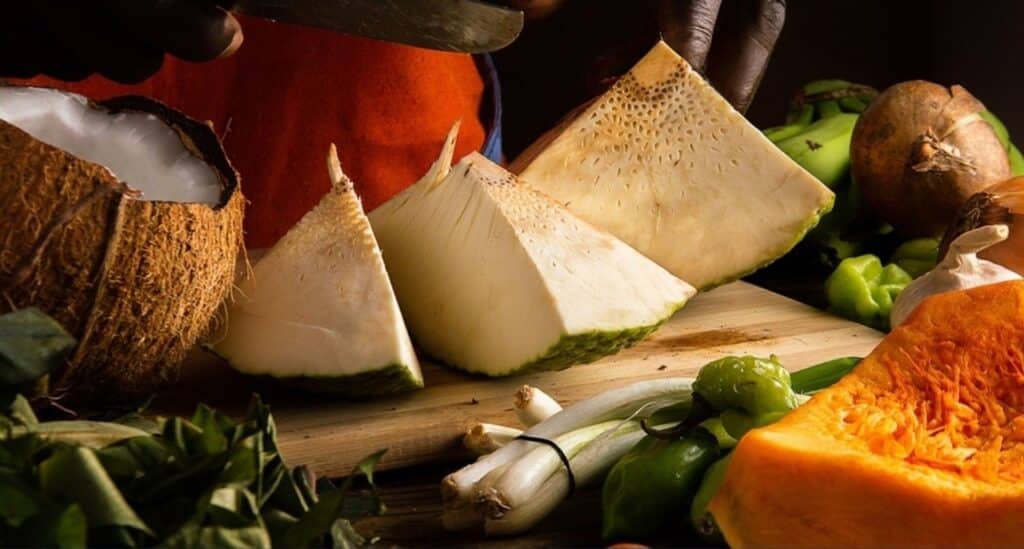
Looking at this pot is also like taking a journey through part of Grenadian history via its ingredients. Callaloo and dasheen trace back to crops that were grown in the region before European colonization. The breadfruit tells a different story. Native to the Pacific, it was introduced to the Caribbean during the colonial period to provide a low-cost food source for enslaved people.
Turmeric, often called “saffron” locally, opens another door. Its presence points to South Asian migration to the region following emancipation. Thus, ingredients that share neither the same origin nor the same historical period find their way into the same pot. Oil Down does not tell a single story. Rather, it shows how Grenada has transformed diverse heritages into a culinary tradition that has become deeply rooted in the local culture.

A Passion for Sharing Knowledge
But perhaps the most striking aspect of the dish comes to light when it’s being prepared. An Oil Down is perfect for large gatherings, family reunions, and shared moments. Everyone can participate, bring an ingredient, keep an eye on the cooking, or wait around the pot. That’s when cooking becomes a way of passing down traditions. A mother demonstrates a technique. A child watches the order of the layers. A new generation slightly modifies the recipe without erasing what they’ve inherited. Oil Down thus continues to exist because it embraces variations. It doesn’t survive despite family differences it thrives because of them.
What Granada Puts in Its Pot
At its core, Grenadian cuisine is less about a specific recipe than it is about a way of sharing a common heritage. Breadfruit, coconut milk, leaves, spices, and protein sources may vary from one pot to the next, but the collective spirit remains the same.
Perhaps that is the true power of Oil Down. It brings together history, local produce, and family memories in a single dish, then transforms all of that into a shared meal. And while every family may have its own way of preparing it, one question remains: What must remain for an Oil Down to continue, generation after generation, to tell the story of Grenada?
Oil Down is Grenada’s national dish. It typically combines breadfruit, callaloo, coconut milk, dumplings, spices, and various protein sources in a single pot. The recipe varies from family to family.
Oil Down is more than just a meal. Its preparation is tied to sharing, family gatherings, and the passing down of traditions. Its ingredients also reflect various periods and influences in Grenadian history.
The name “Oil Down” comes from the way it’s cooked. The coconut milk gradually reduces, the ingredients absorb the liquid, and the coconut’s natural oil remains in the dish.