In Belize, hudut is one of the dishes most closely associated with the Garinagu, the Garifuna people who live on the country’s southern coast. Behind this coconut broth and pounded plantain lies a history of deportation, a journey across the sea, and a national holiday on November 19.
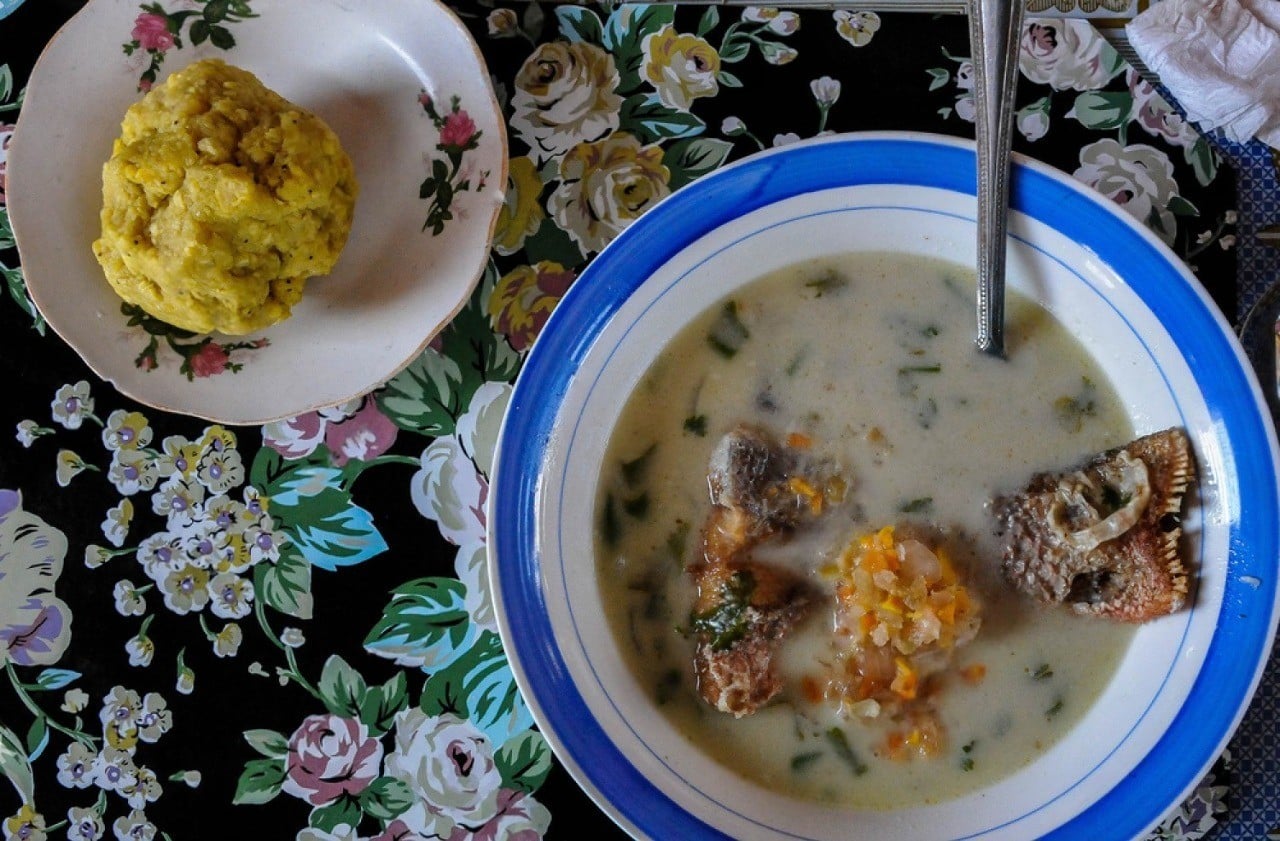
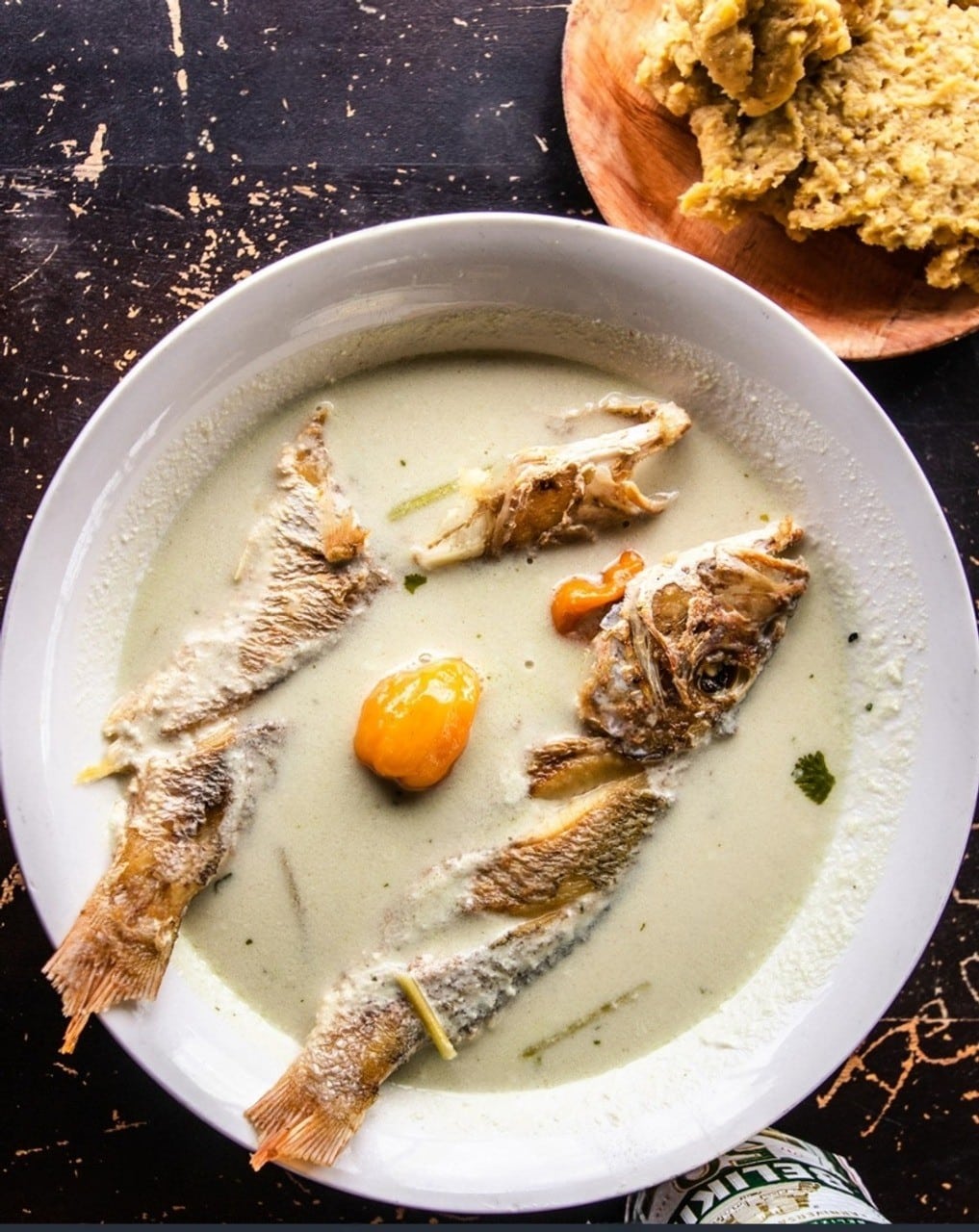
Hudut is a Garifuna dish made from pounded plantain and a fish broth with coconut milk. In Belize, it is primarily associated with the Garinagu, the plural of Garifuna, who make up 4% of the population according to the 2022 census. It is found mainly on the southern coast, around Dangriga, the capital of Stann Creek District. The dish takes center stage every November, as Garifuna Settlement Day approaches, the holiday that celebrates the Garifuna people’s settlement in Belize.
What is the Garifuna hudut?
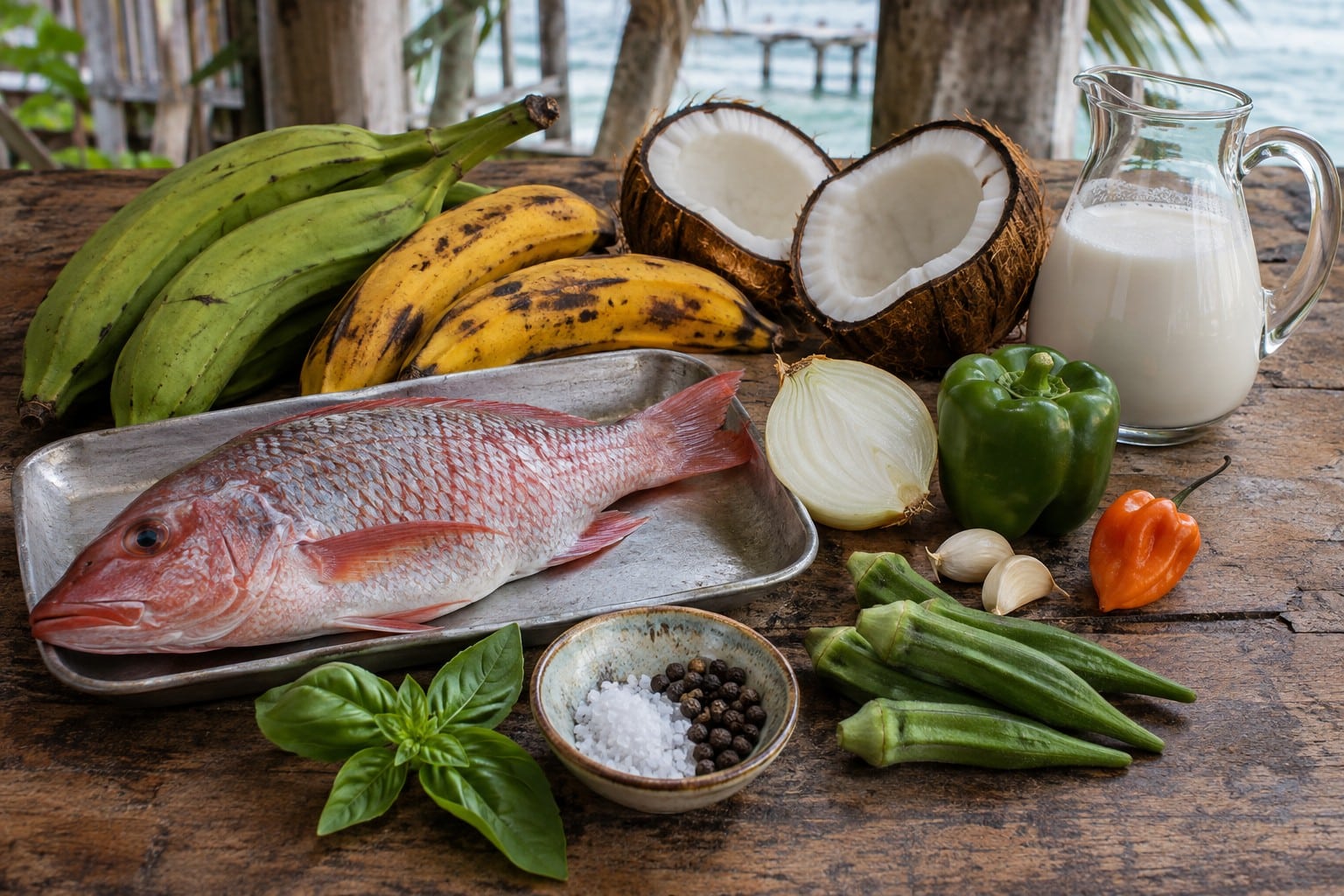
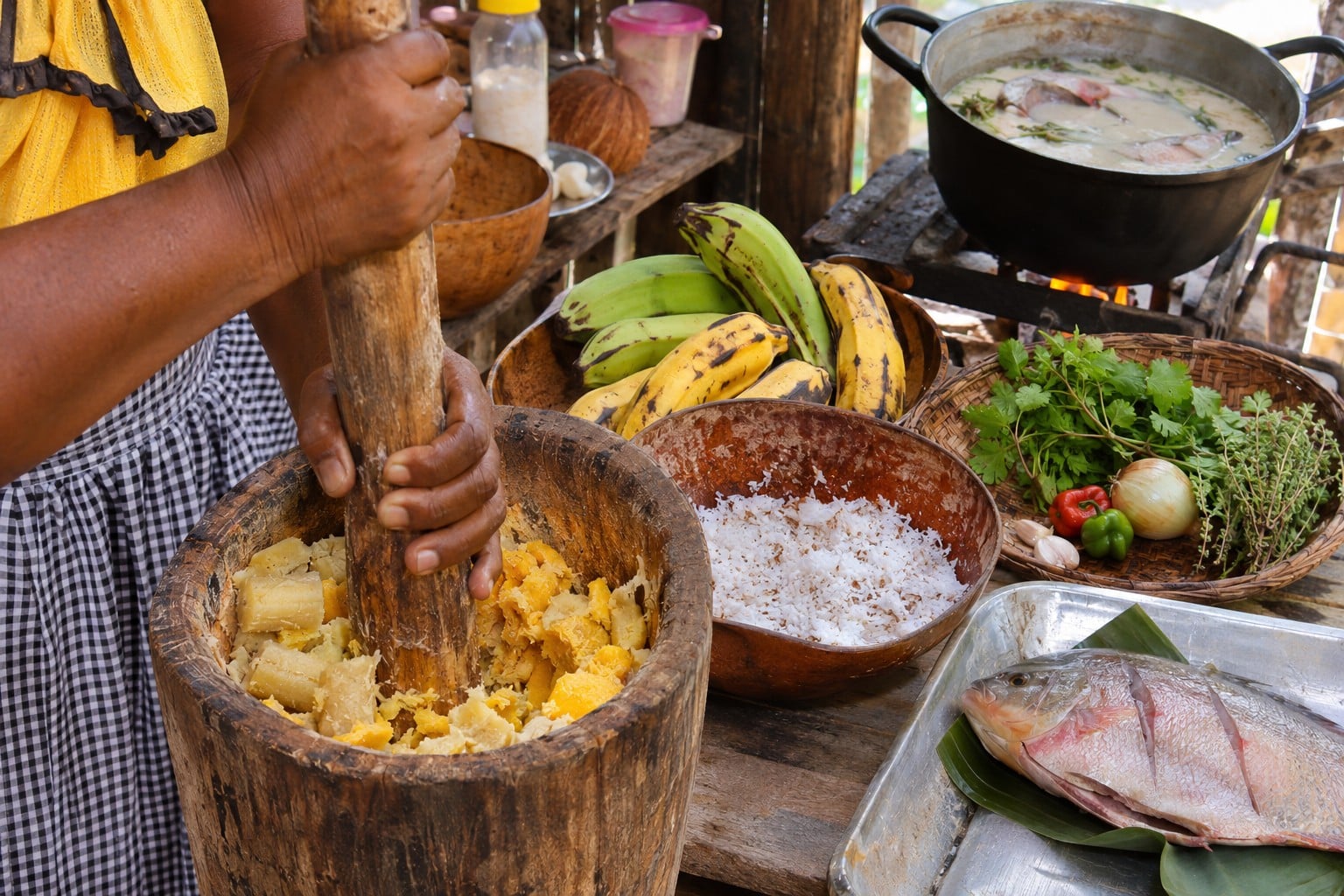
Hudut combines two ingredients served side by side. The first is a plantain paste. Green plantains, or “afoo,” and ripe plantains are boiled and then pounded in a wooden mortar until they form a dense, smooth paste. The second is falumou, the Garifuna word for coconut milk. It serves as the base for the broth in which the fish is cooked.
The process is just as important as the ingredients. Pounding plantain takes time and effort, much more than simply making a purée. This dish is, first and foremost, a family meal, prepared at home and shared around the pot.
Hudut, a dish from a people who came from Saint Vincent
The history of the hudut does not begin in Belize. It begins in Saint Vincent, the island in the Lesser Antilles that the Garinagu call Yurumein. The Garifuna people originated there from the encounter between African refugees and the Kalinago, the island’s indigenous inhabitants. The British referred to them at the time as the “Black Caribs.”
In 1796, after a long war against the British, the Garinagu were forced to surrender. In October, 4,195 Black Kalinago were captured and sent to Balliceaux, a barren islet in the Grenadines. On March 11, 1797, only 2,248 men, women, and children remained to set sail. On April 12, 1797, 2,026 survivors landed on Roatán, an island off the coast of Honduras. The deportees brought their language, their songs, and their skills with them. These songs, recognized by UNESCO, still speak of cassava cultivation, fishing, and canoe building.
From Roatán to Dangriga, settling in Belize
From Roatán, the Garinagu made their way to the coast of Honduras and then spread out along the bay. By around 1802, about 150 of them were already working in the logging industry in what is now Belize, then a British colony. They were viewed with great suspicion there. The mass migration took place in 1832, when cholera and the civil war in Central America drove many families northward. They settled in the southern part of the country. In 1975, the town of Stann Creek was renamed Dangriga at the request of its residents. It was also there that the November 19 celebrations began in 1941.
Hudut, between the sea and cassava
Hudut reflects a way of life rooted in the sea and the land. The Garinagu are a people of fishermen and seafarers, and the coconut plays a central role in their cuisine. The other staple of their diet is ereba, cassava bread.
The process of making it is time-consuming. Bitter cassava is grated on the egi, a board inlaid with stone chips, pressed in the ruguma, a woven press, then sifted through the híbise before being cooked into flat cakes. This work falls largely to women, who cultivate the cassava and prepare the food. These two preparations thus reflect the entire family’s organization, from the field to the pot.
On November 19, hudut marks Settlement Day
Garifuna Settlement Day owes much to Thomas Vincent Ramos, along with CJ Benguche and Mateo Avaloy. A resolution signed on November 16, 1941, paved the way for a day of recognition. In 1943, November 19 became a public holiday in the Stann Creek District. Today, it is observed as a public holiday throughout Belize. In 2026, the holiday falls on Thursday, November 19, with the theme “Uaraguni, Anichigu, Awanseruni, Wani Aunegu,” which translates to “Unity, Culture, Progress; The Future Is Ours.”
Recognition goes beyond borders. In 2001, UNESCO proclaimed the Garifuna language, dance and music a Masterpiece of the Oral and Intangible Heritage of Humanity, on behalf of Belize, Guatemala, Honduras, and Nicaragua. They have been on the Representative List since 2008. UNESCO also highlighted threats such as economic migration, discrimination, and the absence of the Garifuna language in schools. In this context, this dish holds a special place. Every pounded plantain, every coconut broth carries a part of this history. It remains to be seen whether the language that names these gestures, falumou, ereba, ruguma, will follow the same path.
Frequently asked questions
Hudut is a Garifuna dish made from green or ripe plantains that are boiled and then mashed, served with a fish broth made with coconut milk, called falumou in Garifuna. In Belize, it is associated with the Garinagu of the southern coast.
Hudut is a Garifuna dish shared by Garifuna communities throughout Central America, particularly in Belize and Honduras. In Belize, it is most commonly associated with the southern coast and the city of Dangriga.
Garifuna Settlement Day is observed every November 19 in Belize. This holiday commemorates the Garinagu people’s settlement in the country. In 2026, it falls on Thursday, November 19.