
Rendez-vous aux Jardins: the art of seeing at Habitation Clément

Habitation Clément

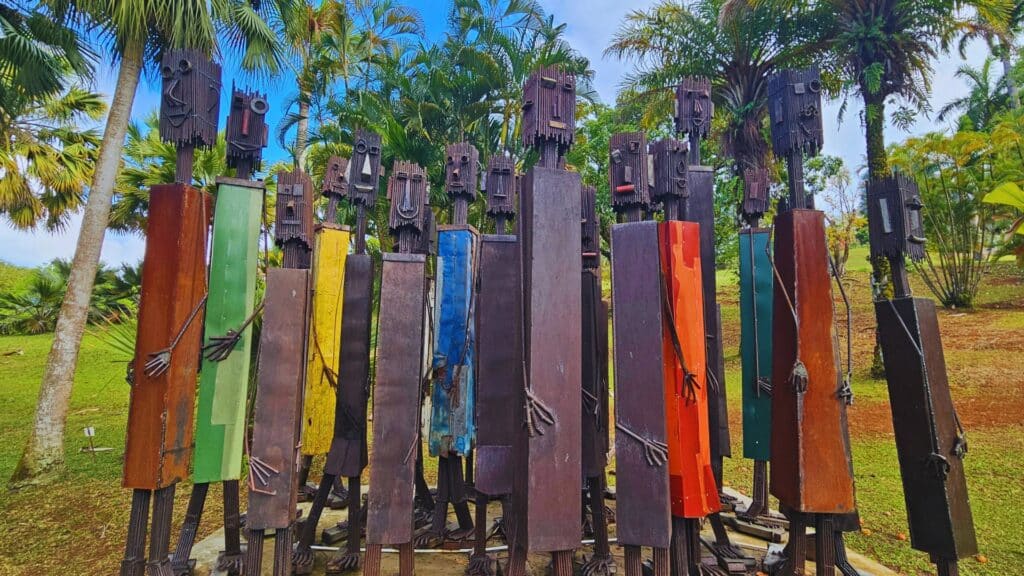
Les Belcoua in the garden of Habitation Clément (Domaine de l'Acajou)

For the Rendez-vous aux Jardins 2026, the Domaine du François is opening up its 15-hectare park to a theme that touches on something profoundly universal: sight. RICHÈS KARAYIB follows the Belcoua family on a tour of the Remarkable Gardens of Martinique. That day, between baobabs, monumental sculptures and tall tropical trees, they discover together that a garden can also teach us to look differently.

Habitation Clément
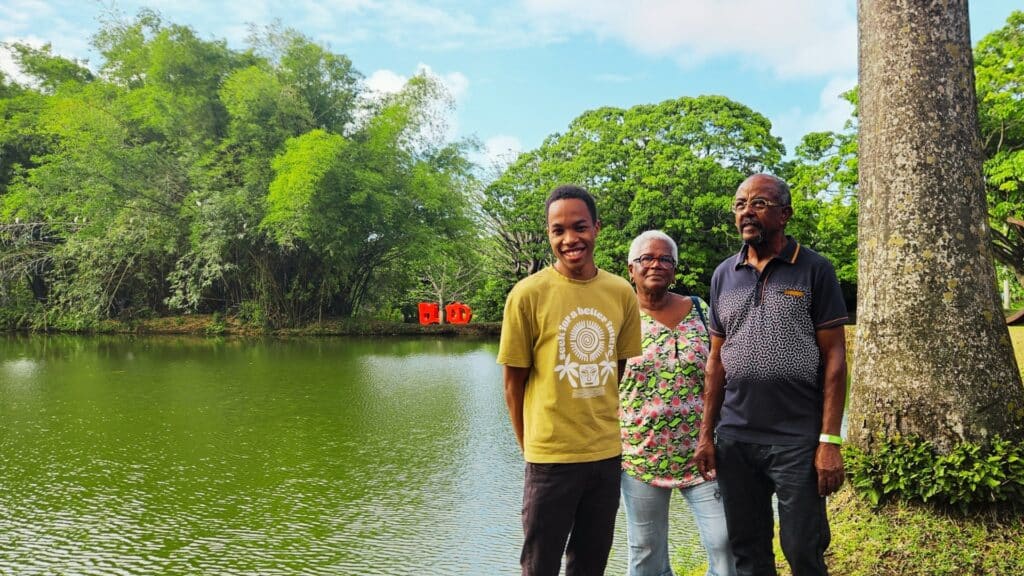
The BELCOUA family (Kévin, Jocelyne and Émile)

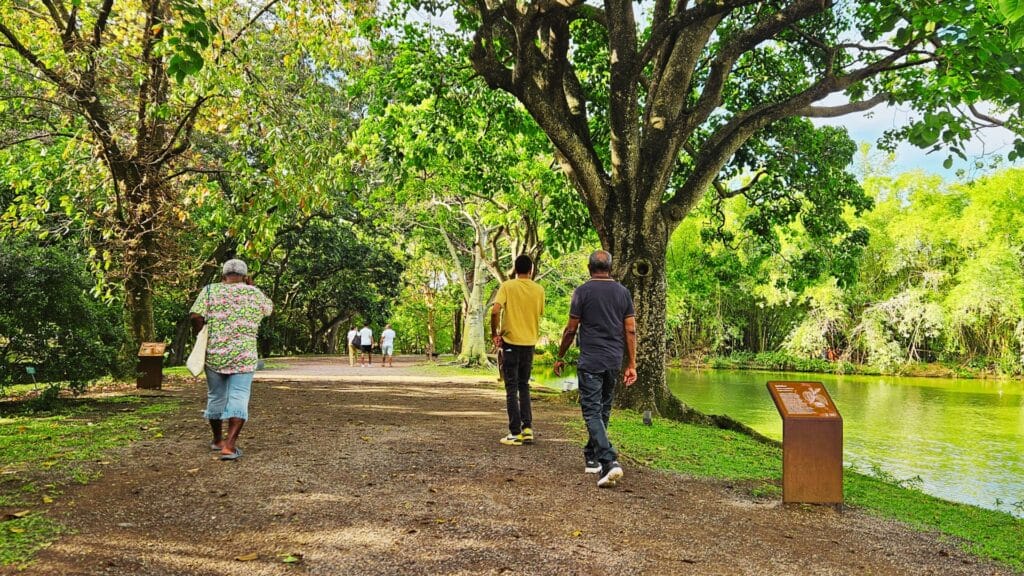
Émile and Jocelyne Belcoua set off down the gravel driveway that runs beneath the canopy of tall trees. Kévin walks beside his grandfather, with the same quiet step. To the right, a body of water sleeps under the filtered light of the foliage. Above, the branches form a living roof that draws the eye upwards. The visit hasn’t really begun, but it has, in a way, already taken place. All you had to do was look.

Habitation Clément

It is precisely this attention to the eye that the estate intends to invite the public to experience on June 6 and 7, on the occasion of the 2026 edition of the Rendez-vous aux Jardins in Martinique, this year under the theme of the view. A theme that particularly resonates with the identity of the site, where tropical nature and contemporary art are in constant dialogue.

Domaine de l'Acajou, Jardin Remarquable since 2011

“The estate covers 160 hectares, and we have dedicated 15 hectares to cultural and tourist activities,” explains Célia Sainville, tourism manager at Habitation Clément.

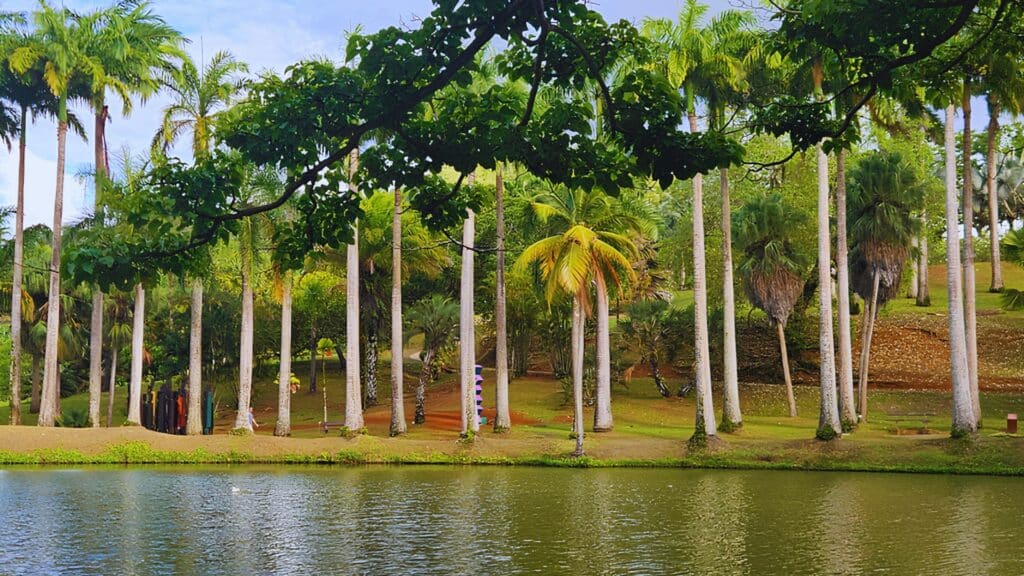
More than 300 plant species have been identified on this site. Visitors will come across emblematic tropical species such as the breadfruit, the baobab and palms in a collection of eighty varieties, as well as remarkable trees along the way: the cannonball tree, the hourglass tree – all silent presences that invite you to take it easy.

Habitation Clément

The “Jardin Remarquable” label, awarded by the French Ministry of Culture, recognizes this diversity, as well as the landscaping that organizes the whole.

Two parks coexist here: the old one, which surrounds the historic house, and the new one, planted some thirty years ago. Between the two, there’s a free walk – an hour for those who want to go fast, a whole morning for those who take the time to stroll. Émile takes his time.

Jocelyne stops in front of every palm tree, observing every leaf, every bark.

Kévin walks at their pace, attentive, lingering in front of a cannonball tree he’s discovering for the first time.

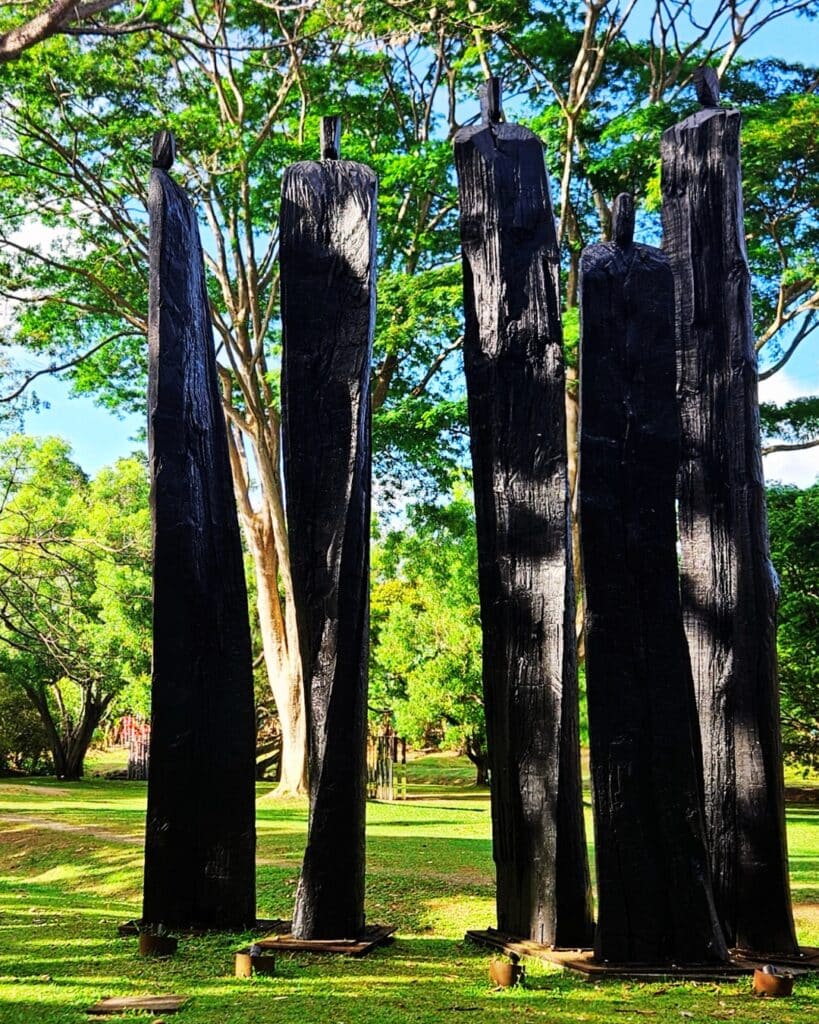
Le Jardin des Sculptures: an open-air museum in Martinique

It’s that at the bend of a path, the garden changes nature. What sets this place apart is this open-air museum, born almost by chance.

“In 2011, the Fondation Clément held an exhibition at the Orangerie du Sénat with 22 artists from Réunion, Guyane, Martinique and Guadeloupe,” explains Régine Bonnaire, project manager at the Fondation Clément.

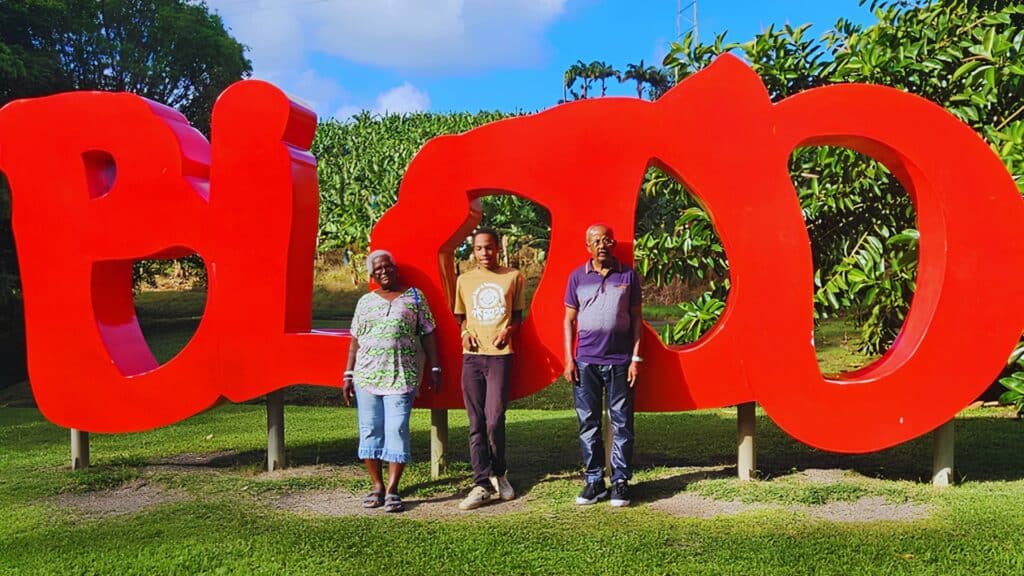
This exhibition, OMA (Outre-mer Art Contemporain), featured works designed for the outdoors. Among them, BLOOD by Thierry Alet and AVANÇONS TOUS ENSEMBLE by Luz Severino.

Habitation Clément
BLOOD by Thierry Alet
Habitation Clément
LET'S GO FORWARD TOGETHER by Luz Severino

Once the exhibition was over, some of the works were moved to the gardens of Habitation Clément. Thus was born, more by opportunity than by original design, the Jardin des Sculptures. Today, more than twenty monumental works are displayed here, signed by internationally renowned artists such as Daniel Buren and Bernard Venet, as well as Caribbean artists Hervé Beuze, Christian Bertin, Michel Rovelas, Luz Severino and Thierry Alet.

A rare encounter between the global and Caribbean scenes, as close as possible to the visitor.

See art differently in the heart of a Remarkable Garden

It is in this silent dialogue that the promise of the 2026 edition of Rendez-vous aux Jardins is played out.

“People have the impression that contemporary art is something abstruse, that it’s not accessible to everyone,” observes Régine Bonnaire.

“Now, we can learn by having fun, we can learn to look, we can learn to question ourselves.”

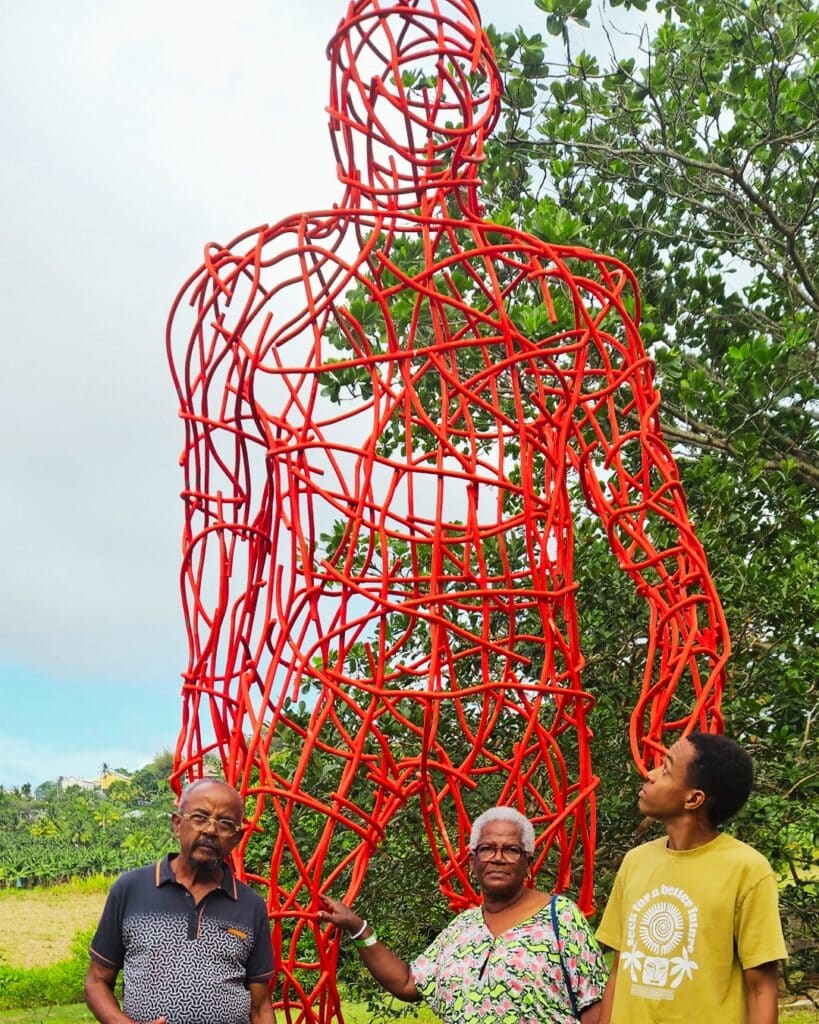
Kévin looks up at the sculpture towering above him.

Jocelyne, without a word, places her hand on the red material.

Émile, beside them, lets himself be penetrated by the presence of the work.

And it is perhaps here, in the end, that the uniqueness of the place is revealed:

“The advantage of the sculpture garden is that you can touch them. You can experiment with the materials, you can play with the sculptures”, Régine Bonnaire points out.

Habitation Clément
the family in front of ARMATURES by Hervé Beuze

The garden at Habitation Clément invites you to get up close and personal. It’s a place to skirt, to touch and to be amazed. Art becomes a playground as much as an object of contemplation, and for visitors to the Rendez-vous aux Jardins in Martinique, themed tours and workshops will extend this invitation to sharpen the eye.

Rendez-vous aux Jardins 2026: the art of seeing with the family

At a time when we talk so much about transmission, but don’t always know how to bring it to life, Habitation Clément offers a rare setting: a place where three generations can simply discover, observe and marvel together. See a baobab tree, walk around a sculpture, recognize the silhouette of a tree in a work of art, or the motif of a work of art in a tree.

Habitation Clément
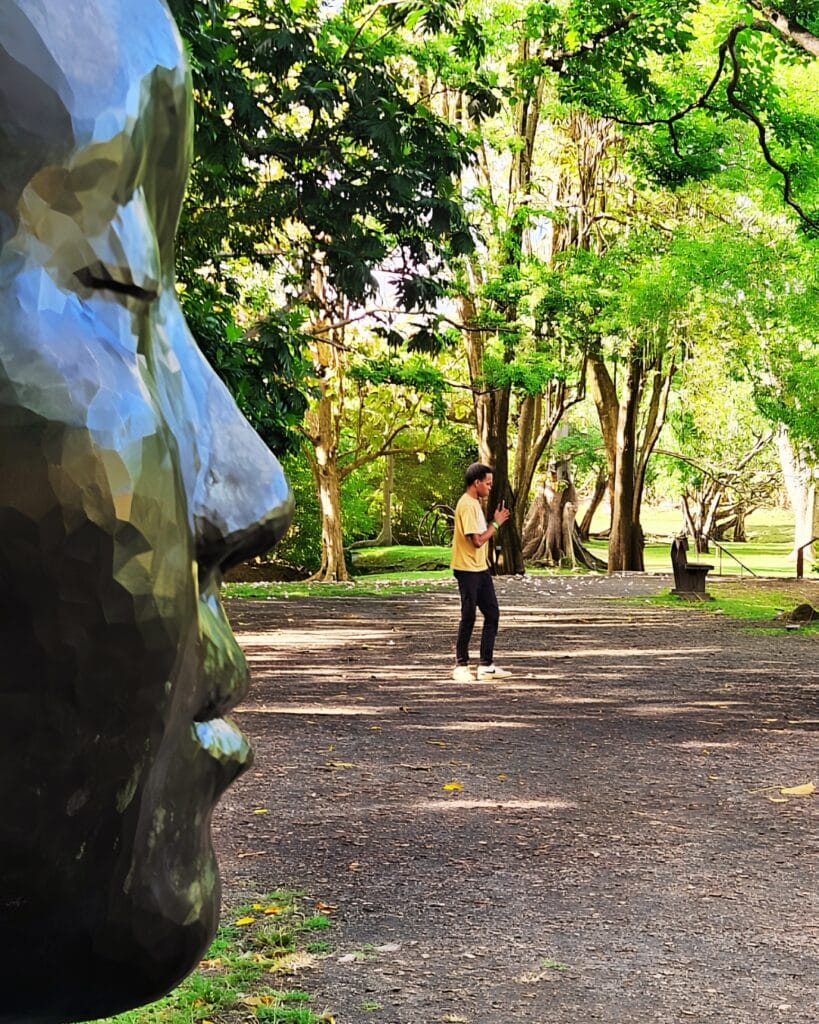
VIRTUAL YOONA by Catherine Ikam closes his eyes. Kévin looks for two.
Habitation Clément
JUSQUQU A L'OMBRE by Christian Lapie

“The aim is to invite visitors to see not only the garden, but also art in a different light”, Régine Bonnaire sums up.

For the Belcoua family, this first visit marks the start of a journey through Martinique’s remarkable gardens.

📌 IN PRACTICE

Rendez-vous aux Jardins 2026 – Habitation Clément (Domaine de l’Acajou)

📅 Saturday 6 and Sunday 7 June 2026

📍 Domaine de l’Acajou, 97240 Le François, Martinique

🎟️ Free admission on both days

🌿 Self-guided tour, workshops and themed tours on site

The first part of the Jardins Remarquables series, an exploration by RICHÈS KARAYIB for the Rendez-vous aux Jardins 2026, in partnership with the Direction des Affaires Culturelles (DAC) de Martinique.

Leave a Reply

Your email address will not be published. Required fields are marked *

More articles from RK

Femme jamaïcaine sur une véranda au crépuscule face à un duppy dans la cour
HISTORY & HERITAGE
Tolotra

“Duppy know who fi frighten”—why does this proverb protect the weak?

“Duppy know who fi frighten”: this Jamaican saying resonates from childhood onward, long before we fully understand its meaning. In Jamaica, at dusk, a scene plays out across generations. Children are called back inside before night swallows the garden. There’s no need to argue the point—outside, the duppies lurk, those spirits that didn’t follow the dead to the end of their journey. A man from Old Harbour, now in his eighties, told researchers in 2021 how these stories shaped his childhood evenings—not so much to terrify as to keep the children close to home. From this inherited fear arose a saying that is still heard today throughout the island: “Duppy know who fi frighten”—the duppy knows who to frighten. What does “Duppy know who fi frighten” mean? The Jamaican Patwah online dictionary illustrates the expression with a typical phrase, “Him cyaa try mi, duppy know who fi frighten,” which could

Read More »
gwoka
HISTORY & HERITAGE
Tolotra

Gwoka, the Guadeloupean drum that UNESCO has enshrined in history

In Pointe-à-Pitre, a bronze statue depicts a seated man with a ka drum between his legs. It pays tribute to Vélo, one of the greatest masters of gwoka, the Guadeloupean music that emerged from the resistance to slavery. Since 2014, UNESCO has designated it as a World Heritage Site. A Tambouyé Turned into a Statue Marcel Lollia, known as Vélo, was born on December 7, 1931, and died on June 5, 1984. He trained several generations of ka players—a drum carved from a tree trunk and covered with a stretched skin. He also inspired Akiyo, a cultural movement advocating for identity founded in 1979, which brought gwoka out of the small circles where it was still surviving. On June 5, 2004, twenty years after his death, a statue by sculptor Jacky Poullier was unveiled in Pointe-à-Pitre, modeled after an earlier Guadeloupean portrait dedicated to another of the island’s great figures.

Read More »
Barbuda
TOURISM
Tolotra

Barbuda: More than 5,000 frigatebirds in an extraordinary lagoon.

In Barbuda, the show begins even before you spot the birds. There is no road leading to the Codrington Lagoon sanctuary. You have to board a boat, travel across the water through the mangroves, and then watch as the black silhouettes of the magnificent frigatebirds (Fregata magnificens) come into view—their colony is one of the largest in the Caribbean. This fact alone is enough to reveal another side of Barbuda. Beyond its pink beaches, the island is home to a lagoon where more than 5,000 of these birds have been recorded, in a colony where a scientific survey counted 1,743 nests. Here, you discover the destination by looking up and understanding the role this lagoon plays in the balance of the entire island. A Ramsar-designated lagoon, nestled between mangroves and reefs The Codrington Lagoon covers 3,600 hectares and has been recognized as a wetland of international importance under the Ramsar

Read More »

conTACT RK

we'd love to have your feedback on your experience so far

Join The List

Join our Richès Karayib community!  Sign up for our newsletter.

Want To Maximize Your Business Presence On Riches Karayib?

Complete the form to start the application