Saint-Martin: preserving marine ecosystems in the face of the climate emergency

écosystèmes marins

In the north of the Lesser Antilles, the island of Saint-Martin is home to remarkably rich marine ecosystems. Coral reefs, sea grass beds, mangroves, turtles and marine mammals cohabit in an environment that is as fragile as it is essential for the territory.

Exceptional biodiversity under pressure

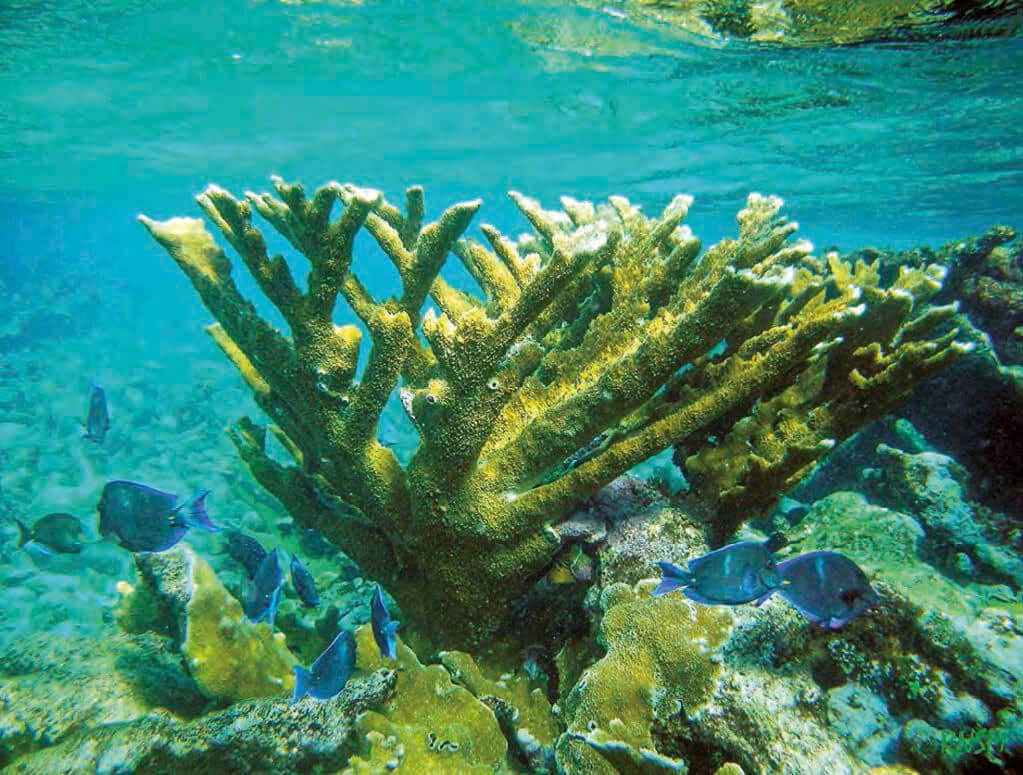
Saint-Martin’ s marine ecosystems form a natural heritage of rare complexity. The island, divided between France and the Netherlands, concentrates a variety of coastal and underwater habitats: fringing and barrier reefs, seagrass beds and mangroves. The reefs alone cover almost 19.4 km² around the island, mainly around Baie Orientale, Coralita, Le Galion and Grandes Cayes.

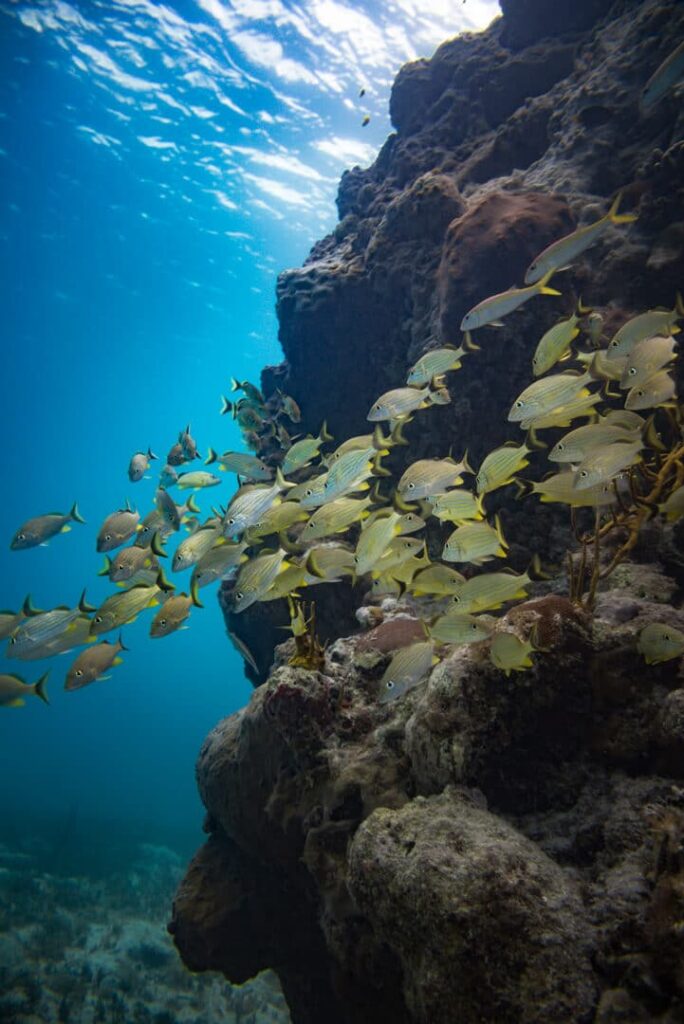
The Nature Reserve boasts over 1,040 marine species, including some 30 corals and over 500 molluscs. There is an impressive diversity of reef fish, sea turtles, starfish, sea urchins, anemones and marine mammals – including dolphins, sperm whales and humpback whales.

These marine ecosystems on Saint-Martin provide refuge, nursery and feeding grounds for emblematic species such as the green turtle, hawksbill turtle and leatherback turtle. From March to November, several of the island’s beaches become crucial egg-laying sites for these protected reptiles.

marine ecosystems

Reefs, seagrass beds, mangroves: essential ecological roles

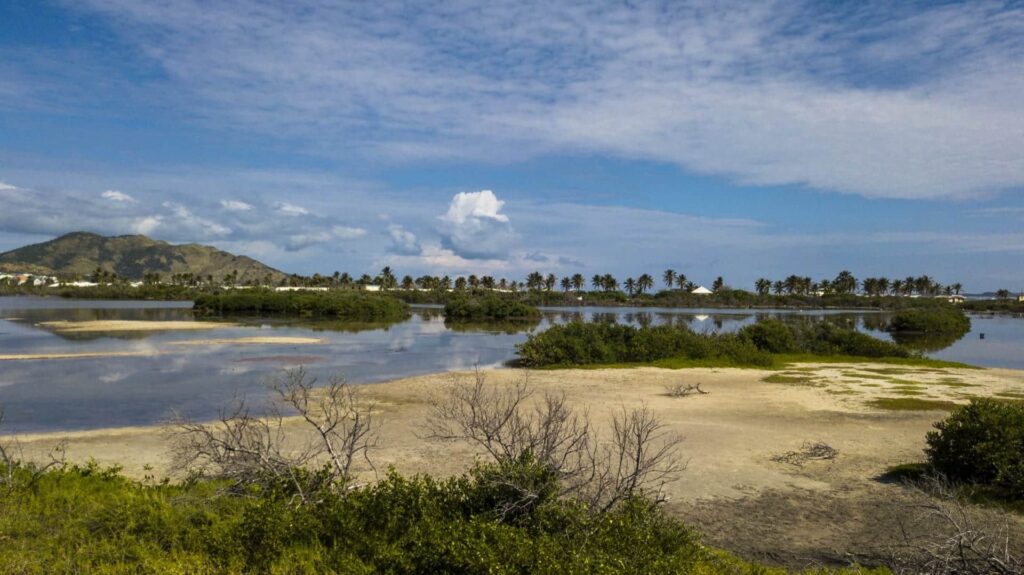
Coral reefs protect coastlines from erosion and mitigate the impact of storms. They are home to a biodiversity that guarantees the balance of marine food chains. Seagrass beds, covering more than 60 km² around the island, and mangroves (24.2 hectares) complete these functions by acting as biological filters, sequestering carbon and ensuring ecological continuity between land and sea.

These marine ecosystems on Saint-Martin act as a natural shield against climate change, playing a central role in climate regulation, local food security and the preservation of endangered species.

marine ecosystems
©st-martin.org
écosystèmes marins
©st-martin.org
écosystèmes marins
©st-martin.org

A major economic lever

Saint-Martin’ s marine ecosystems generate an estimated economic value of 26 million euros per year. Coastal protection alone represents 6 million in potential savings, while nautical and diving activities contribute 20 million to the local economy.

Almost 2,600 jobs and over 400 businesses depend directly or indirectly on these natural environments. Blue” tourism – diving, snorkeling, marine excursions – attracts up to 80% of visitors. With underwater visibility of up to 30 meters, St. Martin’s waters are among the best in the Caribbean for ecological discovery.

Innovative projects such as the “Under SXM” underwater sculpture park in Little Bay create artificial reefs, while diversifying the tourist offer and relieving congestion at the most sensitive natural sites. This type of initiative makes the most of Saint-Martin’s marine ecosystems, while protecting them at the same time.

écosystèmes marins
©st-martin.org

A worrying deterioration

But this ecological treasure is in peril. According to Ifrecor, only 20% of Saint-Martin’s coral reefs are in “good” condition. None are considered to be in “excellent” condition. The rest are showing signs of advanced degradation, directly linked to urbanization, port developments and pollution from untreated wastewater.

Sediments from urban or agricultural runoff asphyxiate corals. Chemicals favor invasive algae to the detriment of constructive species. The overexploitation of marine resources is putting further pressure on Saint-Martin’s already fragile marine ecosystems.

Coral bleaching in 2023, caused by water temperatures in excess of 30°C, affected the entire nature reserve. Despite this, some corals have shown an encouraging capacity for resilience. However, this positive dynamic remains fragile.

Nature reserves and protection strategies

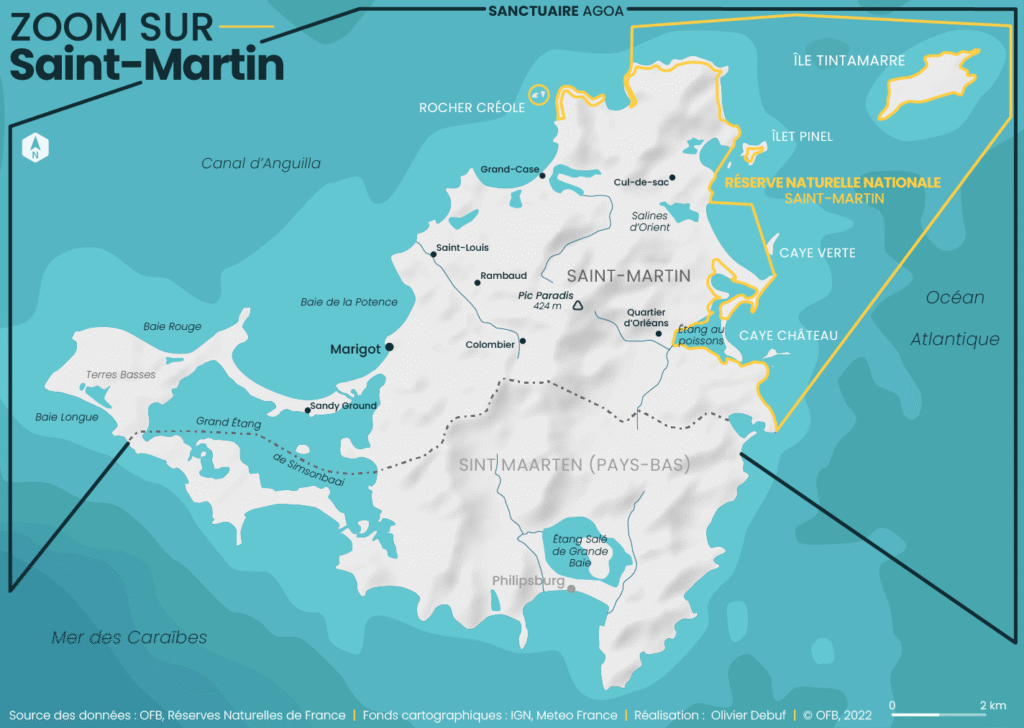
Created in 1998, the Réserve Naturelle Nationale de Saint-Martin covers over 3,000 hectares, of which 2,796 hectares are marine. It is the main conservation tool, protecting reefs, mangroves, seagrass beds, ponds and coastal forests. This protected area alone is home to almost 2,000 species in 44 taxonomic groups.

A five-year management plan provides a framework for actions to preserve the marine ecosystems of Saint-Martin: habitat restoration, control of uses, user awareness, scientific monitoring and regional cooperation.

Marine mammals benefit from the Agoa sanctuary, which covers the entire exclusive economic zone of the French West Indies, while turtles are the subject of coordinated action plans with networks of eco-volunteers monitoring nesting sites.

écosystèmes marins
©Réserve Naturelle Nationale de Saint-Martin
écosystèmes marins
©Réserve Naturelle Nationale de Saint-Martin
écosystèmes marins
©Réserve Naturelle Nationale de Saint-Martin
écosystèmes marins
©Réserve Naturelle Nationale de Saint-Martin

Sustainable tourism and ecological restoration

The Nature Reserve is developing an eco-friendly mooring strategy, with mooring buoys and digital tools to limit destructive anchoring. Diving centers are also trained in eco-responsible practices, helping to protect Saint-Martin’s marine ecosystems while maintaining a high-quality tourist industry.

Reef restoration programs include the creation of coral nurseries and targeted transplants. Research into the thermal resistance of corals is opening up new prospects for strengthening the resilience of Saint-Martin’s marine ecosystems in the face of climate change.

Towards a sustainable blue economy

Saint-Martin’ s future depends on the balanced development of its blue economy, making the most of ecosystem services such as coastal protection, carbon sequestration and tourist appeal. Payment for environmental services schemes could provide new sources of funding for conservation.

Saint-Martin’s participation in regional networks such as the CAMAC project also enables the pooling of knowledge and best practices, reinforcing the protection of Saint-Martin’s marine ecosystems on a Caribbean scale.

Leave a Reply

Your email address will not be published. Required fields are marked *

More articles from RK

Philippe Faure-Brac
NEWS
Tolotra

Philippe Faure-Brac at Habitation Clément: Martinique rum as seen by a great sommelier.

Philippe Faure-Brac had never visited Habitation Clément before. World’s Best Sommelier 1992, member of the Meilleurs Ouvriers de France with honorary status since 2015, he came to Martinique to look at rhum agricole from its very place of production: the cane, the cellars, the bottling and the tasting. A first visit to Habitation Clément At Habitation Clément, in Le François, this visit had a special significance. Philippe Faure-Brac was already familiar with Clément rums, their quality positioning and their universe. He had also contributed to the book Rhum Clément, une histoire de famille, bringing his insight into the house’s aromatic precision, balance and tradition of excellence. But he lacked the experience of the place. That of the light, the temperature, the atmosphere of the winery and the exchanges with the teams. “The first time in Martinique? I was going to say finally,” he confided, recalling that he had been hoping

Read More »
Boiling Lake
TOURISM
Tolotra

Boiling Lake: 92 °C, 63 m wide, the 2nd largest bubbling lake in the world

Just 8 kilometers east of Roseau, the capital of Dominica, it’s a three-hour walk from Laudat to Boiling Lake. Three hours of humid forest, desolate valley, soil-heated rocks and sulfurous fumes. At the end of the path, a 63-metre-wide pool. Inside, the water bubbles almost continuously, with temperatures measured up to 91.6°C at the edges. It’s the second largest bubbling lake in the world. A rare phenomenon in a UNESCO park The world’s first is Frying Pan Lake in New Zealand’s Waimangu Valley. But the Dominican Boiling Lake is in a class of its own. Firstly, because it can only be reached on foot, after a demanding hike. Secondly, because it is part of a national park that has been a UNESCO World Heritage Site since 1997: Morne Trois Pitons National Park. This makes it one of the most singular geothermal phenomena protected in a world-renowned natural site. A flooded,

Read More »
Tourisme 3.0
TOURISM
Tolotra

Tourism 3.0: Jamaica wants to keep its tourist wealth

At the Montego Bay Convention Centre, the image speaks for itself. Local entrepreneurs showcase their products, hotel representatives circulate, meetings follow one another. Behind these rapid exchanges, one question weighs heavily: when tourism makes money, how much really stays in Jamaica? This is at the heart of Tourism 3.0, the new direction championed by Jamaica’s Minister of Tourism, Edmund Bartlett. At the Tourism Enhancement Fund’s 11th Speed Networking Event, he set out a clear ambition: to make tourism a more direct driver for Jamaican producers, artisans, manufacturers and suppliers. Tourism that no longer just wants to attract Jamaica knows how to welcome visitors. But the challenge is no longer just to fill hotels or increase arrivals. The real challenge is to retain more value in the territory. Edmund Bartlett has recognized a structural weakness: a large proportion of the goods and services consumed by the tourism industry are still imported.

Read More »

conTACT RK

we'd love to have your feedback on your experience so far

Join The List

Join our Richès Karayib community!  Sign up for our newsletter.

Want To Maximize Your Business Presence On Riches Karayib?

Complete the form to start the application