From May 22 to 27, 2026 Grenada will host a new edition of the Grenada Chocolate Fest 2026. Over the years, this event has become one of the most unique on the island’s gastronomic and cultural calendar. The theme of this year’s event is an ambitious one: “Reimagining Caribbean Cocoa – From Roots to Renaissance”, an invitation to rethink cocoa from its historical roots and imagine new perspectives.
For six days, producers, chocolatiers, chefs, artisans, researchers, locals and visitors from all over the world come together to celebrate cocoa in all its forms: agriculture, gastronomy, well-being, creation and cultural transmission. More than just a gourmet festival, Grenada Chocolate Fest 2026 offers a complete immersion in the world of Grenadian cocoa, from the plantations to the artisanal creations that have made the island’s chocolate world famous.
A story born of a passion for Grenadian cocoa
Grenada Chocolate Fest 2026 is part of a story that began in 2014, when Grenada decided to put the spotlight on one of its most precious agricultural heritages: cocoa.
The festival was conceived to promote the “tree-to-bar “tree-to-bar”, an approach that involves mastering every stage of chocolate production, from growing the cocoa to making the bar. This vision was developed in Grenada by a number of entrepreneurs and craftsmen who were convinced that cocoa could become a true symbol of the island’s identity.
Among the key figures in this story are Mott Green founder of the Grenada Chocolate Company, whose commitment to sustainable, artisanal, solar-powered chocolate has had a profound impact on the development of the industry on the island. Since its inception, the festival has pursued a clear objective: to enable visitors and locals alike to understand the complete cocoa journey, from plantation to finished product, while promoting the farmers, artisans and communities who perpetuate this know-how.


A festival that grew with the cocoa industry
Over the years, the festival has gradually gained international recognition in the world of artisan chocolate and gastronomic tourism. Today, each edition attracts fine cocoa experts, chefs, culinary innovators and local producers, as well as visitors from the Caribbean, Europe and North America.
This development also reflects the transformation of Grenada’s cocoa sector. The island is now renowned for the quality of its cocoa and for the presence of several companies specializing in the production of artisanal chocolate. Against this backdrop, Grenada Chocolate Fest 2026 is part of a wider dynamic: that of a region transforming its agricultural heritage into a cultural, economic and tourism driver.


The Grenada Chocolate Fest 2026 program
The 2026 edition offers six days of varied activities. Each day is designed as a journey to explore cocoa from different angles. Each day is designed as a journey to explore cocoa from different angles.
May 22: festival opening and first chocolate experiences
The festival kicks off with a series of meetings and events dedicated to the cocoa industry. The first day brings together producers, specialists and enthusiasts for discussions and exchanges on the future of cocoa, while offering a number of experiments to help visitors understand the first stages of chocolate processing.
Participants can attend lectures dedicated to cocoa, discover an exhibition devoted to artisanal products, take part in a chocolate candy-making workshop or create their own chocolate bar. The day ends with a festive evening at a historic estate on the island, marking the official opening of the festival.
May 23: well-being, gastronomy and family activities
The second day focuses more on sensory experience and well-being. Cocoa is explored as a gastronomic ingredient, but also as an element associated with health, relaxation and creativity. A number of experiments are proposed around cocoa and superfoods, while a cocoa village hosts family activities and interactive workshops to discover the different flavors of chocolate.
Culinary demonstrations and tastings punctuate the day, which concludes with a gourmet dinner showcasing the products and culinary talents of Grenada.
May 24: immersion in nature and cocoa plantations
The third day invites participants to discover cocoa in its natural environment. A hike explores some of the island’s most emblematic landscapes, notably in the direction of a waterfall, while an artistic brunch offers an original encounter between gastronomy and creation. A culinary demonstration inspired by Rastafari culture also illustrates the links between cocoa, traditions and Caribbean cuisine. One of the highlights of the day is an immersive tour of a historic cocoa estate, where visitors can observe the various stages of cocoa production. The day ends with a festive chocolate party.
May 25: chocolate, perfumes and the Grenadian art of living
The fourth day of the festival highlights the Grenadian art of living. Participants can start the day with a yoga session accompanied by a cocoa butter massage, before setting off to discover some of the island’s secret beaches on a guided walk. A gastronomic tour then explores local flavors, while a cocoa and fragrance experience highlights the links between chocolate, spices and aromatherapy. A gastronomic tasting in a prestigious setting completes this day dedicated to the senses.
The day continues with a market of local artisans and artists, accompanied by musical entertainment celebrating Grenadian culture.
May 26: passing on chocolate-making know-how
The fifth day of the Grenada Chocolate Fest 2026 emphasizes transmission and learning. Visitors can take part in experiments combining rum and chocolate, discover the island’s culinary specialities on a gastronomic tour, or learn how to make chocolate sweets alongside local artisans.
There are also workshops where you can plant a cocoa tree and make your own chocolate bar, giving you a hands-on experience of the work of cocoa growers and chocolatiers.
May 27: artistic creation and closing party
The final day of the festival celebrates creativity and conviviality. Participants can discover a natural spa inspired by cocoa, take part in an artistic workshop combining chocolate and spices, or create jewelry from cocoa beans. An introduction to the traditional process of making the cocoa balls used to prepare Grenadian tea also introduces participants to a culinary practice that is emblematic of the island. The festival concludes with a culinary and musical street party, marking the end of a six-day celebration of Grenadian cocoa.


A festival open to families
Grenada Chocolate Fest 2026 is also designed as an event accessible to all ages. Children can take part in a number of specially adapted activities, including chocolate-making workshops, creative cocoa activities and fun activities that allow them to discover the world of chocolate in an interactive way. This family dimension contributes to making the festival a moment of intergenerational transmission of Grenadian cocoa heritage.
Grenada Chocolate Fest 2026: much more than a gourmet festival
The Grenada Chocolate Fest 2026 Through plantations, workshops, culinary experiences and encounters, cocoa appears as a thread linking agriculture, crafts, tourism and cultural identity.
More than just a gastronomic celebration, the festival shows how Grenada is transforming its cocoa heritage into a living project, capable of bringing together producers, creators and visitors around the same passion. From May 22 to 27, 2026, Grenada thus confirms its role as a benchmark in the world of artisan chocolate and in the promotion of cocoa as a living heritage.
The Grenada Chocolate Fest 2026 takes place from May 22 to 27, 2026 on the island of Grenada. For six days, the festival features conferences, chocolate-making workshops, tastings, plantation tours and cultural events dedicated to cocoa.
The festival offers a wide range of experiences: chocolate-making workshops, gourmet tastings, visits to cocoa plantations, nature walks, wellness experiences, culinary tours and cultural events.
The festival showcases Grenada’s cocoa heritage, supports local producers and strengthens the island’s international reputation in the field of artisan chocolate and gastronomic tourism.
Caribbean hotel executive Janelle Hopkin was honored on the international stage at the 2026 edition of the prestigious ITB Berlin one of the world’s most important tourism industry events. On March 4, 2026, the President and CEO of the Spice Island Beach Resort received the PATWA Gold Award – Woman of the Year in Hospitality (Caribbean) at the PATWA World Tourism & Aviation Leaders’ Summit an annual summit that brings together tourism leaders, ministers and international experts.
This distinction recognizes its major role in the development and promotion of the Caribbean hotel industry worldwide. It is also part of an edition marked by several awards to Grenada, confirming the archipelago’s rise to prominence on the international tourism scene.
International recognition for Caribbean leadership
PATWA International Travel Awards organized by the Pacific Area Travel Writers Association. Each year, the awards recognize the destinations, companies and personalities that are shaping the future of global tourism. Founded in 1999, this international organization of tourism journalists and experts is affiliated to UN Tourism (formerly the World Tourism Organization). The distinctions awarded by the jury are based on several criteria: leadership, innovation, contribution to sustainable development and overall impact on the industry.
For the 2026 edition, more than 550 nominations were reviewed before the selection of around 80 international winners. In this highly competitive environment, the awards won by our company are a testament to the high standards and credibility of these awards in the travel and hospitality sector. In this highly competitive context, the distinction obtained by Janelle Hopkin is a major recognition for the Caribbean and for the model of hospitality embodied by the Spice Island Beach Resort.


A woman at the helm of a symbol of Caribbean luxury
Located on the famous Grand Anse Beach the Spice Island Beach Resort is one of the region’s most renowned establishments. This independent hotel complex offers 64 elegant suites including 17 with private pool and 32 suites directly on the beach. The establishment stands out for its upscale positioning, combining Caribbean hospitality, personalized service and environmental commitment.
Founded by Sir Royston Hopkin. After the death of its founder, the management of the resort was entrusted to his daughter. After the death of its founder, the management of the resort was entrusted to his daughter. Janelle Hopkin who continues the legacy of this hotel institution. Under his leadership, the resort has retained the prestigious distinction AAA Five Diamond one of the most demanding certifications in the international hotel industry, while multiplying awards for service quality and environmental initiatives.


A vision focused on sustainable and responsible tourism
Beyond the resort’s commercial success, Janelle Hopkin’s recognition is also based on her commitment to responsible tourism.
For several years now, the manager has been promoting a hospitality model based on three pillars:
- – preserving the coastal environment
- – local community involvement
- – excellence in hotel service
In a context where island destinations are particularly exposed to the effects of climate change, this sustainable approach is becoming a strategic issue for the future of Caribbean tourism. This is in line with the global strategy of Grenada, which seeks to develop tourism based on cultural authenticity, the enhancement of its heritage and the active participation of its inhabitants.

Grenada raises its profile on the world tourism scene
Janelle Hopkin’s award is just one in a series of accolades Grenada has won at the PATWA International Travel Awards 2026.
Awards include:
- – Destination of the Year – Caribbean Experiences for Grenada
- – Tourism Minister of the Year – Sustainable Development for Adrian Thomas
- – Excellence in Destination Development for Stacey Liburd, Tourism Board Director
- – Best All-Inclusive Resort – Caribbean for Spice Island Beach Resort
These awards testify to the joint efforts of public and private players in Grenada’s tourism industry to boost the destination’s international competitiveness.
An inspiration for women in the tourism industry
In her acceptance speech, Janelle Hopkin underlined the symbolic significance of the award. In her view, this award is not just a recognition of an individual’s achievements: it highlights the leadership capacity of Caribbean women in the global tourism industry.
The hospitality sector, while highly feminized in its operational professions, is still largely dominated by men in management positions. Janelle Hopkin’s career path is helping to redefine leadership models in the international hotel industry. She also stressed the importance of training and supporting new generations of tourism professionals, a vital issue for island destinations whose economies are largely dependent on this industry.

Janelle Hopkin is President and General Manager of the Spice Island Beach Resort a luxury resort located in Grenada in the Caribbean. She took over the management of the family resort founded by her father, Sir Royston Hopkin a major figure in the island’s tourism development. Under his leadership, the establishment continues to distinguish itself for its upscale hospitality, personalized service and commitment to sustainable tourism.
In 2026, Janelle Hopkin received the PATWA Gold Award – Woman of the Year in Hospitality (Caribbean) at the PATWA World Tourism & Aviation Leaders’ Summit, held during ITB Berlin in Germany. This international distinction recognizes her leadership in the Caribbean hospitality industry, as well as her role in promoting a hospitality model based on service excellence, enhancement of local culture and sustainable tourism development.
The Spice Island Beach Resort is located on the famous Grand Anse Beach in Grenada, in the Lesser Antilles. This luxury beachfront hotel is renowned for its elegant suites, some with private pools, and for the quality of its welcome and service. One of the most renowned resorts in the Caribbean, it attracts travelers every year in search of an upscale hotel experience in an exceptional natural setting.
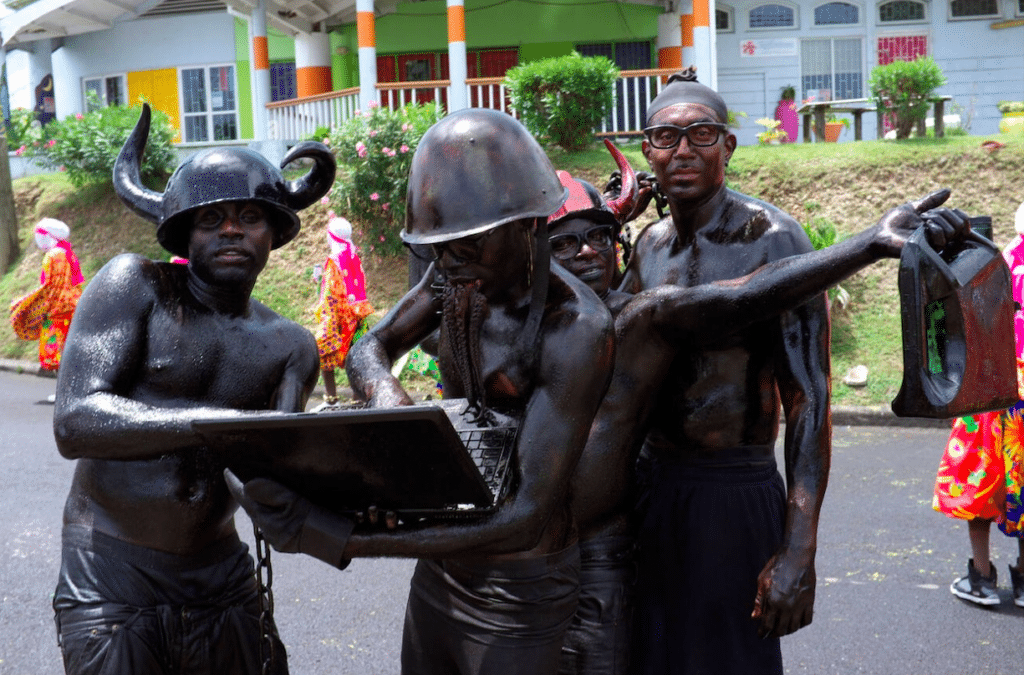
In Grenada, carnival is expressed first and foremost through the body, rhythm and density of the street. When silhouettes are covered in black oil, chains echo on the asphalt and the crowd moves in unison in the morning gloom, the Jab Jab is a must. More than a carnival character, he is a collective presence, a form of expression deeply rooted in the island’s social and cultural history.
In 2026, this emblematic figure will regain its centrality on the occasion of two major events: Carriacou Carnival (Kayak Mas) in February and Spicemas, Grenada’s national carnival in August. Understanding the Jab Jab allows us to read these events not as mere festivities, but as structuring moments of Grenadian identity.
The Jab Jab: a historical and symbolic construction
The term Jab derived from the word “diable” in French-influenced Creoles, should not be interpreted literally. In Grenada, it does not refer to a religious figure. It’s part of a colonial history marked by the stigmatization of black bodies, perceived as threatening, unruly or subversive.
His aesthetic is a reversal. Black, applied to the skin in the form of oil or paint, erases visible social distinctions. The horns and chains, far from being decorative, recall a history of domination, while at the same time subverting it. What was once an instrument of constraint becomes a sign of affirmation. The body, put forward without artifice, once again becomes a space for language.
J'ouvert: the moment when Jab Jab becomes fully incarnate In Grenada
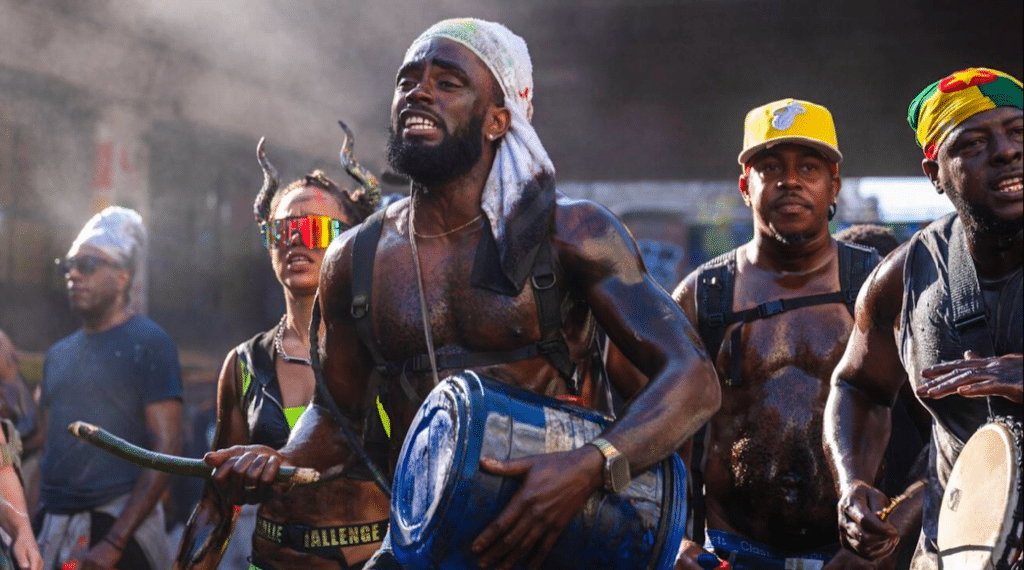
In Grenada, it finds its most intense expression in the J’ouvert, the inaugural moment of carnival, which takes place at dawn. This choice of time is not insignificant. The transition from night to day marks a break, a threshold, a space where ordinary norms become blurred. The Grenadian J’ouvert is characterized by a dense collective progression, punctuated by percussion, chanting and the continuous movement of the crowd. It appears as a living mass, inseparable from the street and those who pass through it. It’s not an organized parade, but a collective dynamic in which experience takes precedence over staging.
It’s at this moment that Grenada’s Carnival asserts its Caribbean uniqueness: a festival rooted in the lived experience, before any visual or spectacular dimension.
A contemporary reading
It continues to speak in the present tense. It is neither frozen nor folklorized. It reflects a Grenadian way of conceiving carnival as a space of historical continuity.
Three dimensions still structure its scope today.
Collective memory.
Jab Jab assumes the heritage of the past without simplifying it. References to confinement, constraint and resistance are visible, audible and embodied.
Occupying public space.
The body becomes a political tool in the truest sense: it occupies the street, transforms the city and temporarily redefines the uses of urban space.
The strength of the collective.
In Jab Jab, the individual takes a back seat to the group. Energy comes not from an isolated performance, but from a shared movement, extended over time.

2026: Carriacou Carnival, another scale of Jab Jab
February 2026, Carriacou Carnival also known as Kayak Mas opens the archipelago’s carnival season. On this island to the north of Grenada, carnival retains a very community-based dimension, with local traditions playing a central role. It often takes a more restricted form, more closely linked to the island’s social dynamics. It coexists with other emblematic expressions, specific to Carriacou, which bear witness to the internal cultural diversity of the Grenadian state.
Kayak Mas thus offers a complementary reading of Jab Jab: less massive, but deeply rooted, revealing the plurality of carnival practices within the same territory.
Spicemas 2026: Jab Jab at the heart of the national carnival
August 2026, Spicemas is the highlight of the Grenadian cultural calendar. More extensive, more structured, this national carnival nevertheless remains true to its fundamentals. It retains a central place, notably during the J’ouvert on Carnival Monday.
It’s at Spicemas that Jab Jab reaches its peak. The concentration of participants, the physical intensity and continuity of movement give this moment an almost organic dimension. The contrast with the Tuesday parades, devoted to more elaborate costumes and staging, underlines the complementary nature of Grenadian carnivalesque registers.
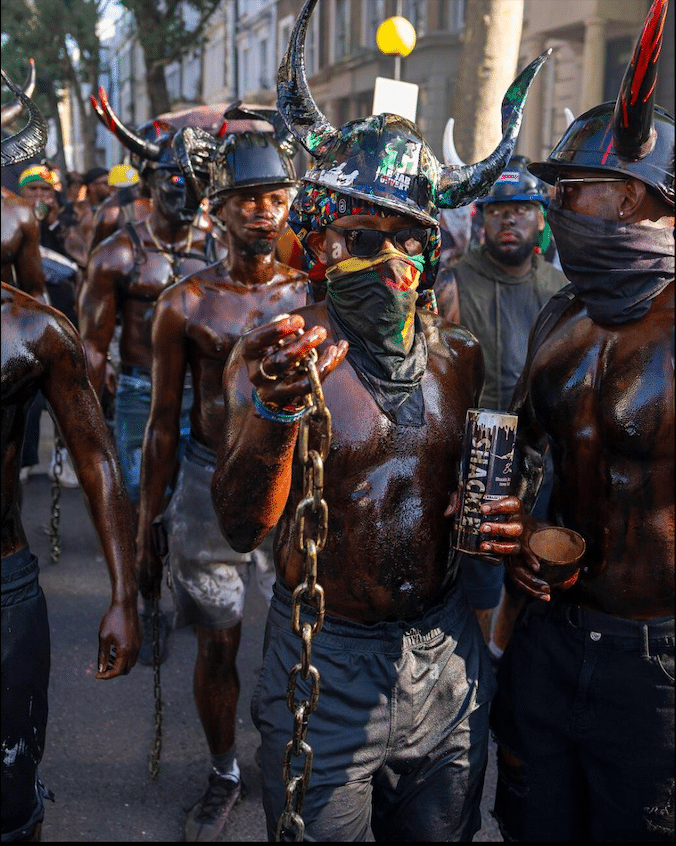

Jab Jab as the main theme of Grenadian carnival
Through him, Grenada affirms a conception of carnival that goes beyond mere celebration. It’s a living culture, capable of linking the past to the present, the intimate to the collective, the local to the national.
In 2026, between Carriacou Carnival and Spicemas Jab Jab appears as a common thread. It crosses territories, links generations and structures the carnival calendar. Above all, it reminds us that, in the Caribbean, carnival is also a space for transmission, where history is told through the body and movement.
For those seeking to understand Grenada beyond the expected images, it offers an essential key to understanding the city. A demanding, dense, yet profoundly revealing key to Grenada’s cultural identity.
This carnival figure has its roots in the island’s colonial history. Its aesthetic, based on black, chains and the body in motion, refers to a collective memory transformed into cultural and festive expression.
During Grenada’s national carnival, it is mainly expressed during the J’ouvert, a central moment when the street becomes a space for collective gathering, marked by strong physical and symbolic intensity.
Carriacou Carnival has a more local, community-based approach, while Spicemas has a broader, national dimension. Both events, however, share a common cultural and historical backbone.
The Big Drum of Carriacou is not simply a musical expression. It is a ritual Afro-Caribbean community, deeply rooted in the history of the slave trade and the reconstruction of the identity of African populations deported to the Caribbean. On this small island in the Grenadines archipelago, drumming, singing and dancing form a common language that links the living to their ancestors. Unlike other territories, where certain practices have been transformed or folklorized, Carriacou has retained a direct and assertive relationship with its African heritage. The Big Drum remains an active social practice, integrated into the collective life and major community events.
Big Drum of Carriacou: an explicitly named African memory
One of the distinctive features is the notion of the “Nation Dance. The term “nation” here refers to the African groups of origin of the enslaved ancestors: Temne, Manding, Igbo, Kongo, Chamba, Cromanti, among others.
This explicit reference to African nations is rare in the English-speaking Caribbean. In Carriacou, it still gives structure :
- – songs,
- – drum rhythms,
- – dance steps,
- – and the ritual order of ceremonies.
Through him, the island commemorates not an abstract Africa, but a plural one. plural Africa transmitted through body, voice and rhythm.

Origins linked to slavery and cultural resistance
Big Drum of Carriacou took shape during the slave era, when music and dance became spaces for cultural spaces for cultural survival. Despite the prohibitions and violence of the colonial system, enslaved populations maintained fragments of African practices, which they recomposed in a new context.
After the abolition of slavery in the XIXᵉ century, these ceremonies did not disappear. They evolve into rituals of commemoration, homage to ancestors and social structuring. It then becomes a strong identity marker, transmitted from generation to generation.
The drum: voice, authority and sound memory
In the Big Drum of Carriacou, the drum is never a simple instrument. It is considered a living presence with symbolic authority. Large drums, made using traditional techniques, interact with secondary drums and sometimes idiophones.
Drummers play a central role:
- – they master the rhythms specific to each nation,
- – they guide the dancers,
- – they regulate ritual time.
The drum structures the ceremonial space and organizes the circulation between the sacred, the social and the collective emotion.

Responsorial songs and fragmented languages
The Big Drum of Carriacou songs are based on a call-and-response structure. A soloist leads the song, which is then taken up by the congregation. The lyrics combine :
- – creolized English,
- – fragments of African languages,
- – ritual formulas whose precise meaning has sometimes become blurred.
Even when words are no longer fully understood, their emotional emotional charge remains intact. Singing acts as a sound memory, capable of transmitting stories, values and community ties without a written medium.
Dance as a body archive
In the Big Drum of Carriacou, dance is a codified language. Each nation has its own specific movements:
- – hip work,
- – circular movements,
- – bust postures oriented towards the earth,
- – symbolic hand and arm gestures.
Dance expresses respect for ancestors, collective joy and contemporary social dynamics. In this way, bodies become veritable living archives. These are the living archives of an African memory recreated in the Caribbean.
Social functions and community cohesion
It plays an essential role in the island’s social life. It is involved in :
- – funerals and commemorations,
- – community celebrations,
- – major cultural gatherings.
It facilitates mourning, strengthens intergenerational ties and provides a space for informal transmission. In a context marked by emigration, the Big Drum also acts as a an anchor of identity for Carriacouans living abroad.

Between spirituality, ancestrality and syncretism
Big Drum of Carriacou is part of a vision of the world in which the ancestors remain present and active. The practice combines :
- – Christian influences,
- – African cosmologies,
- – healing practices and spiritual mediation.
The line between ritual and performance is deliberately blurred. For the participants, the Big Drum is not conceived as a show, but as a way of life. relational act between the living, the community and ancestors.
Intangible heritage and contemporary issues
Today, it is attracting growing interest, particularly in the context of cultural tourism. This visibility offers economic opportunities and increased recognition, but also raises major issues:
- – risk of folklorization,
- – standardization of practices,
- – loss of control by the holders of tradition.
The central issue remains the balance between ritual preservation and openness to the world so that the Big Drum retains its symbolic depth.

Big Drum of Carriacou in the Afro-Caribbean landscape
The Big Drum of Carriacou dialogues with other major Afro-Caribbean traditions: Kumina in Jamaica, orisha drums in Trinidad, bèlè in Martinique, gwo ka in Guadeloupe, vodou rituals in Haiti. Its uniqueness lies in the centrality of named African nations still active in the collective imagination.
The Big Drum of Carriacou embodies a Caribbean that has transformed the history of slavery into shared memory and cultural creativity. Preserving it means supporting tradition-bearers, documenting knowledge and recognizing the value of a practice that makes the drum a language of dignity, continuity and resistance.
This is an Afro-Caribbean ritual practiced on the island of Carriacou, part of Grenada. It combines drums, responsorial songs and codified dances to honor African ancestors and original “nations” (Temne, Igbo, Manding, Kongo, etc.). More than a performance, it is a living community practice, rooted in the memory of slavery and cultural resistance.
Its uniqueness lies in the explicit naming of African nations at the very heart of the ritual, still active in the songs, rhythms and dance steps. This continuity of memory, rare in the English-speaking Caribbean, makes Big Drum Carriacou a particularly identifiable and preserved intangible heritage, transmitted mainly through oral tradition.
Yes, Big Drum of Carriacou is played at community events (memorials, funerals, local celebrations) and cultural festivals. Access, however, requires respect. It’s a ritual with a spiritual dimension. Cultural tourism initiatives today favor supervised formats to avoid folklorization and ensure that local communities retain control over their practices.
The Rézo 2025 seminar, held in Grenada, brought together the directors of the Alliances Françaises of the English-speaking Caribbean, with the same ambition: to consolidate the links between the territories and reinforce the vitality of the French-speaking world in the region.
Having explored the institutional and strategic vision of this regional cooperation in the previous article, “The Alliances Françaises network at the heart of the Caribbean: cooperating, innovating, sharing”, Richès Karayib now turns the spotlight on those who are at its beating heart.
For several days, the participants shared their experiences, challenges and successes, revealing a common conviction: to bring culture and the French-speaking world closer to the people of the Caribbean via the Alliances Françaises.
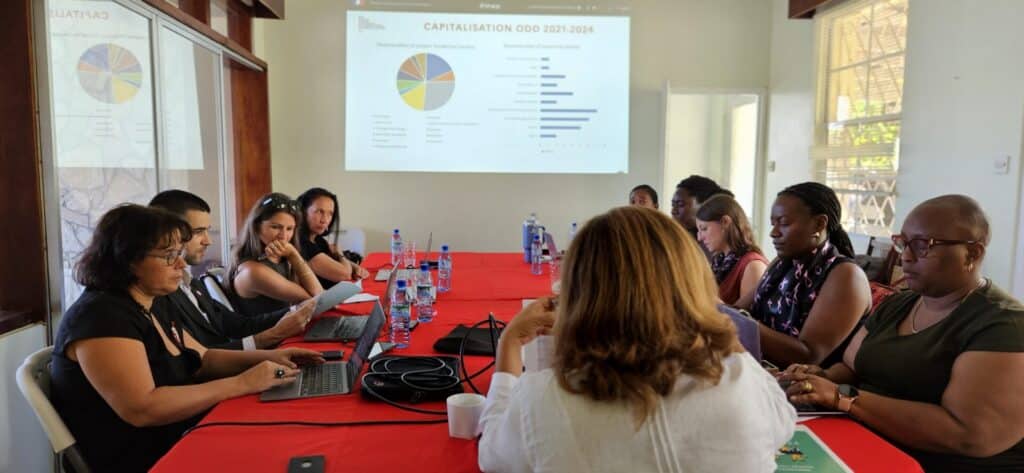
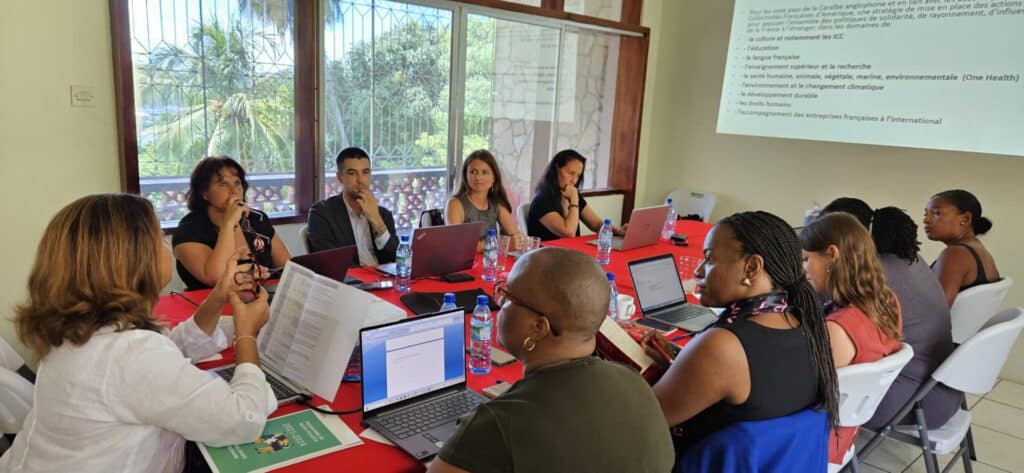
An essential meeting for a fragmented network
Each Alliance Française operates on an island, often geographically isolated. This seminar, organized with the support of the Service de Coopération et d’Action Culturelle (SCAC) of the French Embassy in Saint Lucia, was a breath of fresh air for the Alliance Française network. The directors emphasized that these meetings are an essential step: they enable them to exchange tools, compare local realities and together find concrete solutions to shared challenges. They all emphasized the strength of the collective, the richness of exchanges in an English-speaking environment and the complementarity of approaches between territories.
These moments offer both a human and a formative dimension: they re-energize, reinforce solidarity and remind us that, despite the diversity of contexts, the Alliances Françaises move forward with the same ambition – to make the French-speaking world live and shine in the Caribbean. From an institutional point of view, Christiane Bourgeois, Cooperation and Cultural Action Advisor, reminded us that this annual seminar is the only time when all the directors can get together to discuss successes, difficulties and common perspectives.
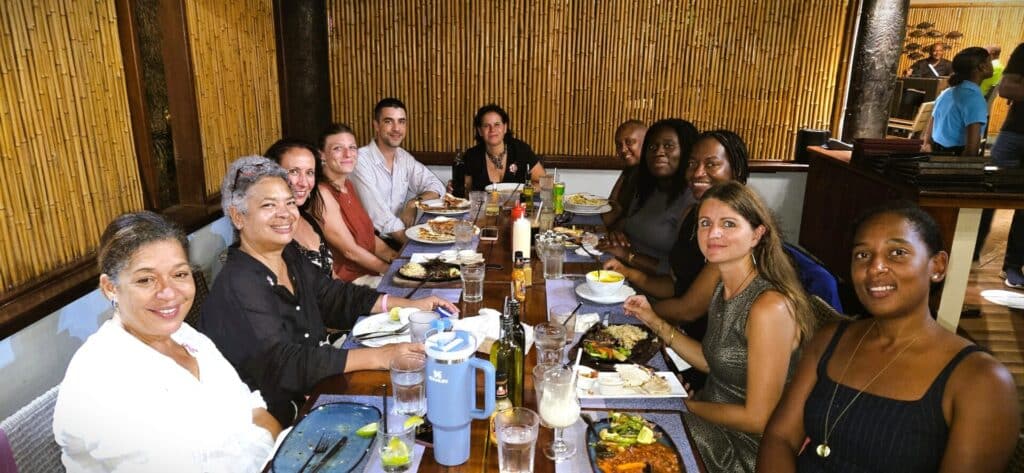
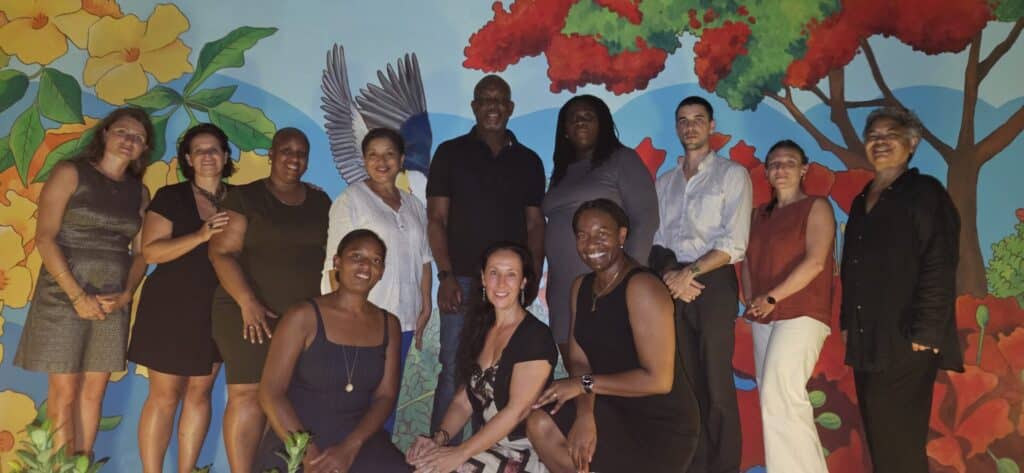
Nine territories, nine realities, but the same conviction: these times of exchange are essential to maintain the network’s momentum and strengthen cooperation in the Caribbean. Beyond these collective exchanges, it is in the field that the vitality of the Alliances Françaises network takes on its full meaning. Each Alliance Française acts in its own way, in line with the realities of its environment and the languages and cultures of its territory.
A deep-rooted network: ten Alliances, one commitment
Although their contexts differ, the Alliances Françaises of the English-speaking Caribbean share the same vocation: to teach, connect and bring the French-speaking world to life on a daily basis. They adapt to local realities with the same conviction: culture and language are levers for social cohesion, openness and the future.
Grenade – Ilona Forte-Gilbert: teaching differently, connecting differently
The Alliance Française de Grenade operates without permanent premises, a situation that Ilona Forte-Gilbert has turned into an asset.
Courses are now offered online, helping to maintain the French language’s presence and reach new audiences. The Alliance is also involved in schools through educational and cultural activities carried out in partnership with teachers. Out-of-home screenings and workshops keep us in touch with the community.
“Our priority is to remain present and useful, even without a building. Digital technology and partnerships enable us to keep the Alliance going.”

Saint Lucia – Aurélie Gbeffa: coordinating and federating
In Saint Lucia, Aurélie Gbeffa runs the local Alliance and is responsible for regional coordination of the ten Alliances Françaises in the Eastern Caribbean. She assists managers with communication, pooling, associative governance, digital transition and cultural revitalization.
It also pilots the Rézo project, an annual seminar supported by the SCAC, which has become a key event for cohesion and collective reflection. In Castries, the Alliance Française de Sainte-Lucie combines language courses, cultural activities and Creole language promotion through exhibitions and workshops.
“Our strength lies in moving forward together while valuing the cultural diversity of our islands.”

Barbados – Océane Gaillard: promoting French in an English-speaking environment
In Barbados, the Alliance Française acts as a linguistic and cultural bridge. Under the leadership of Océane Gaillard, it has consolidated its foothold in a predominantly English-speaking environment. Educational programs have been set up for schools and adults, and the Alliance has trained members of the Regional Security System in French and Haitian Creole.
On the cultural front, it has welcomed the Guianese troupe Ôtepé, and is developing a program open to different French-speaking expressions.
“We represent a plural Francophonie: France, Africa, Canada and the Caribbean. Culture is our best lever for inspiring the desire to learn.”

Trinidad & Tobago – Anyka Batista: an open and inclusive francophonie
In Trinidad & Tobago, Anyka Batista defends an inclusive and creative Francophonie, which values local languages as much as French. Every October, Creole Heritage Month brings together screenings, conferences and concerts, reflecting a strong commitment to cultural diversity.
The Alliance Française also offers courses for children, teenagers and adults, as well as cultural evenings that encourage encounters between communities. Challenges related to visibility and funding persist, but are offset by a collaborative approach with local schools and institutions.
“We want the Francophonie to be seen as part of our culture, not something external.”

Jamaïque – Clovis Lemée: creating living spaces
In Jamaica, Clovis Lemée is revitalizing a historic Alliance Française, transforming it into a place for living and creating. The Language Exchanges, monthly multilingual evenings, bring together a varied public around cultural themes, while the French Library Sessions – mini-concerts filmed in the media library – turn language into a tool for encounters and artistic expression.
“Learning a language is about creating links. That’s what the Alliances Françaises are all about.”
This cultural dynamic is attracting a younger audience and helping to restore the French language to its rightful place in the English-speaking Caribbean.

Saint-Kitts & Nevis – Lucille Caulliez : education and ecology
The Alliance Française de Saint-Kitts & Nevis combines language learning with civic engagement. Her Naturally Learn French project, supported by a grant from the French Embassy to the Eastern Caribbean, Barbados and the OECS, offered six months of free tuition to twelve teenagers from disadvantaged backgrounds, combining French language discovery, ecological workshops and cultural activities. Each month, participants explored local ecosystems, cultivated a garden, created with recycled materials or exchanged online with students from Guadeloupe – a concrete and lively way to learn the language while forging links in the Caribbean.
This project, which earned the Alliance the Green Alliance Award from the Global Environment Facility, illustrates the vitality of an open, sustainable and youth-oriented French-speaking community. She is also developing Francoscop, an audiovisual series produced by young people, dedicated to the French-speaking world.
Director Lucille Caulliez sums up the spirit of the program:
“We want to show that French is a tool for openness and creativity.”

Dominique – Cévinne M’Voula-Henderson: connecting languages and cultures
Established in 1965, the Alliance Française de la Dominique is active in the educational and cultural fields. The Creole & French Spelling Bees, bilingual spelling contests, encourage students to play with the two languages, understand their complementarity and take pride in them. Training workshops and cultural activities support the enhancement of Creole heritage while promoting the French language.
“The aim is to make French and Creole languages of pride and transmission.”

Guyana – Déborah First-Quao: rebuilding and training
In Georgetown, Déborah First-Quao, recently appointed to Guyana, is re-launching a long-standing but low-profile Alliance Française by focusing on training and educational partnerships. She has created a network of French teachers, developed bilingual workshops at the National Library and renewed ties with local institutions. Cultural and educational initiatives aim to put French back into everyday life, despite major logistical constraints.
“We want to restore French to its rightful place in schools, showing that it can be useful, lively and accessible.”

Suriname – Virginie Lemay: building institutional bridges
In Suriname, Virginie Lemay is strengthening links between the Alliance Française and local institutions. Language training is offered to the security forces, the Ministry of Education, businesses and the hotel industry. La Journée Française, organized with the Collectivité Territoriale de Guyane, is a five-day event featuring exhibitions, professional meetings and concerts.
“French becomes a concrete tool for regional cooperation.
This cross-sectoral approach positions the Alliance Française as a key player in the dialogue between Suriname, Guyana and the rest of the Caribbean.

A shared vision: support, connect, promote
For Christiane Bourgeois, Regional Advisor for Cooperation and Cultural Action at the French Embassy in Saint Lucia, this seminar is an essential moment for consolidating the network’s ties. She points out that it’s “the only occasion of the year when we have the opportunity to meet the directors of the Alliances Françaises”, a privileged time to take stock, exchange practices and difficulties, and set up joint projects.
“The Alliances Françaises are an essential tool for embassies, especially in areas like the Caribbean, where there is no Institut Français. They are local organizations, rooted in the territory, with their own board of directors and their own strategy”. She also recalled the key role played by the Alliances in disseminating the French language and promoting dialogue between peoples, stressing that they promote the language, ensure its teaching and maintain the link between the cultural and the educational, between France and the countries of the region.


Aware of the economic fragility of the associative model, Christiane Bourgeois stresses the importance of the support provided by the Service de Coopération et d’Action Culturelle (SCAC) and the French Ministry of Europe and Foreign Affairs.
Last but not least, it pays tribute to Granada, the seminar’s host, and its people:
“It’s an absolutely authentic island, with extremely friendly people. I encourage all French and Caribbean people to come to Grenada, a country that deserves to be known and appreciated.”


Where the French language comes alive
Over and above balance sheets and figures, these meetings are a reminder that the French-speaking world lives and breathes through the people who make it happen. On every island, the Alliances Françaises gather, transmit and inspire. Anchored in their reality, they build bridges between languages, cultures and generations – a living, inclusive and deeply Caribbean Francophonie.
The Alliances Françaises play a central role in French language teaching, cultural dissemination and dialogue between Caribbean territories. Anchored locally, they adapt their actions to the social, linguistic and cultural realities of each island.
The Rézo seminar is the only annual gathering of all the directors of the Alliances Françaises in the Caribbean. It enables them to share practices, strengthen regional cooperation and maintain a collective dynamic in a geographically dispersed network.
The Alliances Françaises develop tailor-made projects: online or face-to-face courses, actions in schools, ecological projects, cultural events, professional training or institutional cooperation. This adaptability is their strength in a predominantly English-speaking environment.
The Caribbean is facing growing environmental pressure from the massive arrival of sargassum: brown seaweed that washes up on the coast in large numbers, weakening coastal ecosystems and affecting fishing, tourism, public health and the daily lives of island communities. It is against this backdrop that the SARSEA – Sargassum Regional Strategies for Ecosystem-based Actions project was officially launched on October 28, 2025 in Saint Lucia, marking a turning point for regional management of this challenge.
A structuring framework and committed partners
Financed by the Agence Française de Développement (AFD) and implemented by Expertise France in partnership with the Commission of the Organization of Eastern Caribbean States (OECS), the SARSEA project offers the states concerned a framework for cooperation, knowledge and action.
The SARSEA project will focus on a number of key areas:
- – Strengthen regional cooperation on Sargasso planning and management, to improve political coordination and international visibility of the phenomenon.
- – Support small island states – notably Dominica, Grenada, Saint Lucia and Saint Vincent and the Grenadines – in implementing integrated sargassum management and recovery initiatives, adopting a circular and sustainable approach.
- – Support regional scientific cooperation to better understand the phenomenon, anticipate its effects and guide management strategies.
- – Integrate the gender approach into all Sargasso-related policies and actions, to ensure an inclusive and equitable response.

The launch: a key moment for dialogue
The opening ceremony in Saint Lucia was attended by governmental, institutional and scientific representatives from all over the Eastern Caribbean. Among them were the French Ambassador to the Eastern Caribbean, Barbados and the OECS, Marie-Noëlle Duris, and the French Ambassador for regional cooperation in the Atlantic zone, Arnaud Mentré.
Dominica stressed the need for a coordinated, multi-level approach to Sargassum management, citing the role that each island can play in a value chain adapted to its capabilities. Saint Lucia reaffirmed its commitment to playing an active part in this collective response. Grenada, for its part, put forward several priorities: the creation of a regional testing center, the implementation of a grounding monitoring system, a harmonized collection mechanism and a strengthening of sanitary monitoring.
During the event, a partnership protocol was signed between Expertise France and the OECS Commission, reinforcing the institutional framework for regional action. Round tables addressed the national visions of partner countries, followed by the challenges and opportunities of regional cooperation in Sargasso management. The afternoon was devoted to a presentation of the project strategy and a coordination meeting of partners. The following day, participants took part in a collective scientific workshop led by the Institut de Recherche pour le Développement.


Towards a shared Caribbean strategy
The SARSEA project aims to consolidate a network of public, private and scientific players in the region, with a view to pooling skills, data and best practices. The objective of the SARSEA project is clear: to improve preparedness and response to Sargasso groundings, while strengthening the resilience of coastal territories.
Under the SARSEA project, although four states will benefit directly from the project, all twelve OECS member states will be able to take advantage of the lessons, tools and best practices that emerge. This reinforces the regional and inclusive dimension of the action.


Why is this project so important?
Massive sargassum groundings in the Caribbean are not an isolated phenomenon: they disrupt coastlines on a daily basis, affect people’s health (toxic gas emissions during decomposition, respiratory problems), weaken marine ecosystems (seagrass beds, corals, mangroves) and threaten key economic sectors such as fishing and tourism.
In this context, fragmented or national management alone is no longer enough. The phenomenon crosses borders, currents and ecosystems. The SARSEA project proposes a coordinated, sub-regional response based on robust science.
Future milestones
- – Structuring integrated value chains around sargassum: from collection to valorization (possibly into bioproducts, fertilizers, etc.).
- – Set up harmonized monitoring systems for strandings, collection and sanitary analysis.
- – Deployment of concerted scientific actions to fill knowledge gaps and guide better-adapted public policies.
- – Promoting women’s participation and gender mainstreaming in all phases of action.
- Dissemination of project feedback, tools and best practices to all OECS member states.


The launch of the SARSEA project marks an essential step in the regional mobilization against the impact of sargassum in the Eastern Caribbean. By combining political, scientific, technical and inclusive cooperation, the island states now have a structured framework for tackling this complex phenomenon. The SARSEA project does not replace national or local work: it amplifies and structures it, giving it scope and resources. With this new impetus, the prospect of concerted, better-informed and sustainable management of sargassum is taking shape in the region.
Together for a radiant Caribbean, the Alliances Françaises become bridges between cultures, languages and territories.
At the RÉZO seminar in Grenada, the directors and presidents of the Alliances Françaises of the English-speaking Caribbean met to strengthen cultural and linguistic cooperation in the region and define new common directions.
Supported by the French Embassy’s Service de Coopération et d’Action Culturelle (SCAC), which also took part in some of the discussions, the seminar was an opportunity to strengthen synergies between the Alliances Françaises network and consolidate dialogue with the SCAC, in a spirit of listening and collaboration.

Between exchanges, common strategies and innovative projects, this meeting outlined the contours of a more open, inclusive and modern French-speaking and multilingual Caribbean.
A key moment for an evolving network, serving a Caribbean that learns, shares and shines.


A meeting with a family flavour
Sometimes they’ve known each other for years, sometimes only through a screen. But from the very first minutes, the laughter, hugs and warmth of the reunion remind us that, in the Caribbean, the Alliances Françaises network is above all a human adventure.
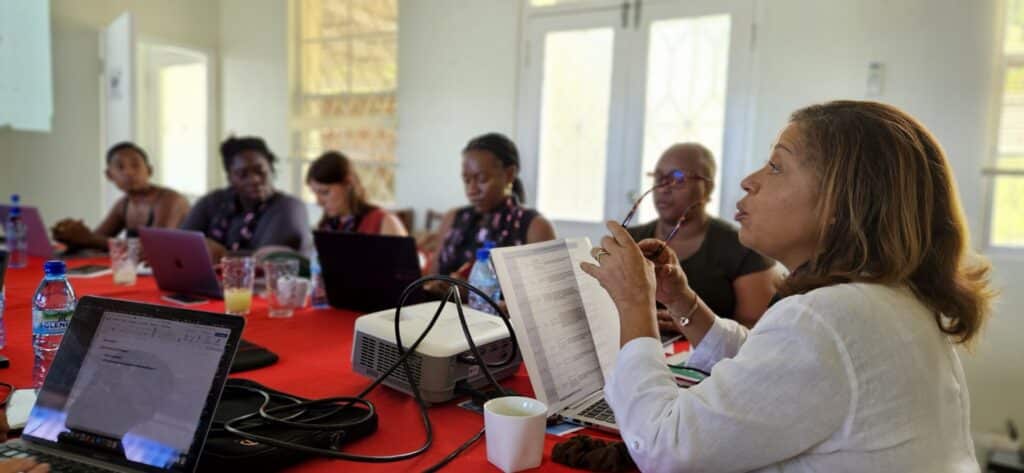
Over the course of three days, directors and presidents shared their experiences from country to country – from day-to-day challenges to local pride and a shared determination to build a stronger, more united and more visible network. In the room, diversity was evident in the accents, the backgrounds and the ideas. From Jamaica to Trinidad and Tobago, each voice brought its own nuance, its own experience, its own way of bringing culture and the French-speaking world to the heart of the territories.


Welcomed by Ilona Fort-Gilbert, Director, and Suelin Low Chew Tung, President of the Alliance Française of Grenada, participants spent several days exchanging ideas and reflections in an atmosphere that was both productive and warm.


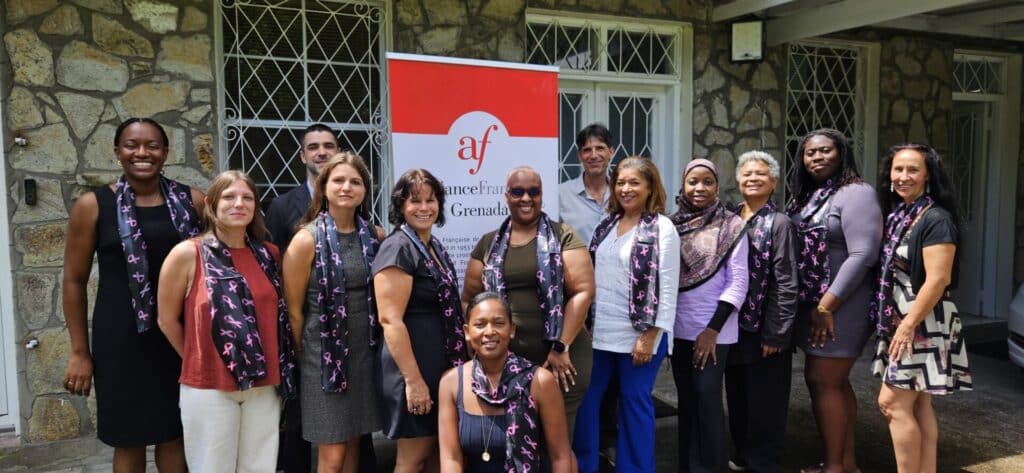
Around the table, the directors: Aurélie Gbeffa (Saint Lucia and regional coordinator of the Alliances Françaises of the Eastern Caribbean), Océane Gaillard (Barbados), Virginie Lemay (Suriname), Lucille Caulliez (Saint Christophe-et-Niévès), Cévinne M’Voula (Dominique), Anyka Batista (Trinidad and Tobago), Ilona Forte-Gilbert (Grenada), Déborah First-Quao (Guyana) and Clovis Lemée ( Jamaica), as well as Christiane Bourgeois (CORCAC – Saint Lucia) and Suelin Low Chew Tung (President – Grenada).

Joining them by videoconference were the presidents: Charlene White-Christian (Dominica), Ruben Del Prado (Suriname), Danielle Parkinson (Trinidad and Tobago), Kara Daly (Saint Kitts and Nevis), Delphine Hadley and her successor Denvil Douglas (Saint Vincent and the Grenadines), and Stuart Defreitas, vice-president (Guyana).


During the discussions, Christiane Bourgeois, Regional Counsellor for Cooperation and Cultural Action (Conseiller Régionale de Coopération et d’Action Culturelle – CORCAC), Head of the Cultural and Cooperation Department (Service de Coopération et d’Action Culturelle – SCAC) of the French Embassy to the Eastern Caribbean, Barbados and the OECS, underlined the essential role of the Alliances Françaises in promoting French and Caribbean culture.

The Regional Counsellor for Cooperation and Cultural Action – CORCAC structures its action around cultural, educational, scientific and economic cooperation, seeking to link French priorities – culture, the French-speaking world, sustainability and human rights – to the specific needs of the countries of the English-speaking Caribbean. We believe that it’s not just the structures, but also the committed men and women on the ground who bring this open, supportive and creative French-speaking community to life.
“The Alliances Françaises are essential partners.”

The presence of Jean-François Hans, Geographical Delegate for Zone C at the Fondation des Alliances Françaises, reminded us from Paris of the importance of the network’s global cohesion.
Charter of values, governance tools, visual identity and support for local teams: the Foundation ensures that quality and ethics are shared across all five continents.
“A large Alliance must always reach out to a smaller one. That’s our collective DNA.”
This solidarity, the driving force behind the movement, takes on its full meaning in the Caribbean, where logistical and human challenges combine with cultural and linguistic richness.
A global Francophonie rooted in local realities
Founded in 1883, the Alliances Françaises network is now the world’s largest cultural network, with over 820 establishments in 135 countries.
In the English-speaking Caribbean, ten Alliances promote the French language and culture: Barbados, Saint Lucia, Dominica, Grenada, Jamaica, Saint Kitts and Nevis, Guyana, Saint Vincent and the Grenadines, Trinidad and Tobago and Suriname.
In 2024, they welcomed over 1,000 learners, delivered 9,000 hours of courses and organized 160 cultural events, bringing together over 7,000 participants.
These figures reflect a living, dynamic reality: the Caribbean Francophonie is not just an idea, it’s a daily presence in classrooms, galleries, festivals and the streets of island capitals. Francophonie thrives on exchanges, local initiatives, and the passion of those who keep the French language alive.

A network in motion: between vision and action
Projet Rézo
Driven by a shared desire to see the network evolve, the RÉZO project is a real driving force for the Alliances Françaises of the English-speaking Caribbean, and a way of thinking about the network differently: more collaborative, more agile, more visible.
Supported by the French Embassy’s Service de Coopération et d’Action Culturelle (SCAC), it aims to strengthen regional coordination, pool tools and professionalize teams. Over the course of the sessions, discussions highlighted a shared ambition: to harmonize practices, encourage pedagogical innovation and strengthen skills, while consolidating the place of the French-speaking world in plural linguistic environments.
Under the coordination of Aurélie Gbeffa, six areas of work were addressed:
- – Associative governance and transparency: strengthening internal management and communication with members.
- – Team training: consolidating skills and promoting regional mobility.
- – Certifications and educational quality: aligning training and evaluation standards across the network.
- – Digital transition: developing collaborative tools and shared digital resources.
- – Setting up RÉZO projects: creating and leading joint projects between Alliances.
- – Revitalizing media libraries: modernizing cultural spaces to better reflect today’s audiences and practices.
Each Alliance leaves with a personalized roadmap, proof of a shared commitment and a strong regional dynamic.

Micro-projects
In the same vein, the SCAC has reiterated its key role in supporting and facilitating micro-projects. These subsidies, allocated each year to local project leaders, are a concrete lever for the implementation of cultural, educational and civic initiatives throughout the region.
A virtuous mechanism that supports local creativity, while promoting training and autonomy for local players. Beyond the financial aspect, this initiative, a signature of the French Ambassy of Saint Lucia, reflects a form of close, human-centered diplomacy that fosters exchange and cooperation between Francophone and Anglophone territories.
From Saint Lucia to Dominica, from Trinidad and Tobago to Grenada, the micro-projects supported reflect the diversity of shared challenges: culture, education, the environment, inclusion and innovation. These are just some of the areas in which the Alliances Françaises, supported by the SCAC, are building bridges between societies and driving sustainable cooperation in the Caribbean.

CARIFRAN
This strategy is also part of the regional dynamic of the CARIFRAN program, dedicated to the training and mobility of teachers of French in the Caribbean.
Implemented by the Organization of American States and funded by the French Embassy to the Eastern Caribbean, Barbados and the OECS to the tune of 453,000 euros, CARIFRAN is helping to strengthen a French-speaking educational community open to inter-island exchanges and linguistic cooperation. It embodies the complementary nature of the network’s educational, cultural and diplomatic activities.

The strength of a fragile network
Over and above the discussions, workshops and decisions, the RÉZO seminar confirmed the vitality of a network in the throes of transformation. But it also served as a reminder of the fragility of an associative model that relies on commitment, passion and solidarity more than on substantial resources.
In the English-speaking Caribbean, as elsewhere, the Alliances Françaises carry out their activities with modest means but remarkable efficiency, and with a real desire to move forward together, thanks to the strength of their teams, their volunteer presidents and the constant support of the SCAC and the Fondation des Alliances Françaises.

It’s this collective humanity, built on resilience and conviction, that makes the network unique: the ability to forge links, invent and reinvent ourselves, even in the face of uncertainty. And while cultural and linguistic cooperation can sometimes be a challenge, it is also a promise: that of a plural Caribbean, connected, proud of its diversity and capable of writing its future through dialogue between cultures.

The BioSPACE project, led by the Organization of Eastern Caribbean States (OECS) and its partners, aims to strengthen the sustainable management of natural resources, protect biodiversity and support island communities in the face of the impacts of climate change. Its actions focus on environmental data collection, ecosystem restoration and the development of sustainable livelihoods.

In the Eastern Caribbean, BioSPACE supports island territories in their transformation towards a more resilient model. Whether it’s farming, fishing, ecosystem restoration or bee-keeping, these initiatives strengthen livelihoods while preserving biodiversity.
These videos illustrate the concrete actions undertaken by BioSPACE in different parts of the region, giving a voice to communities and showing how they are becoming active players in the preservation of their environment.

Agriculture in Saint Vincent and the Grenadines
In Saint Vincent and the Grenadines, sustainable agriculture is at the heart of the initiatives supported by BioSPACE. This video shows how adapted farming practices boost food security and enable communities to better cope with climate change.
Fishing in Saint Vincent and the Grenadines
Artisanal fishing is essential to the people of Saint Vincent and the Grenadines. With the support of BioSPACE, sustainable management measures are helping to protect marine resources while ensuring stable incomes for local fishermen.
Restoration of the Woburn mangrove (Grenada)
The restoration of mangroves in Woburn, Grenada, illustrates the importance of coastal ecosystems in the fight against erosion and climate change. Thanks to the BioSPACE project , these vital areas are regaining their protective role and becoming areas of restored biodiversity.
Beekeeping at Produce Delight (Saint Kitts and Nevis)
In Saint Kitts and Nevis, beekeeping is supported by BioSPACE as a sustainable economic alternative. It adds value to honey production, diversifies livelihoods and protects pollinators, essential players in biodiversity and local agriculture.
Through these examples, the BioSPACE project is demonstrating its central role in the resilience of Caribbean communities and the preservation of island ecosystems.
To find out more about the project and discover other Caribbean initiatives, read Richès Karayib magazine #2 – The Caribbean’s Maritime Attractiveness
A small island with a great heritage
Carriacou, Grenada‘s sister island, lies in the heart of the Grenadines, between the main island and St. Vincent. With just 13,000 inhabitants, it embodies a more intimate Caribbean, far removed from the mass tourism logics that mark other territories. Its name, inherited from the Amerindian populations, means “island of reefs”, in reference to the richness of its seabed. This identity, both geographical and symbolic, sums up what Carriacou is all about: a territory where nature, culture and history intertwine to offer a singular vision of the region.

A living cultural heritage
One of Carriacou’s most remarkable features is its attachment to its cultural traditions. Big Drum Dance and music inherited from African ancestors, remains at the heart of community gatherings. Each rhythm, each dance step, tells the story of the people who came from Africa and settled on the island over the centuries. This intangible heritage is a direct link to the island’s Caribbean and African roots, resonating with the region’s collective memory.

But this is not the only cultural expression on the island. Its carnival, marked by the Shakespeare Mas is a singularity unique in the world. Inhabitants, dressed in traditional costumes, declaim Shakespeare’s verses in the streets. This practice, inherited from the British colonial period, bears witness to the creative appropriation of a European heritage by a Caribbean society. It illustrates the ability of the islands to transform influences from elsewhere into deeply rooted local traditions.

Shipbuilding, a distinctive expertise
Carriacou is also known for its tradition of wooden boat building. This know-how, handed down from generation to generation, remains a pillar of local identity. Artisanal shipyards still produce sturdy boats, used for fishing and sometimes even for inter-island transport. This practice, which combines ancestral knowledge with adaptation to contemporary needs, reflects the ingenuity and resilience of the local people.
Beyond the economy, shipbuilding is a cultural symbol. Each boat launched is celebrated as a community event, bringing families and neighbors together in an atmosphere of solidarity. This ritual gives the island a unique dimension in the Caribbean, where few territories have maintained such an attachment to this type of tradition.


Unspoilt nature
The beauty of the island’s natural landscapes is another attraction. Beaches such as Paradise Beach or Anse La Roche. These are peaceful settings where tranquillity takes precedence over the influx of visitors. Nearby, the Sandy Island is an ecological jewel. Accessible by boat, this small islet is a protected reserve, rich in coral and marine species. Carriacou demonstrates its commitment to preserving its environment, an essential condition for maintaining the balance between human activities and biodiversity.
The island’s relief, less rugged than that of other Caribbean territories, also allows for small-scale agriculture. Manioc, yams, sweet potatoes and tropical fruits make up a diet that remains linked to the land. This agricultural dimension, often invisible to visitors, nonetheless contributes to the island’s food self-sufficiency and the maintenance of traditional practices.


Authenticity with a difference
Unlike other more high-profile destinations, Carriacou has chosen a more measured path to development. Tourism structures do exist, but on a smaller scale: guesthouses, family-run restaurants, excursions led by locals. This approach limits the impact of tourism on the environment and allows economic benefits to circulate more widely within the community.
This model reflects a vision of tourism that is in tune with the island’s values: preservation, respect for traditions and a focus on local identity. It attracts a public interested in culture, history and direct contact with the local population, rather than standardized leisure consumption.


Carriacou in Caribbean history
Carriacou’s importance goes beyond its small size. Like many islands in the region, it has been marked by colonization, the slave trade and the struggle for influence between European powers. The first inhabitants, the Amerindians, left an imprint that is still perceptible in the toponym and certain traditions. African populations, who arrived by force, brought with them the knowledge and cultural expressions that today form the basis of the island’s identity.
In its own way, the island illustrates the overall history of the Caribbean: that of an area shaped by human movement, cultural resistance and constant adaptation. This historical role, often overlooked, deserves to be highlighted in any reflection on the region.
A Caribbean with a human face
Highlighting Carriacou is a way of showing a different Caribbean, where proximity to the inhabitants and respect for traditions take precedence over the quest for fast consumption. It’s also a reminder that a small island can carry a powerful message: that of a society capable of preserving its heritage while adapting to the realities of the present.
Carriacou, with its small size and ability to maintain ancient practices, demonstrates that authenticity is still possible in the contemporary Caribbean. The island is not content to exist in Grenada’s shadow: it is asserting its singularity, and its attachment to an identity that combines African heritage, colonial influences and local know-how.
The Organization of Eastern Caribbean States (OECS) has taken another step forward in its commitment to sustainable development by signing a memorandum of understanding with the International Solar Alliance (ISA). The agreement was signed in Santiago, Chile, at the seventh meeting of the ISA Regional Committee for Latin America and the Caribbean, held from August 4 to 6, 2025.
More than just a technical document, it embodies a collective vision: to accelerate the energy transition of small island states thanks to solar energy, and reduce dependence on costly fossil fuel imports.
OECS: a central player in the Eastern Caribbean
Created in 1981, the OECS currently has eleven members, including six independent states: Antigua and Barbuda, Dominica, Grenada, Saint Kitts and Nevis, Saint Lucia and Saint Vincent and the Grenadines. This regional organization plays a fundamental role in economic integration, shared governance and the coordination of public policies in strategic areas such as education, health, climate and energy.
The signing of this protocol with the ISA is part of a wider strategy to strengthen the economic and environmental resilience of a region particularly exposed to the effects of climate change, devastating hurricanes and volatile energy prices.

The strengths of the International Solar Alliance
The ISA, founded in 2015 on the initiative of India and France, today brings together 124 member states on four continents. It positions itself as a gas pedal of the solar transition, offering innovative financing, technical support and capacity-building programs. Its expertise is particularly valuable for countries in the South, which have to reconcile economic development with climate imperatives.
Under the agreement, ISA undertakes to :
- ✅ promote solar energy in member states,
- ✅ mobilize public and private funds via the World Solar Fund and other climate finance instruments,
- ✅ strengthen local skills through Solar Technology Application Resource Centers (STAR-C).

Action-oriented cooperation
For the OECS, the agreement signed with the ISA goes beyond mere institutional cooperation. It aims to achieve concrete results:
- ✅ develop solar projects capable of reducing dependence on diesel,
- ✅ facilitate access to financing for governments and businesses alike,
- ✅ create skilled jobs in green industries,
- ✅ pool solar equipment purchases to lower costs.
This strategy is perfectly aligned with the “Decade of Sustainable Energy” launched by the OECS for the period 2025-2035. The objective is clear: to make solar energy a cornerstone of the economic and social development of member states.

The specific challenges of small island states
OECS member countries belong to the category of Small Island Developing States (SIDS). Their vulnerability is manifold:
- Geographical, because hurricanes and extreme weather can destroy energy infrastructures in a matter of hours;
- financial, since access to international credit remains limited due to the small size of their economies;
- structural, with heavy dependence on fossil fuel imports that weigh heavily on national budgets and trade balances.
Kerryne James, Minister for Climate Resilience and Co-Chair of the ISA Regional Committee for Latin America and the Caribbean, emphasized this point: “We need to recognize that access to finance for the energy transition remains a major challenge for SIDS.”
A regional center of excellence for solar energy
One of the most innovative aspects of this cooperation is the creation of a Regional Center of Excellence for Solar Energy. This will be used to develop local expertise, promote knowledge sharing and set up training programs tailored to Caribbean realities.
According to Ashish Khanna, Managing Director of the ISA, this initiative will also leverage digital innovations: “By promoting group purchasing of solar energy through digital bidding platforms, we will improve efficiency, reduce costs and attract large-scale private investment.”
A long-term vision for the Caribbean
For Dr Didacus Jules, Director General of OECS, the agreement signed is not just about energy. It is a truly strategic investment in the resilience and economic independence of the region. By transforming the energy sector, the OECS intends to offer its citizens a better quality of life, while reducing greenhouse gas emissions.
The Decade of Sustainable Energy (2025-2035) thus marks a turning point: solar energy is no longer seen as just another option, but as a pillar of the economic and social future of the islands of the Eastern Caribbean.
OECS as regional leader
By signing this agreement with the International Solar Alliance, the OECS confirms its role as a leader in the Caribbean energy transition. By focusing on solar energy, it is charting a credible course towards greater resilience, independence and prosperity for its member states. Beyond the technical aspect, this partnership embodies an ambition: to enable small island states to transform their vulnerability into an asset, by becoming laboratories for sustainable solutions on a global scale.