
There is currently no direct flight between Guyana and French Guiana. However, following the air services agreement signed on September 30, 2026, which replaces the 1976 agreement, Trans Guyana Airways is planning at least two flights per week between Georgetown and Cayenne, though no dates have been announced.
In Georgetown, Guyana, the journey to Cayenne begins with a three- to four-hour drive to Moleson Creek. Next comes a ferry that departs only once a day, a crossing into Suriname, and then a second border crossing. That’s still what it takes in 2026 to reach French Guiana from English-speaking Guyana. The direct flight between Guyana and French Guiana being planned by Trans Guyana Airways would cut this journey from nearly 24 hours to about 1 hour and 15 minutes, according to the airline.
Direct Flight Between Guyana and French Guiana: What the September 30, 2026 Agreement Unlocks
On September 30, 2026, in Georgetown, Guyana’s Minister of Public Utilities and Aviation, Deodat Indar, and the French Ambassador, Olivier Plançon, signed a new air services agreement. The agreement replaces the one from 1976. For fifty years, air service between Guyana and France had therefore rested on the same framework.
The new agreement covers traffic rights, safety, fares, and code-sharing between airlines. Guyana has designated Trans Guyana Airways, which is preparing two weekly flights between Georgetown and Cayenne, subject to authorization. As of October 13, 2026, neither the aircraft, nor the fares, nor the date of the first takeoff is known.
The issue goes beyond a single airplane. As of November 2025, no direct air link connected France and Guyana, and plans for a Cayenne-Paramaribo-Georgetown route had been scrapped. A direct flight between Guyana and French Guiana would therefore be a concrete answer to this gap, if the project comes to fruition.

Georgetown to Cayenne: Why the Trip Takes Almost a Day
There are no bridges across the Corentyne, the river that separates Guyana from Suriname. The MV Canawaima ferry connects Moleson Creek to South Drain in about an hour and a half. You must drive to Paramaribo, then to Albina, cross the Maroni River toward Saint-Laurent-du-Maroni, and continue for about three hours to Cayenne. Each leg of the journey depends on the previous one, and missing the ferry at Moleson Creek means losing a day.

This route is vulnerable. In August 2026, the MV Canawaima was grounded for nearly a week following a decision by Suriname’s maritime authority, and passengers were stranded on both sides of the river. The ferry resumed service on August 29, 2026, but it is expected to be retired in 2027. On July 1, 2026, Suriname announced that it would single-handedly finance the 3.1-kilometer-long future bridge, a decision that Guyanese President Irfaan Ali said came as a surprise to him.
What a Direct Flight Between Guyana and French Guiana Would Change for French Guiana
In the first half of 2026, French Guiana welcomed 45,465 visitors from outside the territory, 53% more than a year earlier, with estimated spending of 81.4 million euros. Nearly 70% came from mainland France. A connection to Georgetown would add an English-speaking neighbor to this map, and Trans Guyana Airways is already discussing connections in Cayenne with Air France.
One obstacle remains, however. In November 2025, Guyanese citizens who wanted to travel to France had to apply for a visa at the French Embassy in Suriname, at a cost of 90 euros. A 1-hour-and-15-minute flight would shorten the distance, but not this process. French Guiana is also home to residents born in Guyana, 2,403 according to the 1999 census, 1,046 of them in Cayenne. The figure is dated, but these families would be the first to see the distance change.

What Guyana Could Gain
Guyana received 453,489 visitors in 2025 and 360,623 in the first nine months of 2026. Its president announced a 33.3% increase in the first half of 2026. A direct flight between Guyana and French Guiana would connect Georgetown to a French territory of the European Union and offer a new route for travelers and businesses. For both Cayenne and Georgetown, the stakes go beyond tourism. Two neighboring capitals, one English-speaking and the other French-speaking, would be an hour’s flight apart instead of a day’s drive. However, no estimate of the economic impact has been announced, in Georgetown or in Cayenne.
An announcement, but not a schedule yet
On October 3, 2026, Trans Guyana Airways confirmed that it had begun the administrative process. Georgetown and Cayenne, the two capitals of the Guiana Shield, are now awaiting a date. It remains to be seen whether the first passengers will be families, businesspeople, or tourists. The next announcement will reveal whether the direct Guyana-French Guiana flight will take off before the Corentyne ferry is phased out, or whether travelers will still have to rely, for the time being, on that single daily departure.
Frequently Asked Questions
No. Trans Guyana Airways is preparing these flights, but as of October 13, 2026, no launch date or schedule has been announced.
By road, up to 24 hours, including a ferry, taxis, and crossing the Maroni River. By plane, Trans Guyana Airways estimates the flight time at about 1 hour and 15 minutes.
It replaces the 1976 agreement between Guyana and France. It governs traffic rights, safety, fares, and code-sharing, and Guyana has designated Trans Guyana Airways under this agreement.
In Guyana, an unexpected promotion is sometimes enough to bring a smile to an entire neighborhood—or even an entire street. A low-key employee suddenly appointed to head a department, an inexperienced cousin catapulted into the role of director, a voice that had gone unnoticed until then and is suddenly being heard by everyone. At times like these, a phrase almost inevitably makes the rounds in street or family conversations: “Monkey turn captain”—literally, “the monkey becomes captain.” It’s a simple image, but one that speaks volumes about the way Guyanese society views—with irony rather than malice—those who suddenly rise to power, without ever quite placing its full trust in them.
What does “Monkey turn captain” mean?
“Monkey turn captain” refers to a person who was previously viewed as frivolous or unqualified but suddenly finds themselves in a position of authority, met by those around them with a mix of surprise and skepticism. The meaning of the proverb goes beyond a simple joke. “Monkey turn captain” questions the legitimacy of new power without always denying it outright, which distinguishes the phrase from outright mockery and brings it closer to a warning passed down from generation to generation. This proverb, like many others in Guyana, is still passed down primarily orally rather than in writing, carried on by families and communities rather than through books.
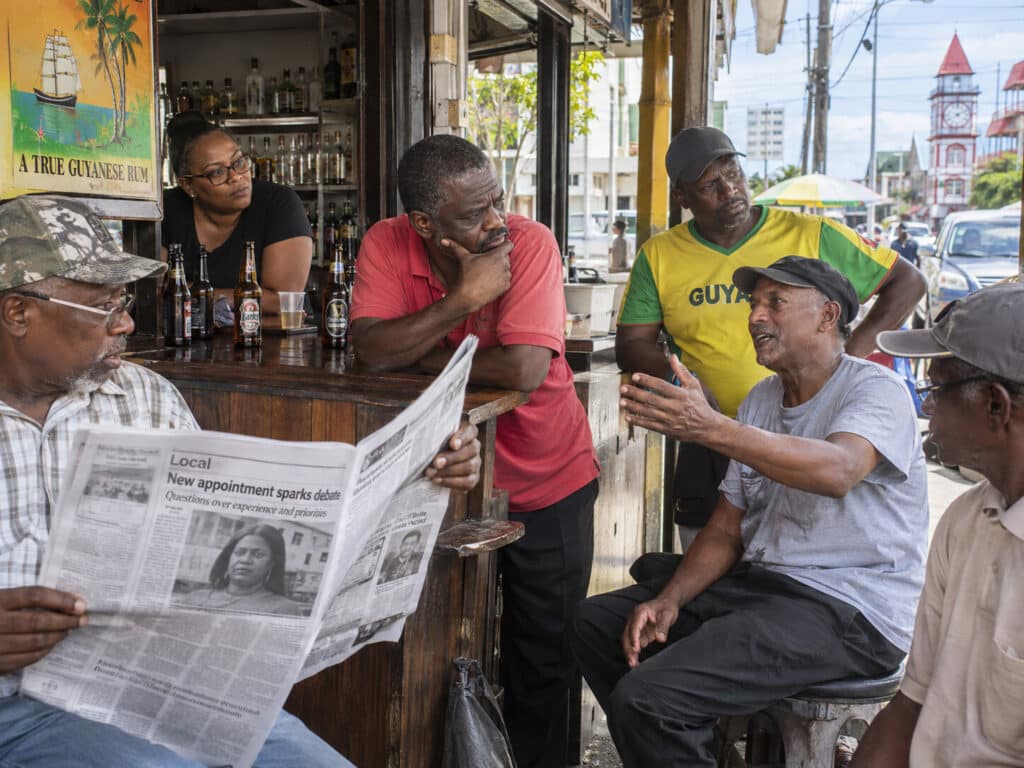
A statement that passes judgment without always condemning
The expression is used both to comment on a public event and to gently tease a loved one who has been promoted at work. It isn’t necessarily hostile. Above all, it conveys a collective sense of surprise, that of a community watching a hierarchy turn upside down faster than it had expected. When used among close friends and family, the phrase remains lighthearted, almost affectionate.
In a more public context, such as in a column or political commentary, it takes on a more critical tone, especially when the new authority figure quickly fails to live up to expectations. The shift from one register to another, from informal to more formal, is precisely one of the most studied characteristics of Guyanese Creole.

A country where hierarchies are changing rapidly
Guyana has been undergoing rapid economic transformation for the past decade. The discovery of hydrocarbons off the coast in 2015 led ExxonMobil to begin production at the Liza field on December 20, 2019, making the country one of the world’s fastest-growing economies since then. This acceleration has reshaped social and professional dynamics at an unusual pace for a country with a population of approximately 840,000.
In this context, a proverb that speaks precisely of sudden promotions and unexpected new authorities remains particularly relevant, without the need to name any specific cases for everyone to understand what it’s all about. The saying has also spread beyond the country’s borders, carried by a large Guyanese diaspora living in New York, Toronto, and London, who continue to use it to comment, from afar, on the latest developments in their homeland.

Guyanese Creole: A Multilayered Language
Guyanese Creole spans a range of registers, from those closest to Standard English to more colorful forms that include proverbs such as “Monkey turn captain,” as demonstrated as early as 1987 in a seminal academic study devoted to this language. This multi-layered language reflects the very diversity of Guyana, which is populated by descendants of enslaved Africans, indentured laborers from India, as well as Amerindian, Chinese, and Portuguese communities. In this composite linguistic landscape, the proverb embodies folk wisdom transmitted orally rather than having a single, dated origin—a fact that makes it difficult to establish a precise etymology with certainty, though this in no way diminishes the power of the imagery it continues to convey.

A proverb that keeps coming back
“Monkey turn captain” has never needed a specific event to remain relevant. The proverb lives on in everyday conversation, ready to resurface whenever a promotion surprises more than it convinces. RK has already chronicled Guyana through the Umana Yana, this diplomatic pavilion built in Georgetown by Wai-Wai artisans from the interior of the country.
“Monkey turn captain” is perhaps its more biting counterpart, one that reminds us that a new status, on its own, is never enough to earn respect. Who, in Guyana or elsewhere in the Caribbean, is wearing that captain’s uniform today—a rank no one has truly granted him yet—and how much longer before the crew points this out to him?

“Monkey turn captain” literally means “the monkey becomes captain.” The expression refers to a person who was previously viewed as frivolous or unqualified but who suddenly finds themselves in a position of authority.
Guyanese Creole is a language with multiple registers, which has been documented by academic research since the late 1980s and is spoken by a population of African, Indian, Amerindian, Chinese, and Portuguese descent.
Since the discovery of oil in 2015 and the start of production in 2019, Guyana has experienced one of the fastest rates of economic growth in the world, leading to a surge in promotions and sudden changes in status—exactly what this proverb refers to.
Gaston Monnerville, born on January 2, 1897, in Cayenne, French Guiana, served as President of the French Senate from 1958 to 1968. To this day, he remains the only Black president of a chamber of the French Parliament, a position he attained after a career as a lawyer and later as a member of the Resistance during the Occupation. In 1962, Gaston Monnerville publicly opposed General de Gaulle over the reform of the method for electing the President of the Republic, a confrontation that has gone down in the history of the Senate.
Gaston Monnerville vs. de Gaulle: The 1962 Scene

On October 9, 1962, Gaston Monnerville addressed the Senate from the rostrum at the Palais du Luxembourg in Paris. The President of the Republic, Charles de Gaulle, had just announced a referendum to elect the president by direct universal suffrage, relying on Article 11 of the Constitution rather than the amendment procedure provided for in Article 89. Monnerville denounced this decision before the senators. According to several consistent accounts of that session, he addressed General de Gaulle with a phrase that has remained famous in the Senate: “No, Mr. President of the Republic, you do not have the right—you are taking it.”
A few days earlier, in late September 1962, during a speech in Vichy, he had already announced his intention to vote “no” and described General de Gaulle’s move as abuse of office.” This term would leave a lasting mark on the debates of the nascent Fifth Republic. On October 1, 1962, despite this open confrontation with the executive branch, the senators re-elected Gaston Monnerville as President of the Senate. The referendum was held a few weeks later, and the reform was ultimately adopted by the French people.
From Cayenne to Toulouse: A Family That Believes in Education
Gaston Monnerville was born on January 2, 1897, in Cayenne, French Guiana, the son of Marc Saint-Yves Monnerville and Marie-Françoise Orville. His mother had already lost two children when, in 1912, she agreed to send Gaston Monnerville and his brother Pierre to study in metropolitan France, thousands of kilometers away from French Guiana. He then enrolled at Lycée Pierre Fermat in Toulouse, France. This family decision—a true sacrifice for the time—paved the way for him to study law.
On his mother’s side, he has roots in Martinique. His maternal uncle, Saint-Just Orville, served as mayor of Case-Pilote, in Martinique. This connection would remain a constant throughout his life. During the Resistance, he chose the pseudonym “Saint-Just” specifically as a tribute to his uncle from Martinique.
A Guyanese lawyer admitted to the Paris Bar
Gaston Monnerville earned a bachelor’s degree in literature and then a doctorate in law from the University of Toulouse in 1921, with a dissertation on unjust enrichment. He was admitted to the Toulouse Bar in 1918 and to the Paris Bar in 1921. He then joined the law firm of César Campinchi, where he worked for eight years. In 1931, he successfully defended Guyanese defendants in the Galmot case, a defense that brought him recognition beyond the legal community.

From the Cayenne City Hall to the Resistance under the name Saint-Just
Gaston Monnerville was elected to the National Assembly as the representative for French Guiana in 1932 and was reelected in 1936. In 1935, he also became mayor of Cayenne, in French Guiana. From 1937 to 1938, he served twice as Under-Secretary of State for the Colonies in the final governments of the Third Republic.
When World War II broke out, Gaston Monnerville volunteered for the Navy on September 7, 1939. He served as a judicial officer on the battleship Provence during the Battle of Mers-el-Kébir on July 3, 1940. After being demobilized, he joined the Resistance. From December 1942 to September 1944, he commanded F.F.I. resistance fighters in Auvergne under the pseudonym Saint-Just. This service earned him the 1939–1945 War Cross and the Resistance Rosette.
Twenty-two years as president of the upper house
Following the Liberation, Gaston Monnerville was appointed by the Resistance to the Consultative Assembly on November 7, 1944. He was elected to the Council of the Republic on December 15, 1946, and became its president on March 14, 1947. Following a contested election in French Guiana, he was elected senator for the Lot department in November 1948, a position he held until 1974. In 1958, with the adoption of the new Constitution of the Fifth Republic, the Council of the Republic became the Senate, and he became its first president.
Gaston Monnerville remained president of the Senate until 1968, having served for twenty-two years at the head of the upper house of the French Parliament, including his tenure as president of the Council of the Republic. At the same time, he served as president of the Lot General Council from 1951 to 1970 and was mayor of Saint-Céré, in the Lot department, from 1964 to 1971. No other Black president has since led a chamber of the French Parliament.

A Story Yet to Be Told
In 1974, the then-President of the Senate, Alain Poher, appointed Gaston Monnerville to the Constitutional Council, where he served until 1983. He also published his memoirs in two volumes titled *Témoignage*, as well as a book dedicated to Georges Clemenceau. He died in Paris on November 7, 1991, shortly before his ninety-fifth birthday.
Thirty-five years after his death, the Senate still devotes an entire section to Gaston Monnerville in its official history. Born in French Guiana, of Martinican descent on his mother’s side, and the leader of the French Senate for twenty-two years, he lived through the Resistance, decolonization, and one of the greatest institutional conflicts of the Fifth Republic. His life story raises a simple question for the Caribbean today: How many other life stories of this magnitude remain to be told?

Gaston Monnerville was a lawyer and politician born on January 2, 1897, in Cayenne, French Guiana. He served as President of the French Senate from 1958 to 1968, after having served as President of the Council of the Republic from 1947 to 1958. To this day, he remains the only Black president of a chamber of the French Parliament. Gaston Monnerville died in Paris on November 7, 1991.
Gaston Monnerville deemed General de Gaulle’s decision to have the election of the President of the Republic by direct universal suffrage adopted by referendum—pursuant to Article 11 of the Constitution—rather than following the amendment procedure provided for in Article 89, to be illegal. He described this move as “abuse of office” in a speech in late September 1962, and then reaffirmed his opposition in the Senate on October 9, 1962.
Yes. Gaston Monnerville’s mother, Marie-Françoise Orville, had roots in Martinique. Her maternal uncle, Saint-Just Orville, served as mayor of Case-Pilote, in Martinique. Gaston Monnerville chose the pseudonym “Saint-Just” during the Resistance as a tribute to his uncle.
In Saint Lucia, during the 51st meeting of CARICOM heads of government, Dr. Hyginus “Gene ” Leon, executive director of DBRP/The Nature Bank, presented an ambitious idea during a side event on reparations: using restorative justice to rethink Caribbean development. Here, the term does not refer solely to financial compensation. It aims to acknowledge the consequences of slavery and colonization, to redress the harm caused, and to transform the mechanisms that continue to perpetuate them.
Four Measures of Development
Development is often measured in terms of growth, investment, and infrastructure. This perspective is incomplete. An economy can build roads, ports, or hotels while at the same time undermining its natural resources, its population, or its institutions. This discussion is based on four forms of wealth. Productive capital includes infrastructure, businesses, and financial resources. Natural capital encompasses soil, forests, water, reefs, and the climate. Human capital encompasses health, education, skills, and dignity. Finally, societal capital relates to institutions, social cohesion, and trust.
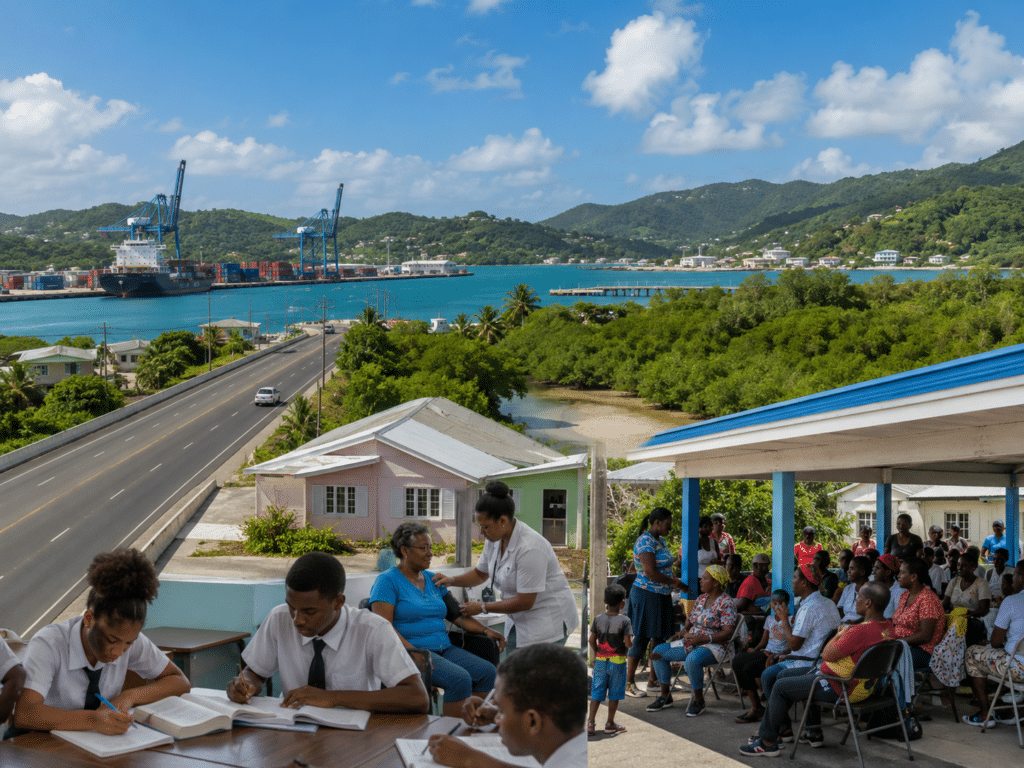
Progress requires that these four forms of wealth advance together. When one form of capital develops at the expense of the others, growth becomes fragile. A region can achieve strong economic performance while simultaneously depleting the very foundations that make that prosperity possible.
A Five-Century-Old Economic Error
Restorative justice takes on a broader dimension here. It stems from a historical observation: for centuries, the economic system has assigned a price to produced goods while reducing people and nature to mere resources. The British Emancipation Act of 1833 illustrates this logic. More than 800,000 enslaved people were freed. Yet the 20 million pounds allocated compensated the slaveowners, while the freed people received no compensation. The financial value of property was recognized; the value of human life remained absent from the balance sheet.

This extractive model has not entirely disappeared. Cocoa produced in Ghana and Côte d’Ivoire fuels a global industry, while producers and the regions of origin retain only a small share of the value created. Incomes remain low, forests are shrinking, and the bulk of the profits are concentrated elsewhere.

Reparations, Climate, and Inequality: A Common Root
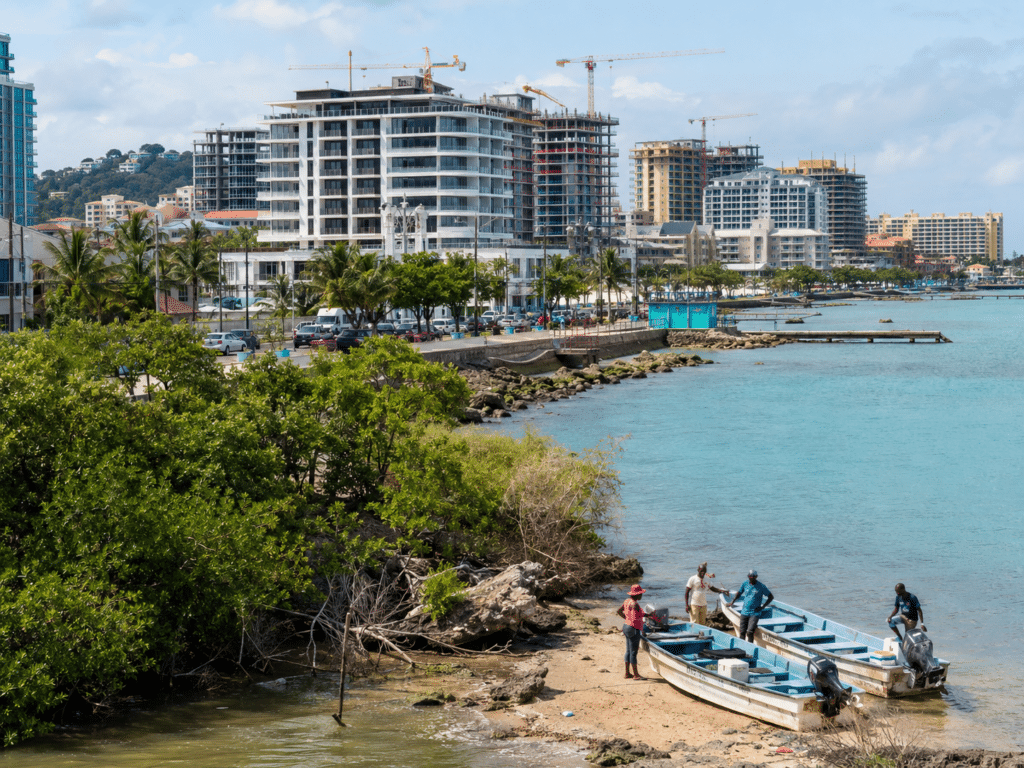
Reparations for slavery, climate-related losses and damages, and the fight against inequality are often addressed separately. Yet these issues stem from the same mistake: counting only part of the actual wealth. In the Caribbean, this contradiction is evident. A mangrove forest may be destroyed to make a project profitable in the short term. Its ability to protect coastlines, limit storm damage, or support fisheries is not always factored into the initial calculations. When disaster strikes, the region must finance reconstruction, often through debt. The value of nature is ignored at the outset, and then its absence becomes a collective burden.

Restorative justice thus links memory, the economy, and the environment. It raises a concrete question: How can we redress a historical injustice without reproducing the same imbalances in current decisions?

Rescue, Rebuild, and Transform
Restorative justice is structured around three stages: relief, reconstruction, and repositioning. The first addresses immediate emergencies. The second restores what has been lost. The third transforms the rules so that the harm is not repeated. This final stage is crucial. Rebuilding a house on the same fault line is tantamount to setting the stage for its next collapse. Similarly, compensation scattered across isolated projects may produce temporary results without addressing the root causes of vulnerability.

Restorative justice could therefore fund additional investments: education, health care, ecosystem protection, resilient infrastructure, strong institutions, and economies capable of retaining more value within the Caribbean region. The goal would be to compensate for a loss while making its recurrence less likely.

Three Possible Changes for CARICOM
Restorative justice offers three avenues for the region. First, every major public or financial decision could assess what it creates and what it destroys in terms of the four forms of wealth. Second, reparations could be organized as a coherent portfolio of reconstruction and transformation. Finally, human and environmental costs could be incorporated into the evaluation of projects, loans, and investments.
Restorative justice would thus shift the focus of the debate. For the Caribbean, making amends for the past could become a way to protect the future, by finally treating people, nature, institutions, and infrastructure as equally valuable.
In this context, restorative justice refers to an approach aimed at acknowledging and addressing the lasting consequences of slavery and colonization. It is not limited to the payment of financial compensation; it also seeks to invest in communities, institutions, the environment, and the economy to ensure that the same inequalities do not continue to be perpetuated.
The four forms of capital are productive capital, which includes infrastructure and businesses; natural capital, such as forests, reefs, and water; human capital, which encompasses health, education, and skills; and societal capital, based on institutions, trust, and social cohesion. Sustainable development requires advancing these four forms of capital together, without enriching one at the expense of the others.
It could help fund a coherent set of initiatives in education, health, ecosystem protection, climate resilience, and infrastructure. It also involves factoring human and environmental costs into financial decisions and assessing what each project creates or destroys. These guidelines were presented to CARICOM as proposals, not as decisions that have already been adopted.
Since joining the Caribbean Telecommunications Union, French Guiana has established its place as a French territory in the Americas that looks toward the Caribbean, the Amazon, and Europe all at once. This choice may seem technical. Yet it speaks to something deeper: for French Guiana, regional integration is not just about politics or airplanes. It’s also about networks, data, businesses, and everyday life.
A membership that goes beyond telecommunications
The Caribbean Telecommunications Union is a regional organization dedicated to the development of information and communication technologies in the Caribbean. By joining this network as an associate member, French Guiana is entering a forum where connectivity, cybersecurity, digital governance, and infrastructure are discussed. The formal membership agreement was signed in Port-of-Spain, Trinidad and Tobago, following ministerial approval during ICT Week 2025 in Kingston, Jamaica. This is a significant development: French Guiana is now one of the territories associated with an organization designed to coordinate digital initiatives on a Caribbean scale.
For Gabriel Serville, president of the Territorial Collectivity of French Guiana, this step is part of a broader strategy. The goal is not only to improve communication with neighboring countries, but also to open up opportunities for businesses, healthcare, startups, the space industry, and public services.

French Guiana: Between the Caribbean and the Amazon
French Guiana is not an island, but it shares concrete challenges with the Caribbean: remoteness, connectivity costs, dependence on international cables, the need for more resilient networks, and difficult travel between neighboring territories. Through the Caribbean Telecommunications Union, French Guiana can advocate for its needs within a regional framework. It can also bring attention to a different geographical context: that of a territory situated between the Guiana Shield, the Amazon Basin, and the Caribbean Arc.
This positioning gives meaning to the projects discussed in connection with membership. In particular, the Lum@link project aims to diversify international connections, increase bandwidth, and secure communications across the territory. The prospect of a high-capacity data center in French Guiana was also presented, as were projects related to coastal monitoring and climate adaptation through the SEAS program.


How this might make a difference
Joining the Caribbean Telecommunications Union does not mean that new telecom operators will immediately set up shop in French Guiana. The real challenge lies elsewhere: building bridges. French Guianan companies could collaborate with Caribbean partners. Institutions could share their expertise. Joint projects could emerge in areas such as cybersecurity, connectivity, innovation, and data management.
That is also why this issue goes beyond the digital realm. When a region can communicate more effectively, it can cooperate more effectively. When it secures its communications, it also protects its economy, its essential services, and its ability to respond in the event of a crisis.

A Sign Ahead of the CARICOM Summit
Joining the Caribbean Telecommunications Union comes at a time when French Guiana is also continuing to strengthen its ties with CARICOM. Political membership would be a major step forward. But that alone will not be enough. Before the grand gestures, we need concrete cooperation. Cables. Protocols. Companies communicating with one another. Government agencies working together. Young professionals who see the Caribbean as a place of opportunity, and not just as a map.
Perhaps that is where the real value of this partnership lies. French Guiana is not just building a technical connection; it is building a digital bridge. And in a region where distances are sometimes greater than just kilometers, this bridge could become one of the most useful pathways toward a more connected Caribbean.


The Caribbean Telecommunications Union is a regional organization that supports the development of telecommunications and digital technology in the Caribbean. It works on issues such as connectivity, infrastructure, cybersecurity, data, and digital cooperation among Caribbean countries.
French Guiana’s accession to the Caribbean Telecommunications Union marks a milestone in its growing ties with the Caribbean. It allows the territory to participate in regional discussions on digital technology, networks, infrastructure, and economic cooperation. For French Guiana, it is also a way to strengthen its role as a bridge between the Caribbean, the Amazon, Europe, and South America.
This membership does not necessarily mean that new telecom operators will immediately enter French Guiana. Above all, it opens up opportunities for partnerships with Caribbean stakeholders, particularly in the areas of business, institutions, healthcare, startups, cybersecurity, connectivity, and data management. The challenge is to build concrete partnerships in the region.
Organized by the Caribbean Chamber of Commerce in Europe (CCCE), the second edition of Caribbean Days brought together various expressions of Caribbean culture at UNESCO headquarters in Paris. Over the course of four days, the event provided a forum for dialogue on regional cooperation, sustainable tourism, and economic relations between the Caribbean and Europe.
A Caribbean-style restaurant with a view of Paris
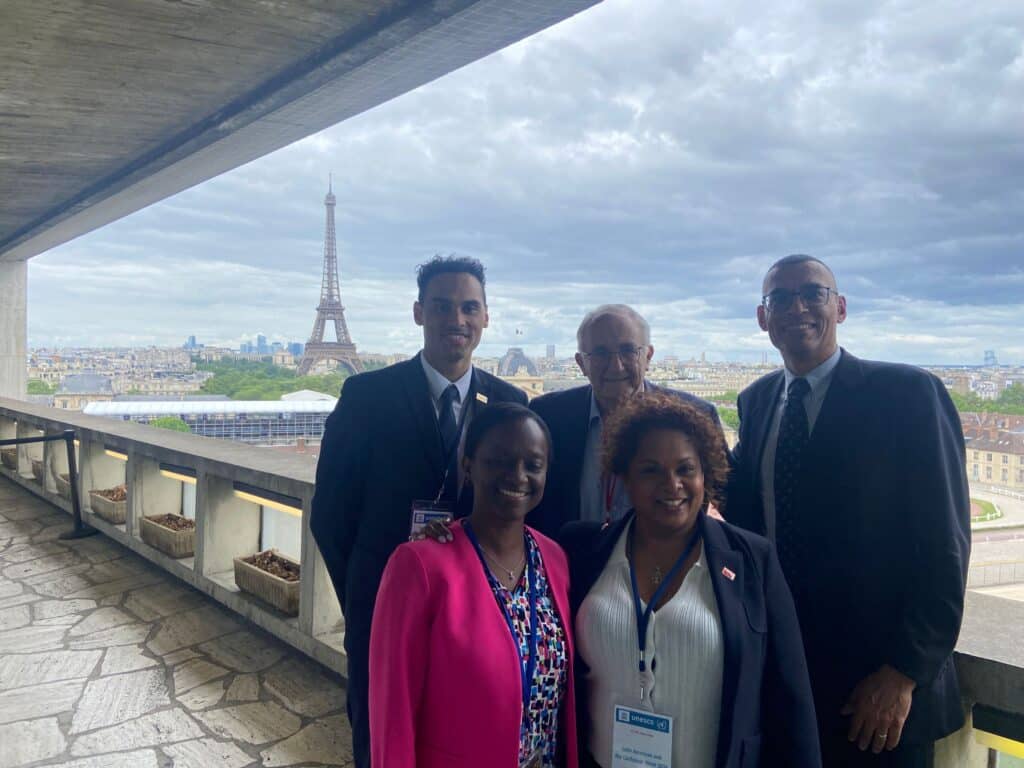
On the roof of UNESCO, Caribbean chefs from the association Les Toques françaises are preparing a three-course Caribbean menu. From the restaurant, guests can see the Eiffel Tower, Les Invalides, and the Left Bank. This scene captures the spirit of the Caribbean Days : to showcase the Caribbean through its creative works and craftsmanship, and then use this cultural presence to foster broader exchanges.
The Caribbean Chamber of Commerce in Europe (CCCE) organized this second edition as part of Latin American and Caribbean Week. Under the theme “Peace, Diversity, and Sustainability,” the event brought together representatives from the cultural, institutional, diplomatic, and economic sectors.
Over the course of four days, the program featured the visual arts, gastronomy, fashion, film, literature, poetry, music, and dance. These disciplines showcased various facets of Caribbean creativity in a venue dedicated to education, science, culture, and heritage.
Creative Industries Take Center Stage
The Caribbean Days highlighted the creative industries as one of the region’s strengths. Cuisine, fashion, film, storytelling, music, and dance served as points of connection between different regions and sectors.
This diversity brought together Caribbean ambassadors, other diplomats, representatives from the public sector, and private-sector stakeholders. Culture thus provided a common framework for discussions on development, investment, and partnerships.
Founded in November 2019, the CCCE’s mission is to facilitate exchanges between the Greater Caribbean and Europe. It also seeks to encourage European investment in the region’s sustainable economic development. In Paris, this mission has taken the form of meetings between institutions, businesses, and Caribbean representatives.
Regional Cooperation Over Lunch
A luncheon discussion focused on cooperation between France’s overseas territories in the Caribbean and CARIFORUM member states. Representatives from the Bank of France, Expertise France, and the OECD gave presentations.
The remarks by French Senator Micheline Jacques, who supports an economic partnership between France’s overseas territories and Haiti, refocused the debate on a concrete question: How can we strengthen ties among the various parts of the Caribbean region?
Through this event, the Caribbean Days brought culture, diplomacy, and the economy closer together. Gastronomy was not merely a backdrop; it served as a framework for dialogue on potential areas of cooperation and on the Caribbean’s role in its relations with Europe.
Sustainable Tourism in the Face of Climate Change
A roundtable discussion was held on sustainable tourism. Geoffrey Lipman, former president of the World Travel and Tourism Council and former deputy secretary-general of the World Tourism Organization, participated alongside Florian Valmy-Desvillers, director of business development for the Caribbean Tourism Organization in the United Kingdom and Europe.
Jo Spalburg, Secretary General of the CCCE, summarized the main message of these discussions. According to him, the acceleration of climate change makes it necessary to develop tourism that is more sustainable and more beneficial to local communities. These communities play a direct role in protecting the region’s natural and cultural heritage for future generations.
This reflection gives the Caribbean Days a specific scope. It links the promotion of Caribbean destinations to the responsibility of preserving what attracts visitors: landscapes, cultural heritage, cultural practices, and local knowledge.

From Cultural Visibility to Partnerships
As this second edition comes to a close, the CCCE is highlighting a collective goal: to transform cultural visibility into collaborations, innovation, and sustainable growth for the region.
The Caribbean Days have shown that culture can foster dialogue among diplomats, institutions, businesses, and creative professionals. What happens next will depend on the ability of the partners gathered in Paris to turn these exchanges into concrete partnerships that benefit Caribbean regions and communities.
Caribbean Days, also known as Journées des Caraïbes, is an event organized by the Caribbean Chamber of Commerce in Europe at UNESCO headquarters in Paris. Over the course of four days, the second edition of the event showcased the visual arts, gastronomy, fashion, film, literature, poetry, music, and dance. The event took place under the theme “Peace, Diversity, and Sustainability,” as part of Latin American and Caribbean Week.
Caribbean Days is organized by the Caribbean Chamber of Commerce in Europe (CCCE). Founded in November 2019, this organization seeks to facilitate exchanges between the Greater Caribbean and Europe, while encouraging European investment in the region’s sustainable economic development. In Paris, the CCCE brought together representatives from the cultural, diplomatic, institutional, and economic sectors to discuss Caribbean culture and challenges.
Caribbean Days combined the promotion of creative industries with discussions on regional cooperation and sustainable tourism. A luncheon forum focused on relations between France’s overseas territories in the Caribbean and CARIFORUM member states. A roundtable discussion also addressed the effects of climate change and the need to develop more sustainable tourism that better benefits local communities working to protect the region’s natural and cultural heritage.
When luxury is more than just décor
For a long time, luxury in the international hotel industry was measured by the thickness of the marble, the height of the ceilings, the scarcity of objects in the rooms. Some of this grammar still exists. But another, potentially more profitable, is emerging. Cultural luxury is gaining in importance. It is measured by the quality of the connection a traveler can establish with the place he or she is visiting.
This evolution is documented in Travel Dreams 2026: From data to delight, a report published by Amadeus in April 2026, based on a survey conducted by Opinium Research in the fourth quarter of 2025. Asked about the sensations they seek in a destination, 24% of the 6,000 travelers cited “connection to a place: food, experiences, special moments”. This was the second most frequent response, behind freedom. As far as hoteliers are concerned, the figure is becoming strategic: 44% of the 500 general managers surveyed across nine countries identified “concierge and guided experiences” as one of the two main drivers of growth in non-room revenues, on a par with social events.
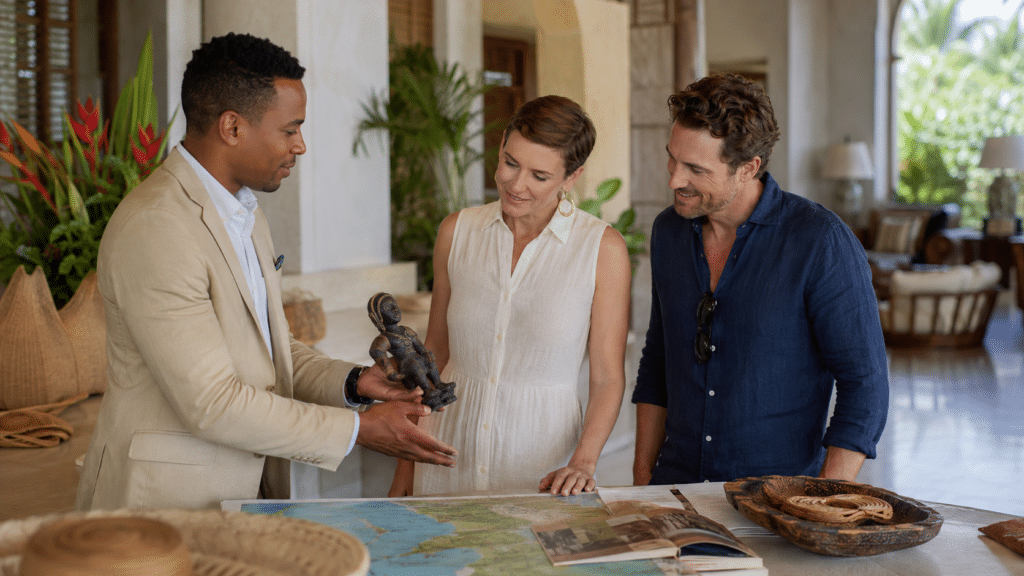
What travellers are really looking for
In other words, what travelers are looking for, and what hoteliers worldwide are beginning to monetize in earnest, is the same thing: access to living culture. Cultural luxury is not just about décor or service levels. It’s about creating the right relationship between the visitor, the area and the people who bring it to life.
The Amadeus report goes further, putting a figure on what it calls “local experience kits”: neighborhood guides, handcrafted souvenirs, connections with cultural players. It estimates that a mid-range hotel could generate over $243,000 in additional annual revenue from this type of service, based on a guide price of $20 per kit. Nearly a third of business travelers who extend their stay for leisure purposes say they are prepared to pay more than 15% above the average rate for this type of service. With this in mind, cultural luxury is also becoming an issue of business model, not just image.
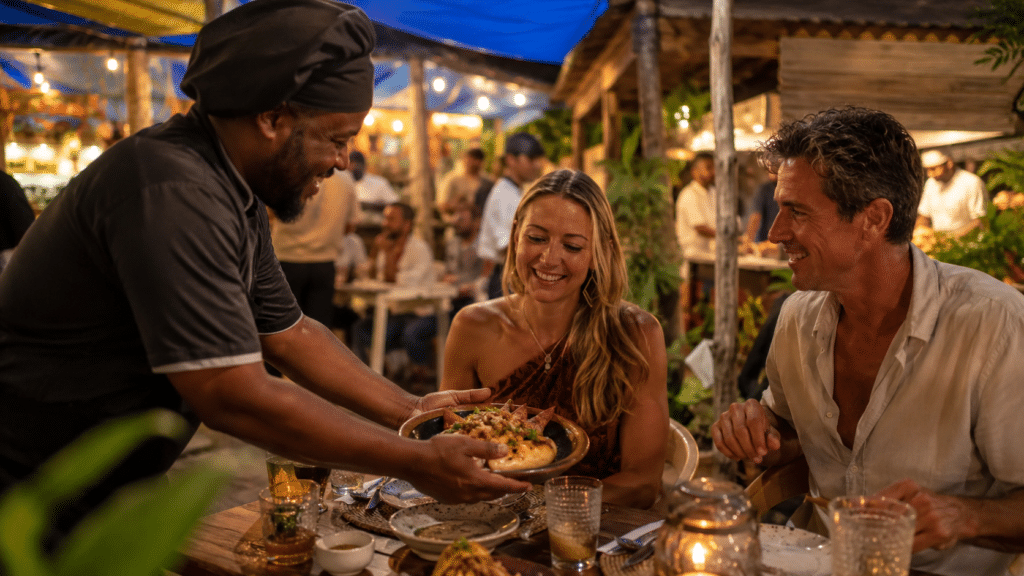
The Caribbean's value is still under-structured
This fact is particularly relevant to the Caribbean. The region’s cultural heritage is alive and well, but still unevenly structured in terms of tourism and hotel offerings. The Kalinago traditions of Dominica, the Creole languages spoken from island to island, the memory of ancient maritime routes, syncretic ritual practices, culinary know-how handed down outside the formal circuits: all this constitutes a capital that still largely escapes the logics of standard hotel valorization. And yet, this is precisely where cultural luxury can find its most solid footing.

Exceptions do exist. Some independent hotels in the Caribbean have long understood that having a traveler dine in a local market, meet with an artisan or enjoy an hour’s silent walk in a heritage district creates a value that is difficult to compare with a standardized spa facility. But these initiatives often remain isolated, barely visible in destination communications, and rarely structured as a coherent economic proposition. To turn cultural luxury into a sustainable lever, we need to move on from one-off initiatives to a clear, profitable offering that respects local players.

Local experiences to be organized differently
The Amadeus report identifies a potentially game-changing trend. According to the study, 41% of hotels surveyed have already created packages linked to regional concerts, cultural events or popular TV series, and 38% plan to do so within the year. The traveler of 2026 no longer comes just to see a place. They come to enter into a relationship with it, through proposals that are constructed, told and embodied. This shift towards cultural luxury is exactly the kind of proposition that the Caribbean can articulate, provided its economic players work together.
This implies a number of shifts. Firstly, we need to move away from competition between islands and think in terms of pan-Caribbean offerings, where the richness of each territory complements rather than cannibalizes each other. Secondly, we need to professionalize the way in which our cultural heritage is presented: not by folklorizing it, but by presenting it with the editorial and visual rigor expected by a well-informed international traveler. Finally, we need to structure the economic relationship between hotels, local cultural players and experience operators, so that the value generated benefits the regions and not just international intermediation platforms. Caribbean cultural luxury can only be as strong as the people who bring it to life.

A journey that also promises personal transformation
Another statistic in the report is worth noting. Asked what they hope to bring back from a trip, 18% of travelers surveyed cite “a new version of themselves: clearer, lighter, more intentional”. This figure rises to 39% among travelers surveyed in China. For Caribbean destinations seeking to diversify their source markets, this signal deserves attention. It does not allow us to generalize to all Asian markets, but it does show that some travelers already associate travel with a form of personal transformation.

Enhancing without diluting
In 2026, cultural luxury is no longer sold in rooms alone. It’s sold in encounters. In hours. In presence. The Caribbean has what it takes to meet these expectations. All that remains is to organize it, to tell its story, to enhance its value without diluting it.
Cultural luxury is a new way of thinking about high-end travel. It’s not just about the comfort of a hotel, the quality of a room or the presence of exclusive amenities. It’s built around the relationship between the traveler and the territory visited. In tourism, this can take the form of a meeting with an artisan, a meal prepared with local produce, a guided tour by a local, or an experience that provides a better understanding of a place’s history, languages, practices and memories. Cultural luxury therefore gives value to that which cannot easily be copied: the living identity of a territory.
Cultural luxury represents a major opportunity for the Caribbean, as the region boasts a rich living heritage: Creole languages, culinary traditions, historical memories, music, craft skills, community practices and indigenous or Afro-descendant heritages. Yet some of this richness remains unstructured in conventional tourism offerings. By developing better-organized local experiences, Caribbean territories can create new revenue streams, boost the attractiveness of their destinations and better involve cultural players in the value generated by tourism. The challenge is not just economic: it also concerns the transmission, recognition and preservation of local identities.
Caribbean hotels can develop cultural luxury by working directly with local players: artisans, guides, chefs, artists, historians, cultural associations, heritage communities and experience operators. The aim is not to turn culture into décor, but to build respectful, rewarding and well-told propositions. This means choosing legitimate partners, presenting traditions accurately, avoiding clichés and guaranteeing that income actually benefits the people who carry this knowledge. A solid cultural luxury doesn’t put culture on display: it creates a fair encounter between the visitor, the place and those who bring it to life.
The Kali’na of French Guiana have been part of the history of coastal Guyana since well before colonial times, but all too often they have been relegated to the margins of the great discourses on the territory. However, among the Kali’na, history does not live only in books: it continues in a language that is still spoken, in villages where memory remains anchored, in cultural practices that are still present, and in a relationship with the land that has never ceased to structure collective life.
If their names are back in the news today, it’s because an old colonial drama is resurfacing at the heart of public debate. To understand this moment, we need to look beyond a parliamentary sequence: we need to return to a living people, to a wounded memory, and to a transmission that, despite the ruptures of history, has never disappeared.
Who are the Kali'na of French Guiana?
The Kali’na of French Guiana are one of the six Amerindian peoples present in French Guiana. Their historical presence is concentrated mainly on the coast and in western Guiana, notably around Awala-Yalimapo, Mana, Saint-Laurent-du-Maroni and Iracoubo, with reports of their presence towards Cayenne and Kourou. Their language, Kali’na, belongs to the Carib family. It is the only Amerindian language of French Guiana to be spoken in five territories: Venezuela, Guyana, Suriname, French Guiana and Brazil. The very word “Kali’na” refers to a strong self-designation, meaning “man, human being”.
This fact alone is enough to shift the gaze. The Kali’na of French Guiana are neither a heritage decoration nor a frozen survival. They belong fully to the territory’s present. Their history is that of a people whose coastal roots go back a long way, whose regional ties extend beyond today’s borders, and who, from the 16th century onwards, had to come to terms with the arrival of the European powers while preserving their own logic of alliance, circulation and transmission.

Why does the memory of the Kali'na matter today?
Kali’na memory is important today because it affects the way Guyana looks at its human foundations. For a long time, indigenous peoples were only mentioned in a secondary way in institutional narratives, as if they belonged first and foremost to the past. Yet Kali’na culture is still passed on in language, in stories, in family references and in bilingual educational materials, showing that this presence remains active. Also in 2024, educational resources in Kali’na and French were published based on stories rooted in the daily life of Awala-Yalimapo, a sign that transmission is not just a matter of memory, but also of the present.
This is what gives the current debate such profound significance. When a people continues to keep its language and cultural references alive, the question of ancestors cannot be reduced to an administrative issue. It touches on the continuity of a community, the dignity of its dead and the place accorded to its history in the public arena.

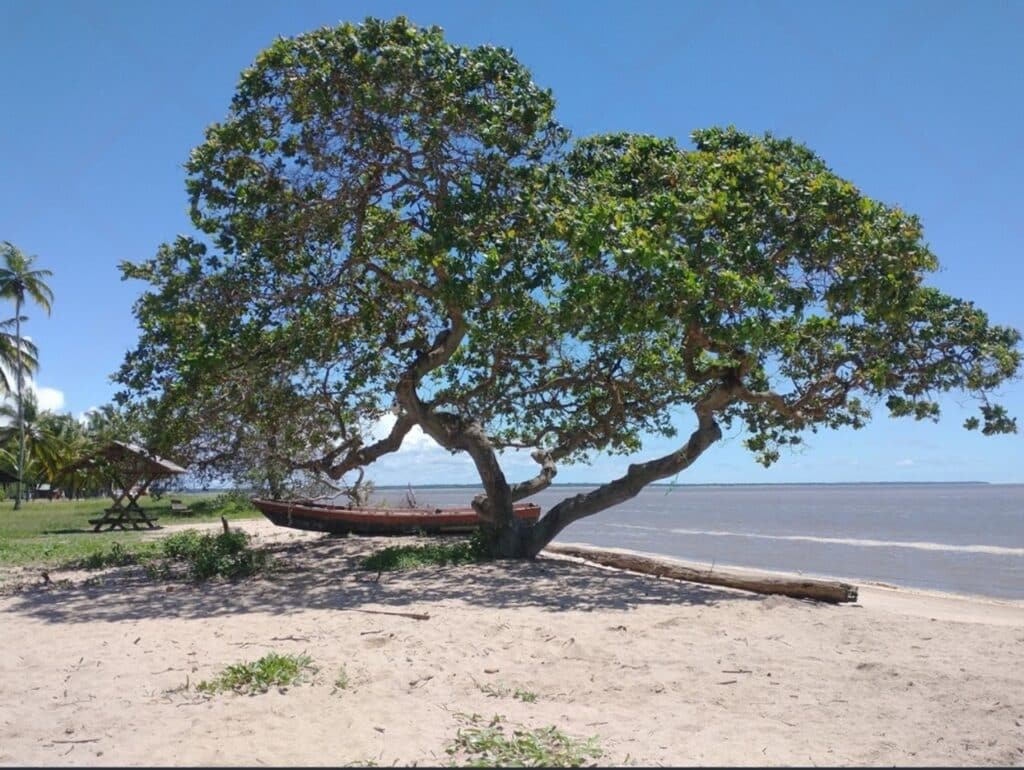


What happened in 1882 and 1892?
One of the most violent episodes in this history dates back to the end of the 19th century. In 1882 and again in 1892, Kali’na and Arawak from French Guiana were exhibited in Paris as part of ethnographic displays now recognized as part of the history of “human zoos”. These are not mere dates in a colonial chronology: they refer to displaced men, women and children, exposed to the public gaze and stripped of their humanity in the name of so-called scientific or exotic curiosity.
This memory has not remained theoretical. In the explanatory memorandum to the bill under discussion today, it is recalled that a request was made by the Moliko Alet+Po association for the return to French Guiana of human remains of Kali’nas people who had died in mainland France while being exhibited. The text specifies that six skeletons and two casts are involved, kept at the Musée de l’Homme. This clarification gives the affair particular force: colonial history is not only recounted, it is also materially present in public collections.
Why has Iracoubo become such an important place of memory?
Iracoubo has become a major place of remembrance since the inauguration, on August 11, 2024, of two statues in tribute to pi’pi Ahieramo, pi’pi Molko and the 47 Kali’na and Arawak exhibited in 1882 and 1892 at the Jardin Zoologique d’Acclimatation in Paris. This memorial has more than just a symbolic function. It inscribes a long-suppressed or relegated history into the Guyanese landscape, and gives descendants a place to reflect, to speak and to pass on.
Iracoubo thus becomes much more than a place of remembrance. The site links generations, brings history closer to the land, and reminds us that recognition also requires concrete gestures: naming, commemorating, transmitting, making visible. In a territory where colonial wounds have often been told from the outside, this reappropriation has considerable significance.


What is the current status of restitution?
The dossier reached a precise milestone in the spring of 2026. The draft law on the decommissioning of Kali’nas human remains and their return to the Guiana collectivity for burial purposes was submitted to the Senate on October 3, 2024. Visit April 13, 2026At the French National Assembly, Culture Minister Catherine Pégard confirmed the government’s support for this initiative. Visit April 15, 2026The accelerated procedure has been initiated. The text is due to be debated in a public session of the Senate on May 18, 2026.
This is not yet an effective return. The legislative process is not yet complete. The text provides for the removal from public collections of eight Kali’nas remains held at the Musée de l’Homme, and their return to the Guiana collectivity within a year of the law’s entry into force, for burial purposes. If a specific text was needed, it’s because the law of December 26, 2023 on the restitution of human remains belonging to public collections was designed for requests made by foreign states, and not for a French territory like French Guiana.
For the Kali’na of French Guiana, the issue goes beyond parliamentary law. It’s about dignity, reparation and how a people can finally hope to bring their dead back to their land. Through this sequence, an entire memory refuses to be kept at arm’s length.
The Kali’na of French Guiana are one of the Amerindian peoples who have been present in French Guiana for centuries. Their history is closely linked to the coast, particularly in western Guiana, where their culture, language and traditions continue to be passed on. To speak of the Kali’na of French Guiana is to recall that they are a living people, rooted in their territory and in a memory still carried on by current generations.
The memory of the Kali’na of French Guiana is important today because it provides a better understanding of an essential part of Guyanese history that has often remained in the shadows. It concerns not only the past, but also the present: language, family stories, places of memory and cultural transmission show that this history remains profoundly alive. It also reflects a demand for dignity for ancestors who were long treated with disrespect.
In 1882 and 1892, Kali’na and Arawak people from French Guiana were exhibited in Paris at ethnographic exhibitions now associated with the history of “human zoos”. This episode is one of the most painful in colonial history, as it reduced men, women and children to objects of public curiosity. It is this historical violence that still today explains the emotion and importance of the struggle to remember their ancestors.
Iracoubo has become a major place of remembrance in French Guiana since the inauguration, in 2024, of a memorial to the Kali’na and Arawak people exhibited at the end of the 19th century. This place of remembrance gives a tangible presence to a history long relegated to silence. It also makes it possible to inscribe this memory in Guyanese territory, as close as possible to the descendants and communities concerned.
An important milestone was reached in April 2026, when the French government declared its support for a bill providing for the return of Kali’na human remains to French Guiana. At this stage, the actual return has not yet been achieved, as the legislative process must be completed. But this step marks a major turning point: it recognizes that these human remains are not mere collector’s items, but ancestors whose return has been awaited for over a century.
The partnership between CTO and The Travel Foundation marks an important step in the evolution of tourism policies in the Caribbean. At the ITB Berlin 2026 international trade fair, the region’s tourism leaders confirmed that they would strengthen their cooperation to support a more sustainable tourism model, more resilient to climate change and more focused on local communities.
In a region where the economy is heavily dependent on tourism, climate change is no longer an abstract issue. The effects of global warming, the intensification of weather phenomena and the erosion of coastal ecosystems now represent immediate challenges for many island territories. It is against this backdrop that the partnership between CTO and The Travel Foundation takes on a strategic dimension. The objective is clear: to transform climate commitments into concrete actions capable of supporting the economic and social future of Caribbean destinations.
ITB Berlin, a strategic venue for the voice of the Caribbean
Every year, ITB Berlin brings together the world’s key tourism players: ministries, international organizations, airlines, destinations and industry experts. For the Caribbean, this event is an essential platform for recalling a reality that is often underestimated on an international scale: small island states are among the territories most exposed to the effects of climate change.
At a session devoted to the gap between climate risks and adaptation solutions in tourism, the Secretary General and CEO of the Caribbean Tourism Organization, Dona Regis-Prosper, highlighted the region’s real-life experience. The devastating hurricanes that regularly hit the Caribbean, rising sea levels and increasing pressure on marine ecosystems have had a profound impact on the territories. Today, this first-hand experience is a driving force for rethinking the region’s tourism strategies. The partnership between CTO and The Travel Foundation is precisely in line with this dynamic of transformation.

Moving from climate talk to concrete solutions
At the heart of the partnership between CTO and The Travel Foundation lies one overriding conviction: climate strategies must now go beyond declarations of intent. Caribbean destinations already have numerous studies, scientific data and prospective scenarios on climate risks. However, a persistent challenge remains: transforming this information into genuinely funded and operational projects.
This is one of the points raised by Narendra Ramgulam, Deputy Director of Sustainable Tourism at the Caribbean Tourism Organization. According to him, the region has no shortage of ideas and analyses, but the concrete implementation of projects is often hampered by a lack of access to funding. In this context, the partnership between CTO and The Travel Foundation aims to bridge the gap between strategic planning and real action on the ground.

A tourism model focused on local communities
One of the major thrusts of the partnership between CTO and The Travel Foundation concerns the role of local populations in tourism development. In many Caribbean destinations, the economic benefits of tourism sometimes remain concentrated in certain segments of the industry. The new cooperation framework aims to foster a more inclusive approach in which tourism projects generate direct benefits for communities.
This vision also implies a strengthening of local skills in sustainable tourism professions, as well as increased support for economic initiatives that enhance the region’s natural and cultural resources. This approach is in line with a global trend in the tourism sector. Today’s travelers are increasingly interested in responsible, authentic experiences that are closely linked to the realities of the areas they visit.
Caribbean tourism faces structural transformation
The partnership between CTO and The Travel Foundation comes at a pivotal time for the Caribbean tourism industry. Several profound transformations are redefining the future of the sector. The intensification of extreme climatic phenomena, the gradual weakening of coral reefs, the erosion of certain beaches and the evolution of travelers’ expectations in terms of sustainability are gradually changing the balance of regional tourism.
These elements are not just about the environment. They directly influence the tourism experience, the competitiveness of destinations and the livelihoods of many local populations. Against this backdrop, strengthening the resilience of Caribbean tourism is becoming as much an economic priority as an environmental one.
International cooperation to strengthen resilience
The renewal of the partnership between CTO and The Travel Foundation formalizes a strengthened collaboration between two organizations committed to the transformation of global tourism. The Travel Foundation has been working for several years on initiatives to make tourist destinations more sustainable, notably through climate planning, tourism flow management and ecosystem protection.
For its part, the Caribbean Tourism Organization represents the tourism interests of many of the region’s territories and plays a central role in coordinating regional policies. By combining their expertise, the two institutions aim to develop tools and strategies that will enable Caribbean destinations to better anticipate climate risks, while maintaining their attractiveness to tourists.
A regional vision for the future of Caribbean tourism
Beyond technical cooperation, the partnership between CTO and The Travel Foundation is also part of a broader vision: that of a coordinated regional approach to sustainable tourism. The Caribbean shares many common realities. The economies of many territories rely heavily on tourism, the islands remain particularly exposed to climatic risks, and the region boasts an exceptional natural and cultural heritage.
In view of these common characteristics, regional cooperation appears to be an essential lever for developing solutions tailored to the specific characteristics of island destinations. This approach is also in line with the ambitions of the CTO Reimagine Plan, a strategy that aims to reposition Caribbean tourism around sustainability, innovation and resilience.
The Caribbean, a global laboratory for sustainable tourism
Through the partnership between CTO and The Travel Foundation, the Caribbean is also seeking to assert its role in international debates on the future of tourism. The challenges facing the region today could foreshadow those that other tourist destinations will have to face in the coming decades. From this perspective, the Caribbean can become a veritable laboratory of innovation for climate-resilient tourism strategies, sustainable management of island destinations and the integration of communities into the tourism economy.
The stakes involved in the partnership between CTO and The Travel Foundation extend far beyond regional borders. The solutions developed in the Caribbean could inspire other regions of the world facing similar challenges.
The partnership aims to develop concrete strategies to make Caribbean tourism more resilient in the face of climate change, while supporting local communities.
Caribbean destinations have to cope with intensifying hurricanes, beach erosion, coral reef degradation and rising sea levels.
The Caribbean Tourism Organization aims to position the Caribbean as a sustainable destination, capable of reconciling tourism development, ecosystem protection and benefits for local populations.
The integration of Richès Karayib into the Caribbean Broadcasting Union (CBU) marks a new stage in the development of Caribbean media. This membership formalizes Richès Karayib’s regional roots and reinforces its determination to actively contribute to the structuring of the Caribbean media landscape.
In a context where the circulation of content remains fragmented between linguistic and geographic territories, joining the Caribbean Broadcasting Union represents a strategic lever for boosting the visibility and circulation of Caribbean content.
The Caribbean Broadcasting Union, a pillar of the Caribbean media landscape
The Caribbean Broadcasting Union is the regional organization that federates the Caribbean media, covering radio, television, print and digital platforms. It plays a central role in cooperation between broadcasters, the circulation of content, the professionalization of players in the sector and the promotion of Caribbean productions.
Every year, the Caribbean Broadcasting Union organizes the CBU Media Awards. These awards recognize the most outstanding productions in radio, television, print and digital. These awards are a major event for Caribbean media professionals, helping to raise standards of journalistic and editorial quality in the region. By becoming a member of the Caribbean Broadcasting Union, Richès Karayib joins a structured and recognized network at the heart of regional media dynamics.

A strategic step for Richès Karayib
Since its creation, Richès Karayib has been promoting culture, heritage, tourism and the women and men who shape the Caribbean’s attractiveness and influence. Membership of the Caribbean Broadcasting Union consolidates this trajectory by opening up new prospects:
- – publishing cooperation on a regional scale
- – increased circulation of content
- – professional exchanges between member media
- – enhanced visibility with institutional and economic players
Joining the Caribbean Broadcasting Union also enables Richès Karayib to place its productions within a demanding regional framework, where content quality, journalistic rigor and editorial impact are decisive. This new step comes at a time when the medium is developing its print, digital and audiovisual formats, with a clear ambition: to connect Caribbean territories beyond linguistic borders.
Building a structured Caribbean media space
The Caribbean is rich in talent, culture and initiative. However, content produced in one territory is still not widely distributed to other islands and countries in the region. One of the major challenges of the Caribbean Broadcasting Union is precisely to promote this circulation and encourage regional collaboration.
By joining the Caribbean Broadcasting Union, Richès Karayib is affirming its desire to play an active part in this dynamic. This is not just institutional recognition, but a commitment: to contribute to a more connected, visible and structured Caribbean media.
This approach is in line with Richès Karayib’s mission to promote the region’s talents, initiatives and heritage, while encouraging synergies between regions.
Setting course for the CBU Media Awards
As part of this membership, Richès Karayib will take part in the 37th CBU Media Awards organized by the Caribbean Broadcasting Union. Richès Karayib’s participation is in line with the company’s commitment to professionalization and regional outreach.
Beyond the competition, the CBU Media Awards represent a space for Caribbean media to meet, exchange ideas and gain visibility. For RK, it’s a further opportunity to promote a committed editorial voice in the service of the Caribbean.

A new development phase
Joining the Caribbean Broadcasting Union marks a natural evolution for Richès Karayib. After consolidating its presence in the French-speaking Caribbean, the medium is now taking a decisive step towards wider regional integration.
In a changing media environment, where cooperation, editorial quality and international visibility are essential, joining the Caribbean Broadcasting Union is a strong signal.
Richès Karayib’s ambition is to contribute to a more visible, coherent and assertive Caribbean media.
The Caribbean Broadcasting Union (CBU) is the regional media organization for the Caribbean, covering radio, television, print and digital platforms. It promotes cooperation, the circulation of content and the professionalization of players in the sector.
Membership of the Caribbean Broadcasting Union enables Richès Karayib to join a structured regional network, boost its visibility on a Caribbean scale and develop editorial collaborations with other member media.
The CBU Media Awards are an annual competition organized by the Caribbean Broadcasting Union to recognize the best radio, television, print and digital productions in the region.
