French Guiana – Promoting, defending and protecting the Bouillon d’Awara: a Guianese tradition honored

Bouillon d’Awara

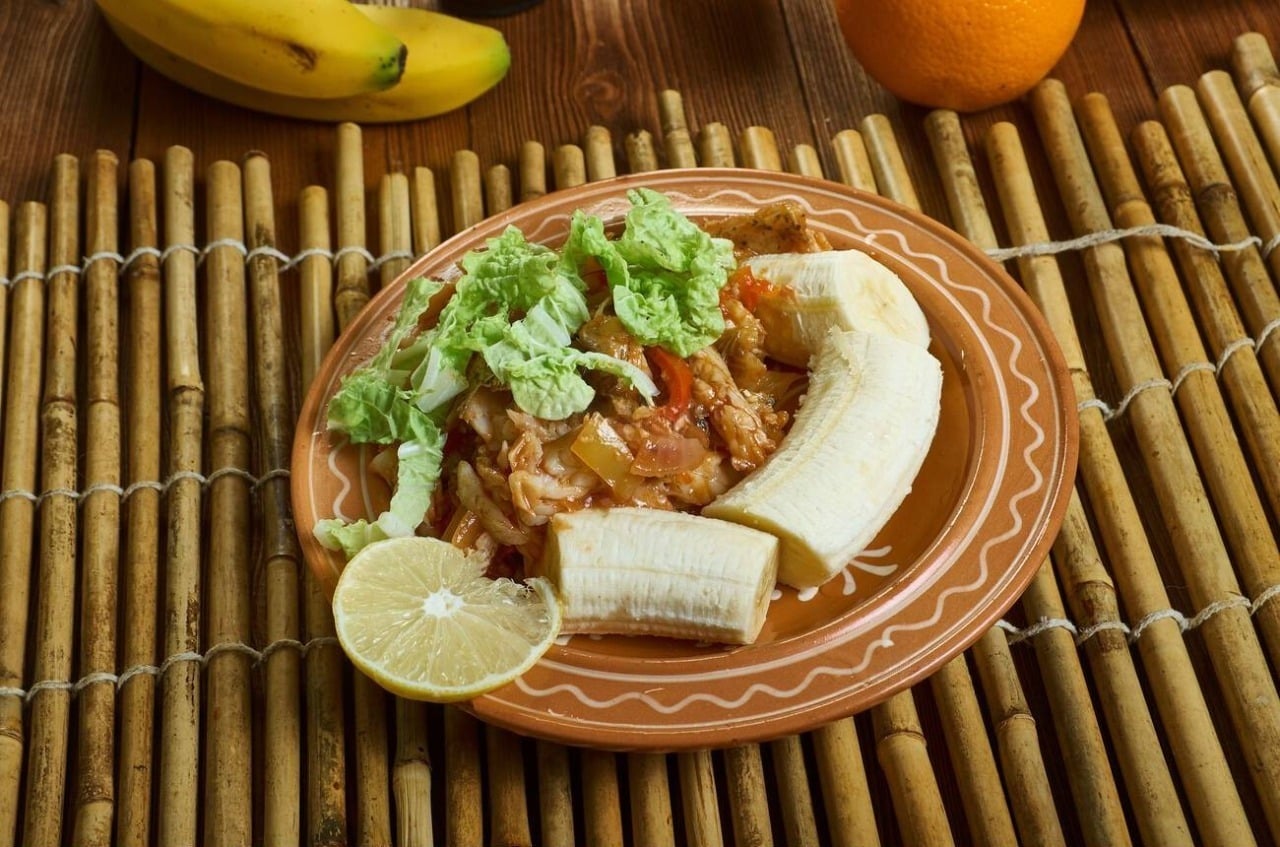
Bouillon d’Awara is much more than a simple dish in French Guiana; it’s a veritable cultural institution. This traditional dish, prepared mainly during the Easter holidays, embodies the territory’s culinary and social identity. With the recent creation of the Confrérie Gastronomique du Bouillon d’Awara. This local specialty now enjoys official recognition, both nationally and internationally. But what makes this broth so special, and why does it deserve such attention?

History and origins of Bouillon d'Awara

Bouillon d’Awara is surrounded by myths and legends that add an almost mystical dimension to this dish. A popular story has it that a young native woman created this broth to prove her love to a foreigner, incorporating flavors from all over French Guiana. This legend reflects the very essence of the broth: a harmonious blend of cultures, ingredients and traditions.

Prepared only at Easter, this dish also symbolizes family and community family and community gathering. Its complex preparation, often spanning several days, mobilizes an entire team, strengthening social and family ties.

Bouillon d’Awara
Awara Source : Ti molokoy
Bouillon d’Awara
Bouillon d’Awara. Source : Ti molokoy

Ingredients and preparation

The secret of Bouillon d’Awara lies in its varied, local ingredients. Among them:

  • The awara pastemade from the fruit of the awara palm, the real basis of the dish.
  • From smoked meats (chicken, fish) and salted (cod, ham).
  • Vegetables such as cabbage, eggplant or spinach.
  • From local spices to spice up the flavours.


Preparation is an art. It requires patience and skill. The broth simmers for 24 to 36 hours. The result is a rich, creamy stew with a distinctive orange color. The end result is a rich, creamy stew with a distinctive orange color.

La Confrérie Gastronomique du Bouillon d'Awara

Officially created during the 10ᵉ edition of the Journées des Goûts et Saveurs de Guyane, on April 12, 2025 this brotherhood has eleven founding members including renowned chefs, enthusiasts and specialists in Guyanese gastronomy. It is chaired by Serge Fulgence.

Its mission is threefold:

  • Preserving the authenticity of the Awara broth through its codes and art of living.
  • Promoting its recognition well beyond French Guiana.
  • Passing on know-how to new generations.

The Confrérie has received prestigious national recognition by receiving its diploma of integration into the Confréries de France and is now a member of the Conseil européen des confréries œno-gastronomiques via the Languedoc and Roussillon embassy.

“A brotherhood serves to promote a dish, to defend its authenticity, and to promote it far beyond its borders” – Jean Claude Estirac, Vice-President of the European Council of Wine and Gastronomy Brotherhoods.

Bouillon d’Awara
Bouillon d’Awara
Induction of Serge Fulgence as President of the Confrérie gastronomique du Bouillon d'Awara
Bouillon d’Awara
Jean Claude Estirac vice-president of the Conseil européen des confréries oeuno-gastronomiques

Strong political and cultural support

On the occasion of this recognition, Emmanuel Prince, Vice-President of the Collectivité Territoriale de Guyane (CTG), praised the commitment of :

“Awara is a symbol. It is memory, sharing, creation. And through the Plan Wara we want to spread the word far beyond our borders.

This heritage enhancement plan was launched with a scientific and historical conference held on September 27, 2024. It presented the results of 9 months of research conducted by Emmanuel Garnier of CNRS who delved into the historical and cultural roots of Awara broth.

The ceremony also saw the induction of new honorary members, including Jean-Paul Fereira and Emmanuel Prince.

Le Bouillon d'Awara: A symbol of living heritage

Beyond its gastronomic dimension, the Bouillon d’Awara is a true pillar pillar of Guyana’s living heritage. Celebrated each year during the Journées des Goûts et Saveurs (Taste and Flavor Days), it attracts both locals and international visitors curious to discover this culinary wealth.

By highlighting its cultural roots, its community roots and its gustatory originality, the Bouillon d’Awara has established itself as an ambassador of Guyanese culture ready to seduce the whole world.

Leave a Reply

Your email address will not be published. Required fields are marked *

More articles from RK

Piké djouk
HISTORY & HERITAGE
Tolotra

Piké djouk from French Guiana: a dance that tells the social history of the territory

The Piké djouk of Guyana is one of those essential cultural expressions that enable us to understand the social history and identity of Guyana. At once a dance, a rhythm and a festive practice, it embodies a living memory handed down from generation to generation. Even today, it occupies a singular place in cultural events, traditional balls and initiatives to promote Guiana’s intangible heritage. A dance born in Guyanese Creole society The Piké djouk appeared in post-abolition Creole societies, at a time when Afro-descendant populations were rebuilding their own cultural forms. Like many Caribbean and Amazonian dances, it is the result of a blend of African, European and local influences. Popular balls became essential social venues, where people danced, met up and passed on social codes. It’s part of this collective dynamic. It’s not just about entertainment: dance is also a social language, a meeting place and sometimes even a

Read More »
Maryse Condé
HISTORY & HERITAGE
Tolotra

Guadeloupe – February 11, 2026: Maryse Condé, a Caribbean literary conscience that continues to enlighten the world

Maryse Condé remains one of the most powerful voices in Caribbean and French-language literature. In this February 11On the anniversary of her birth in Pointe-à-Pitre in 1934, her work resonates with particular intensity. More than a novelist, she has shaped critical thinking on colonial history, black identity and the multiple heritages of the Caribbean. For readers both in the region and in the diaspora, she is the embodiment of a literature that rejects useless ornamentation in favor of a lucid analysis of reality. Her writing has helped reposition the Caribbean in major contemporary intellectual debates. A literary birth set in Caribbean history The trajectory of Maryse Condé began in Pointe-à-Pitre, in a Guadeloupe still marked by the social hierarchies inherited from colonization. From her earliest works, she set out to deconstruct simplified narratives of West Indian identity. Her work is not limited to memory: it questions the silences, fractures and

Read More »
Barbara Jean-Elie
LITERATURE
Tolotra

Martinique – Barbara Jean-Elie: Writing Is About Passing Things On

She introduces herself without emphasis: author, mom, journalist, presenter. And she loves to create. That’s all she says. But as we move through her books, her musical stories and her travels from island to island, one thing becomes clear: Barbara Jean-Elie doesn’t just create: she also creates. transmitsit preservesit gives voice to an intimate Caribbean, often unknown – sometimes even to those who live there. It all begins with a story read aloud It all began there, in the intimacy of a mother-child bond. Barbara Jean-Elie reads stories to her daughter, watches her grow up, then feels the urge to write for these children as they move forward, wonder, awaken. In 2013, Sina sur son Nuage was born: seven extraordinary stories from the Caribbean, carried by seven songs. Jean-Michel Martial tells the story, Alain Suréna composes, and the Caribbean voices of Lynnsha, Fanny J, N’Jie and Laura Beaudi embody the

Read More »

conTACT RK

we'd love to have your feedback on your experience so far

Join The List

Join our Richès Karayib community!  Sign up for our newsletter.

Want To Maximize Your Business Presence On Riches Karayib?

Complete the form to start the application