When approaching Guanaja from the sea, the island’s first impression is of its silhouette: pine-covered hills, encircled by a ring of reefs and small cays. Nothing flashy, just a landscape that immediately makes one thing clear: here, the sea, the mountains and the villages still live on a human scale.
A mountainous island facing the sea
Guanaja is one of the three large Bay Islands off the coast of Honduras. It lies some 70 km from the mainland, and offers a surprising relief for an island of its size. Often nicknamed “the Green IslandGuanaja is largely covered by Caribbean pine forests and tropical vegetation. From the ridges, a string of coves, discreet beaches and reefs form a natural boundary between the island and the open sea.
The forests were severely damaged by Hurricane Mitch in 1998, but some of the vegetation cover is gradually recovering. The island’s interior remains largely undeveloped, with trails used by locals and fishermen.
Bonacca, a town set on the sea
The contrast is striking when you arrive at Bonacca – often referred to as The Cay. Most of Guanaja’s inhabitants live on this tiny islet built on the water. The tightly-packed wooden houses rest on stilts, linked by footbridges and narrow lanes. Together, they form a singular urban network, where you walk above the sea and boats circulate as if in a labyrinth.
Bonacca is sometimes compared to a small Caribbean Venice, not for its aesthetics, but for the way it organizes a town around the sea. Several thousand inhabitants live on less than 40 hectares, with shops, schools, churches and docks in constant motion. The place is not a tourist attraction: it’s a concrete response to the constraints of a limited island territory.
A major reef in the Mesoamerican Barrier Reef
Around the island, the sea is a structuring element. The island is bordered by the Mesoamerican Barrier Reef, the second largest reef system in the world. The surrounding clear waters, seagrass beds, coral reefs and wetlands are part of the Bay Islands National Marine Park.
This park, created to preserve an essential marine heritage, covers hundreds of thousands of hectares and includes Roatán, Utila and Guanaja. On site, associations such as BICA work with local residents to protect the reefs, regulate fishing and involve local communities. These efforts enable the island to maintain a balanced relationship between human activity and the preservation of its marine environment.
A Caribbean history that links cocoa, pine trees and sea routes
The history of Guanaja far exceeds its size. In 1502, Christopher Columbus landed here on his fourth voyage and named it Isla de los Pinos, in reference to the forests that already covered it. Accounts of the time tell us that it was here that he first encountered cocoa, transported by merchants in large pirogues.
Later, the island became a transit point for privateers, merchants and families from the Cayman Islands, which explains the coexistence of English and Spanish in daily life today. Guanaja went through several names – Caguamara, Isla de Pinos, Bonacca – before being officially renamed as it is today.
Living on Guanaja: fishing, resilience and community ties
The island’s economy is still based on fishing and limited tourism, focused on nature and the sea. Hurricane Mitch left a lasting impression on the island’s inhabitants, destroying many homes, particularly in Bonacca. But the island proved resilient. The inhabitants rebuilt, slowly and with their own means, taking into account the sea and the constraints of the territory.
The local culture blends Honduran traditions, Anglo-Caribbean influences and specific festive practices such as the Junkanoo, where locals parade in costumes made from recycled fabrics and materials. These celebrations, often modest and very communal, are a reminder of the strength of the social bond that characterizes the island.
A discreet and essential Caribbean
To showcase Guanaja is to tell the story of a different Caribbean: an island that refuses the race to outdo itself, that relies on sobriety, the sea and the forest rather than on large-scale development. An island where we still build on the water because land is scarce, where we protect the reefs because they are the first line of defence, where we live as close as nature will allow.
Guanaja is a discreet island, but essential to understanding Caribbean diversity. An island where the sea structures life, where history can be read in the reefs and stilts, and where community remains the primary force.
Bonacca, the inhabited heart of Guanaja, was built on a very small islet to avoid coastal mosquitoes and benefit from better ventilation. The houses on stilts are an extension of this adaptation.
Yes, the island belongs to Bay Islands National Marine Park which protects reefs, seagrass beds and mangroves around Guanaja, Roatán and Utila.
On Roatán, the sea seems to speak low. It stretches shades of blue around the hills, glides over the seagrass beds, then lingers on the corals that line the coast. Here, the island welcomes you without artifice: regular breathing, villages open to the horizon, and inhabitants who still live by the rhythm of the water. Roatán is not a setting: it’s a territory that has chosen to combine nature, history and hospitality.
Off the coast of Honduras, Roatán belongs to the Islas de la Bahía. Its coastline juts out like a balcony over the Mesoamerican Barrier Reef, a vast coral ecosystem shared with Mexico, Belize and Guatemala – the largest reef in the Western Hemisphere and the second largest in the world. This marine continuum is home to major biodiversity and sustains the life of coastal communities.
On the west coast, the Bay Islands National Marine Park (BINMP) oversees the protection of key areas, while the NGO Roatán Marine Park works with local residents to run education, monitoring and restoration programs. This alliance between citizen science and official management gives the island a leading role in reef conservation.
To the west, West End and West Bay offer clear waters where, from the shore, you can observe the mosaic of coral and the dance of tropical fish. Here, snorkelling is renowned for its easy access to the reef, a rare asset in the region when accompanied by responsible attitudes: respect for beacons, no contact with coral, zero anchoring on seagrass beds.
More than just a postcard, Roatán has adopted a simple educational approach, with information panels, community centers and naturalist outings. More than a leisure activity, underwater observation becomes a way of understanding the territory and preserving it.
Punta Gorda: Garifuna memory in the present
On the north coast, Punta Gorda recalls a founding story. In 1797, Garifuna families – Afro-American Indians – were uprooted from St. Vincent and landed here. They built the first Garifuna community in Honduras and gave Roatán an essential part of its identity. Today, Garifuna music, language and dance are recognized by UNESCO as part of humanity’s intangible cultural heritage (Belize, Guatemala, Honduras, Nicaragua).
In Punta Gorda, this memory is not a fixed memory: it is shared on a daily basis through cuisine (cassave, grilled fish), polyrhythmic songs and ancestral tales. This heritage gives Roatán a unique voice in the Caribbean: a voice that links the movement of the tides to the paths of exile.
Island itineraries: sea, dry forests and villages
Roatán’s beauty lies in its contrasts. The main road runs through dry forests dotted with agaves, reaches lookouts from which you can follow the line of the reef, then descends to wooden piers where fishermen sort the day’s catch. In the coves, seagrass beds are home to turtles and starfish; offshore, the coral gardens reveal, in places, rare bunches of acropora that are still vigorous, as at Cordelia Banks, a reference site for the regeneration of the species.
Life is organized around sheltered bays: cafés open to the trade winds, small marinas, artisan workshops. In West End, strolls follow the water’s edge; in Sandy Bay, community organizations run awareness-raising campaigns; to the east, villages are spaced out, giving way to a more secretive island.
Hospitality through the eyes
A warm welcome on the island is based on simple gestures: advice on the state of the sea, an address where to try a local dish, a story shared when returning from the open sea. Many accommodations have opted for a human scale; nature guides work hand in hand with associations; restaurateurs favor local fishing and seasonal produce. This local economy relies on the sea without forcing it.
Travelers often come away with a lesson: the beauty of a reef cannot be consumed, it must be earned and respected. The fine sand, the clear water, the light all demand attention, in other words, a way of being rather than a performance.
An island that keeps its promises
What makes Roatán stand out is its coherence: a world-leading reef, communities that depend on it, a culture that carries a unique Caribbean memory, and committed local players. The island doesn’t try to impress with superlatives; it prefers to keep a clear promise: to leave room for everyone to listen to the sea and learn from it.
In the salty morning drizzle, in the sun setting over West Bay, in the drums of Punta Gorda, the island reminds us that the Caribbean is a collection of islands, yes, but above all a collection of stories. Its own stories, patiently woven between reef and memory, make you want to come back to take a better look and walk more gently.
The Garifunas of Honduras embody a living memory of the Black Caribbean, at the crossroads of history, maritime tradition and contemporary struggles for cultural survival. For this Afro-Indigenous community, artisanal fishing is much more than an economic activity; it is the foundation of their identity. Heirs to a unique blend of escaped Africans and indigenous Caribbean populations, the Garifunas have developed and preserved a maritime know-how that intimately links everyday gestures to a vision of the world shaped by the ocean.
A story born of exile and resistance
The Garifunas of Honduras were not born on the shores of Central America. Their story takes root in the 17th century, on the Caribbean island of Saint-Vincent, where shipwrecked – and sometimes escaped – African slaves found refuge among the indigenous Kalinagos and Arawaks. This mix, unique in Caribbean colonial history, gave rise to a new community: the Garifunas.
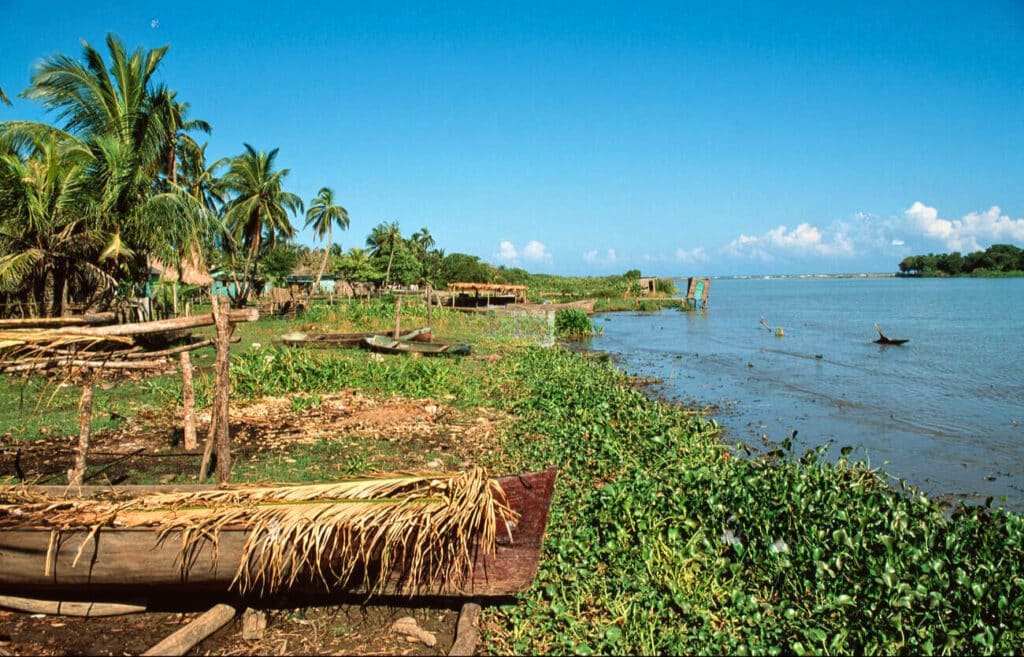
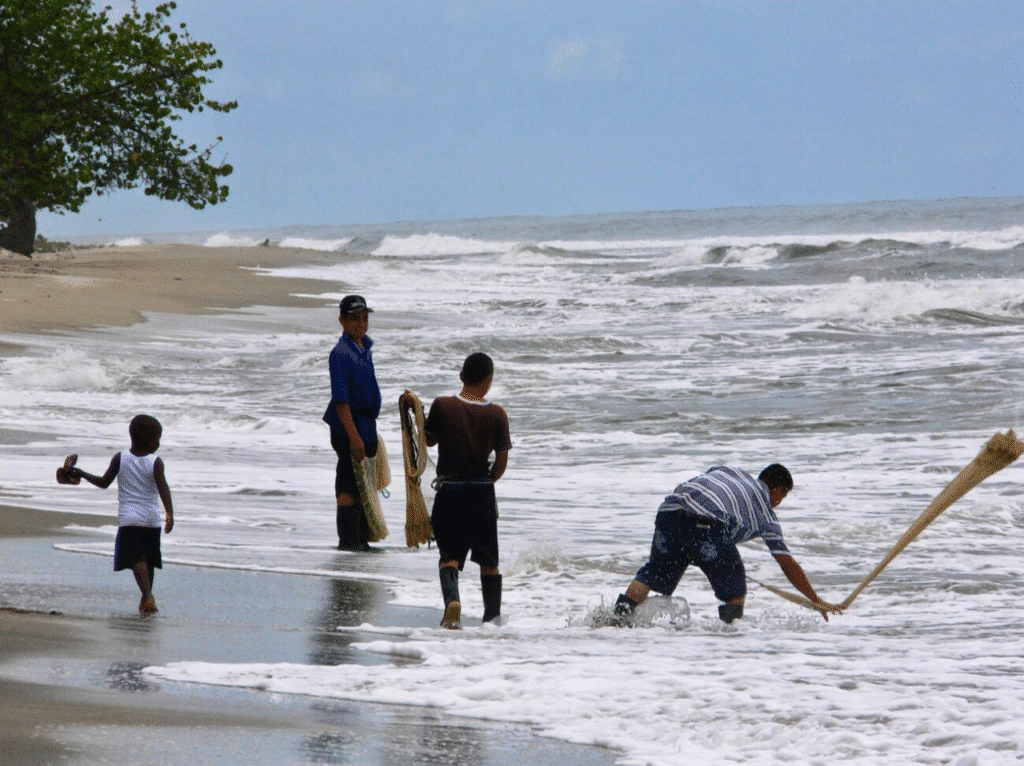
But this relative autonomy came to an end with the arrival of the British. In 1797, accused of supporting the French, the Garifunas were captured and deported en masse to the island of Roatan, off the coast of Honduras. From there, they gradually settled on the Caribbean coasts of Honduras, Belize, Guatemala and Nicaragua. It was on these shores that their special relationship with the sea emerged, through artisanal fishing.
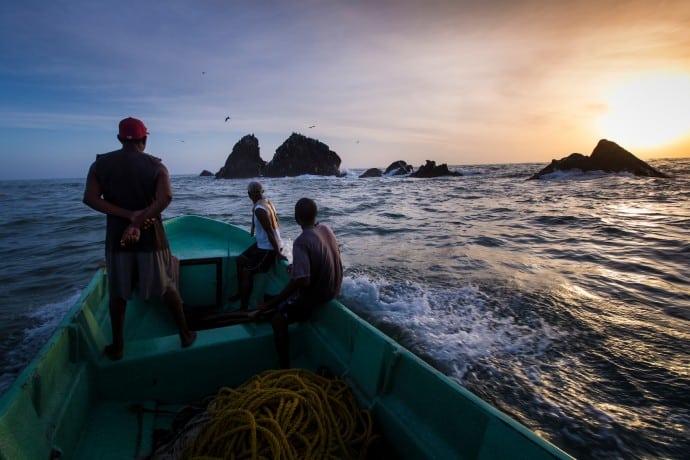
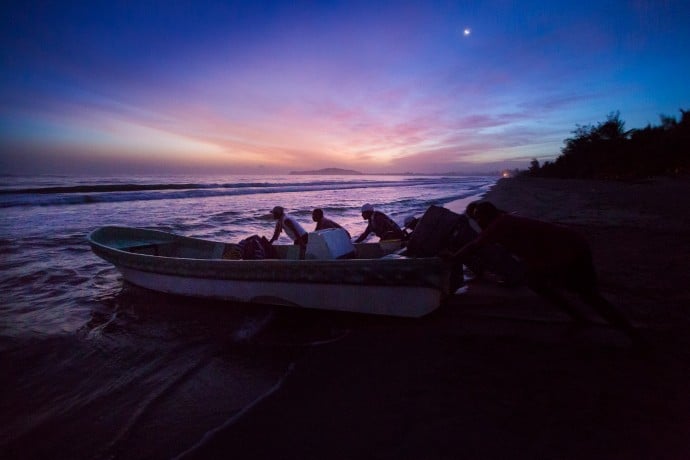
Even today, the Garifunas of Honduras perpetuate techniques that have been passed down orally for generations. Far removed from industrial logics, their practice relies on light boats, often made of wood, powered by oars or small motors, as well as on the use of nets, lines and creels. Respect for the reproductive cycle of species, detailed knowledge of currents and the seabed, and the ability to read the signs of the sky are all part and parcel of their expertise.
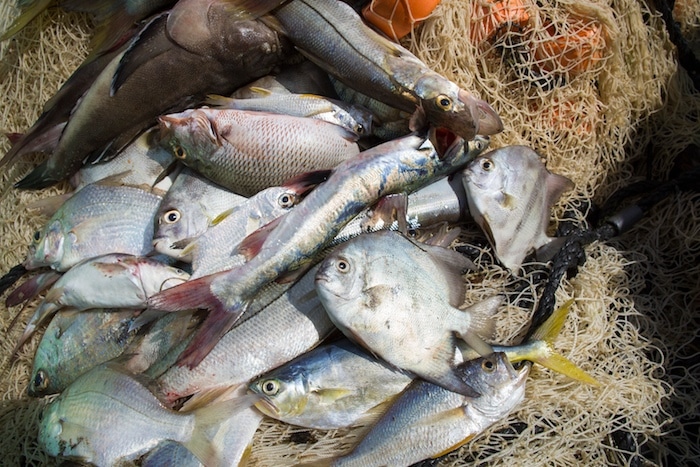
Fishing is not just a matter of subsistence. It’s a deeply cultural act, closely linked to cuisine, music and spirituality. Traditional dishes such as Machuca (mashed plantain with fish in a coconut milk broth) tell the story of the sea as much as they nourish the body. The transmission of these recipes, the sharing of meals and the songs sung on fishing trips are all part of a genuine community ritual.
A central role for women in the maritime economy
If the figure of the fisherman is often masculine, the Garifunas of Honduras are actually an ecosystem in which women play a central role. They prepare, process and sometimes even sell the fish. They keep culinary practices alive and organize the solidarity networks that keep villages alive. In some communities, they are also involved in coastal fishing, particularly for shellfish.
The Garifuna social model is based on complementarity between the sexes, structured around the extended family and the community. This strong social fabric provides a bulwark against external pressures, but is now under threat.
Land pressure and ecological upheaval
Since the 1990s, the Garifunas of Honduras are seeing their way of life threatened by the expansion of agro-industrial, tourism and sometimes extractive projects on their coastal lands. The development of palm oil plantations, resorts and marinas is encroaching on traditional fishing grounds, sometimes without prior consultation with local communities.
Expropriations, often contested by local residents, raise legitimate concerns about respect for Garifuna land rights. This phenomenon is leading to a scarcity of accessible marine resources, increased pressure on ecosystems and the gradual economic marginalization of fishermen.
Added to this are the effects of climate change. Coastal erosion, rising sea temperatures and disrupted breeding seasons have a direct impact on the abundance and diversity of fish species. The Garifunas of Honduras must now navigate in an increasingly uncertain environment.
Community and legal mobilization
In the face of these challenges, communities are not remaining passive. The Black Honduran Fraternal Organization (OFRANEH), a pillar of the Garifuna movement, has been working for over 40 years to defend the cultural and territorial rights of the Garifunas. It supports the Garifunas of Honduras through awareness-raising campaigns, legal action at national and international level, and support for food sovereignty projects.
Emblematic cases include that of the community of Triunfo de la Cruz, which won its case before the Inter-American Court of Human Rights. OFRANEH also campaigns for sustainable fishing practices that respect biodiversity and are adapted to the local ecological context.
Community and legal mobilization
In the face of these challenges, communities are not remaining passive. The Black Honduran Fraternal Organization (OFRANEH), a pillar of the Garifuna movement, has been working for over 40 years to defend the cultural and territorial rights of the Garifunas. It supports the Garifunas of Honduras through awareness-raising campaigns, legal action at national and international level, and support for food sovereignty projects.
Emblematic cases include that of the community of Triunfo de la Cruz, which won its case before the Inter-American Court of Human Rights. OFRANEH also campaigns for sustainable fishing practices that respect biodiversity and are adapted to the local ecological context.
A threatened but resilient living heritage
Beyond the material aspects, the Garifunas of Honduras are the guardians of an exceptionally rich intangible heritage. Their language, their music to the rhythm of drums and the puntatheir dances and beliefs linked to the sea make up a powerful symbolic universe. Fishing is both an everyday act and a metaphor for our relationship with the world.
Every trip out to sea, every net cast into the water, is also an act of cultural resistance. Sea tales, work songs and prayers to ancestors before fishing bear witness to a sacred relationship with the environment.
Garifuna of Honduras are not just economic players in coastal areas. They embody a balance between tradition and resilience, between ancestral know-how and contemporary issues. Their presence on the shores of Honduras is a reminder that the sea is not just a space of resources, but also a place of memory, transmission and struggle. Defending their way of life also means preserving another way of living in the world, one that is more respectful of natural and human balances.