Since July 24, 2026, Saba has been celebrating a special occasion. This year, the Saba Carnival marks the symbolic milestone of its 50th edition. Through August 2, music, contests, family gatherings, and parades will transform the island. But this anniversary is about much more than just a celebration. It highlights the ability of a small Caribbean community to build, pass on, and reinvent a tradition that has become one of its major cultural events.
A story that began in 1975
The History of the Saba Carnival began in 1975 thanks to Carmen Simmons-Nicholson. The official organization credits her with introducing the carnival to the island, highlighting her vision and commitment. Fifty editions later, this legacy remains essential: the carnival did not emerge as an imported tourist event, but as an initiative spearheaded by a community leader and then gradually embraced by the residents.
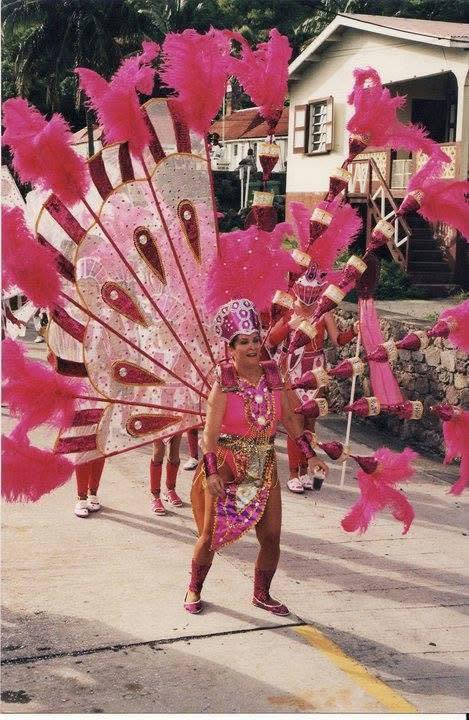
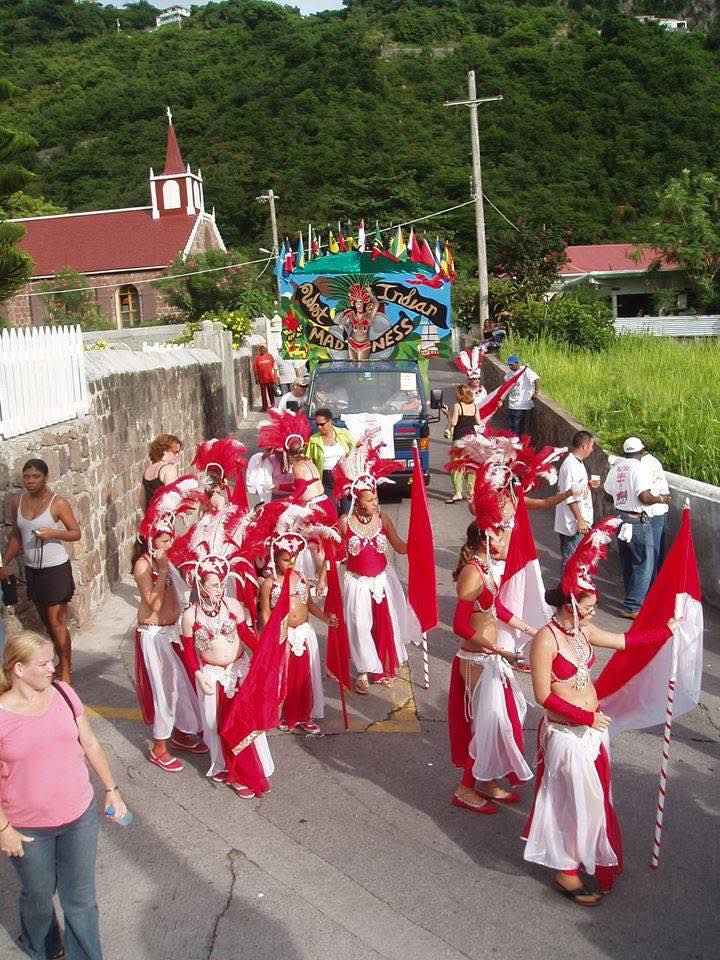
On an island where villages, families, and community organizations play a central role in community life, the continuity of such an event holds special significance. The traditional costumes, music, competitions, and public gatherings allow each generation to inherit a history while adding its own unique touch.
A birthday celebration organized in the villages
Even before the official opening, the Saba Carnival began to spread across the island. The “Road to Carnival” program brought together residents and visitors in Windwardside, St. John’s, and then The Bottom. Local musicians, vendors, families, and guest artists took part in a series of events designed to build excitement in each community.
This organization highlights one of the strengths of the Saba Carnival: it is not limited to the Carnival Village or the major parades. It takes shape in various settings and is built on collective participation. In Saba, the small size of the community in no way diminishes the event’s ambition; on the contrary, it gives it a human dimension that is difficult to replicate in larger events.
The 2026 Program: A Blend of Tradition and Celebration
The celebrations began on Friday, July 24, with Soca Groovy, followed on July 25 by the Road March competition, open to junior and senior categories. The Family Fun Day on July 26 then put children and families at the center of the pre-festival weekend.
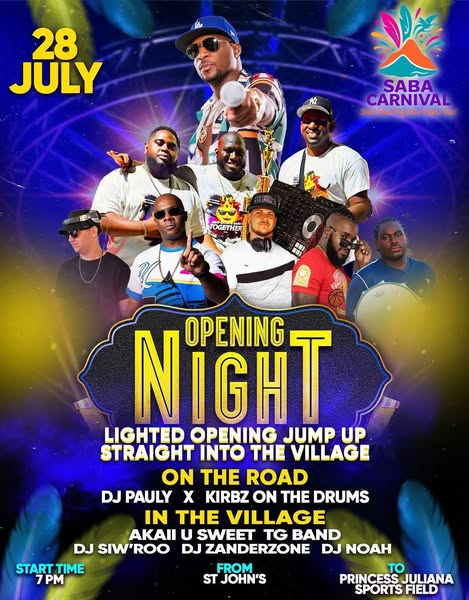
This Monday, July 27, marks the start of the official week with Operation Jump Up 50 and the opening night event, “Take Me Back.” The chosen title clearly captures the spirit of this year’s event: looking back at the past without letting the carnival become stuck in nostalgia.
The program for the Saba Carnival continues on July 28 with Caribbean Fusion, on the 29th with Issa Vybe 50, on the 30th with International Flag Fest, and on the 31st with Ultimate 50. These events highlight Saba’s connections to its regional surroundings. The local carnival serves as a hub for artists, rhythms, flags, and audiences from various Caribbean territories.
The highlight will take place on Saturday, August 1, with the J’ouvert, followed by the first major parade. A second day of parades is scheduled for Sunday, August 2, to bring the anniversary edition to a close. In the streets, the costumes, the groups, and the music will make collective expression the main language of the celebration.
Saba Carnival: More Than a Week of Fun
The longevity of the Saba Carnival raises an important question: What is a community protecting when it continues to hold a carnival for fifty editions? It protects memories, of course, but also skills, traditions of cooperation, and a way of publicly identifying with one another. The event also gives Saba regional visibility. Known for its volcanic landscapes, hiking trails, and its reputation as the “Unspoiled Queen,” the island reveals another side of itself here: that of a vibrant, creative place deeply connected to the rest of the Caribbean.
In this context, the 50th anniversary is not merely a time to take stock. It marks a transition between the people who launched and established the tradition, the artists who keep it alive today, and the young people who will be called upon to give it new forms.
By celebrating its history while embracing contemporary influences, the Saba Carnival reminds us that cultural heritage is truly alive only when it continues to bring people together. From the first project launched in 1975 to the parades of 2026, the island is therefore not merely celebrating fifty editions of music and color—it is celebrating fifty editions of community.
The 2026 Saba Carnival takes place from July 24 to August 2. The program includes music competitions, family activities, cultural evenings, the J’ouvert, and two big parade days.
The program includes the Soca Groovy, the Road March competition, Family Fun Day, Operation Jump Up 50, Caribbean Fusion, International Flag Fest, the J’ouvert, and the parades on August 1 and 2.
The announced connecting flights will allow passengers to continue on to Lima, Quito, San José, Guatemala City, Port of Spain, Havana, Santo Domingo, and several other cities in Central America, South America, and the Caribbean.
Every summer, the island of Saba celebrates its carnival with a rare intensity. From July 28 to August 3, 2025, the Saba Carnival returns for a new edition, blending Caribbean traditions, community spirit and cultural richness in an exceptional natural setting.
A long-standing tradition since 1975
Saba Carnival doesn’t follow the pre-Lenten calendar like traditional carnivals. It is held in July, to enable Saban students living abroad to participate. First held in 1975, this summer festival has become an integral part of the identity of the island’s 1,500 inhabitants. It reflects the history of Saba, colonized by the Dutch in the 17th century, where African, European and Caribbean cultures have intermingled over the centuries.
In its fifty years of existence, Carnival has grown from a local celebration to an event recognized throughout the region. Today, it mobilizes all generations, in a society where family and community ties remain strong.
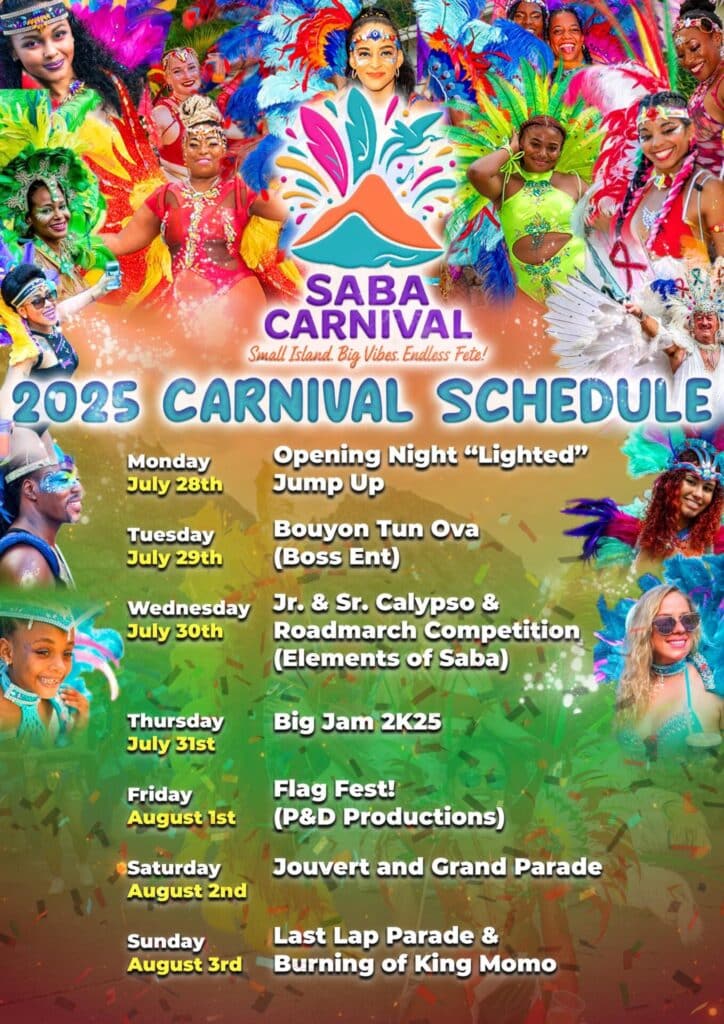
The official 2025 program, released by the local authorities, includes seven days of festivities punctuated by popular events.
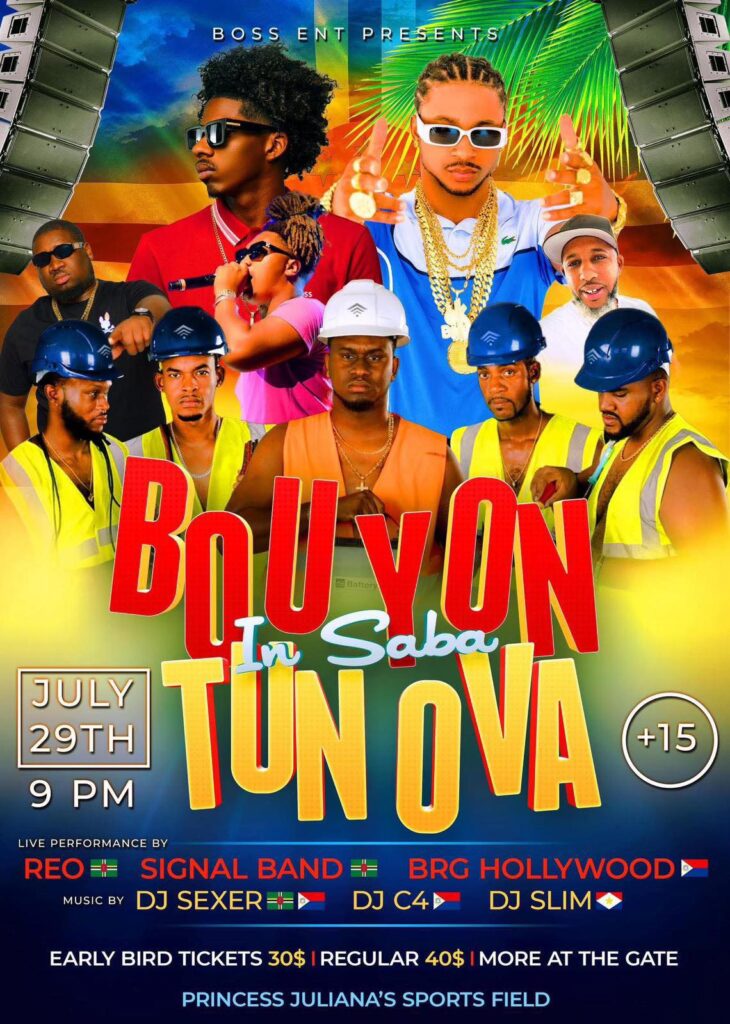
Monday, July 28 opens the festivities with a ceremony at The Bottom, the island’s capital. On Tuesday, July 29, it’s time for Bouyon Night, an energetic evening dedicated to the Bouyon musical genre, originally from Dominica. On Wednesday July 30, the Calypso and Road March competition will showcase local artists in two emblematic Caribbean musical styles.
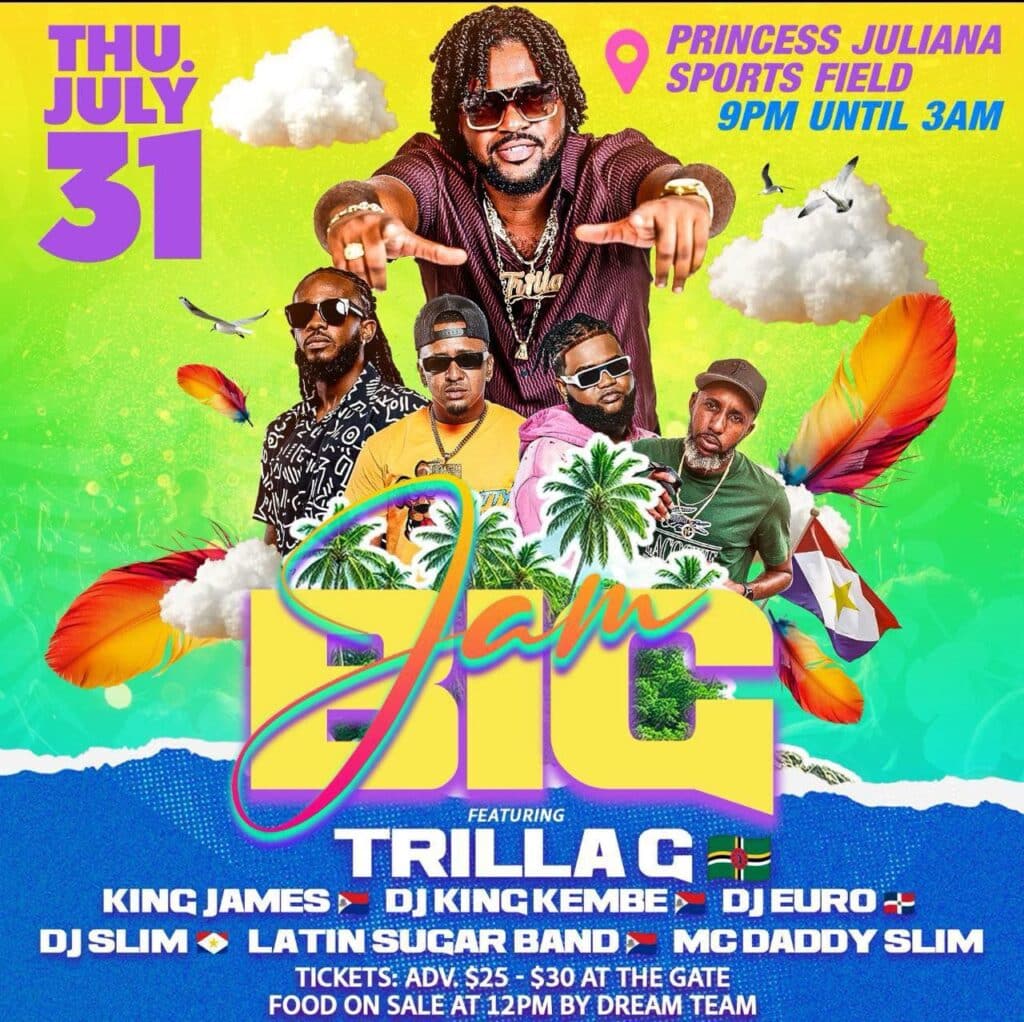
Thursday, July 31, is the Big Jam, an evening of music with an international flavour. On Friday August 1, the International Flag Fest will fly Caribbean banners in the streets of The Bottom and Windwardside, in a festive and colorful atmosphere.
The weekend marks the climax of the carnival. Saturday August 2 kicks off at dawn with the traditional Jouvert Morning, a morning procession typical of Caribbean carnivals. The Grand Parade follows during the day, with its decorated floats, flamboyant costumes and musical performances.
Finally, on Sunday August 3, the Second Parade, also known as the Last Lap, is the last major parade before the festival closes.
Saba is a 13-square-kilometer volcanic island dominated by Mount Scenery, the highest point in the Kingdom of the Netherlands at 887 meters above sea level. Since 2010, together with Bonaire and St. Eustatius, it has been a special municipality of the Netherlands. This administrative status provides logistical support without compromising its Caribbean identity.
Divided into four villages – The Bottom, Windwardside, Hell’s Gate and St. Johns – the island cultivates a peaceful, communal way of life. This intimate setting gives the carnival a warm, almost family feel.
True to its nickname of “Unspoiled Queen”, Saba is renowned for its conservation efforts. Its marine park, created in 1987, protects 1,300 hectares around the island, offering exceptional underwater biodiversity. Thirty dive sites are listed, with visibility of up to 90 meters.
The island also boasts a network of hiking trails traversing several ecosystems, from tropical rainforest to tidal pools. Although a number of renewable energy initiatives have been launched, no official source confirms that the electricity grid has been predominantly solar-powered since 2019.
Carnival is Saba’s annual tourist peak. Its accommodations, mostly small hotels and cottages, are fully booked during the week. This is of direct benefit to restaurateurs, craftsmen, musicians, costume designers and service providers.
Far from mass tourism, Saba focuses on authenticity. The carnival is part of this strategy, offering an immersive, sincere experience in a preserved environment. According to the Association of Caribbean States, island carnivals are powerful vectors of revenue and identity for small territories.
The Saba Carnival is much more than a tourist event. It embodies the island’s living memory. By showcasing local music, dance and traditional costumes, it strengthens the bond between young people and their heritage.
Preparations take several months and involve all generations. This collective organization weaves local solidarity and perpetuates the values of sharing and unity. What’s more, the growing recognition of carnival on a regional scale is helping to put Saba on the Caribbean cultural map.
A 2025 edition to match history
For its 50th edition, Saba Carnival 2025 promises a structured, festive and inclusive program. While certain traditions, such as the cremation of King Momo, are not on the program this year, other strong rituals, such as the Jouvert Morning and the Grand Parade, will be maintained.
In a Caribbean context where many islands are rethinking their tourism models, Saba remains true to its approach: focusing on quality, identity and the preservation of its natural and cultural resources.
Saba Carnival 2025 proves once again that a small territory can produce a large-scale event without denying its authenticity. From July 28 to August 3, this extraordinary island will make the heart of the Caribbean beat to the rhythm of its music, traditions and deep attachment to its culture. More than a festival, it’s the expression of a people and a territory proud of their roots and resolutely looking to the future.
To provide the best experiences, we use technologies like cookies to store and/or access device information. Consenting to these technologies will allow us to process data such as browsing behavior or unique IDs on this site. Not consenting or withdrawing consent, may adversely affect certain features and functions.
Functional
Always active
The technical storage or access is strictly necessary for the legitimate purpose of enabling the use of a specific service explicitly requested by the subscriber or user, or for the sole purpose of carrying out the transmission of a communication over an electronic communications network.
Preferences
The technical storage or access is necessary for the legitimate purpose of storing preferences that are not requested by the subscriber or user.
Statistics
The technical storage or access that is used exclusively for statistical purposes.The technical storage or access that is used exclusively for anonymous statistical purposes. Without a subpoena, voluntary compliance on the part of your Internet Service Provider, or additional records from a third party, information stored or retrieved for this purpose alone cannot usually be used to identify you.
Marketing
The technical storage or access is required to create user profiles to send advertising, or to track the user on a website or across several websites for similar marketing purposes.