
On the future EC$5 bill, the face of Grenadian Olympic champion Kirani James will appear alongside that of former Saint Vincent and the Grenadines Prime Minister Robert Milton Cato. This pairing encapsulates the ambition of the new series: to bring to life, through everyday gestures, the stories of those who have left their mark on the Eastern Caribbean.
On July 9, 2026, the Eastern Caribbean Central Bank (ECCB) unveiled the new designs for the five main denominations of the regional currency. For the first time, the 5, 10, 20, 50, and 100 EC dollar bills will no longer feature the portrait of Queen Elizabeth II. Ten figures from member countries will take her place.
A common currency for eight territories
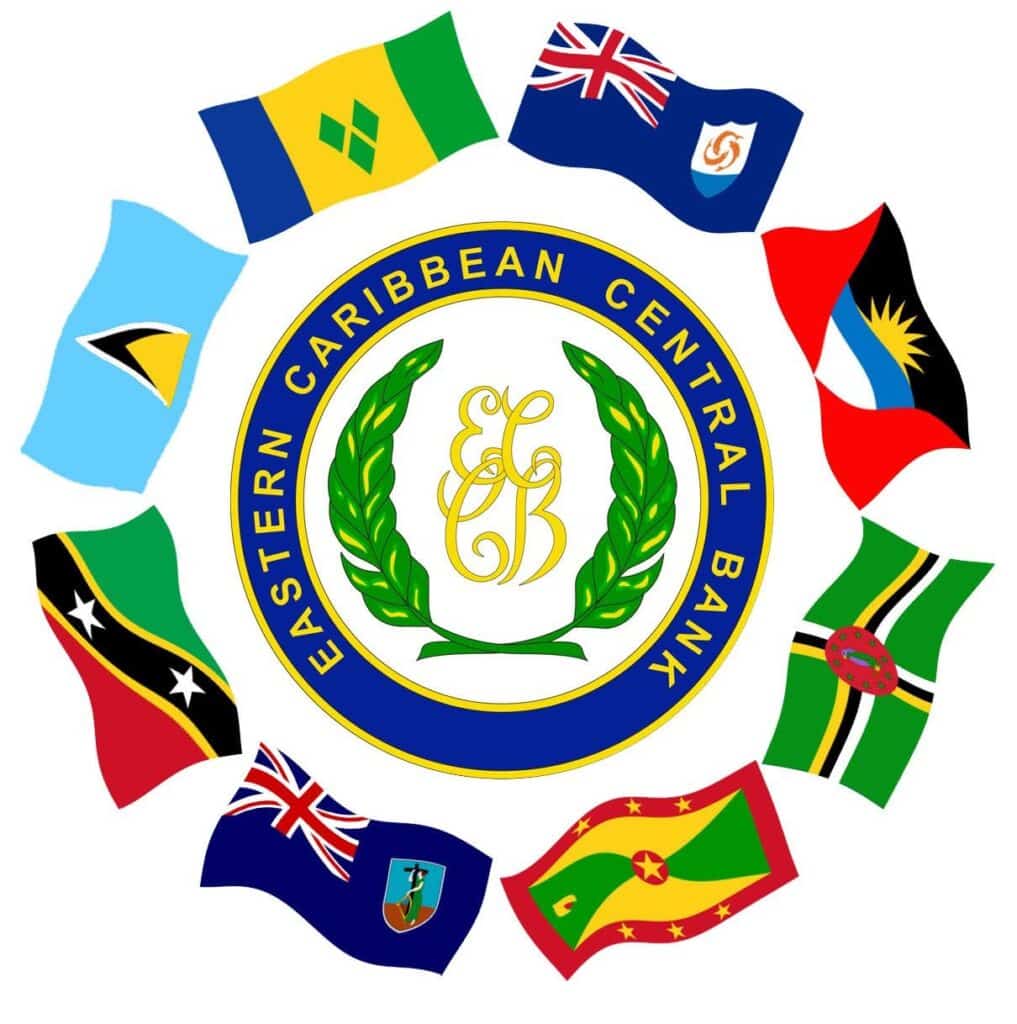
The EC dollar is the official currency of Anguilla, Antigua and Barbuda, Dominica, Grenada, Montserrat, Saint Kitts and Nevis, Saint Lucia, and Saint Vincent and the Grenadines. These eight member states share a central bank and a currency, but each retains its own national history. The new design specifically seeks to bring these narratives together without blurring them. In the Eastern Caribbean, the banknote thus becomes more than just a means of payment; it becomes a symbol of regional recognition.
Five cuts for ten courses
The $100 bill will feature Saint Lucian economist Sir William Arthur Lewis and Sir John Compton. In 1979, Arthur Lewis received the Bank of Sweden Prize in Economic Sciences for his pioneering work on development. The $50 bill will feature Sir K. Dwight Venner, governor of the ECCB from 1989 to 2015, and Sir Robert Llewellyn Bradshaw. The $20 bill will feature Sir Vere Cornwall Bird Sr. and Dame Mary Eugenia Charles, the first woman elected prime minister in the Caribbean region.
The $10 bill will feature William Henry Bramble and James Ronald Webster. Finally, the $5 bill will feature Robert Milton Cato and Kirani James. As the 2012 Olympic 400-meter champion in London, Kirani James earned Grenada its first-ever Olympic medal.

A decision that has been in the works since 2023
The decision to make this change was not reached in a matter of weeks. On July 21, 2023, the ECCB’s Monetary Council approved the replacement of the image of Elizabeth II. The Central Bank then held public consultations between July and December 2023. According to the ECCB, these discussions revealed strong support for national heroes and the region’s founding figures. The 2026 unveiling thus reflects not only an institutional decision but also the expectations expressed in the countries concerned.
What memory do the tickets choose?
The collection tells a certain story of the Eastern Caribbean . It primarily highlights political leaders, an economist, a pioneer of monetary integration, and an athlete. These figures evoke the region’s path to independence, the building of its institutions, and the determination to establish the region’s presence on the international stage. But the list also sparks debate. Among the ten figures selected, only one is a woman: Dame Eugenia Charles. The arts, literature, and music are not directly represented. This observation does not diminish the significance of the change, but it does show that a currency alone cannot encapsulate the full richness of a region.
By replacing the monarch’s portrait with those of local figures, the Eastern Caribbean is shifting the symbolic center of its currency. They are not merely changing images: they are choosing the faces that will henceforth accompany purchases, wages, and trade. A new question then begins to circulate along with these bills: what other women, artists, thinkers, or builders might one day become part of the shared narrative of the Eastern Caribbean?
📸 @ECCB
The Eastern Caribbean Central Bank is replacing the portrait of Queen Elizabeth II with those of ten prominent figures from the region. This new series aims to better represent the history, achievements, and shared identity of the eight member countries that use the EC dollar.
The five banknotes will feature, among others, economist Sir Arthur Lewis, former Prime Minister Dame Eugenia Charles, former ECCB Governor Sir K. Dwight Venner, and Grenadian Olympic champion Kirani James. Each banknote will feature two regional figures.
The EC dollar is used by eight members of the Eastern Caribbean Monetary Union: Anguilla, Antigua and Barbuda, Dominica, Grenada, Montserrat, Saint Kitts and Nevis, Saint Lucia, and Saint Vincent and the Grenadines.
In Kingstown, capital of Saint Vincent and the Grenadines, the countdown has begun. On June 26, 2026, Vincy Mas will open a new edition under the theme “The Great Escape”. For twelve days, until July 7, the island of around 100,000 inhabitants will host its biggest cultural event. The slogan speaks of warmth, escape and celebration. But behind the poster is a story of timing.
In the mas camps, the weeks leading up to the opening are rarely silent. Costumes are being adjusted, sections prepared and the sounds that will accompany the parades rehearsed. Families return from the diaspora, visitors book their places, and Kingstown prepares for a change of pace. Vincy Mas is not an island carnival. It’s an annual landmark around which St. Vincent organizes part of its cultural life.
A decisive choice in 1977
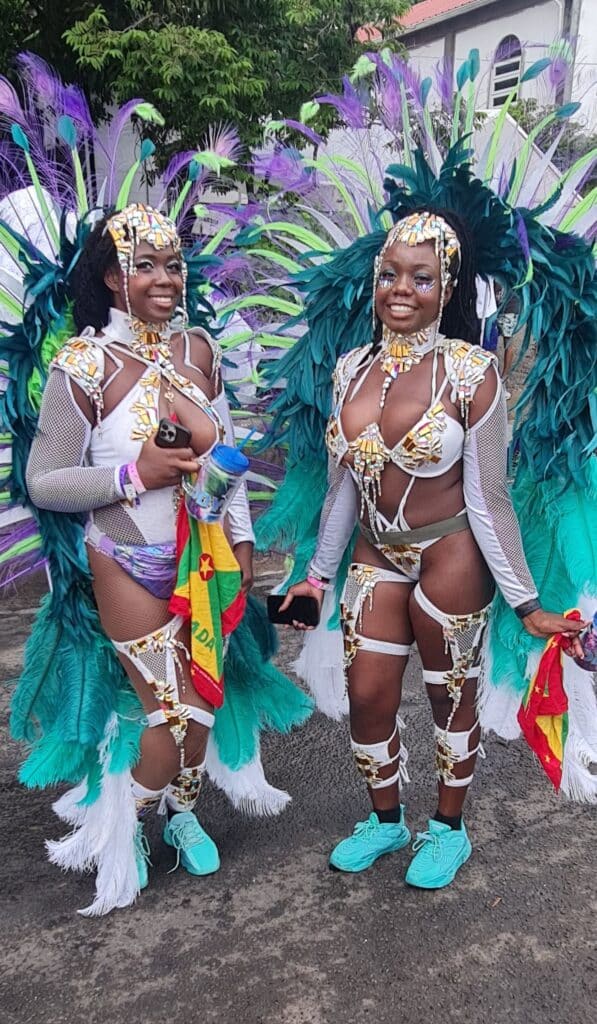
The historical uniqueness of the Vincentian carnival lies in a deliberate change. Before 1977, St. Vincent’s carnival followed the pre-Lenten calendar, as did many of the great Caribbean carnivals. It was held in the days leading up to Ash Wednesday, in a time frame marked by Christian heritage, European traditions and Afro-Caribbean popular reappropriations.
From 1977 onwards, another period began: the era of the summer festival. Saint-Vincent moved its carnival to late June and early July. The event was organized around a new date, an official celebration, management by the Carnival Development Corporation, and popular highlights such as calypso competitions, soca, costumes and parades.
This move didn’t erase the heritage. It has placed it in another time. Vincy Mas retains the strong codes of Caribbean carnival: the mas, the music, the competitions, the characters, the street. But he’s no longer tied to the religious calendar. It has created its own space, between summer vacations, diaspora movements and national cultural strategy.
Vincy Mas: twelve days to raise the island
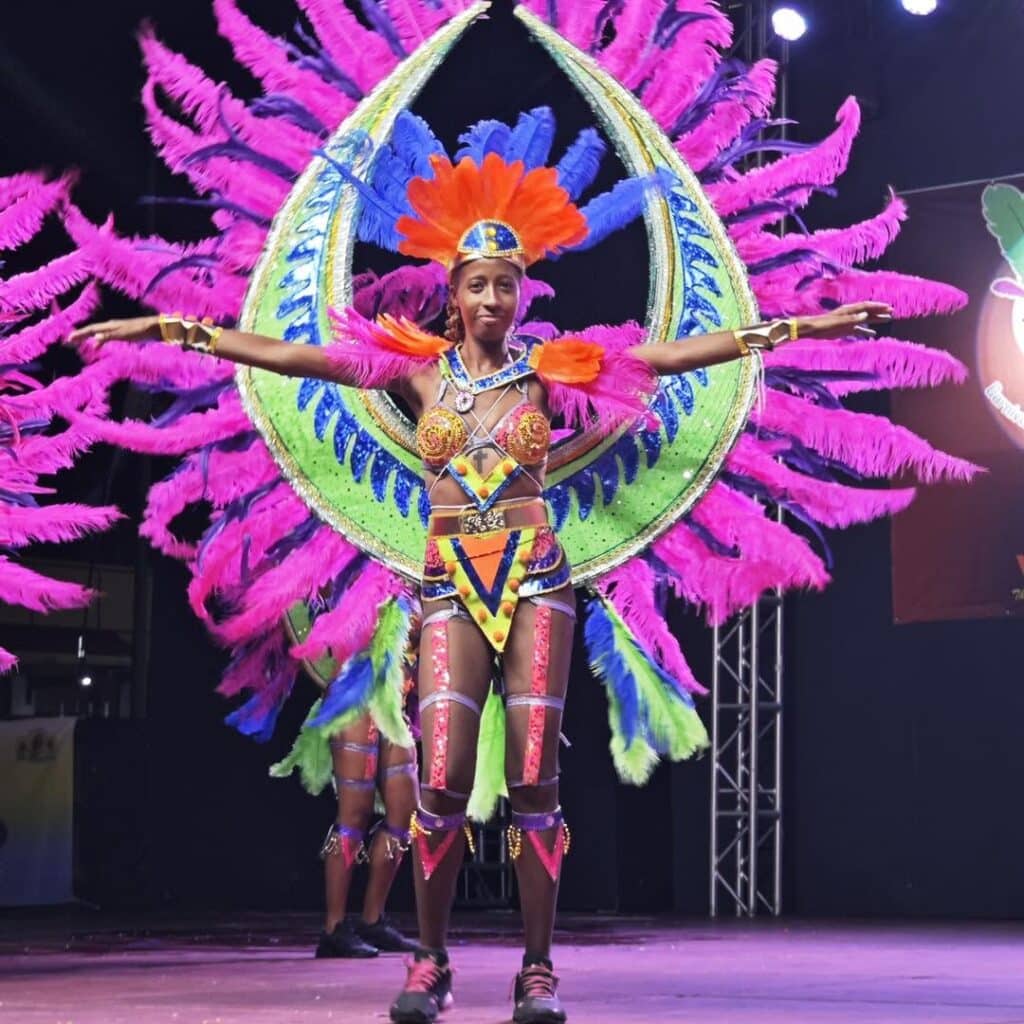
The 2026 edition is scheduled to run from June 26 to July 7. The last two days, Carnival Monday and Carnival Tuesday, are listed as official holidays on Monday July 6 and Tuesday July 7. This is when the festivities reach their peak, with J’Ouvert, parades, costumed bands and a massive public presence in the streets.
The Vincy Mas 2026 format remains dense. It brings together calypso and soca competitions, steel pan competitions, King and Queen of the Bands presentations, the Junior Carnival, folk festivals and street parades. Around this backbone, the great markers remain visible: steel pan, masquerade, calypso, costumes and cultural pride.
This blend explains its strength. The steel pan recalls a shared musical history in the English-speaking Caribbean. Calypso retains its role of social commentary. Soca carries contemporary energy. Mas transforms bodies into collective images. Vincy Mas moves forward between heritage and modernity, without having to choose between the two.


A special place in the Caribbean
This singularity deserves to be precisely named. Saint Vincent and the Grenadines is one of those territories that have succeeded in decoupling their carnival from Lent without losing their cultural identity. Martinique and Guadeloupe still have a pre-Lent carnival. Trinidad too. Jamaica has developed its own calendar, later in the spring. Saint-Vincent, for its part, maintains an early summer carnival.
This position gives Vincy Mas a special significance. It comes after the big February-March events, but before other July and August carnivals in the region. For the Vincentians, this is more than just a tourist advantage. It’s a way of saying that their carnival is not a copy. It follows its own season, its own tempo, its own way of gathering.
After La Soufrière, a consolidation edition
The recent context also lends weight to the 2026 edition. In 2024, Saint Vincent and the Grenadines celebrated the 45th anniversary of its independence, gained in 1979. The country also bears the memory of the eruption of La Soufrière in 2021, which led to the evacuation of over 20,000 people in the volcano’s red zone. The shock affected families, the economy, travel and the country’s tourist image.
After the interruptions caused by the pandemic, then the gradual resumption, Vincy Mas has regained a special value. It goes beyond simple programming. Carnival reaffirms its ability to reclaim public space, sound, costume and collective memory.

What the carnival must preserve
The future is already full of questions. How can we prevent the festival from becoming too dependent on tourism? How can we sustain mas bands, pan yards, calypsonians and young artists beyond a few weeks of visibility? How can we transmit the codes of calypso and mas to a generation that also listens to dancehall, reggaeton, afrobeats and new-generation soca?
On June 26, in Kingstown, the first big wave gets underway. For twelve days, St. Vincent will be reminding us that the Caribbean is more than just a carnival calendar. Vincy Mas exists because a country has chosen its moment. And what if this choice, almost fifty years later, had become its greatest signature?
Vincy Mas 2026 runs from June 26 to July 7 in St. Vincent and the Grenadines. The last days of the festival, Carnival Monday and Carnival Tuesday, are the big street events, with the J’Ouvert, parades, costumed bands and a big turnout in Kingstown.
Vincy Mas left the pre-Lent calendar in 1977, when St. Vincent chose to move its carnival to late June and early July. This move gave the festival an identity of its own in the Caribbean. The Vincentian carnival retains the codes of mas, calypso, soca and parades, but now follows a summer timetable.
Vincy Mas stands out for its calendar, its national roots and its role in the cultural life of Saint Vincent and the Grenadines. Unlike the pre-Lent carnivals of Trinidad, Martinique or Guadeloupe, it takes place in early summer. This position gives it a special place in the Caribbean carnival season, between popular heritage, the return of the diaspora and Vincentian cultural affirmation.
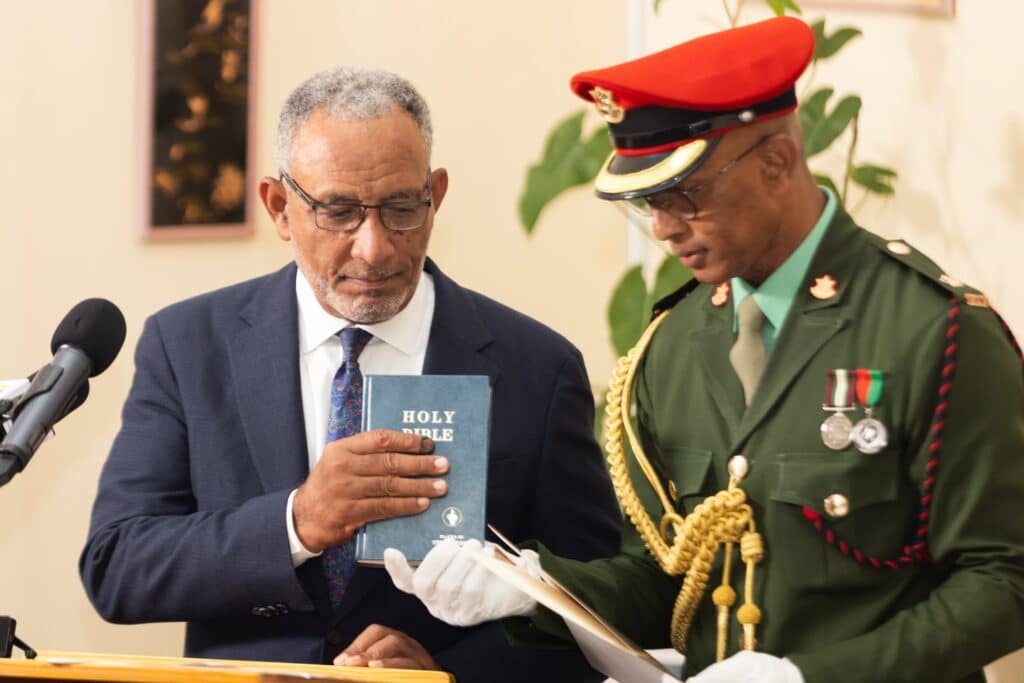
For more than two decades, political life in Saint Vincent and the Grenadines had been moving forward with the same face, the same party, the same course of action. The recent election upset this balance in a single vote. With an unprecedented result – 14 seats out of 15 – the New Democratic Party (NDP) took power and appointed Godwin Friday as Prime Minister.
For this small Caribbean state, it’s a rare moment: a real political shift in a country accustomed to continuity.From December 5 to 13, Atelier Robinot is hosting an exhibition that is as moving for its beauty as for what it reveals. With La mémoire de l’eau, Roseman Robinot, a Guyanese artist born in Martinique, brings together twenty works created between 1996 and 2019. Through them, she explores the way in which landscapes, seas and shores retain traces of a history that has often been overlooked or ignored.
A clear victory after 23 years of continuity
The Unity Labour Party (ULP), in power since 2001, failed to resist the wave of change. The outgoing party went from a solid majority to a single seat. The only member of parliament to be re-elected is Ralph Gonsalves, a leading figure in St. Vincent and the Grenadines and head of government for over twenty years. The reason for this sudden fall was a number of factors that accumulated over time: the exceptional length of Gonsalves’ mandate, the gradual lassitude of part of the population, the consequences of the vaccination mandate during the pandemic, and communication that was deemed too weak during the campaign.
This does not detract from the major role he played. Gonsalves steered Saint Vincent and the Grenadines through the global financial crisis, the Covid-19 pandemic, the eruption of La Soufrière, Hurricane Beryl and several severe weather events. Many recognize this record. However, this political experience was not enough to stop the desire for renewal expressed at the ballot box.
Godwin Friday: the arrival of new leadership
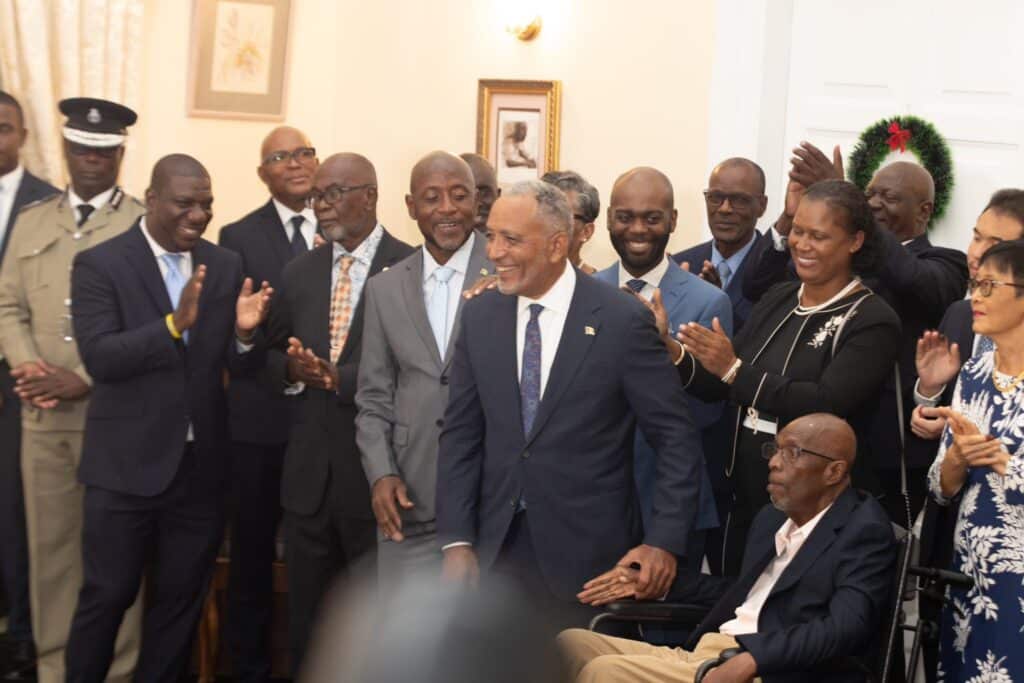
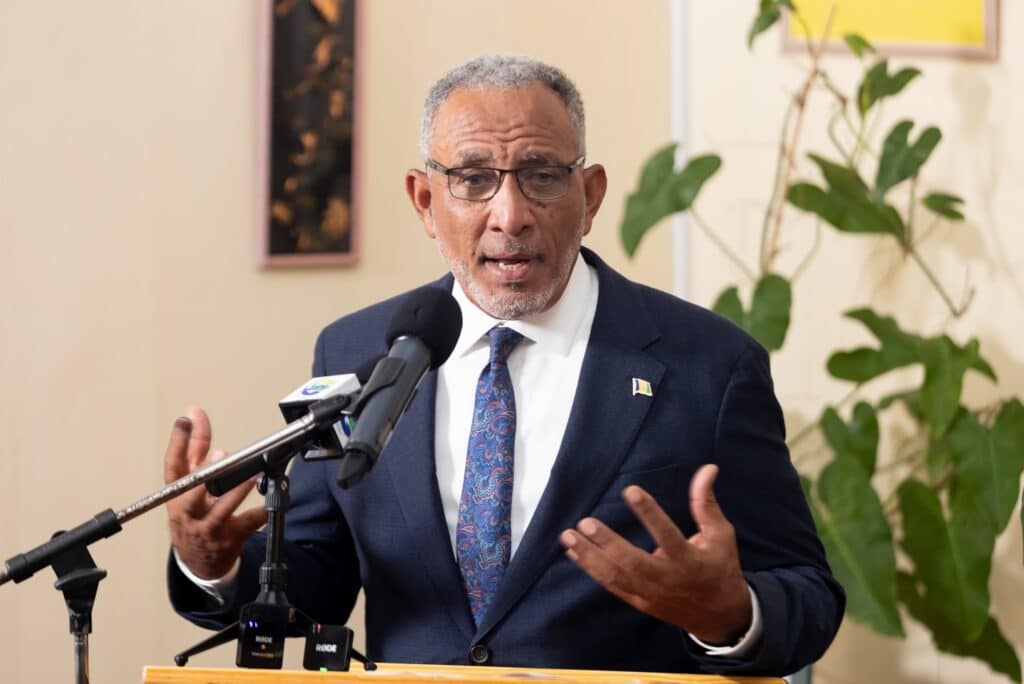
At 66, Godwin Friday now carries a mandate of unprecedented scope. Trained as a lawyer and a member of parliament since 2001, he took over as head of the NDP in 2016. Over the years, he has rebuilt the party’s image, consolidated its territorial roots and proposed a credible alternative. His victory reflects both the desire for change and the confidence placed in his political style: calm, direct, close to the ground.
During the campaign, the NDP focused on clear priorities: job creation, better wages, a tough response to crime, improved healthcare and investment in infrastructure. These commitments resonated strongly, particularly with young adults. The electorate sees in Godwin Friday a leader likely to bring concrete solutions to problems now at the heart of everyday life in Saint Vincent and the Grenadines.
A closely watched transition in the Caribbean
The announcement of the results quickly spread beyond the country’s borders. Jamaican Prime Minister Andrew Holness congratulated Godwin Friday, underlining the importance of this moment for the Vincentian people and recalling the close ties between the two nations. In the region, political changes often influence the balance of power. That’s why this changeover in Saint Vincent and the Grenadines is being closely watched by members of the OECS and Caricom.
Internationally, Taiwan immediately welcomed the victory. The island has long enjoyed active cooperation with Saint Vincent and the Grenadines in the fields of health, infrastructure and education. Nevertheless, the subject remains sensitive: in the past, the NDP had raised the possibility of severing diplomatic relations with China. But this idea does not feature in the party’s latest manifesto, leaving the door open to cautious continuity.
A country waiting for concrete answers

Above all, the political transition ushers in a period of high expectations. Godwin Friday will have to respond rapidly to the challenges identified by the population:
– employment, essential for stabilizing the social situation;
– crime, which has become a major concern;
– access to healthcare, weakened by budget constraints ;
– infrastructure, which needs to be strengthened in a country exposed to climate risks.
The NDP has also indicated its willingness to consider a citizenship by investment program, already adopted by several neighboring states. Saint Vincent and the Grenadines is currently the only independent OECS nation not to offer such a scheme. The debate promises to be a sensitive one, but it could offer significant financial leverage if the government chooses to move in this direction.

A new era to write
The country is entering a turning point. After 23 years of political stability, the changeover ushered in a new dynamic. Godwin Friday has a strong mandate and an almost total majority. His ability to transform this confidence into concrete progress will define the trajectory of Saint Vincent and the Grenadines in the years to come.
FAQ
Godwin Friday is a Vincentian lawyer and politician, Member of Parliament since 2001 and leader of the New Democratic Party since 2016. He became Prime Minister following the NDP’s landslide victory in the general election.
Because the New Democratic Party won 14 of the 15 seats in Parliament, ending 23 years of governance by the Unity Labour Party. A transition on this scale is rare in the country’s political life.
Priorities include creating more jobs, fighting crime, strengthening infrastructure, improving access to healthcare and considering a “citizenship by investment” program.
