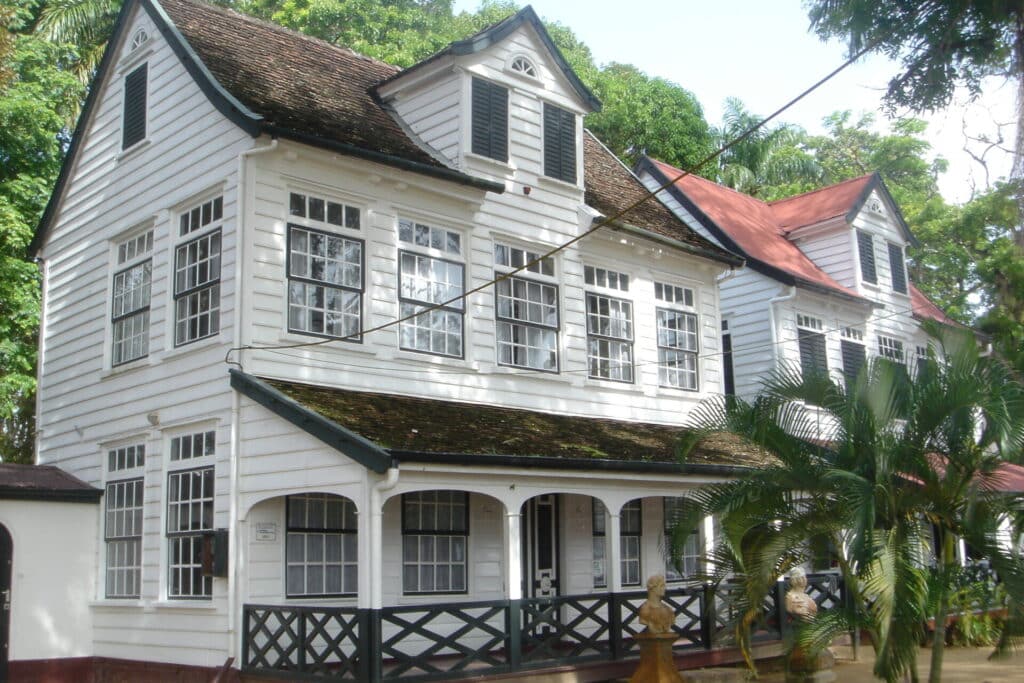
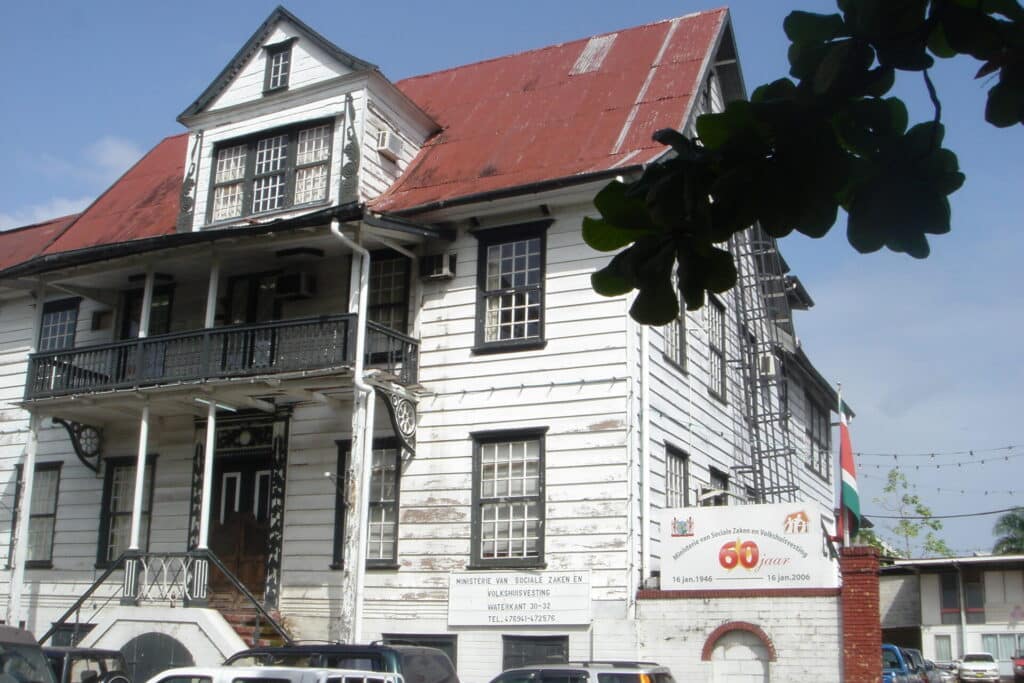
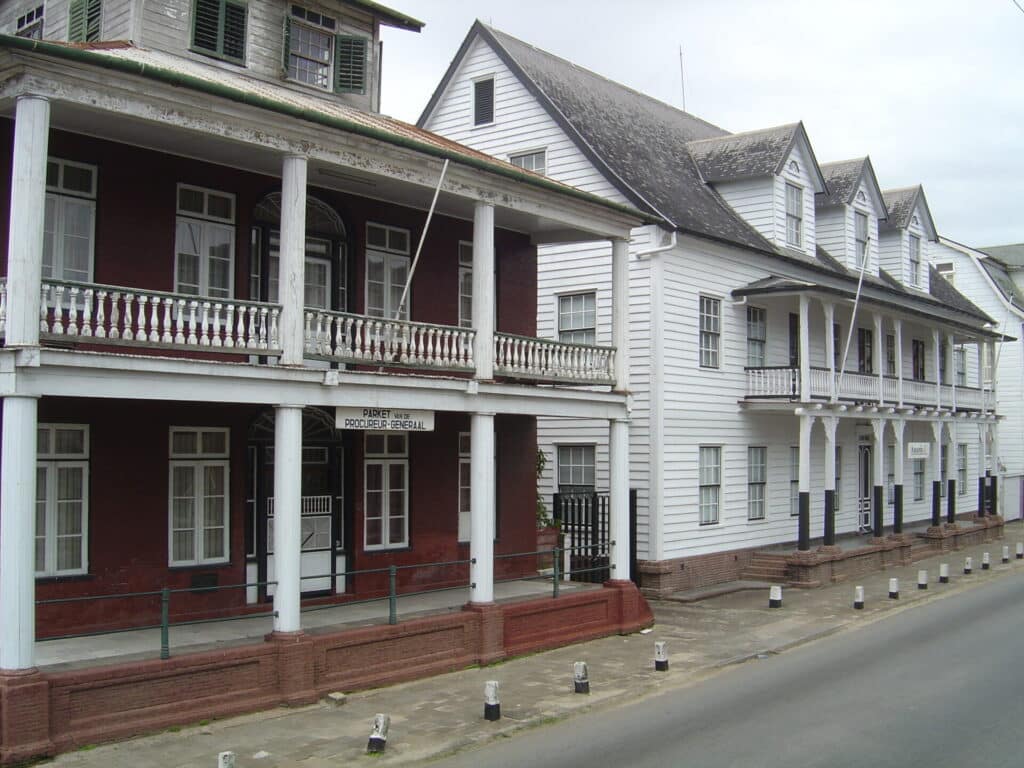
When you arrive from the Suriname River, it’s not a concrete silhouette that takes shape, but a succession of white plank buildings, lined up for over three centuries. Paramaribo doesn’t have the allure of other South American capitals. It took a strange gamble: to remain made of wood. And it has kept its promise, despite fires, humidity and urban pressures.
A historic center recognized by UNESCO since 2002
Traced back to 1683, it’s one of the few colonial cities in America whose historic center is still mainly built of wood. Where other capitals have replaced their colonial houses with stone or concrete buildings, Paramaribo has preserved its original street layout and much of its ancient built fabric. This persistence earned Paramaribo its inscription on UNESCO’s World Heritage List on June 29, 2002, on the basis of cultural criteria ii and iv. The fusion of Dutch architecture, European techniques, South American materials and local know-how has been decisive. The city is not a static museum: it’s a living practice.
Thirty hectares home to major heritage landmarks
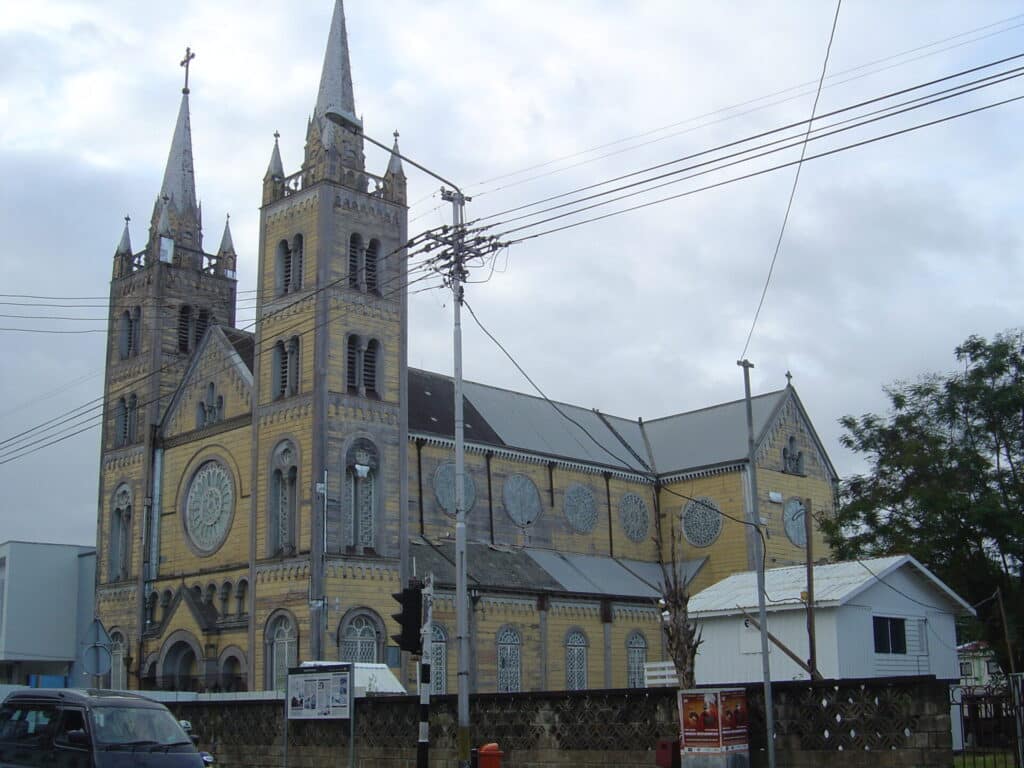
The World Heritage site covers 30 hectares, surrounded by a 60-hectare buffer zone. It includes emblematic buildings such as Fort Zeelandia, built in 1667, the Cathedral of St. Peter and St. Paul, a neo-Gothic Roman Catholic building constructed of wood in 1885, the Neve Shalom synagogue, located in Keizerstraat, and the Presidential Palace, dating from 1730, built of stone with a wooden upper floor. In the same area, the Keizerstraat mosque is a reminder of the capital’s religious plurality. All these sites have one thing in common: they show how Paramaribo has dealt with wood, brick, climate and time.
Why has Paramaribo wood survived the centuries?
Several reasons converge. Firstly, the use of tropical woods from the hinterland, combined with local materials and building techniques handed down over several generations. Secondly, an urban layout adapted to the terrain: the main streets follow shell ridges, which offered a naturally drained base. Last but not least, the main explanation is not only climatic.UNESCO also stresses the role of limited economic growth, which prevented major urban upheavals, alignment breaks and towers in the center.
A special case in Caribbean urban heritage
This singularity takes on its full meaning when placed in the context of the Caribbean. In Saint-Pierre, Martinique, the 1902 eruption destroyed most of a growing city. In Port-au-Prince, the 2010 earthquake affected institutions, archives and heritage buildings. Willemstad, Curaçao, has also been a UNESCO World Heritage Site since 1997, but its urban heritage is more marked by stone, stucco and Caribbean colors. Paramaribo presents a different case: a built heritage where perishable materials have continued to structure the visual identity.
Fire, maintenance and real estate pressure still threaten the site
The challenge today is not only nature, but also the economy, fire and real estate pressure. Restoring a wooden building requires resources, know-how and ongoing protection. The Stichting Stadsherstel Paramaribo foundation, set up in 2011, buys, restores and reuses dilapidated historic buildings to preserve the urban landscape. But the fragility remains real. In 2025, the World Heritage Committee expressed its concern after the recent loss of five heritage buildings destroyed by fire. A number of houses remain threatened by lack of maintenance or by projects ill-suited to the old town center.
A historic town that's still alive and kicking
And then there’s the question of use. A historic city only survives if it lives. Paramaribo still hosts governmental, commercial and residential functions in its old center. At the time of the UNESCO dossier, Greater Paramaribo had a population of around 250,000, of which less than 10,000 lived within the proposed perimeter. The streets, institutions, restored houses and fragile buildings show the difference between a museum town and an inhabited heritage.
More than three centuries after 1683, a memory that still lives on
More than 340 years after the planned 1683 route, Paramaribo remains one of America’s most discreet capitals. It doesn’t shine like Havana, it doesn’t flaunt itself like Cartagena, it doesn’t fascinate like Santo Domingo. But it continues, peacefully, to stand tall: in wood, and in memory. And what if the next generation of Caribbeans rediscovered, in Paramaribo, that a heritage can exist without stones?
Paramaribo has been a UNESCO World Heritage Site since 2002, thanks to its exceptional historic center, laid out since 1683. Suriname’s capital retains much of its ancient urban fabric, marked by a predominantly wooden architecture, the result of a blend of Dutch influences, South American materials and local know-how.
Paramaribo is not entirely built of wood, but its historic center is still mainly marked by wooden buildings. This characteristic gives the capital of Suriname an identity that is rare in South America and the Caribbean, with white facades, high roofs, green shutters and buildings adapted to the tropical climate.
Paramaribo’s historic center features several important sites, including Fort Zeelandia, the Presidential Palace, the Cathedral of St Peter and St Paul, the Neve Shalom synagogue and the Keizerstraat mosque. This UNESCO-listed perimeter shows how Suriname’s capital has preserved a lively urban heritage of government functions, shops, religious sites and residential buildings.
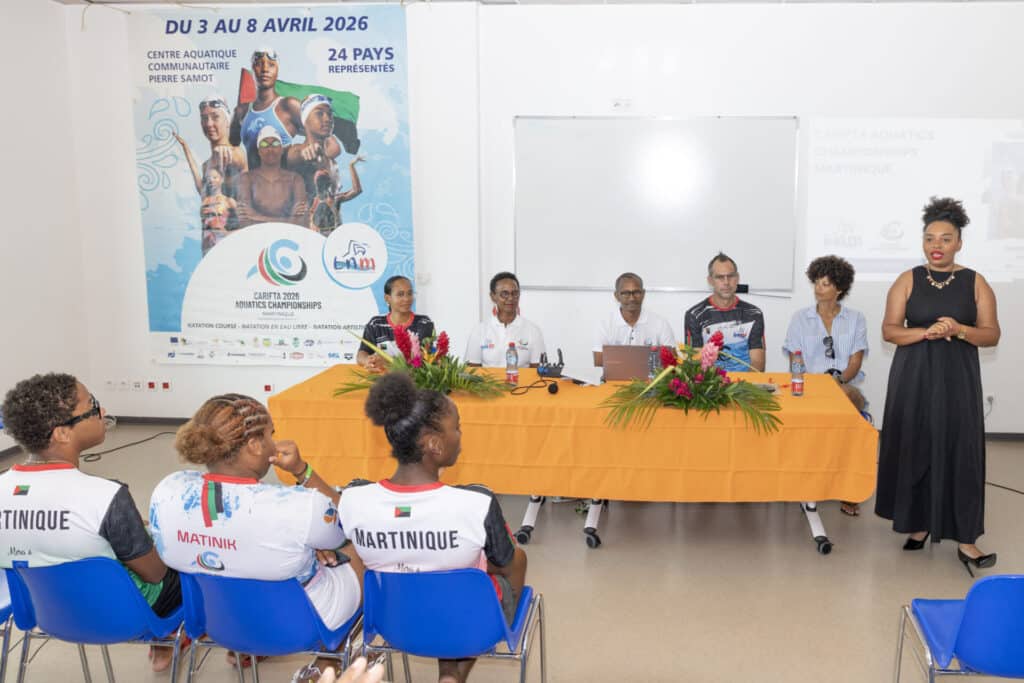
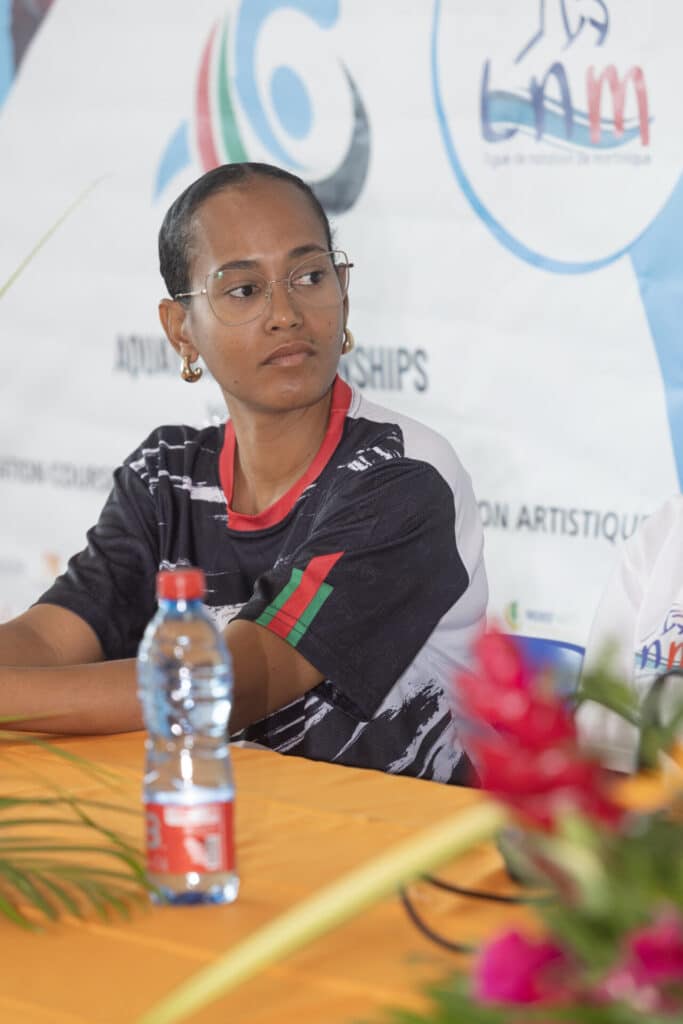
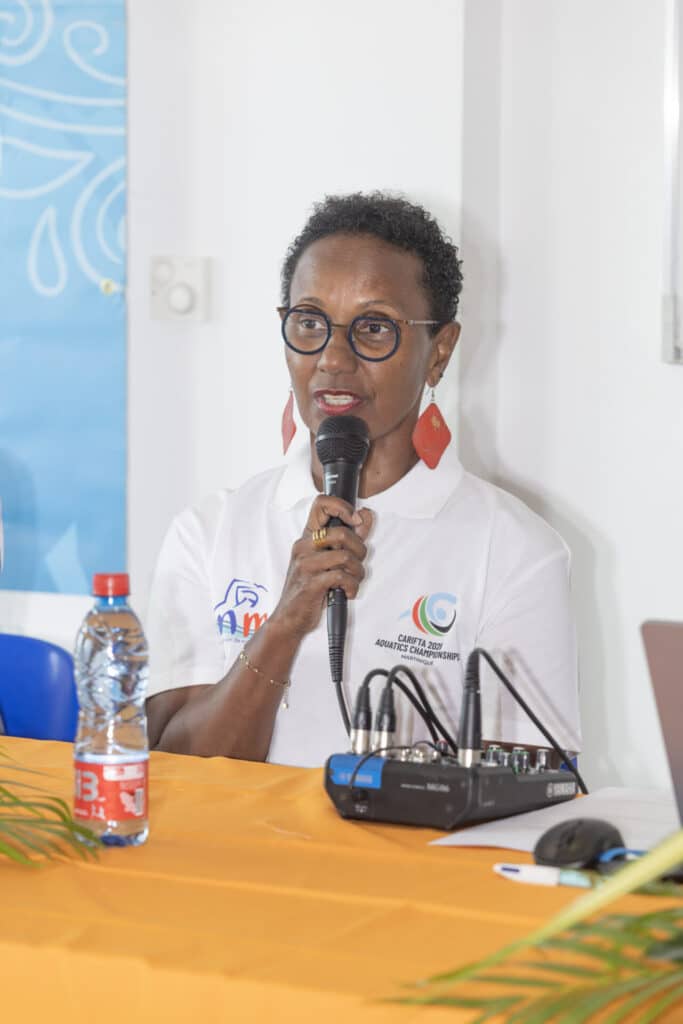
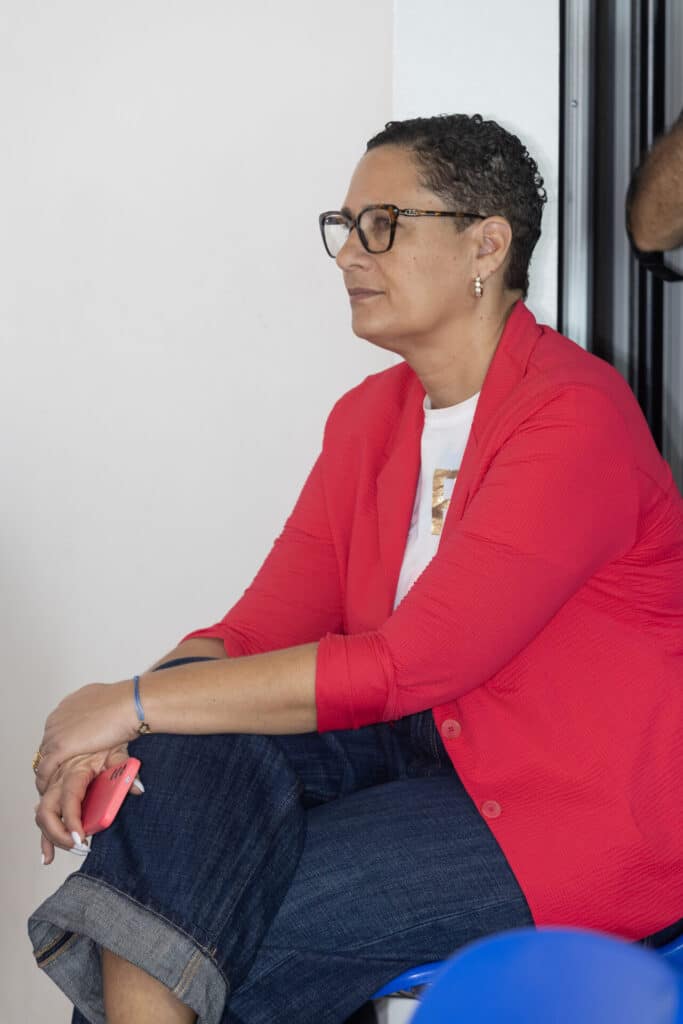
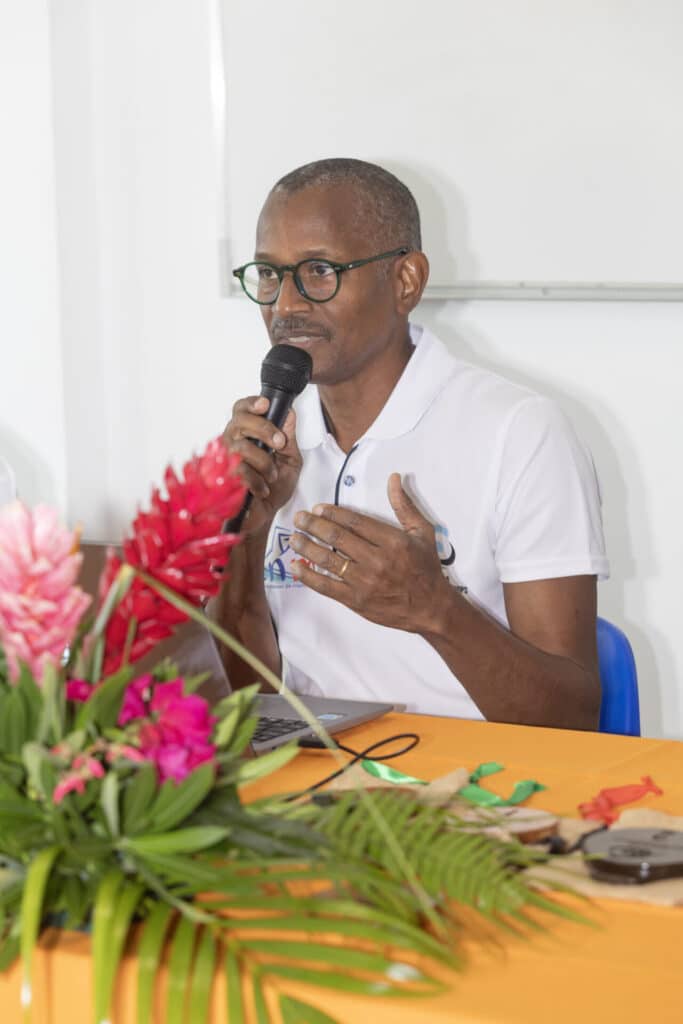
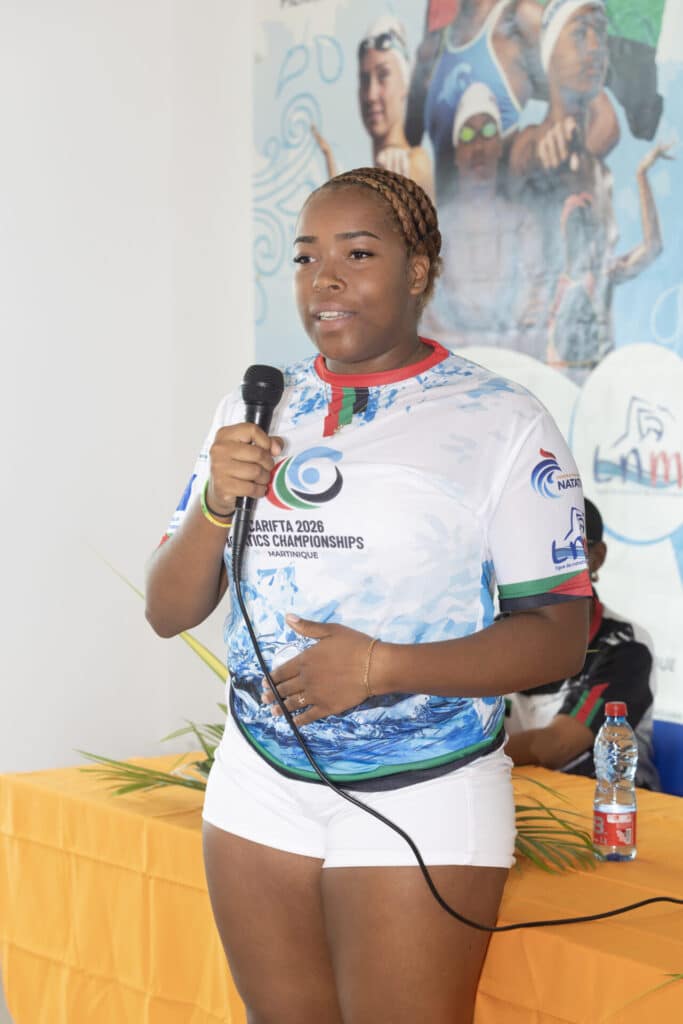
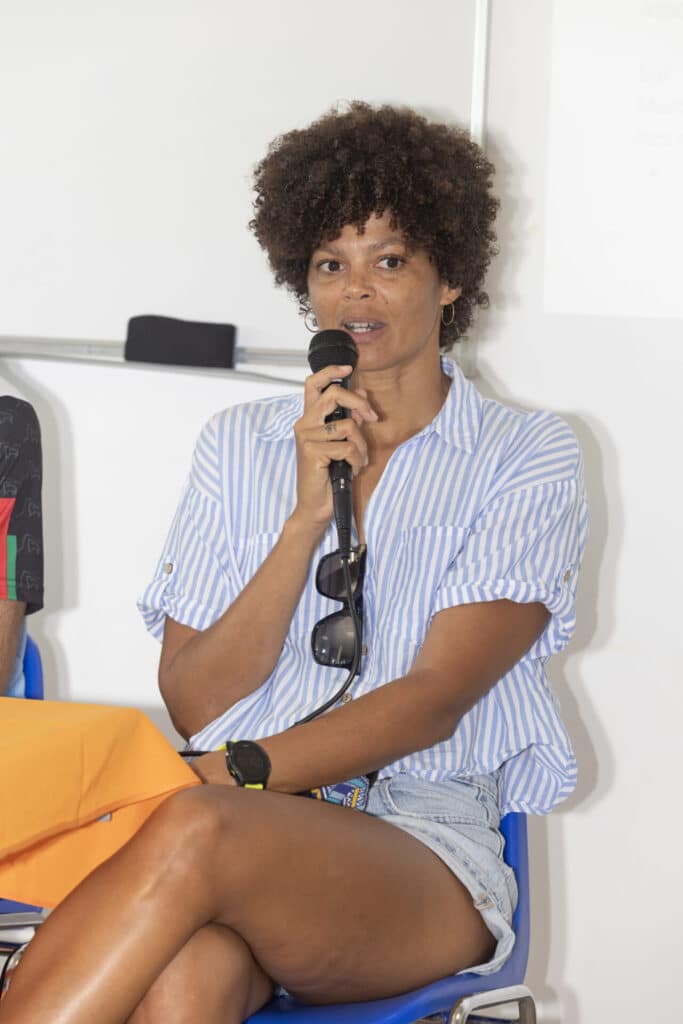
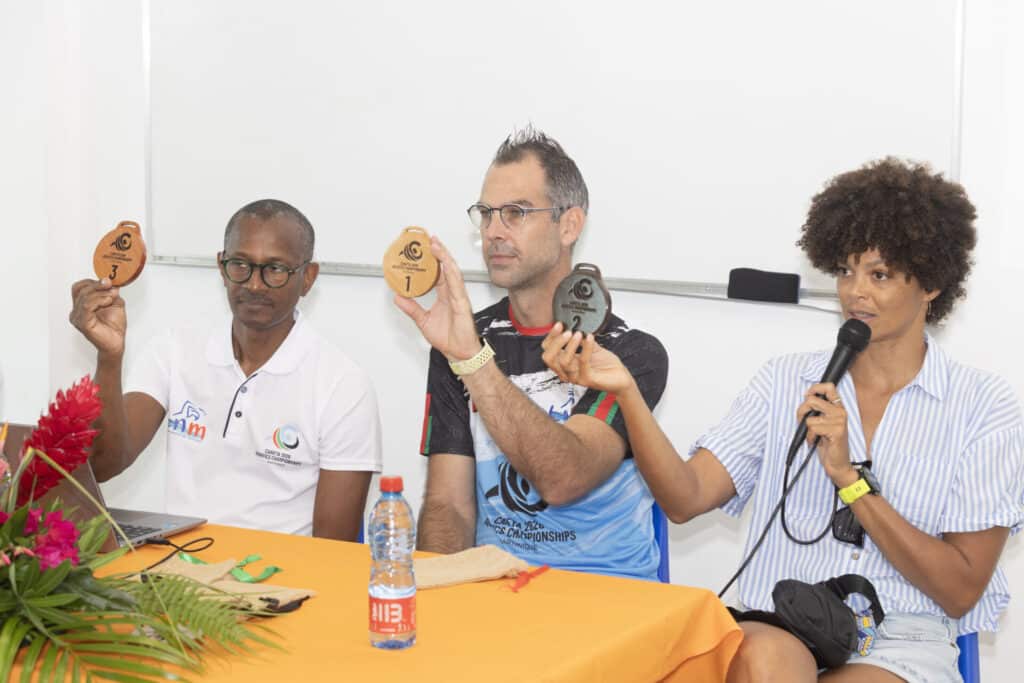
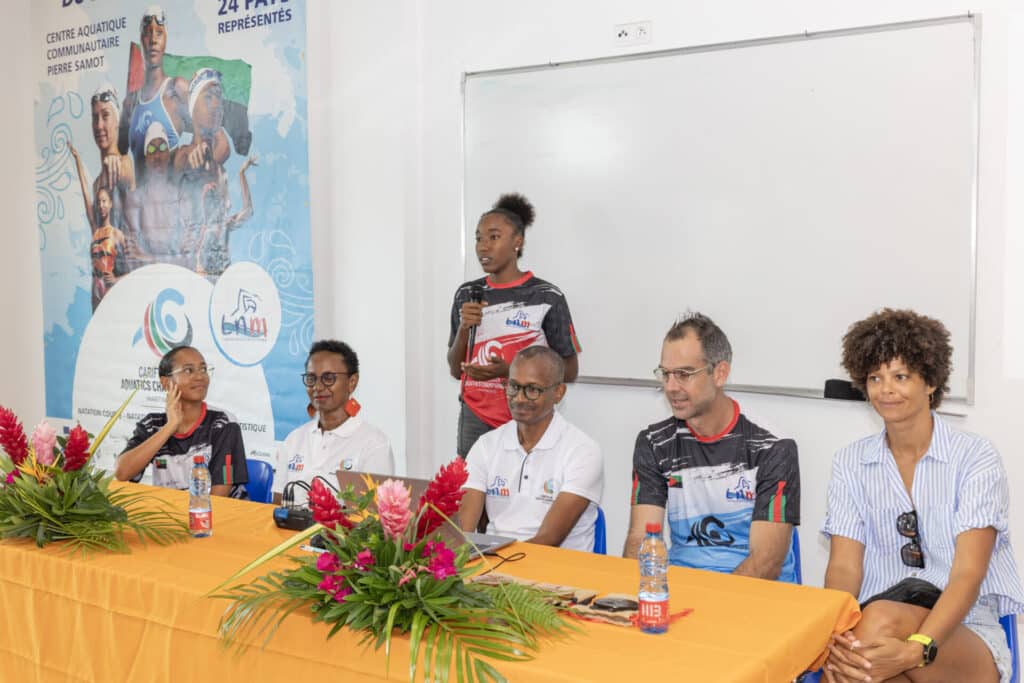
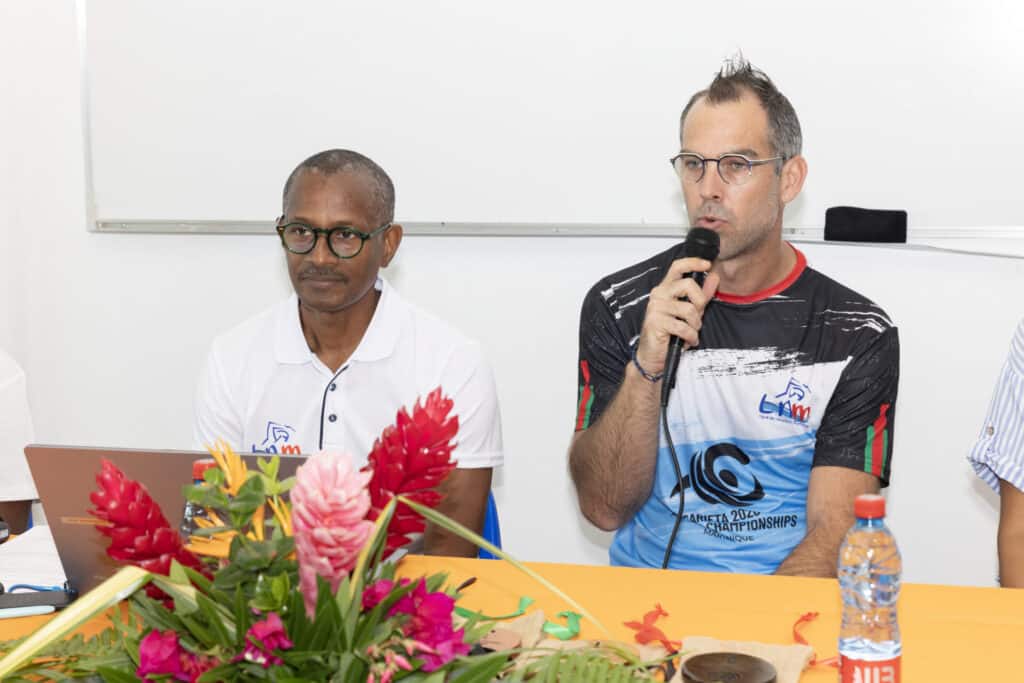
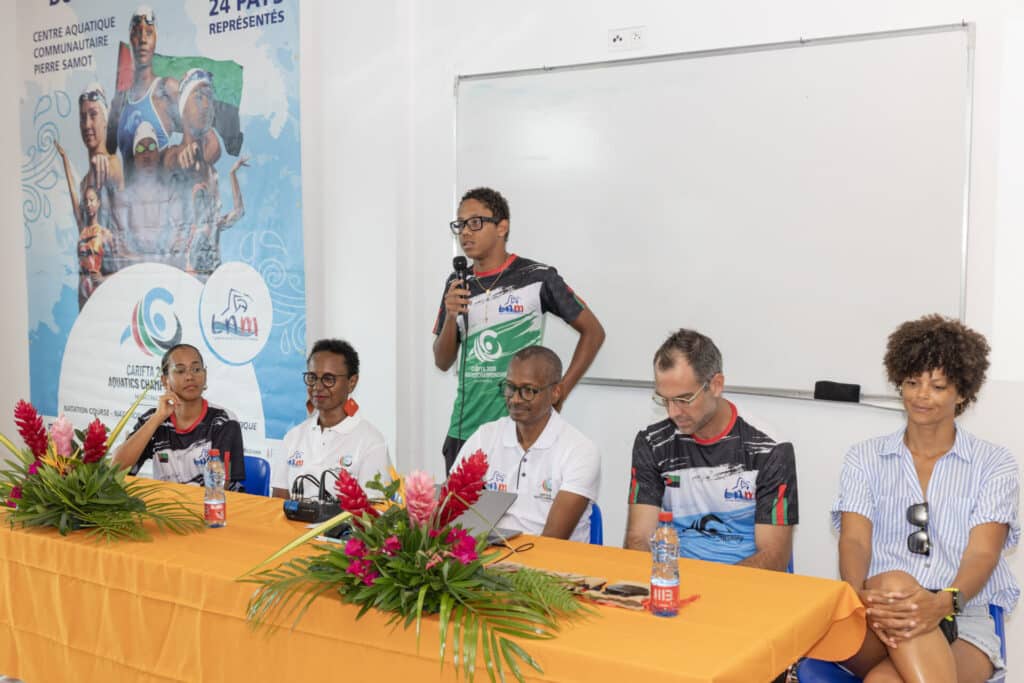
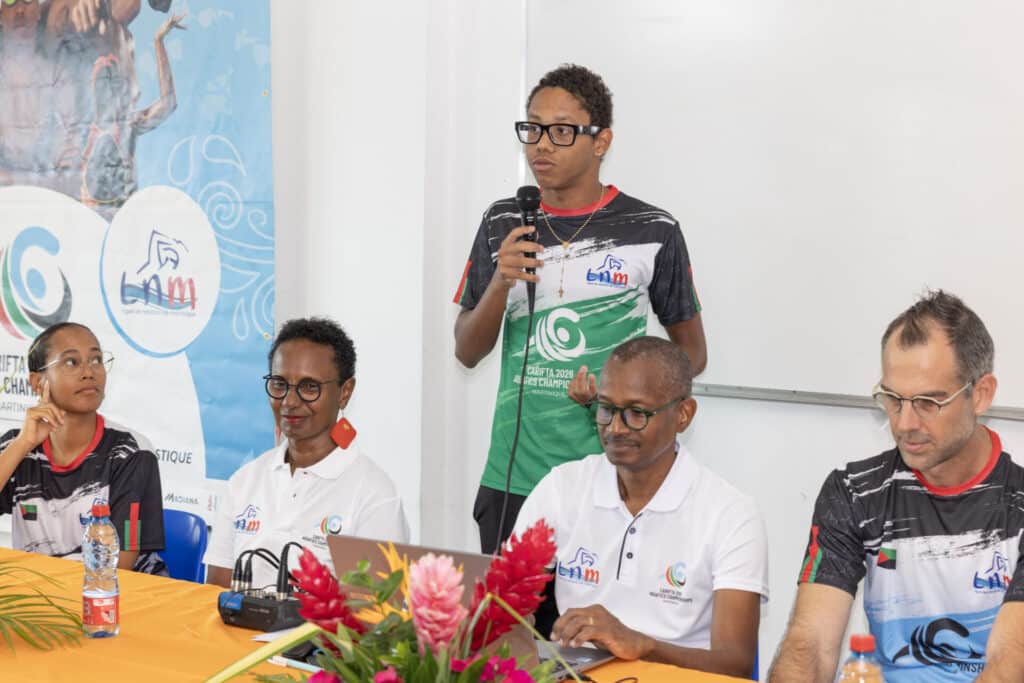
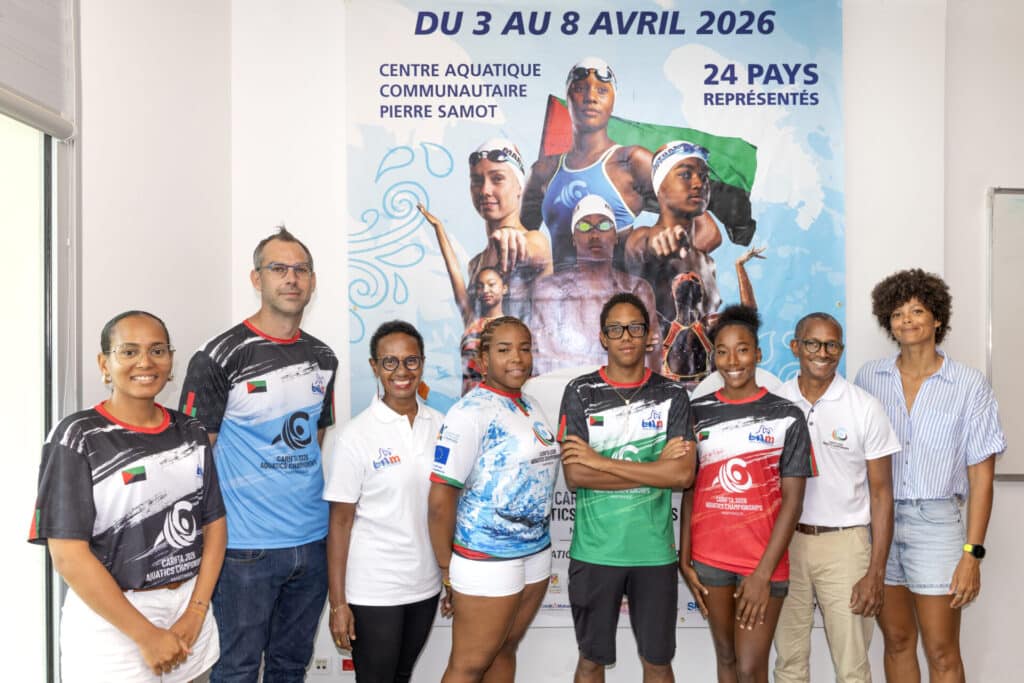
On Saturday March 28, at the Centre Aquatique Pierre Samot in Le Lamentin, the CARIFTA Aquatics Championships 2026 press conference was more than just an information meeting. Over the course of an hour and a half, organizers, athletes and partners presented much more than just the sporting program: from April 3 to 8, Martinique will host the 39th edition of the Caribbean’s leading junior aquatic event, ten years after the first edition was so memorable. Twenty-four nations. Three disciplines. A home territory that knows it.
A bid driven by collective memory
In 2024, at the Caribbean Aquatics Association Congress held in the Bahamas, two bids were put forward to host the 2026 CARIFTA Aquatics Championships: Saint Lucia and Martinique. The vote was clear-cut: some thirty votes for Martinique, ten for Saint Lucia.
Behind this result is a story. The 2016 edition, the first ever to be held on home soil, left its mark on the minds of all those who were there: coaches, delegation leaders, officials. In 2024, when it came time to vote, many still remembered that week.
"It was a beautiful edition, and one that will always be remembered."
The other factor was more concrete: Sainte-Lucie did not yet have its own pool. Martinique, on the other hand, can count on the Centre Aquatique Pierre Samot in Le Lamentin, with its ten-lane Olympic pool, 800-seat grandstand and 25-meter warm-up pool. One of the best facilities in the Caribbean.
The organization also emphasized its capacity to welcome delegations from outside the basin, with several accommodation solutions mobilized in the south of the island, supplemented by other structures if necessary. This logistical aspect, rarely secondary in this type of event, reinforced the credibility of Martinique’s bid.
Three disciplines, 24 nations, a demanding format
The CARIFTA Aquatics Championships 2026 will bring together 24 countries: 21 English-speaking Caribbean nations, plus Martinique, Guadeloupe and Guyana. The swimming races will take place over four days: heats in the morning, finals in the afternoon, from Saturday April 5 to Tuesday April 8. Artistic swimming gets underway on Monday during the lunch break, with solos followed by technical events. The duets and teams round off the program on Wednesday morning. On the same Wednesday, the open water event takes place over five kilometers in the Anses d’Arlets.
Competitors: Benjamins (11-12 years), Minimes (13-14 years), Cadets (15-17 years) do not enter as individuals. They are national selections, with the best swimmers from each territory. To enter the Martinique selection, swimmers must satisfy a time grid established over the previous two seasons, which only selects swimmers capable of reaching the finals.
In the minds of the organizers, selection is based on a simple logic: to score points, you have to enter the final, and to enter the final, you have to be among the top eight times in the morning heats. In other words, the swimmers selected are supposed to have a level that enables them to play a real role in the competition, and not just participate.
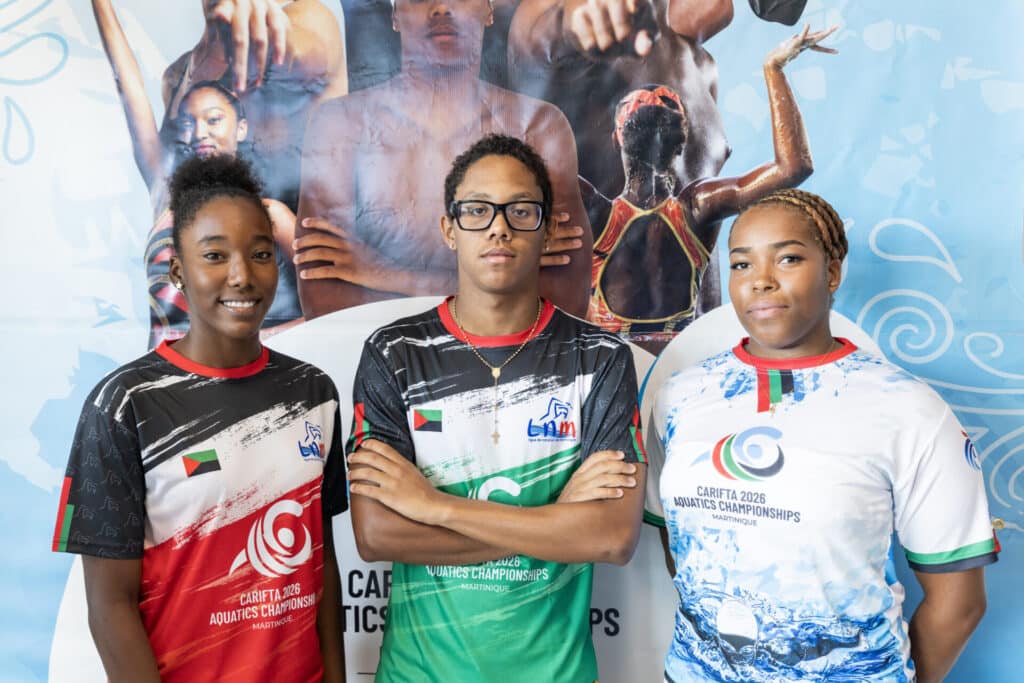
The Martinique delegation at the CARIFTA Aquatics Championships 2026 has 61 swimmers: 36 in racing, 12 in open water, five of whom also race, and 18 in artistic swimming. The team is led by five captains: Jean-Naël Zozime and Maxime Auguste-Charlery for boys’ racing (15-17 age group), Cyrielle Manin and Sayanne Guivissa for girls’ racing, and Nohemy Marajo for artistic swimming.
Water as starting point and destination
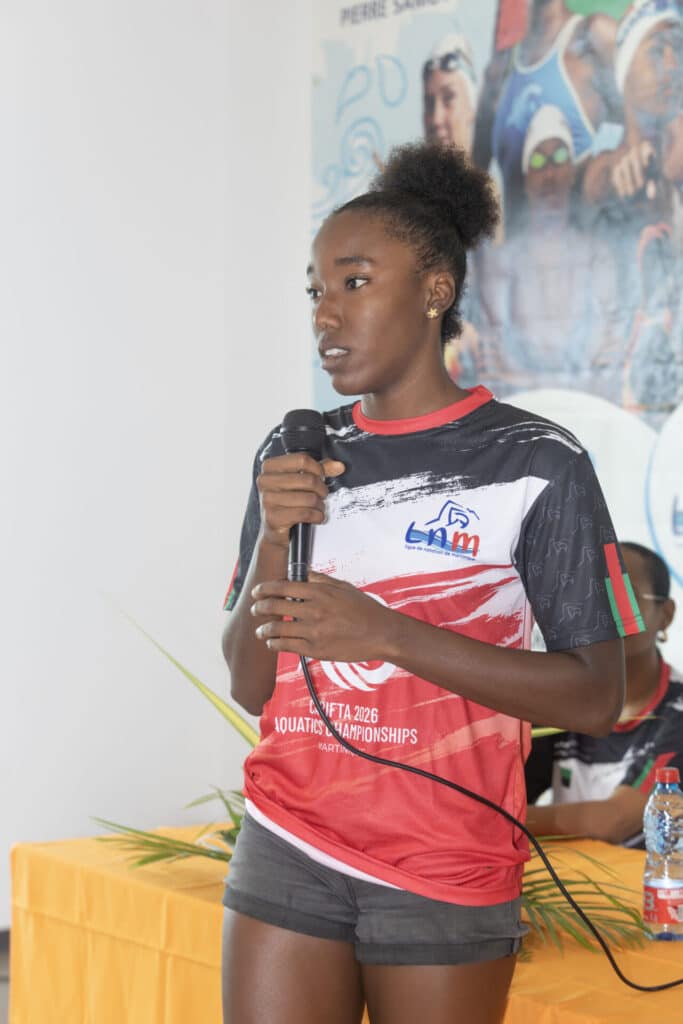
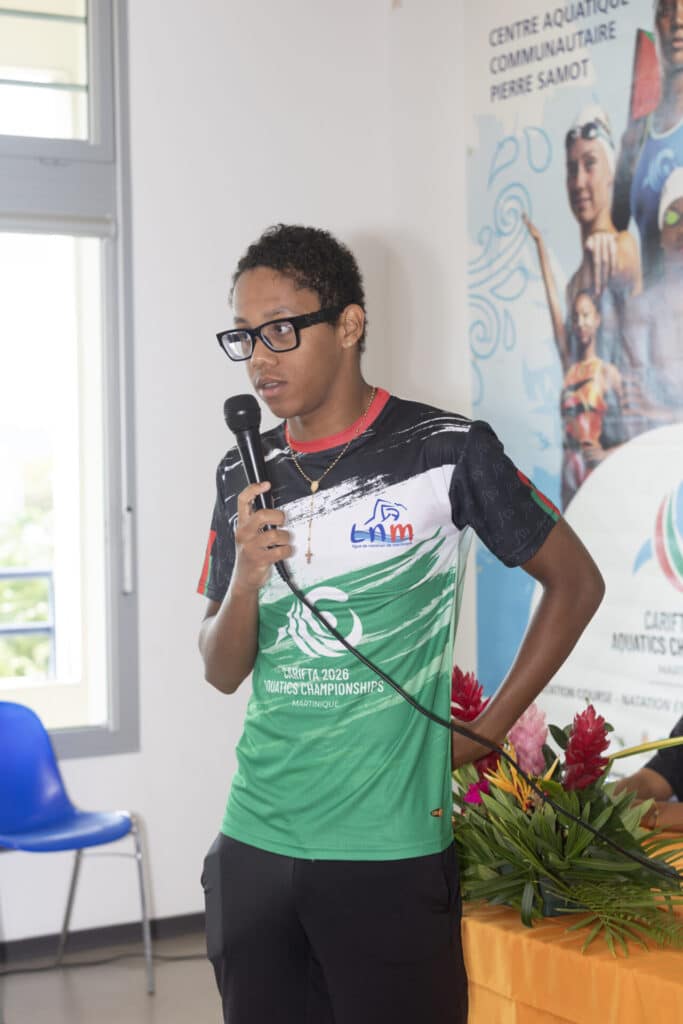
When asked how he got started, Jean-Naël Zozime, captain of the boys’ selection, answers straightforwardly: “I was introduced to swimming so that I wouldn’t drown. Cyrielle Manin, captain of the girls’ selection, tells much the same story: she almost drowned as a child, and that’s what led her to learn to swim.
These two testimonies, heard just a few minutes apart, say something important about this territory. Two young Martiniquans, initially frightened by the sea, who are now representing their island against twenty-three Caribbean nations. This is more than just a sporting achievement.
"Swimming is a tough sport. You can't expect it to be easy, but with a lot of perseverance, anyone can do it."
— Jean-Naël Zozime
Nohemy Marajo, artistic swimming captain, has been practicing for ten years a discipline that the public still knows little about. She explains it concretely: learning choreographies on dry land, rehearsing them in the water, controlling your breathing under the surface while your legs draw figures above. It’s a sport that’s as technically demanding as it is physically demanding, and has as much to do with ballet as it does with endurance.
"You have to know how to endure, how to save every last breath to finish the choreography."
— Nohemy Marajo
The conference of the CARIFTA Aquatics Championships 2026 also pointed out that artistic swimming is still a confidential discipline in the Caribbean, due to the infrastructure it requires and the level of preparation required. It requires three-dimensional work and very thorough technical preparation, as well as the support of outside professionals, particularly in dance and gymnastic preparation. For the supervisors, the challenge of CARIFTA is twofold: to support those who are already practising and to encourage new vocations.
What the coaching team observes in these youngsters is a constant: they train, take their exams, compete at weekends, and do it all over again. “Generally, swimmers perform well in their studies too, because they’ve worked on this rigor on a daily basis.” What you learn in the pool also applies elsewhere, and the organizers insist on this daily requirement: it’s not enough to qualify, you have to be able to show up on the day, in a sport where regularity and discipline count as much as talent.
Medals from the hands of the island
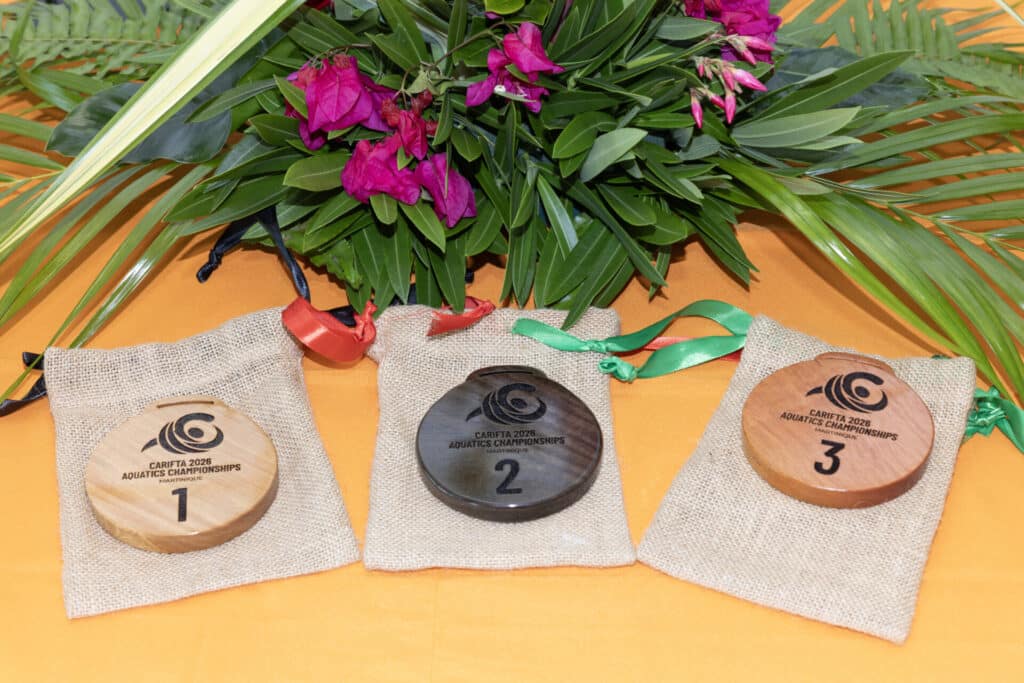
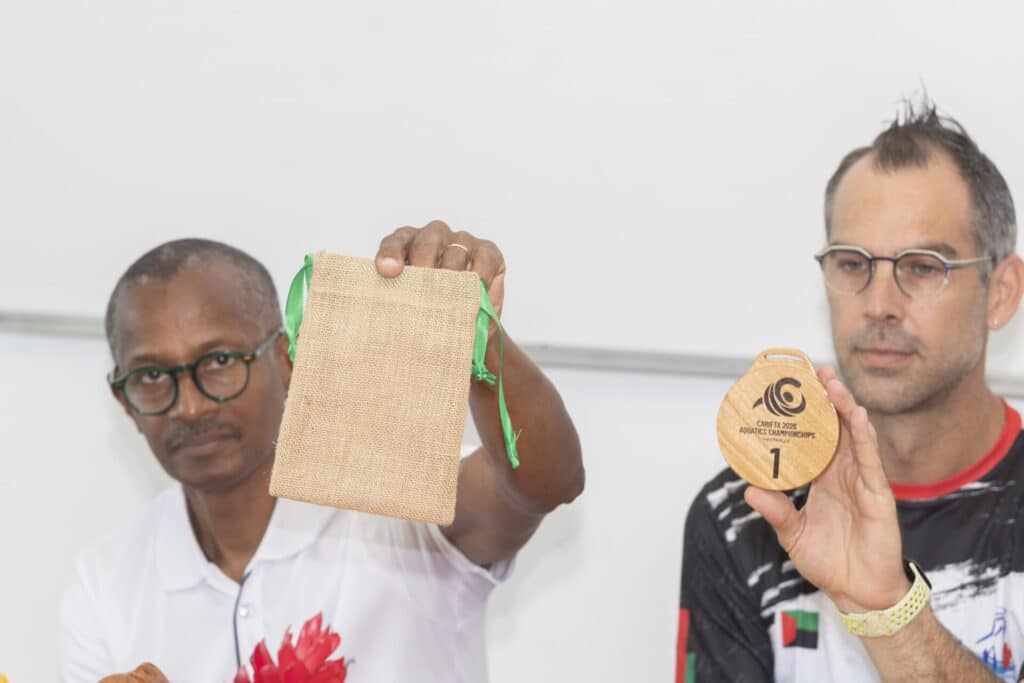
The way an event rewards its champions often says a lot about what it stands for. At the CARIFTA Aquatics Championships 2026, the medals were made in Martinique from noble woods: pearwood for gold, mao bleu for silver, mao ghani for bronze. A craftsman from the Nord-Atlantique region produced them, Joseph Galliard signed the engravings, and a local seamstress made the pouches in the three colors of the Martinican flag.
The initiative was spearheaded by the event’s godmother, Coralie Balmy, a former top-level swimmer who had taken part in the CARIFTA four times in her career. An eco-responsible and identity-affirming initiative, hailed as a first on the Caribbean scale.
Every Caribbean athlete who reaches the podium at the CARIFTA Aquatics Championships 2026 will leave with a piece of Martinique, a unique medal made by local craftsmen, unlike any other.
The conference also specified that trophies would accompany these awards, and that the medals had yet to receive their lanyards before the competition opened. Here too, the aim is clear: to make each award a sporting, local and symbolic object.
A week that mobilizes the whole territory
The CARIFTA Aquatics Championships 2026 won’t just be played out in the pools. Between 1,500 and 1,800 people are arriving in Martinique: swimmers, staff and families spread out over several hotels in the south of the island. Every day, around 150 volunteers ensure the smooth running of the event: former swimmers, parents, locals who sometimes have no direct connection with swimming, but who wanted to get involved.
Among them, the officials play a decisive role: some 26 officials from the Caribbean will reinforce the Martinique officials, bringing the number of people around the pool to around fifty for each morning and afternoon meeting. In addition, there will be first-aid attendants, reception teams, people in charge of awards, delegation escorts and areas open to the public.
Welcoming delegations to the CARIFTA Aquatics Championships 2026 was also thought through in detail. They all had to arrive on April 2, at different times of the day, sometimes very early in the morning, sometimes late at night. In conjunction with the transport company and SAMAC, a precise plan was drawn up at the airport to ensure smooth exits, transfers to buses and settling into accommodation, with particular attention paid to meals depending on the time of arrival.
The opening ceremony of the CARIFTA Aquatics Championships 2026, on Friday April 3 at the Georges Gratiant stadium, is free and open to all: 2,800 seats to fill. The group “Nou Pa Sav” will accompany the parade of delegations. On Saturday, April 4, Les Hommes d’Argile will be on hand as the delegations arrive on site, offering a strong cultural backdrop intended as a symbolic first encounter with Martinican identity. Throughout the week, Martinican cultural groups will be on hand to ensure that visitors leave with a living image of the region, not just competition results.
The CARIFTA Aquatics Championships 2026 ceremony is scheduled to take place from 4 to 6 p.m., and will be broadcast on a giant screen, as well as relayed by media partners and via YouTube for wider distribution in the Caribbean. The ambition is clear: to make Martinique the center of the Caribbean for the duration of the event.
In addition to sport, the organizers of the CARIFTA Aquatics Championships 2026 also have an economic and cultural objective. Bringing in up to 1,800 people means filling accommodation, generating consumption, encouraging car rentals and putting the hotel and restaurant sectors to work. It’s also a way of showcasing Martinique’s culture, notably through the entertainment planned for the opening ceremony and the arrival of the delegations.
The open water event at Anses d’Arlets also serves as a reminder that the sea is a living, fragile environment that deserves protection. The association’s representative at the conference sums up its mission simply: “learn to swim to discover the seas and protect them.”
This educational dimension goes beyond drowning prevention. It also touches on the appropriation of water by the people of Martinique, the discovery of the discipline by the youngest and the broader desire to reinforce the region’s aquatic culture in the long term.
An assertive island
A phrase uttered at the end of the conference sums up the general mood: “We’re ready, and we’ll make the CARIFTA Aquatics Championships 2026 a collective success and a great source of pride for our region.”
What the delegations take away with them on the evening of April 8 is more than just a ranking. It’s an image of Martinique, a territory that knows how to welcome, organize and assert its identity. For six days, the whole Caribbean will be there. It’s up to Martinique to show what it can do.
But the organizers of the CARIFTA Aquatics Championships 2026 also want to leave their mark after the event. The Ligue de Natation de Martinique ended the 2024-2025 season with some 2,540 members, around ten affiliated clubs and, generally speaking, 7 to 8 clubs involved in competition. With this in mind, the CARIFTAs are not intended as a parenthesis, but rather as a possible catalyst to encourage vocations, boost membership and establish swimming as a permanent fixture on the Martinique sports scene.
The organizers of the CARIFTA Aquatics Championships 2026 have also chosen not to reproduce the large village of 2016. In 2026, the activities surrounding the competition are to be more focused, with one day in particular being highlighted, in order to concentrate energy and attendance rather than scattering the highlights.
The CARIFTA Aquatics Championships 2026 is the 39th edition of the Caribbean’s leading junior aquatic event, held in Martinique from April 3 to 8. Twenty-four nations are taking part in racing, artistic and open water swimming, in categories ranging from 11 to 17 years of age.
The swimming race and artistic swimming events take place at the Centre Aquatique Pierre Samot in Le Lamentin. The 5-kilometer open water event takes place in Anses d’Arlets on Wednesday April 8.
Tickets are available on cariftamartinique2026.com and on the Ligue de Natation de Martinique social networks. Prices: €10 in the morning, €20 in the afternoon for adults, 4-day pass at €125. The opening ceremony at the Georges Gratiant stadium is free of charge.
Twenty-four countries are taking part: 21 English-speaking Caribbean nations, plus Martinique, Guadeloupe and Guyana.
The Martinique squad is led by five captains: Jean-Naël Zozime and Maxime Auguste-Charlery for boys’ racing, Cyrielle Manin and Sayanne Guivissa for girls’ racing, and Nohemy Marajo for artistic swimming.
The Rézo 2025 seminar, held in Grenada, brought together the directors of the Alliances Françaises of the English-speaking Caribbean, with the same ambition: to consolidate the links between the territories and reinforce the vitality of the French-speaking world in the region.
Having explored the institutional and strategic vision of this regional cooperation in the previous article, “The Alliances Françaises network at the heart of the Caribbean: cooperating, innovating, sharing”, Richès Karayib now turns the spotlight on those who are at its beating heart.
For several days, the participants shared their experiences, challenges and successes, revealing a common conviction: to bring culture and the French-speaking world closer to the people of the Caribbean via the Alliances Françaises.
An essential meeting for a fragmented network
Each Alliance Française operates on an island, often geographically isolated. This seminar, organized with the support of the Service de Coopération et d’Action Culturelle (SCAC) of the French Embassy in Saint Lucia, was a breath of fresh air for the Alliance Française network. The directors emphasized that these meetings are an essential step: they enable them to exchange tools, compare local realities and together find concrete solutions to shared challenges. They all emphasized the strength of the collective, the richness of exchanges in an English-speaking environment and the complementarity of approaches between territories.
These moments offer both a human and a formative dimension: they re-energize, reinforce solidarity and remind us that, despite the diversity of contexts, the Alliances Françaises move forward with the same ambition – to make the French-speaking world live and shine in the Caribbean. From an institutional point of view, Christiane Bourgeois, Cooperation and Cultural Action Advisor, reminded us that this annual seminar is the only time when all the directors can get together to discuss successes, difficulties and common perspectives.
Nine territories, nine realities, but the same conviction: these times of exchange are essential to maintain the network’s momentum and strengthen cooperation in the Caribbean. Beyond these collective exchanges, it is in the field that the vitality of the Alliances Françaises network takes on its full meaning. Each Alliance Française acts in its own way, in line with the realities of its environment and the languages and cultures of its territory.
A deep-rooted network: ten Alliances, one commitment
Although their contexts differ, the Alliances Françaises of the English-speaking Caribbean share the same vocation: to teach, connect and bring the French-speaking world to life on a daily basis. They adapt to local realities with the same conviction: culture and language are levers for social cohesion, openness and the future.
Grenade – Ilona Forte-Gilbert: teaching differently, connecting differently
The Alliance Française de Grenade operates without permanent premises, a situation that Ilona Forte-Gilbert has turned into an asset.
Courses are now offered online, helping to maintain the French language’s presence and reach new audiences. The Alliance is also involved in schools through educational and cultural activities carried out in partnership with teachers. Out-of-home screenings and workshops keep us in touch with the community.
“Our priority is to remain present and useful, even without a building. Digital technology and partnerships enable us to keep the Alliance going.”
Saint Lucia – Aurélie Gbeffa: coordinating and federating
In Saint Lucia, Aurélie Gbeffa runs the local Alliance and is responsible for regional coordination of the ten Alliances Françaises in the Eastern Caribbean. She assists managers with communication, pooling, associative governance, digital transition and cultural revitalization.
It also pilots the Rézo project, an annual seminar supported by the SCAC, which has become a key event for cohesion and collective reflection. In Castries, the Alliance Française de Sainte-Lucie combines language courses, cultural activities and Creole language promotion through exhibitions and workshops.
“Our strength lies in moving forward together while valuing the cultural diversity of our islands.”
Barbados – Océane Gaillard: promoting French in an English-speaking environment
In Barbados, the Alliance Française acts as a linguistic and cultural bridge. Under the leadership of Océane Gaillard, it has consolidated its foothold in a predominantly English-speaking environment. Educational programs have been set up for schools and adults, and the Alliance has trained members of the Regional Security System in French and Haitian Creole.
On the cultural front, it has welcomed the Guianese troupe Ôtepé, and is developing a program open to different French-speaking expressions.
“We represent a plural Francophonie: France, Africa, Canada and the Caribbean. Culture is our best lever for inspiring the desire to learn.”
Trinidad & Tobago – Anyka Batista: an open and inclusive francophonie
In Trinidad & Tobago, Anyka Batista defends an inclusive and creative Francophonie, which values local languages as much as French. Every October, Creole Heritage Month brings together screenings, conferences and concerts, reflecting a strong commitment to cultural diversity.
The Alliance Française also offers courses for children, teenagers and adults, as well as cultural evenings that encourage encounters between communities. Challenges related to visibility and funding persist, but are offset by a collaborative approach with local schools and institutions.
“We want the Francophonie to be seen as part of our culture, not something external.”
Jamaïque – Clovis Lemée: creating living spaces
In Jamaica, Clovis Lemée is revitalizing a historic Alliance Française, transforming it into a place for living and creating. The Language Exchanges, monthly multilingual evenings, bring together a varied public around cultural themes, while the French Library Sessions – mini-concerts filmed in the media library – turn language into a tool for encounters and artistic expression.
“Learning a language is about creating links. That’s what the Alliances Françaises are all about.”
This cultural dynamic is attracting a younger audience and helping to restore the French language to its rightful place in the English-speaking Caribbean.
Saint-Kitts & Nevis – Lucille Caulliez : education and ecology
The Alliance Française de Saint-Kitts & Nevis combines language learning with civic engagement. Her Naturally Learn French project, supported by a grant from the French Embassy to the Eastern Caribbean, Barbados and the OECS, offered six months of free tuition to twelve teenagers from disadvantaged backgrounds, combining French language discovery, ecological workshops and cultural activities. Each month, participants explored local ecosystems, cultivated a garden, created with recycled materials or exchanged online with students from Guadeloupe – a concrete and lively way to learn the language while forging links in the Caribbean.
This project, which earned the Alliance the Green Alliance Award from the Global Environment Facility, illustrates the vitality of an open, sustainable and youth-oriented French-speaking community. She is also developing Francoscop, an audiovisual series produced by young people, dedicated to the French-speaking world.
Director Lucille Caulliez sums up the spirit of the program:
“We want to show that French is a tool for openness and creativity.”
Dominique – Cévinne M’Voula-Henderson: connecting languages and cultures
Established in 1965, the Alliance Française de la Dominique is active in the educational and cultural fields. The Creole & French Spelling Bees, bilingual spelling contests, encourage students to play with the two languages, understand their complementarity and take pride in them. Training workshops and cultural activities support the enhancement of Creole heritage while promoting the French language.
“The aim is to make French and Creole languages of pride and transmission.”
Guyana – Déborah First-Quao: rebuilding and training
In Georgetown, Déborah First-Quao, recently appointed to Guyana, is re-launching a long-standing but low-profile Alliance Française by focusing on training and educational partnerships. She has created a network of French teachers, developed bilingual workshops at the National Library and renewed ties with local institutions. Cultural and educational initiatives aim to put French back into everyday life, despite major logistical constraints.
“We want to restore French to its rightful place in schools, showing that it can be useful, lively and accessible.”
Suriname – Virginie Lemay: building institutional bridges
In Suriname, Virginie Lemay is strengthening links between the Alliance Française and local institutions. Language training is offered to the security forces, the Ministry of Education, businesses and the hotel industry. La Journée Française, organized with the Collectivité Territoriale de Guyane, is a five-day event featuring exhibitions, professional meetings and concerts.
“French becomes a concrete tool for regional cooperation.
This cross-sectoral approach positions the Alliance Française as a key player in the dialogue between Suriname, Guyana and the rest of the Caribbean.
A shared vision: support, connect, promote
For Christiane Bourgeois, Regional Advisor for Cooperation and Cultural Action at the French Embassy in Saint Lucia, this seminar is an essential moment for consolidating the network’s ties. She points out that it’s “the only occasion of the year when we have the opportunity to meet the directors of the Alliances Françaises”, a privileged time to take stock, exchange practices and difficulties, and set up joint projects.
“The Alliances Françaises are an essential tool for embassies, especially in areas like the Caribbean, where there is no Institut Français. They are local organizations, rooted in the territory, with their own board of directors and their own strategy”. She also recalled the key role played by the Alliances in disseminating the French language and promoting dialogue between peoples, stressing that they promote the language, ensure its teaching and maintain the link between the cultural and the educational, between France and the countries of the region.
Aware of the economic fragility of the associative model, Christiane Bourgeois stresses the importance of the support provided by the Service de Coopération et d’Action Culturelle (SCAC) and the French Ministry of Europe and Foreign Affairs.
Last but not least, it pays tribute to Granada, the seminar’s host, and its people:
“It’s an absolutely authentic island, with extremely friendly people. I encourage all French and Caribbean people to come to Grenada, a country that deserves to be known and appreciated.”
Where the French language comes alive
Over and above balance sheets and figures, these meetings are a reminder that the French-speaking world lives and breathes through the people who make it happen. On every island, the Alliances Françaises gather, transmit and inspire. Anchored in their reality, they build bridges between languages, cultures and generations – a living, inclusive and deeply Caribbean Francophonie.
The Alliances Françaises play a central role in French language teaching, cultural dissemination and dialogue between Caribbean territories. Anchored locally, they adapt their actions to the social, linguistic and cultural realities of each island.
The Rézo seminar is the only annual gathering of all the directors of the Alliances Françaises in the Caribbean. It enables them to share practices, strengthen regional cooperation and maintain a collective dynamic in a geographically dispersed network.
The Alliances Françaises develop tailor-made projects: online or face-to-face courses, actions in schools, ecological projects, cultural events, professional training or institutional cooperation. This adaptability is their strength in a predominantly English-speaking environment.
Together for a radiant Caribbean, the Alliances Françaises become bridges between cultures, languages and territories.
At the RÉZO seminar in Grenada, the directors and presidents of the Alliances Françaises of the English-speaking Caribbean met to strengthen cultural and linguistic cooperation in the region and define new common directions.
Supported by the French Embassy’s Service de Coopération et d’Action Culturelle (SCAC), which also took part in some of the discussions, the seminar was an opportunity to strengthen synergies between the Alliances Françaises network and consolidate dialogue with the SCAC, in a spirit of listening and collaboration.
Between exchanges, common strategies and innovative projects, this meeting outlined the contours of a more open, inclusive and modern French-speaking and multilingual Caribbean.
A key moment for an evolving network, serving a Caribbean that learns, shares and shines.
A meeting with a family flavour
Sometimes they’ve known each other for years, sometimes only through a screen. But from the very first minutes, the laughter, hugs and warmth of the reunion remind us that, in the Caribbean, the Alliances Françaises network is above all a human adventure.
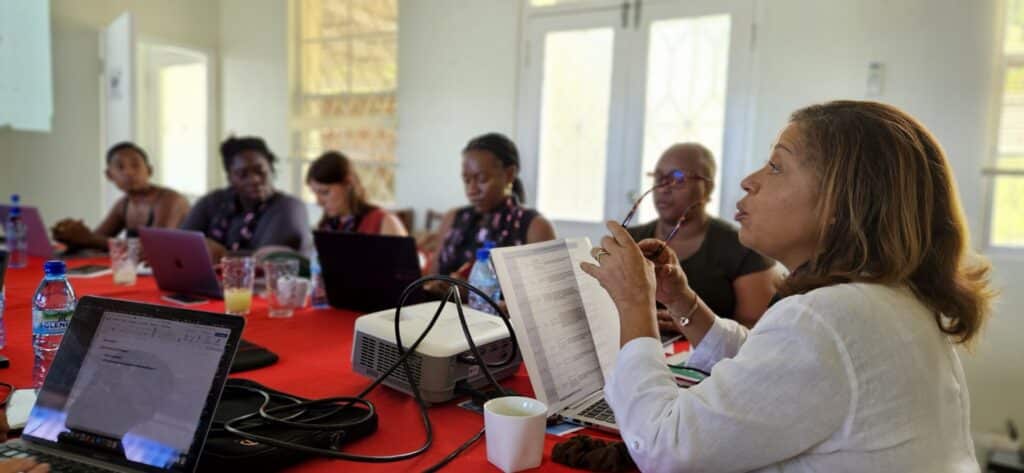
Over the course of three days, directors and presidents shared their experiences from country to country – from day-to-day challenges to local pride and a shared determination to build a stronger, more united and more visible network. In the room, diversity was evident in the accents, the backgrounds and the ideas. From Jamaica to Trinidad and Tobago, each voice brought its own nuance, its own experience, its own way of bringing culture and the French-speaking world to the heart of the territories.
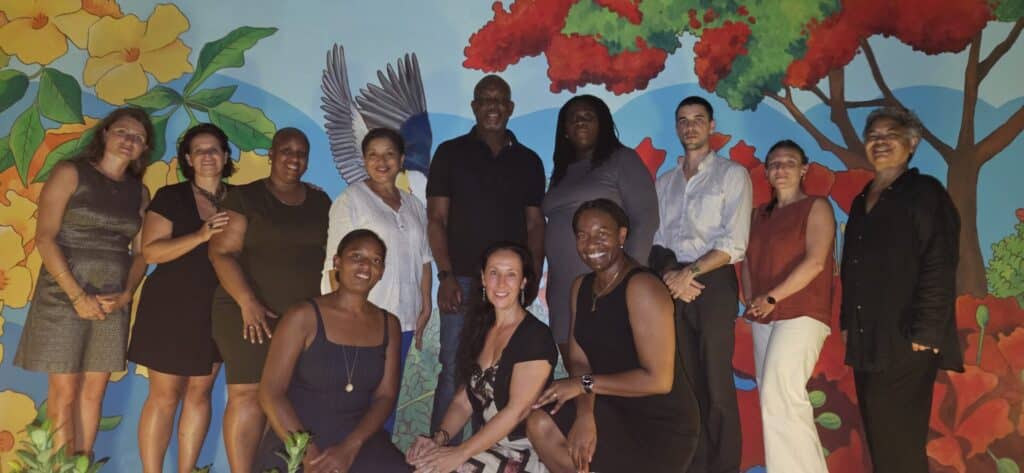
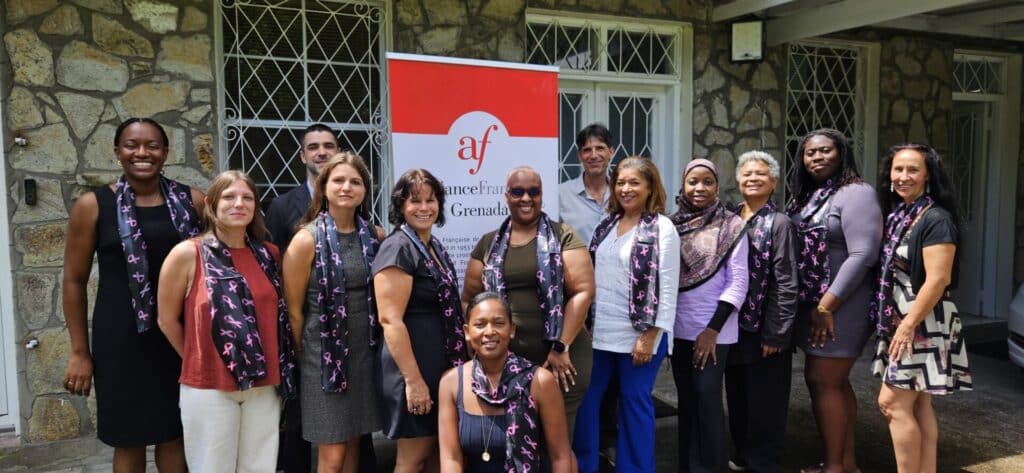
Welcomed by Ilona Fort-Gilbert, Director, and Suelin Low Chew Tung, President of the Alliance Française of Grenada, participants spent several days exchanging ideas and reflections in an atmosphere that was both productive and warm.
Around the table, the directors: Aurélie Gbeffa (Saint Lucia and regional coordinator of the Alliances Françaises of the Eastern Caribbean), Océane Gaillard (Barbados), Virginie Lemay (Suriname), Lucille Caulliez (Saint Christophe-et-Niévès), Cévinne M’Voula (Dominique), Anyka Batista (Trinidad and Tobago), Ilona Forte-Gilbert (Grenada), Déborah First-Quao (Guyana) and Clovis Lemée ( Jamaica), as well as Christiane Bourgeois (CORCAC – Saint Lucia) and Suelin Low Chew Tung (President – Grenada).
Joining them by videoconference were the presidents: Charlene White-Christian (Dominica), Ruben Del Prado (Suriname), Danielle Parkinson (Trinidad and Tobago), Kara Daly (Saint Kitts and Nevis), Delphine Hadley and her successor Denvil Douglas (Saint Vincent and the Grenadines), and Stuart Defreitas, vice-president (Guyana).
During the discussions, Christiane Bourgeois, Regional Counsellor for Cooperation and Cultural Action (Conseiller Régionale de Coopération et d’Action Culturelle – CORCAC), Head of the Cultural and Cooperation Department (Service de Coopération et d’Action Culturelle – SCAC) of the French Embassy to the Eastern Caribbean, Barbados and the OECS, underlined the essential role of the Alliances Françaises in promoting French and Caribbean culture.
The Regional Counsellor for Cooperation and Cultural Action – CORCAC structures its action around cultural, educational, scientific and economic cooperation, seeking to link French priorities – culture, the French-speaking world, sustainability and human rights – to the specific needs of the countries of the English-speaking Caribbean. We believe that it’s not just the structures, but also the committed men and women on the ground who bring this open, supportive and creative French-speaking community to life.
“The Alliances Françaises are essential partners.”
The presence of Jean-François Hans, Geographical Delegate for Zone C at the Fondation des Alliances Françaises, reminded us from Paris of the importance of the network’s global cohesion.
Charter of values, governance tools, visual identity and support for local teams: the Foundation ensures that quality and ethics are shared across all five continents.
“A large Alliance must always reach out to a smaller one. That’s our collective DNA.”
This solidarity, the driving force behind the movement, takes on its full meaning in the Caribbean, where logistical and human challenges combine with cultural and linguistic richness.
A global Francophonie rooted in local realities
Founded in 1883, the Alliances Françaises network is now the world’s largest cultural network, with over 820 establishments in 135 countries.
In the English-speaking Caribbean, ten Alliances promote the French language and culture: Barbados, Saint Lucia, Dominica, Grenada, Jamaica, Saint Kitts and Nevis, Guyana, Saint Vincent and the Grenadines, Trinidad and Tobago and Suriname.
In 2024, they welcomed over 1,000 learners, delivered 9,000 hours of courses and organized 160 cultural events, bringing together over 7,000 participants.
These figures reflect a living, dynamic reality: the Caribbean Francophonie is not just an idea, it’s a daily presence in classrooms, galleries, festivals and the streets of island capitals. Francophonie thrives on exchanges, local initiatives, and the passion of those who keep the French language alive.
A network in motion: between vision and action
Projet Rézo
Driven by a shared desire to see the network evolve, the RÉZO project is a real driving force for the Alliances Françaises of the English-speaking Caribbean, and a way of thinking about the network differently: more collaborative, more agile, more visible.
Supported by the French Embassy’s Service de Coopération et d’Action Culturelle (SCAC), it aims to strengthen regional coordination, pool tools and professionalize teams. Over the course of the sessions, discussions highlighted a shared ambition: to harmonize practices, encourage pedagogical innovation and strengthen skills, while consolidating the place of the French-speaking world in plural linguistic environments.
Under the coordination of Aurélie Gbeffa, six areas of work were addressed:
- – Associative governance and transparency: strengthening internal management and communication with members.
- – Team training: consolidating skills and promoting regional mobility.
- – Certifications and educational quality: aligning training and evaluation standards across the network.
- – Digital transition: developing collaborative tools and shared digital resources.
- – Setting up RÉZO projects: creating and leading joint projects between Alliances.
- – Revitalizing media libraries: modernizing cultural spaces to better reflect today’s audiences and practices.
Each Alliance leaves with a personalized roadmap, proof of a shared commitment and a strong regional dynamic.
Micro-projects
In the same vein, the SCAC has reiterated its key role in supporting and facilitating micro-projects. These subsidies, allocated each year to local project leaders, are a concrete lever for the implementation of cultural, educational and civic initiatives throughout the region.
A virtuous mechanism that supports local creativity, while promoting training and autonomy for local players. Beyond the financial aspect, this initiative, a signature of the French Ambassy of Saint Lucia, reflects a form of close, human-centered diplomacy that fosters exchange and cooperation between Francophone and Anglophone territories.
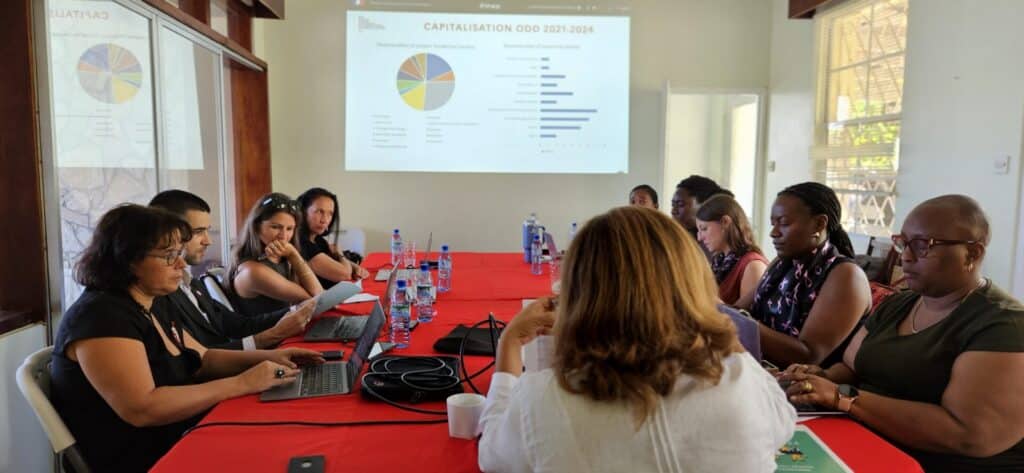
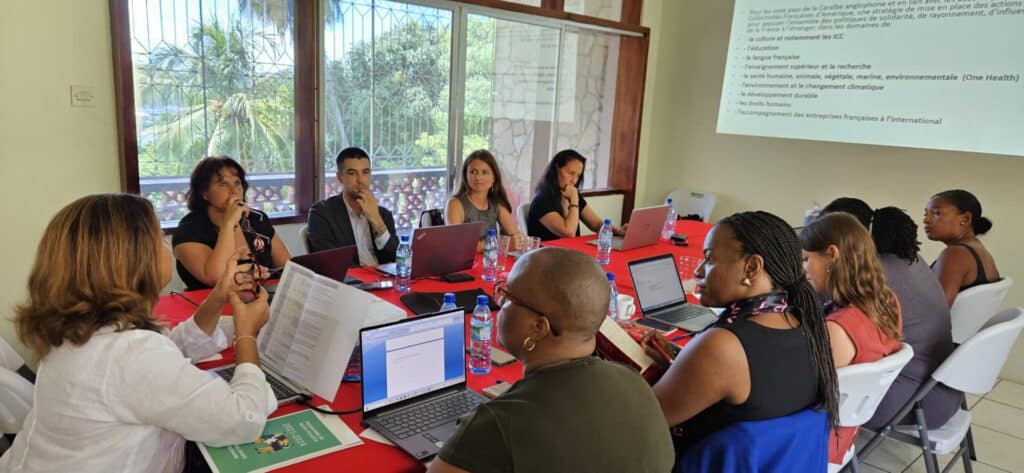
From Saint Lucia to Dominica, from Trinidad and Tobago to Grenada, the micro-projects supported reflect the diversity of shared challenges: culture, education, the environment, inclusion and innovation. These are just some of the areas in which the Alliances Françaises, supported by the SCAC, are building bridges between societies and driving sustainable cooperation in the Caribbean.
CARIFRAN
This strategy is also part of the regional dynamic of the CARIFRAN program, dedicated to the training and mobility of teachers of French in the Caribbean.
Implemented by the Organization of American States and funded by the French Embassy to the Eastern Caribbean, Barbados and the OECS to the tune of 453,000 euros, CARIFRAN is helping to strengthen a French-speaking educational community open to inter-island exchanges and linguistic cooperation. It embodies the complementary nature of the network’s educational, cultural and diplomatic activities.
The strength of a fragile network
Over and above the discussions, workshops and decisions, the RÉZO seminar confirmed the vitality of a network in the throes of transformation. But it also served as a reminder of the fragility of an associative model that relies on commitment, passion and solidarity more than on substantial resources.
In the English-speaking Caribbean, as elsewhere, the Alliances Françaises carry out their activities with modest means but remarkable efficiency, and with a real desire to move forward together, thanks to the strength of their teams, their volunteer presidents and the constant support of the SCAC and the Fondation des Alliances Françaises.
It’s this collective humanity, built on resilience and conviction, that makes the network unique: the ability to forge links, invent and reinvent ourselves, even in the face of uncertainty. And while cultural and linguistic cooperation can sometimes be a challenge, it is also a promise: that of a plural Caribbean, connected, proud of its diversity and capable of writing its future through dialogue between cultures.
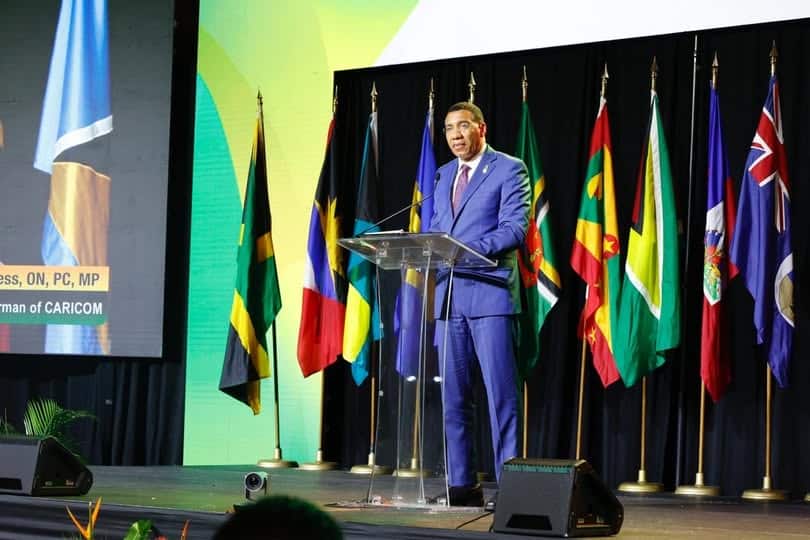
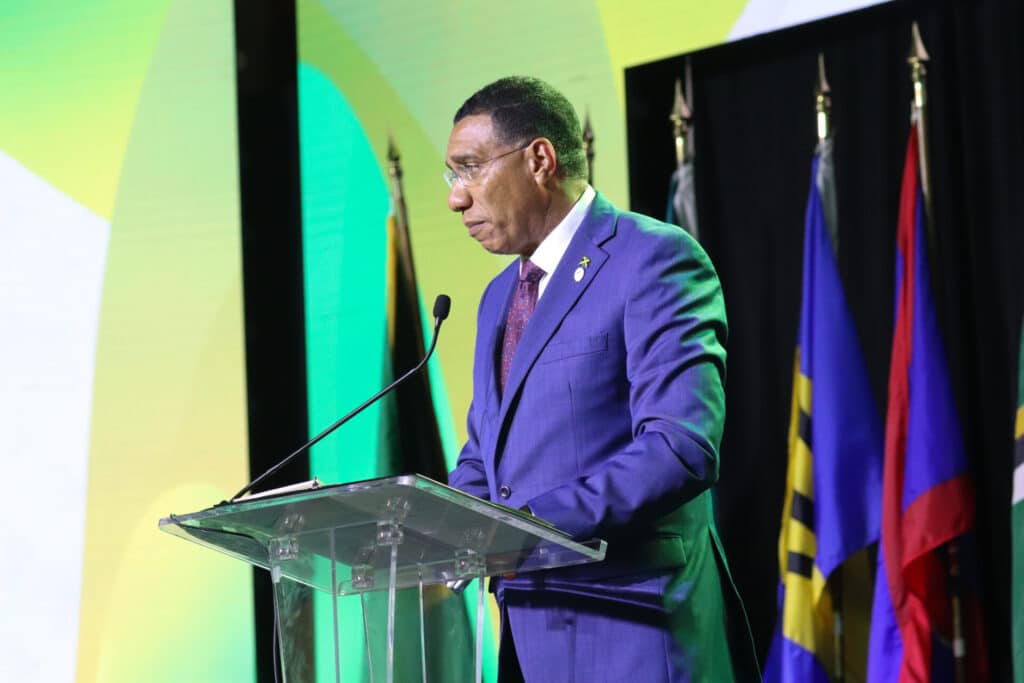
From July 6 to July 08, 2025, Montego Bay will vibrate to the rhythm of the 49th CARICOM Summit, where the Heads of State and Government of member countries will meet to discuss the major challenges facing the region. Chaired by Andrew Holness, Prime Minister of Jamaica, the atmosphere at this year’s summit is both solemn and charged with urgency, as each delegation has come with high expectations in terms of food security, economic resilience, the Haitian crisis and, above all, the overhaul of regional logistics.
The corridors of the Montego Bay Convention Centre are buzzing with strategic conversations, while plenary sessions alternate with thematic workshops, giving each territory the chance to make its voice heard.
A demanding regional context
Right from the opening of the 49th CARICOM Summit, the tone was set: the Caribbean is going through a pivotal period. Successive speeches by representatives from Barbados, Trinidad & Tobago, Saint Lucia and Dominica highlighted the reality of logistical disruption, dependence on costly air transport and the fragility of supply chains. The debates were lively, with each head of delegation insisting on the need for concrete and immediate solutions. Behind-the-scenes exchanges testify to a shared determination to make this summit a decisive moment for the region.
The priorities of the Jamaican presidency
In his inaugural address, Andrew Holness reiterated the importance of strengthening cooperation and diversifying trade, while stressing the need for rapid responses to security and climate issues. His call for collective mobilization did not go unheeded: the 49th CARICOM Summit featured a series of round-table discussions on regional peace, the pooling of resources and the role of young people in building shared prosperity.
Mia Mottley: a plea for logistics transformation
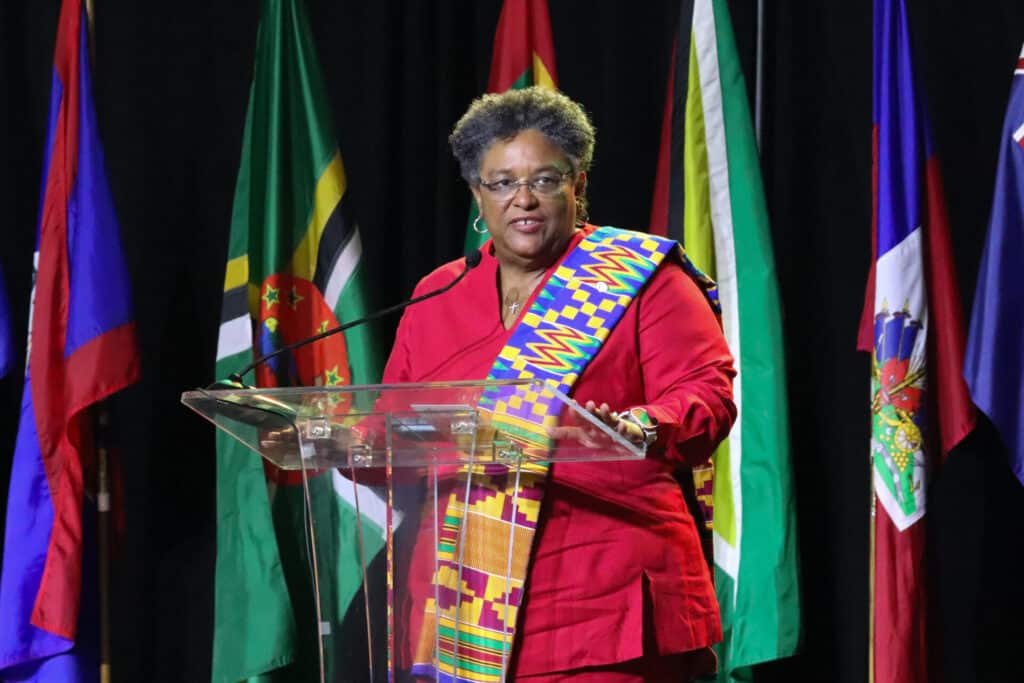
One of the highlights of the 49th CARICOM Summit was the address by Mia Mottley, Prime Minister of Barbados. With eloquence applauded by all participants, she painted a lucid picture of the logistical shortcomings holding back Caribbean development. Her voice, firm and poised, resonated in the auditorium as she spoke of the need for a “regional freight revolution”, stressing the urgent need to democratize transport and restore the sea to its historic role as a link between islands.
Concrete proposals for regional freight
Mia Mottley was not one to rest on her laurels. She announced that two CARICOM member states are in advanced negotiations to acquire cargo aircraft, an initiative she believes will help to fluidify trade and guarantee the supply of essential goods. She also mentioned the expected presentation of a private-sector-led regional ferry project, which could revolutionize connectivity between the islands. These announcements, made at the heart of the 49th CARICOM Summit, were greeted with thunderous applause, a sign that the logistics issue is at the heart of our collective concerns.
Political will at the heart of change
Mia Mottley took advantage of her platform to point out that the success of these projects depends above all on the political will of leaders. She fondly evoked memories of the Federal Maple and Federal Palm, symbols of a time when the sea united the peoples of the Caribbean. Her plea, echoed in several sessions of the 49th CARICOM Summit, found particular resonance with the delegations, who recognized the need to overcome institutional inertia to build a modern, resilient regional logistics system.
The concrete contributions of the 49th CARICOM Summit for member territories
Food security and trade fluidity
Food security was one of the key topics discussed at the 49th CARICOM Summit. Participants emphasized that the establishment of new sea and air links, such as those mentioned by Mia Mottley, will ensure a steady supply of agricultural produce and essential goods. The exchange of best practices between the Ministers of Agriculture and the Economy testifies to a shared desire to optimize logistics circuits and strengthen the food sovereignty of each territory.
Strengthening economic integration and resilience
Discussions on economic integration have highlighted the importance of pooling resources and diversifying trading partners. The 49th CARICOM Summit’s announcements of public and private investment in regional freight pave the way for enhanced cooperation, enabling member territories to better withstand external shocks, whether economic, health-related or climatic. The participants agree that this edition represents a crucial milestone on the road to shared prosperity.
Outlook for youth and innovation
Throughout the workshops, Caribbean youth and technological innovation took center stage. The initiatives presented, whether in training programs, student mobility or support for entrepreneurship, illustrate the determination of leaders to prepare the next generation and give young people the means to become part of the regional dynamic. These perspectives, discussed in depth at the 49th CARICOM Summit, point to new, concrete opportunities for young people.
The 49th CARICOM Summit, catalyst for a new regional era
In Montego Bay, the 49th CARICOM Summit continues in a studious and determined atmosphere. Led by the likes of Mia Mottley and Andrew Holness, the region is taking a decisive step towards modernizing its infrastructure and deepening its integration. The discussions, rich and sometimes passionate, bear witness to a collective determination to transform challenges into opportunities and build a sustainable future for all the people of the Caribbean.
📸 Photo gallery: relive the highlights of the opening ceremony ©CARICOM