TRANSAT CAFÉ L’OR: Martinique Horizon crosses the line in Fort-de-France

TRANSAT CAFÉ L’OR

The arrival of Jean-Yves Aglaé and Moane Mangattale in Fort-de-France at 9:41 am on Sunday, November 23, marked one of the most eagerly awaited moments of the TRANSAT CAFÉ L’OR. Aboard their Class40 Martinique Horizon, the two Martinique sailors finished this 17ᵉ edition in 34ᵉ place, at the end of a long and steady crossing. Their objective was clear: to finish the race on time. They achieved this after almost a month of sailing.

A demanding event for the Class40s

The TRANSAT CAFÉ L’OR, contested over two legs, remains a complex race for Class40s. This year, 44 boats started and 37 finished the race, while 7 had to retire.

The course of the TRANSAT CAFÉ L’OR was marked by unstable weather conditions, sometimes favorable, sometimes restrictive, forcing skippers to review their strategies along the way.

Jean-Yves Aglaé and Moane Mangattale completed the entire course in 26 days, 10 hours and 52 seconds.

Their first stage lasted 4 days, 8 hours, 19 minutes and 42 seconds; the second, longer, 22 days, 1 hour, 41 minutes and 10 seconds.

Their progress was marked by periods when route choices didn’t offer the hoped-for results, but the crew maintained stable sailing, without major incident.

The two sailors summed it up simply: they had to keep moving forward, hold the boat and maintain their coherence despite their fatigue. “Some decisions were difficult, but we had to stay focused and keep going,” they explained on arrival.

TRANSAT CAFÉ L’OR
TRANSAT CAFÉ L’OR

A public mobilized from dawn

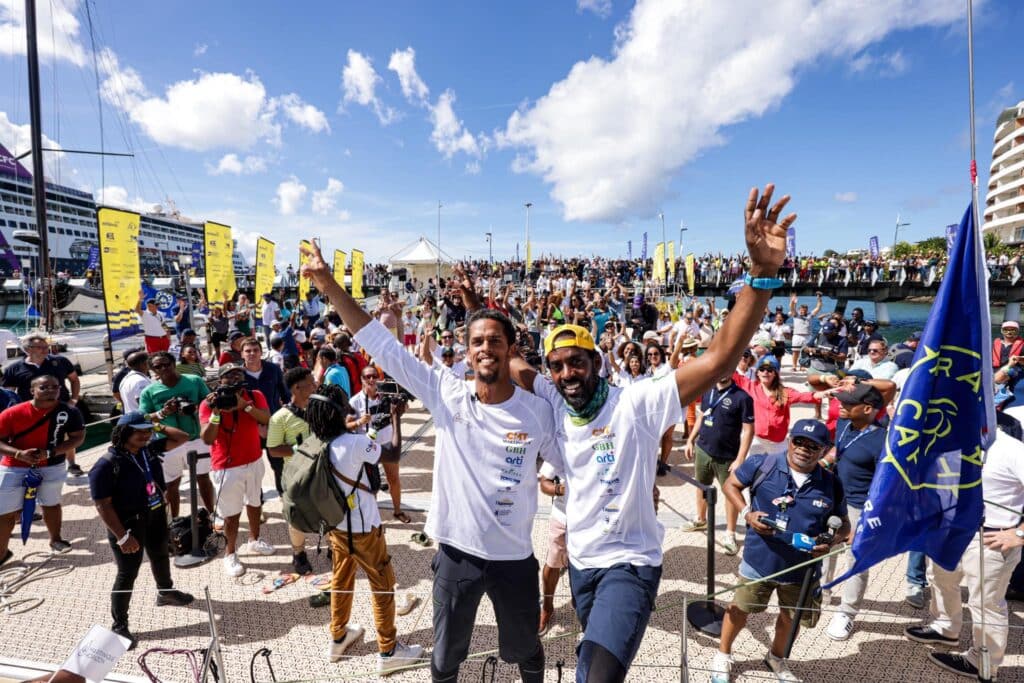
In Fort-de-France, the public began to gather at 7:30 a.m. on the pontoon of honor. Residents, families, sailing enthusiasts and curious onlookers awaited the arrival of Martinique Horizon, creating an attentive and supportive atmosphere. The presence of a Martinique crew in this transatlantic race aroused constant interest throughout the event, and the finish was seen as an important moment for many.

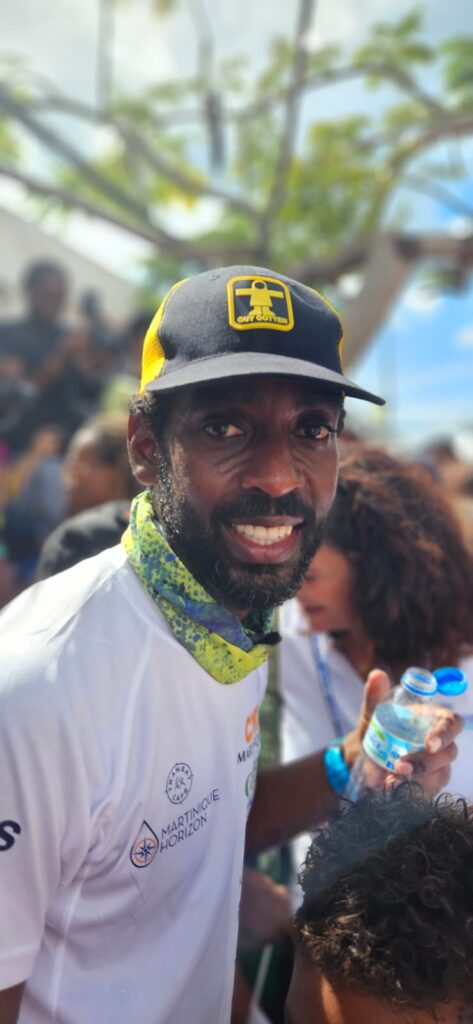
When the Class40 appeared around the bay, the applause began. As they crossed the line, they became continuous. Jean-Yves Aglaé and Moane Mangattale waved to the crowd, visibly tired but focused, before making their way to the pontoon. Both men confided that coming back to Martinique to finish such a race had a special meaning. “Arriving here, in front of our people, is a very special moment”, they declared.

TRANSAT CAFÉ L’OR
TRANSAT CAFÉ L’OR
TRANSAT CAFÉ L’OR

Race conditions that tested their endurance

The TRANSAT CAFÉ L’OR was marked by areas of light winds, rapid weather variations and short nights. Phases without clear progress were among the most difficult moments mentioned by the two navigators. They explained that the most important thing was to maintain constant discipline: watch the equipment, adjust decisions quickly and conserve energy.

The boat arrived in good condition, a sign of careful management and strict respect for equipment. The 34ᵉ place reflects a race run with consistency and a desire to secure each leg rather than take unnecessary risks.

TRANSAT CAFÉ L’OR

A contrasting edition according to trajectory

In this edition of the TRANSAT CAFÉ L’OR, the arrivals were very spread out. Class40 winners Guillaume Pirouelle and Cédric Chateau on Seafrigo – Sogestran crossed the line on November 17. Several boats arrived on the night of the 22nd, including that of Thomas Lurton and Sasha Vandenbrouck, at 2:22 am. A final Class40, Rêve à perte de vue – Qwanza, was still awaited to close the event.

In this context, the arrival of Martinique Horizon is part of a dynamic in which each crew had to deal with its own constraints: tactical choices, experience, state of equipment, accumulated fatigue. The two Martinique sailors sailed a steady race, in line with their project and their means.

TRANSAT CAFÉ L’OR
TRANSAT CAFÉ L’OR

Strong turnout for Martinique's sailing scene

The presence of Jean-Yves Aglaé and Moane Mangattale in the TRANSAT CAFÉ L’OR is a landmark for sailing in Martinique. Their participation in the TRANSAT CAFÉ L’OR reinforces the region’s visibility in a major ocean racing event. It shows that local sailors can take part in a long and technical transatlantic race.

This type of experience could serve as a basis for other local projects, notably around the preparation of young sailors or future crews from Martinique. The two skippers also stressed the importance of the support they received, which played a role throughout the race.

TRANSAT CAFÉ L’OR
TRANSAT CAFÉ L’OR

A race completed with rigor and consistency

Martinique Horizon’s arrival marks the end of a crossing that was conducted with seriousness, without excess or minimization. The boat crossed the line on time, in good overall condition, with a crew that remained focused despite the difficulties and fatigue.

Fort-de-France gave the two sailors a welcome commensurate with their commitment, confirming the interest of the Martinique public in this edition. With this finish, Jean-Yves Aglaé and Moane Mangattale have signed a solid participation, which could encourage other nautical initiatives in the region.

To find out more about TRANSAT CAFÉ L’OR, read our full analysis in the latest issue of our magazine.

FAQ

The TRANSAT CAFÉ L’OR is a double-handed transatlantic race, contested in two legs, which brings together several categories of yachts, including Class40s. It links Europe to Martinique, and is one of the major events on the ocean racing calendar.

The Class40 Martinique Horizon, skippered by Jean-Yves Aglaé and Moane Mangattale, finished the TRANSAT CAFÉ L’OR in 34ᵉ place, with a total time of 26 days, 10 hours and 52 seconds. The two sailors achieved their main goal: finishing the race on time.

The arrival of Martinique Horizon drew large crowds of spectators at dawn. For many, seeing two Martinique sailors complete a transatlantic race of this level represents an important moment for local sailing and a landmark for the region’s nautical projects.

Leave a Reply

Your email address will not be published. Required fields are marked *

More articles from RK

Affiche officielle du documentaire Women of Dominica
FILM & VIDEO
Tolotra

Dominique – Women of Dominica: The documentary that brings together ten women ahead of its premiere in Miami

“Women of Dominica” brings together ten women from different generations around a shared narrative: the Creole heritage of Dominica. The documentary, directed by environmental scientist-turned-filmmaker Farrah La Ronde-Hutchison, will have its U.S. premiere on September 5 in Miami, ahead of a wider release scheduled for 2027. Among the voices featured is that of Ophelia Marie, a historic figure in Dominican music. A story of passing down traditions, between a mother and her daughter The Women of Dominica project has its roots in a family story. In 2019, Farrah La Ronde-Hutchison’s mother received the Golden Drum, a Dominican award dedicated to the preservation of traditional Creole attire. She had carried this responsibility for more than thirty-five years, passing down to her daughter the techniques and fabrics of a garment that few in younger generations still know how to tie today. It was this tradition passed down from mother to daughter that

Read More »
Femme jamaïcaine sur une véranda au crépuscule face à un duppy dans la cour
HISTORY & HERITAGE
Tolotra

“Duppy know who fi frighten”—why does this proverb protect the weak?

“Duppy know who fi frighten”: this Jamaican saying resonates from childhood onward, long before we fully understand its meaning. In Jamaica, at dusk, a scene plays out across generations. Children are called back inside before night swallows the garden. There’s no need to argue the point—outside, the duppies lurk, those spirits that didn’t follow the dead to the end of their journey. A man from Old Harbour, now in his eighties, told researchers in 2021 how these stories shaped his childhood evenings—not so much to terrify as to keep the children close to home. From this inherited fear arose a saying that is still heard today throughout the island: “Duppy know who fi frighten”—the duppy knows who to frighten. What does “Duppy know who fi frighten” mean? The Jamaican Patwah online dictionary illustrates the expression with a typical phrase, “Him cyaa try mi, duppy know who fi frighten,” which could

Read More »
gwoka
HISTORY & HERITAGE
Tolotra

Gwoka, the Guadeloupean drum that UNESCO has enshrined in history

In Pointe-à-Pitre, a bronze statue depicts a seated man with a ka drum between his legs. It pays tribute to Vélo, one of the greatest masters of gwoka, the Guadeloupean music that emerged from the resistance to slavery. Since 2014, UNESCO has designated it as a World Heritage Site. A Tambouyé Turned into a Statue Marcel Lollia, known as Vélo, was born on December 7, 1931, and died on June 5, 1984. He trained several generations of ka players—a drum carved from a tree trunk and covered with a stretched skin. He also inspired Akiyo, a cultural movement advocating for identity founded in 1979, which brought gwoka out of the small circles where it was still surviving. On June 5, 2004, twenty years after his death, a statue by sculptor Jacky Poullier was unveiled in Pointe-à-Pitre, modeled after an earlier Guadeloupean portrait dedicated to another of the island’s great figures.

Read More »

conTACT RK

we'd love to have your feedback on your experience so far

Join The List

Join our Richès Karayib community!  Sign up for our newsletter.

Want To Maximize Your Business Presence On Riches Karayib?

Complete the form to start the application