

Trinidad and Tobago – Trini Bites : A taste of Trinidad on Long Island

Trini Bites

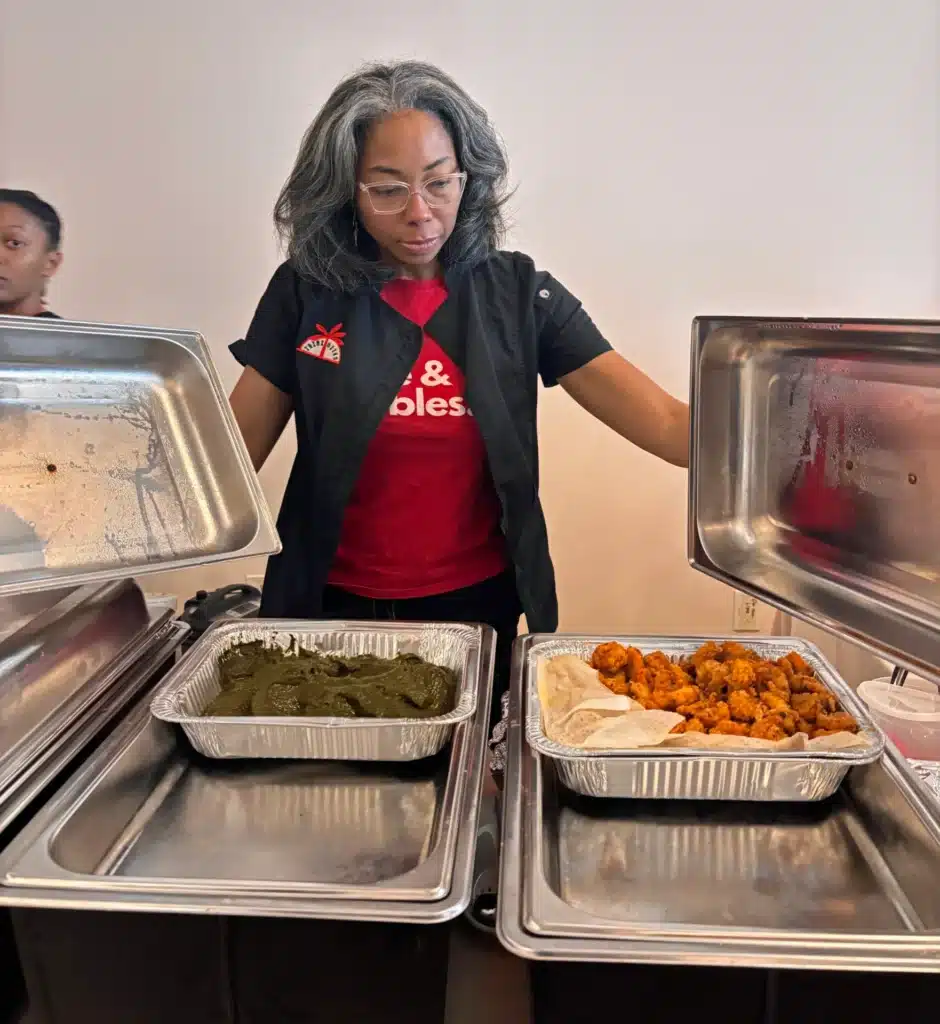
Today, Trini Bites is synonymous with authenticity and culinary transmission on Long Island. Led by Renee Davis, Trini Bites embodies the desire to bring Trinidad and Tobago cuisine to the local community. Since its launch, the brand has won over a varied public, from those nostalgic for the flavors of their childhood to those curious to learn about a rich and little-known gastronomy.

The story of Renee Davis, founder of Trini Bites

Renee Davis, a first-generation Trinidadian-American, worked for many years as a nurse before devoting herself to her passion for cooking. Born into a home where Trinidad and Tobago traditions were omnipresent, she grew up in Brooklyn before moving to Long Island. It was here that she noticed the absence of truly Trinidadian restaurants, which led her to create Trini Bites. For her, it was above all a question of filling a gap and sharing a family heritage.

Trini Bites
Renee Davis. Source : Caribbean LIfe

The beginnings of Trini Bites: an adventure born of an observation

In January 2021, Trini Bites saw the light of day in the form of pop-ups, while Renee Davis was still working as a nurse. Growing demand prompts the founder to rent a professional kitchen in Lynbrook. By June, Trini Bites began serving the community, which welcomed the initiative with enthusiasm. The business quickly becomes one of the few Trinidadian cooking addresses in Nassau County. This success is based on the company’s ability to offer authentic dishes, prepared according to family recipes.

Trini Bites: from food truck to Smorgasburg

In 2022, the brand took a decisive step forward with the launch of Long Island’s first exclusively Trinidadian food truck. Renee Davis manages the preparation, driving, service and maintenance of the truck herself. Thanks to this food truck, the company takes part in numerous public events, festivals, weddings and birthdays. The year 2024 marks the company’s entry into Smorgasburg, New York’s famous food market. Under the name “Doubles or Nothing”, Trini Bites offers doubles, an emblematic sandwich from Trinidad and Tobago, to a clientele eager for new flavors. This experience has enabled the brand to forge valuable links with other players in the sector and broaden its customer base.

Trini Bites
Renee Davis. Source : Caribbean LIfe

The Trini Bites menu: authenticity and creativity

The company’s menu features specialties from Trinidad and Tobago. Doubles, made with fried bread and spicy chickpeas, are the star of the menu. Other specialties include pelau, a simmered rice dish, pholourie, chickpea fritters, and “buss-up-shut” roti. Trini Bites also innovates with original creations, such as curry-stuffed wanton, which reflect the cultural diversity of Trinidad and Tobago. Each dish is prepared with care and respect for tradition, but with a modern touch that appeals to an ever-growing audience.

Trini Bites' challenges and ambitions

Behind its success lies the hard work of Renee Davis, who manages the kitchen, delivery, accounting and customer relations. The challenges are many, including financing and recruitment. “I need more hands, but first we need to increase sales so we can hire,” she explains. Trini Bites is also a family adventure: Renee Davis is keen to pass on to her children the culture of Trinidad and Tobago, so that they remain connected to their roots. The company’s future looks promising, with plans to develop the catering service and, eventually, to open a restaurant or lounge.

Trini Bites

Trini Bites is more than just a caterer or food truck. It’s an identity project, a way of preserving and transmitting a culture through cuisine. Thanks to the company, Long Islanders and New Yorkers can enjoy authentic dishes prepared with passion. The brand embodies perseverance, attachment to tradition and the desire to create a bond within the community.

Leave a Reply

Your email address will not be published. Required fields are marked *

More articles from RK

Zona Colonial
TOURISM
Tolotra

Dominican Republic – Zona Colonial: 1502, the first paved street in the Americas

Zona Colonial, in Santo Domingo, capital of the Dominican Republic, boasts a street billed as the first paved street in the Americas. It’s called “Calle Las Damas”. In the early 16th century, the ladies of the court of María de Toledo, wife of Diego Colón, used it to walk between the buildings of Spanish power, under the Caribbean sun. The street is still there. It borders the Ozama, the river that flows into the Caribbean Sea. And it provides access to the most densely populated “first-time” district in all of colonial America: the Zona Colonial. A UNESCO-listed founding city Zona Colonial, also known as Ciudad Colonial in the Dominican Republic, was designated aUNESCO World Heritage Site in 1990. Santo Domingo is considered to be the first permanent European city in the Americas. First established on the east bank of the Ozama in 1496, then founded as a colonial city in

Read More »
Patrick Chamoiseau
LITERATURE
Tolotra

Patrick Chamoiseau: the Goncourt voice of Creolité

On November 9 1992, in Paris, the Prix Goncourt jury announced its winner: Patrick Chamoiseau, for “Texaco“. The news crossed the Atlantic. In Fort-de-France, Chamoiseau’s childhood home, it resounded like a major recognition. For the first time since René Maran, who won the 1921 Prix Goncourt for Batouala, a West Indian writer received France’s most prestigious literary award. And it’s not just any book: Texaco tells the story of a Martinican lineage through the voice of a woman, in a language that blends French and Creole as if the two had never been separated. A fort-de-française childhood turned into literary material Patrick Chamoiseau was born in Fort-de-France on December 3, 1953. He grew up in the city center, particularly around rue François-Arago, which he would later evoke in Antan d’enfance and Chemin-d’école, two of his most tender books. He went on to study law and social economics in France, before

Read More »
Caribbean
TOURISM
Tolotra

The Caribbean, silent antidote to contemporary exhaustion

A global report published in early 2026 by Amadeus reveals what travelers will be looking for in 2026. The Caribbean has always carried it. There’s a precise moment, in a Caribbean village in the early hours of the morning, when the noise of the world seems to stop. The first lights fall on the facades, a voice answers from one courtyard to another, the smell of coffee mingles with that of the nearby sea. Hardly anyone checks their phone. Life is there, in front of us, denser than any notification. This scene, commonplace for anyone who lives in the Caribbean, is precisely what millions of travellers around the world are now looking for. When the world is looking to get off the hook These are the findings of Travel Dreams 2026: From data to delight, a study published in early 2026 by Amadeus, one of the world’s leading technology players

Read More »

conTACT RK

we'd love to have your feedback on your experience so far

Join The List

Join our Richès Karayib community!  Sign up for our newsletter.

Want To Maximize Your Business Presence On Riches Karayib?

Complete the form to start the application