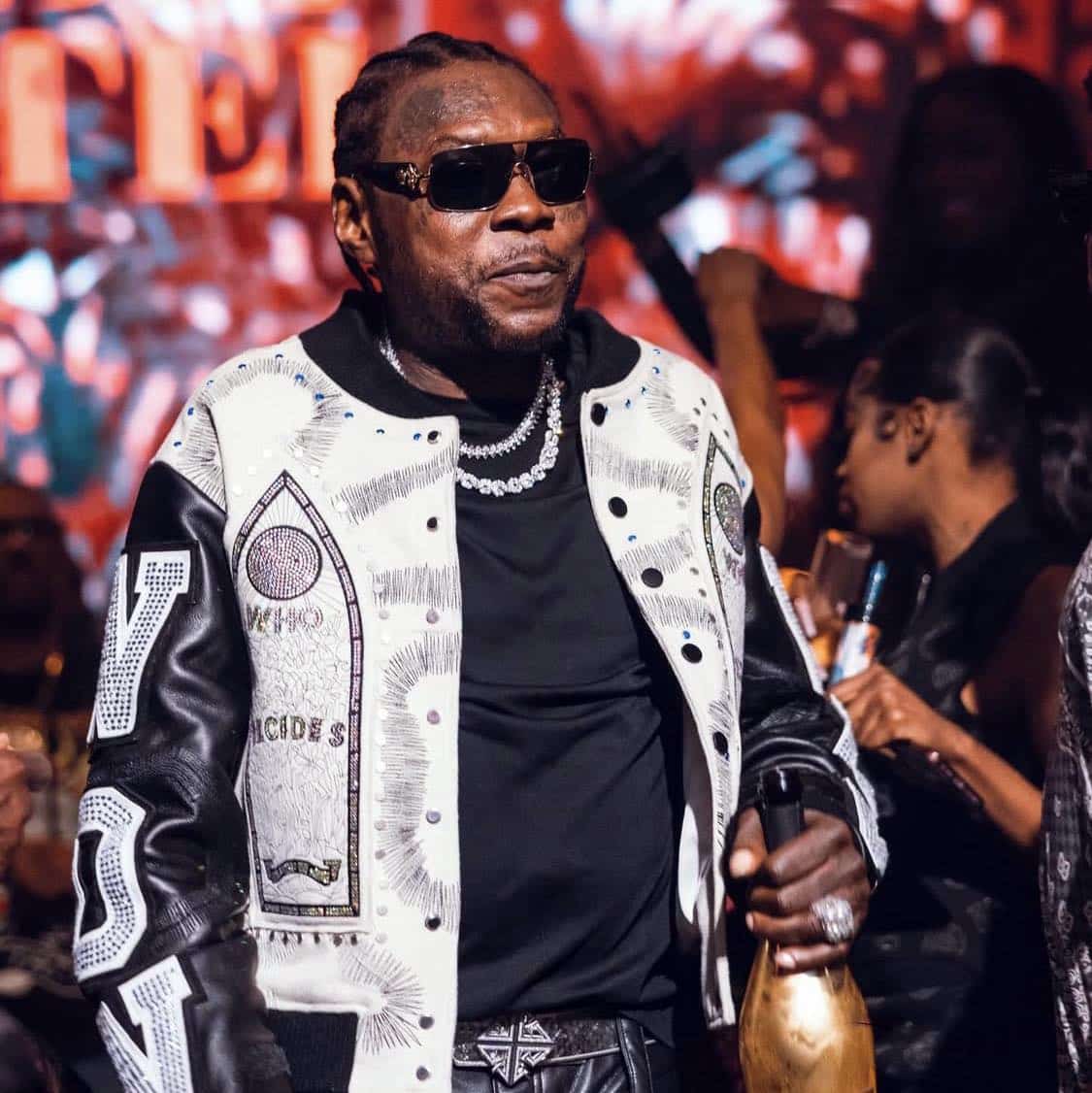
Vybz Kartel won the Best Caribbean Music Act at the MOBO Awards 2026, held on March 26 at the Co-op Live Arena in Manchester in the UK. On paper, it’s a musical distinction. In fact, it’s also a reminder that, in 2026, Jamaican dancehall continues to occupy a leading place in the Caribbean sound imagination and in international recognition circuits.
For Jamaica, this victory carries a special weight. It puts back at the center of a major British scene an artist whose name remains associated with a decisive part of recent dancehall history. For the wider Caribbean, it reminds us of something else: the great cultural institutions of the diaspora continue to play an essential role in the way regional successes are seen, validated and relayed abroad. This reading is all the more important as MOBO celebrated its 30th edition this year.
The MOBO Awards are not a backdrop: they tell the story of a cultural power struggle.
Created in 1996 by Kanya King, the MOBO Awards were born out of a simple observation: black music was already profoundly shaping British culture, but was not receiving institutional recognition commensurate with its influence. Thirty years on, this event remains one of the most visible forums for measuring the place of artists from the African and Caribbean diasporas in the British music industry.
This context gives special significance to Vybz Kartel’s victory. We’re not talking about a marginal award. We’re talking about a ceremony which, in the UK, continues to serve as a thermometer for the visibility of black music. The Guardian reminded us this week that black music represents a major share of the British recorded music market, yet remains under-represented in certain power structures. In this environment, the award won by Vybz Kartel takes on the value of a cultural marker as much as a musical one.


What the Best Caribbean Music Act category really means
We also need to look at the name of the award itself. For a long time, MOBOs distinguished a Best Reggae Act. The category was subsequently renamed Best Caribbean Music Act to reflect a broader landscape, where reggae is no longer the sole voice of the region. This change, enacted in 2022, recognizes a reality that Caribbean audiences have long known: the musical Caribbean does not speak with a single voice, it circulates between dancehall, contemporary reggae, soca and other aesthetics that interact with each other.
This development gives greater prominence to the list of nominees for 2026. Vybz Kartel won against Masicka, Shenseea, Lila Iké, Ayetian and Yung Bredda. This short-list already said a lot about the current state of the Caribbean scene: Jamaica still dominates in terms of the number of names, with a strong dancehall base, but also an openness towards other sensibilities, notably with the presence of Trinidadian Yung Bredda. This is not a detail. The battle for regional visibility is also played out in this type of selection.
Why is this victory particularly important for Vybz Kartel in 2026?
In the case of Vybz Kartel, this award is no accident. The artist had already received the MOBO Impact Award in 2025. This time, he walks away with a competitive prize, which changes the nature of the message sent by the ceremony. The Impact Award recognized a cultural imprint. The Best Caribbean Music Act recognizes an active presence in the recent musical landscape.
Another useful element in understanding this result is that the MOBO 2026 eligibility window ran from September 1, 2024 to October 1, 2025. According to DancehallMag, this period was included on the album Heart & Soul released in August 2025, as well as a series of singles and clips released in the intervening period. In other words, the prize doesn’t just reward an established legend; it also sanctions a recent artistic sequence, visible in the releases and in the circulation of the name. Vybz Kartel over the period selected by the organization.


Behind the trophy, the permanence of Jamaica in the region's symbolic economy
Vybz Kartel’s victory also says something wider than his personal case. It confirms that, despite the diversification of the Caribbean scene, Jamaica still retains a particular driving force in the global musical imagination. This does not mean that the rest of the Caribbean is absent. It means that, when it comes to exported musical language, visual codes, stage attitude and power of influence, Jamaican dancehall remains one of the region’s strongest centers of gravity. This reading is based on both the composition of the category and the final result.
In the UK, this victory has a particular historical significance. For decades, Caribbean communities living in British cities have been involved in the circulation of these sounds, their transformation and their popular anchoring. When Vybz Kartel won the MOBO award in Manchester, it wasn’t just a Jamaican artist who was rewarded. It’s a whole back-and-forth between the Caribbean and its diaspora that’s back in the limelight.
An award that also speaks of other Caribbean artists
At last, the award provides a clearer picture of the current hierarchy on the scene. Shenseea, winner of the category in 2025, was in the running again this year; she was also among the artists featured in the 2026 edition’s program. The fact that Vybz Kartel is her successor, following the recent victories of Skillibeng, Valiant and Shenseea, shows that this category now serves as a very concrete barometer of the forces at play in contemporary Caribbean music.
This is where the information becomes interesting for a medium like RichèsKarayib. It’s not just about saying that an artist has won. The point is to understand what this victory reveals: an increasingly strategic category, Jamaica still very powerful in the consecration circuits, the United Kingdom still a decisive place for the symbolic validation of Caribbean sounds, and a regional scene whose competition is becoming clearer with each passing year.
Vybz Kartel won the award for his continuing influence on Caribbean music, particularly dancehall. Despite the rapid evolution of the music industry, his name remains associated with regular production, a strong public presence and an ability to cross generations. This combination of historical impact and recent activity plays a decisive role in this type of distinction.
The Best Caribbean Music Act category highlights artists from the Caribbean, without limiting themselves to a single musical genre. It includes dancehall, reggae, soca and other contemporary forms. This evolution reflects the current diversity of the region, and allows us to better represent real musical dynamics, rather than focusing solely on reggae as was previously the case.
This is an important victory, as it confirms the place of Caribbean music on the international recognition circuit. The MOBO Awards, held in the UK, are a major platform for artists from the diasporas. Winning a MOBO Award increases the region’s visibility, while demonstrating that its artists continue to influence musical trends on a global scale.