Air France inaugurates direct Cayenne-Fortaleza service French Guiana and the north of Brazil. This new air bridge promises to strengthen ties between two neighboring territories that are often little-known to each other. Whether you’re a professional, a student or a resident interested in regional dynamics, this opening marks a turning point in Franco-Brazilian relations.
A new air bridge between French Guiana and Brazil
History and background of the connection
Until now, French Guiana had only one direct link with Brazil : Cayenne-Belém. Since April 15, 2025, Air France inaugurates direct Cayenne-Fortaleza service becoming the second regular air connection between the two regions. This initiative meets a growing demand for mobility on both sides of the border.
Objectives of this opening
The stakes go far beyond tourism. According to Muriel Fred Charlotte, Air France’s Director for French Guiana, the aim is to “offer Guyanese the chance to be on the doorstep of Brazil more than once a week”. Air France inaugurates direct Cayenne-Fortaleza service to facilitate economic, educational and cultural relations, and encourage cross-border cooperation. Literary forums, artistic exchanges and sporting competitions will all benefit from simplified travel conditions.
Practical details of the Cayenne-Fortaleza route
Frequency, times and device type
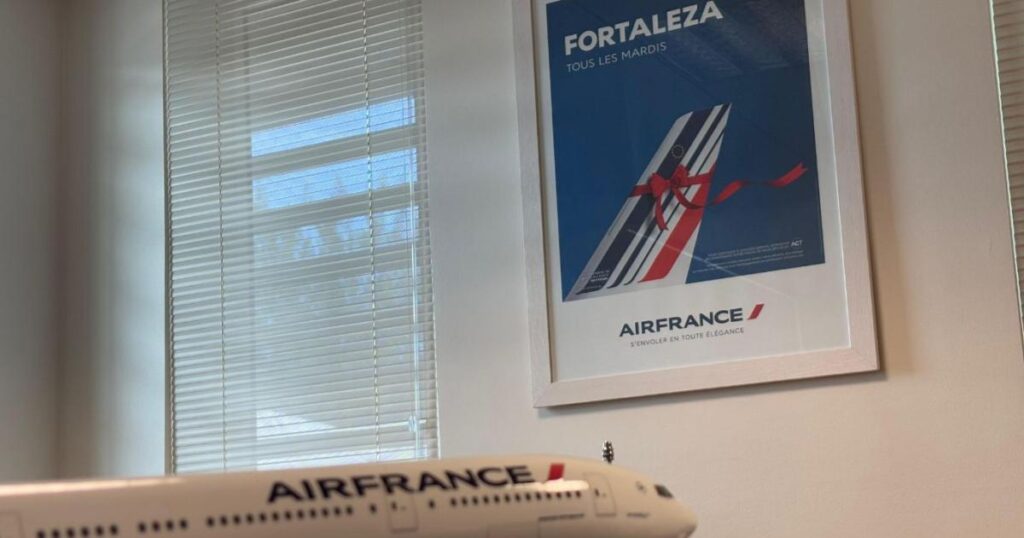
The new route is operated every Tuesday from Cayenne, and every Wednesday from Fortaleza. The inaugural flight left Félix-Éboué airport at 1:05pm, with 160 passengers aboard an Airbus A320 configured for 170 seats. Air France inaugurates its direct Cayenne-Fortaleza route with an aircraft offering comfort, stability and WiFi connection for passengers.
Rates and accessibility
Round-trip fares start at €400, slightly higher than the Cayenne-Belém fare due to the longer flight time. These fares strike a balance between accessibility for passengers and economic viability for the company. Air France inaugurates its direct Cayenne-Fortaleza route service, based on a model similar to that used by Azul before the pandemic.
Fortaleza: a gateway to Brazil
Connectivity to major Brazilian cities
Air France inaugurates direct Cayenne-Fortaleza service by capitalizing on the appeal of a crossroads city. Thanks to agreements with the Brazilian airline Gol, travelers can easily reach the country’s main cities from Fortaleza: Rio de Janeiro, São Paulo, Brasília, Salvador de Bahia, Belém, and of course Fortaleza itself. These connections considerably expand the possibilities for travel from French Guiana.
Fortaleza’s tourist and economic assets
Fortaleza, capital of the state of Ceará, is already popular with Guyanese and West Indians. Known for its beaches, leisure facilities such as the Beach Park, and access to renowned sites such as Jericoacoara, it also attracts entrepreneurs from the Caribbean. With its booming economy, the city offers opportunities for investors interested in South-South trade.

Impact on French Guiana and the Caribbean region
Tourism and economic development
Air France inaugurates direct Cayenne-Fortaleza service and the whole region benefits. By strengthening links with Brazil, French Guiana and the West Indies are opening up new commercial and professional circuits. This line supports local initiatives, encourages entrepreneurial cooperation and offers a gateway to the immense Brazilian market.
Strengthening cultural and sporting exchanges
Relations between French Guiana and Brazil are already taking shape in a number of areas. This new service will encourage the movement of artists, students and sportsmen and women. Cultural institutions such as music schools and literary festival organizers will also benefit from this improved connectivity. Air France inaugurates direct Cayenne-Fortaleza service to provide concrete support for these ongoing dynamics.
Outlook and ambitions for the future
Expanding routes and new opportunities
With two weekly flights to Belém and Fortaleza Air France inaugurates its direct Cayenne-Fortaleza service for the long term. The company makes no secret of its ambitions to further expand its services, should demand continue to grow. This dynamic approach responds to a shared aspiration: better regional integration between French Guiana, the West Indies and Brazil.
Guyana’s strategic role in regional connectivity
Thanks to its geographical position, French Guiana is becoming a key player in South American mobility. Air France inaugurates direct Cayenne-Fortaleza service by positioning French Guiana as an interface between the Caribbean, mainland France and the Brazilian subcontinent. This development contributes to enhancing the region’s value, both in terms of economic exchanges and the circulation of knowledge and talent.
Air France inaugurates direct Cayenne-Fortaleza service.This decision goes beyond the simple addition of a new road. This line will consolidate existing bridges, create new ones, and put French Guiana on the path to increased exchanges with its neighbors. Entrepreneurs, students, cultural and sports professionals will all benefit. The skies between French Guiana and Brazil have never been so open.