
Haiti – Rhum Barbancourt: a gold medal for Haitian excellence

Rhum Barbancourt

Rhum Barbancourt heritage and know-how

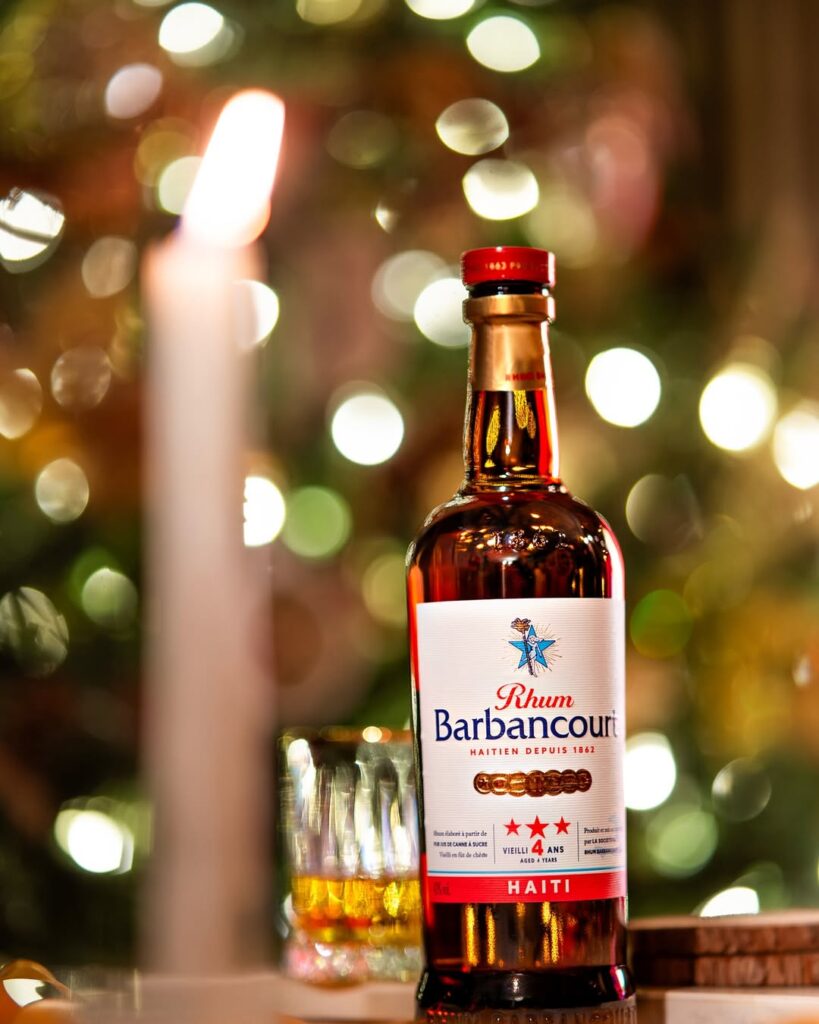
Since 1862, Rhum Barbancourt has embodied rare Haitian know-how, rigorously handed down from generation to generation. Founded by Dupré Barbancourt, the distillery is based on a distillation method inspired by cognac, using exclusively pure sugarcane juice, unlike rums produced from molasses. This structural choice gives Rhum Barbancourt an aromatic richness and finesse recognized by professionals the world over.

Now run by Delphine Nathalie Gardère, the company remains true to its DNA, while incorporating contemporary standards of quality, sustainability and distribution. The story of this rum is that of an emblematic product that embodies Haitian resilience, precision and artisanal excellence.

A controlled manufacturing process from start to finish

The Gold Medal awarded to Rhum Barbancourt in 2025 crowns a rigorous production process. Every stage – from chemical-free cane cultivation by 3,000 local growers to final bottling – is carried out on the Plaine du Cul-de-Sac site. The cane juice, or vezou, is rapidly crushed, then fermented for 48 to 72 hours before being distilled in three columns.

Aging takes place in Limousin oak barrels, repaired on site, giving this rum a unique complexity. The use of bagasse to produce steam and electricity reflects a real commitment to the environment. This energy autonomy, coupled with rigorous resource management, gives Rhum an exemplary stature in the world of spirits.

Rhum Barbancourt
©Rhum Barbancourt
Rhum Barbancourt
©Rhum Barbancourt
Rhum Barbancourt
©Rhum Barbancourt

International recognition and a distinguished track record

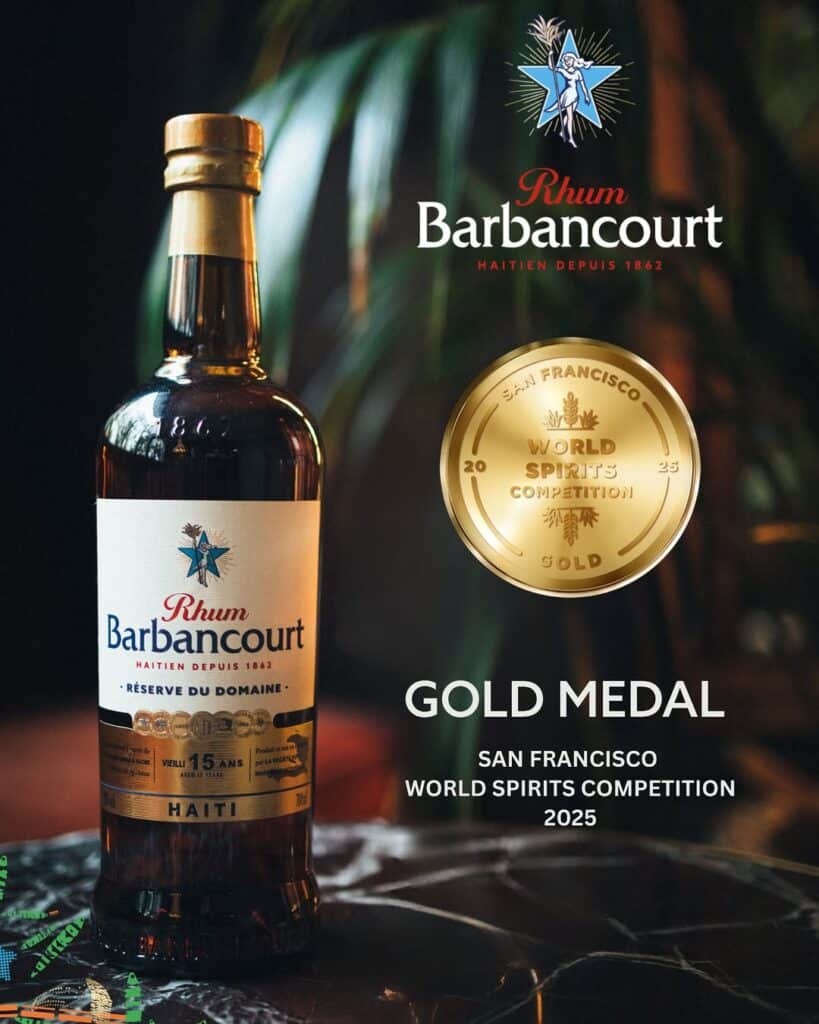
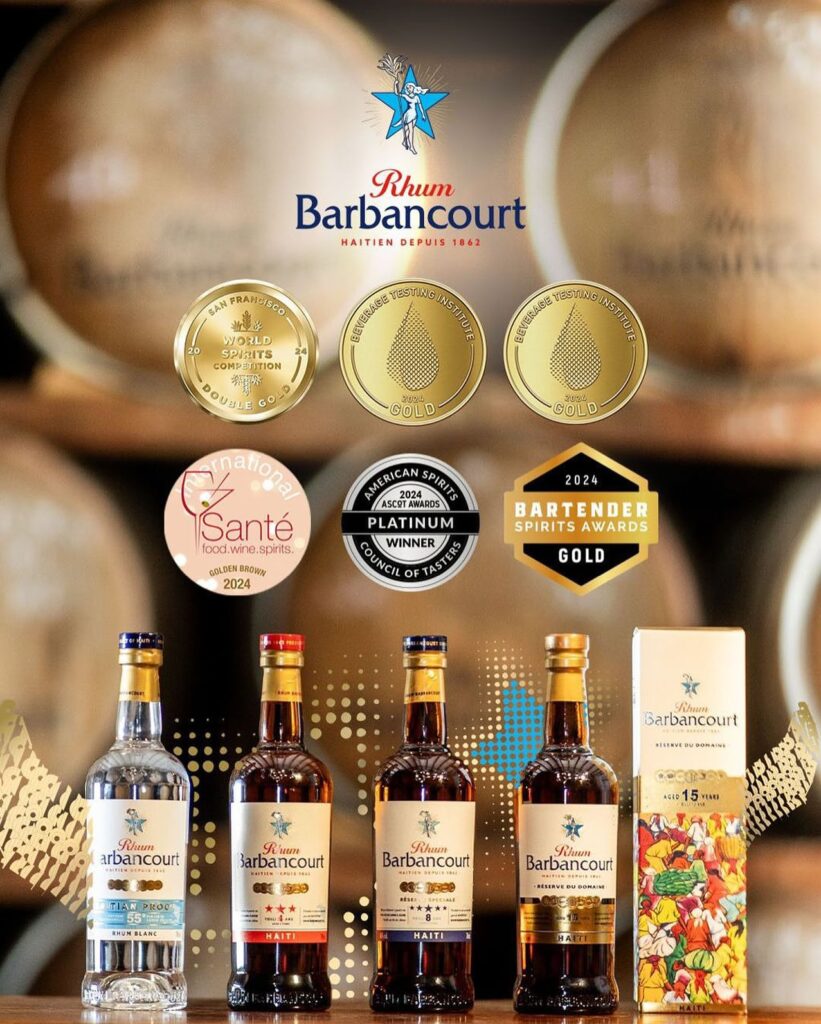
Rhum Barbancourt has won more than 52 awards since 1883. In 2025, two new awards confirm this trajectory: a double Gold Medal for the Haitian Proof White Rum awarded by The Fifty Best in New York, and another for the Reserve du Domaine 15 ans at the San Francisco World Spirits Competition.

These awards are no accident: they are the result of a blind tasting conducted according to a strict protocol by panels of experts. It shone through with its clear aromas, silky texture and balance. The Gault & Millau guide awarded the Réserve du Domaine 94/100, praising its structure, persistence and the precision of its woody, vanilla and spicy notes.

Rhum Barbancourt
©Rhum Barbancourt
Rhum Barbancourt
©Rhum Barbancourt

Sensory Methodology: An Objectivized Assessment

For international competitions, Rhum Barbancourt is tasted without any indication of origin or brand, ensuring an impartial assessment. Temperature control, palate neutralization, sealed samples: every variable is under control. The Haitian Proof White Rum seduced with its floral and citrus notes, while the Réserve du Domaine 15 ans impressed with its intensity and length on the palate.

These ratings confirm that it stands out not only for its organoleptic characteristics, but also for the consistency of its vintages, reflecting a know-how rooted in the Haitian terroir.

A Structuring Economic and Cultural Impact for Haiti

Rhum Barbancourt’s success extends beyond the gastronomic sphere. With over 500 direct employees and thousands of partner farming families, the distillery plays a key role in the national economy. In 2021, its method of production was listed as part of Haitian Cultural Heritage, testifying to the importance of its identity.

This international recognition is also a lever for local development and a symbol of national pride. It illustrates that a home-grown product, crafted with rigor and respect, can compete with the world’s greatest houses without denying its roots.

Rhum Barbancourt
©Rhum Barbancourt
Rhum Barbancourt
©Rhum Barbancourt
Rhum Barbancourt
©Rhum Barbancourt

The Fifty Best and the BTI: Quality references

The recent distinctions for Rhum Barbancourt by The Fifty Best and the Beverage Testing Institute (BTI) are not anecdotal. These institutions are renowned for their scientific rigor, impartiality and exacting standards. The BTI, founded in 1981, evaluates products according to a standardized grid, with professional juries taking into account only the intrinsic quality of the product.

The fact that it regularly features in their top rankings is a testament to excellence based on technical mastery, transparency and integrity.

A strategy for the future combining Tradition and Excellence

Rhum Barbancourt is not resting on its laurels. Its current strategy is based on premiumizing its cuvées, opening up to new markets, and continually adapting to international standards, without compromising its identity. This demanding positioning is based on a triptych: quality, sustainability and transmission.

Efforts to reduce the environmental footprint, train young local talent and invest in equipment modernization bear witness to a clear vision shared by management and all staff. In this way, Rhum Barbancourt is both a pillar of the past and a forward-looking player.

Rhum Barbancourt, awarded a new Gold Medal in 2025, is more than just an exceptional product: it is the living illustration of a mastered heritage, a sublimated terroir and a collective commitment. For Haiti, this international recognition confirms that a demanding craft can become an economic engine and a source of cultural influence. For the world of spirits, Rhum Barbancourt remains a benchmark whose legitimacy is based on longevity, rigor and authenticity.

Leave a Reply

Your email address will not be published. Required fields are marked *

More articles from RK

Marcus Garvey
HISTORY & HERITAGE
Tolotra

Jamaica – Marcus Garvey, Jamaican hero of international renown

Marcus Garvey remains one of the most influential figures to emerge from the Caribbean. Born in Jamaica at the end of the 19th century, he transformed a local experience into a political and cultural project of international scope. At a time when black populations faced deeply rooted systems of exclusion, Marcus Garvey proposed a structured vision based on dignity, organization and autonomy. Recognized today as a national hero in Jamaica, he is much more than a historical symbol. His story helps us understand how the Caribbean helped shape major intellectual and political movements on a global scale. His name continues to circulate in contemporary debates on identity, memory and the development of societies born out of colonial history. From Jamaican origins to the formation of a committed conscience He was born on August 17, 1887 in St. Ann’s Bay, Jamaica, into a modest family. Very early on, he developed a

Read More »
BlueSeas Festival
EVENT MANAGEMENT
Tolotra

BlueSeas Festival: in Curaçao, Pietermaai becomes the epicenter of Caribbean blues in 2026

From April 2 to 4, 2026, Curaçao hosts another edition of the BlueSeas Festival a musical event that is gradually establishing itself as one of the most unique cultural events in the Caribbean. Free, open and rooted in the urban space, the festival goes far beyond simple musical programming to become a genuine territorial experience. Right from the opening night, Thursday April 2 at Kura Hulanda Village, the mood is set: the blues settle into a heritage setting, before taking full possession of the Pietermaai district on April 3 and 4. This two-stage format structures an immersive experience in which music, architecture and local life are seamlessly interwoven. A free festival that transforms the city into an open-air stage The BlueSeas Festival is based on the principle of offering free concerts in public spaces. This choice is not insignificant. It widens access to live music, while creating direct interaction between

Read More »
Le vodou : Haïti au cœur d’une candidature patrimoniale majeure avec le Bénin
COOPERATION
Tolotra

Vodou: Haiti at the heart of a major heritage bid with Benin

The vodou is entering a new phase in its international history. The joint candidacy of Haiti and Benin for inscription on the Representative List of the Intangible Cultural Heritage of Humanity places centuries of memory, transmission and creation at the heart of a global heritage debate. The deadline set by UNESCO for applications to be examined in 2027, and submitted before March 31, 2026, places this initiative within a precise and structured institutional calendar, but the stakes go far beyond the administrative procedure. For the Caribbean, and Haiti in particular, this candidacy is no mere cultural formality. It’s about recognizing a living heritage, often misunderstood, sometimes caricatured, but deeply rooted in the country’s social, artistic and spiritual history. Vodou is not a fixed folklore; it is a cultural matrix, a way of organizing the link between generations, communities and the sacred. To place it within an international heritage dynamic is

Read More »

conTACT RK

we'd love to have your feedback on your experience so far

Join The List

Join our Richès Karayib community!  Sign up for our newsletter.

Want To Maximize Your Business Presence On Riches Karayib?

Complete the form to start the application