

Jamaica – The ISA, a key player in seabed management

ISA

Jamaica occupies a unique position on the international maritime scene as the host state of the International Seabed Authority (ISA). Created as part of the United Nations Convention on the Law of the Sea (UNCLOS) this specialized organization regulates the exploration and exploitation of mineral resources on the high seas. on the high seas.

This role, although not directly exploitative for Jamaica, reinforces its diplomatic influence and its place in the major discussions on sustainable ocean governance. As Mr. Olivier Guyonvarch, Ambassador of France to Jamaica and Permanent Representative to the ISA, this institution represents a key element in the balance between economic development and protection of marine ecosystems.

The International Seabed Authority : A global mission

Created in 1996 under the United Nations Convention on the Law of the Sea (UNCLOS), the ISA is a specialized international organization that regulates mineral resources located beyond national jurisdictions, in what is known as the “high seas”. Today, the International Seabed Authority oversees 31 exploration contracts awarded to 25 countries. Jamaica sponsors one of these contracts, with a British company exploring a specific area. of polymetallic nodules in the Pacific.

One of the main missions of the International Seabed Authority is to finalize a mining code: a regulatory framework that will define the rules and conditions for the future exploitation of these resources. This code must ensure that any exploitation is carried out with the utmost respect for marine ecosystems, while allowing for an equitable sharing of benefits, particularly with developing countries.

ISA
©ISA
ISA
©ISA
ISA
©ISA

Jamaica: A strategic role as host state

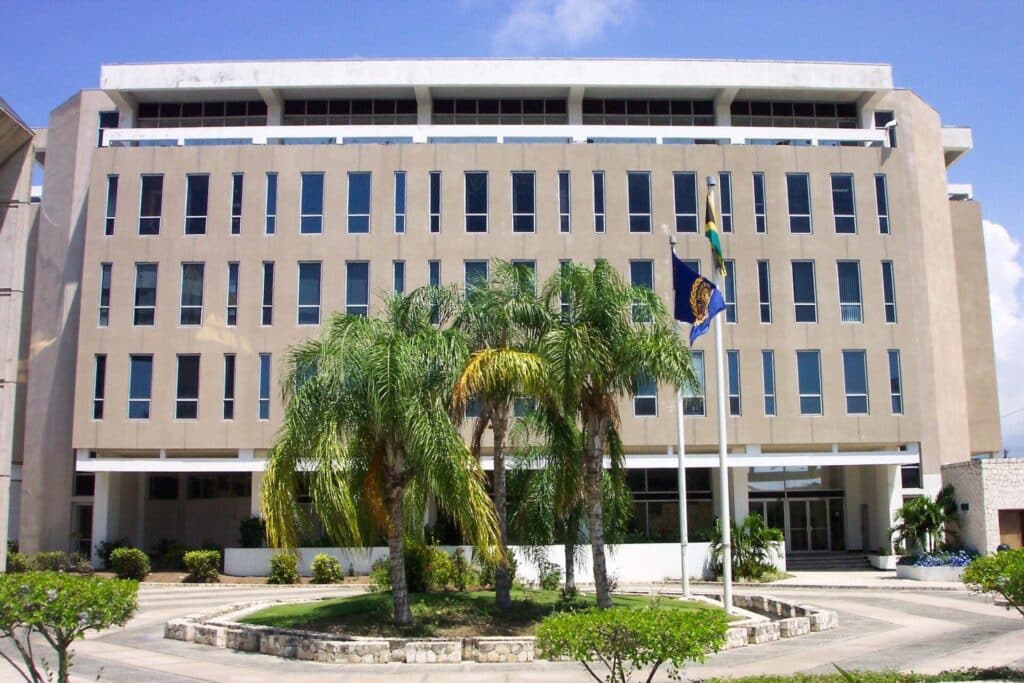
As host state, Jamaica plays an essential role in hosting this international organization, which nevertheless operates independently of its location. The choice of Kingston as IAMF headquarters in 1996 represented a diplomatic victory for Jamaica, reinforcing its image as a key player in international maritime governance.

However, the Caribbean region has no polymetallic nodules, which are mainly located in the Pacific. Despite this, the presence of the International Seabed Authority in Jamaica brings a certain prestige and underlines the country’s commitment to environmental preservation and sustainable development, crucial issues for the entire Caribbean region.

ISA
©ISA
AIFM
© NOAA
AIFM

Environmental challenges and technological ambitions

One of the biggest challenges currently facing the ISA is the adoption of the Mining Code. This complex process involves negotiations between the 36 members of the ISA Council, representing diverse national interests.

The aim is to put in place a framework that ensures fair and sustainable exploitation of resources, while protecting marine ecosystems.

Olivier Guyonvarch also stressed the crucial importance of environmental safeguards in this context. As global demand for polymetallic nodules and other critical minerals increases to meet the needs of renewable energy technologies, the International Seabed Authority will have to ensure that the rules and measures adopted are strictly adhered to. Its role thus becomes fundamental in guaranteeing the delicate balance between economic development and the preservation of marine ecosystems.

AIFM
AIFM
AIFM

The ISA represents a collective effort to meet global environmental challenges and regulate the sustainable use of marine resources.

Although the International Seabed Authority’s operations extend beyond the borders of the Caribbean, its presence in Jamaica symbolizes the interconnectedness of nations when it comes to maritime issues. As the International Seabed Authority moves closer to adopting its mining code, the world will be watching closely as it strives to reconcile resource exploitation with ocean preservation. For Jamaica and the Caribbean, the International Seabed Authority represents both a symbol of international cooperation and a call for sustainable ocean governance.

Leave a Reply

Your email address will not be published. Required fields are marked *

More articles from RK

Great Blue Hole
COOPERATION
Tolotra

Belize – Great Blue Hole: 318 metres of mystery in the sea

Great Blue Hole: seen from the air, it’s a dark circle in the middle of a turquoise lagoon. An almost perfect shape, set in the sea like an enigma. Off the coast of Belize, near Lighthouse Reef, this marine abyss, some 318 metres in diameter and 124 metres deep, has transformed a geological phenomenon into a global image. A blue circle in the heart of the reef From a small plane, the contrast is immediately striking. All around, the clear water hints at the shallows, reefs and nuances of the lagoon. In the center, the blue becomes denser, almost black. The Great Blue Hole is no mere natural curiosity. It’s an ancient limestone cavity, formed at a time when sea levels were much lower, then covered by the waters. This uniqueness explains its visual power. Few places tell such a clear story of the link between geology, climate, sea and

Read More »
St Maarten Carnival 2026
EVENT MANAGEMENT
Tolotra

St Maarten Carnival 2026: 55 years on an island split in two

In Philipsburg, carnival is about much more than costumes and concerts. It shows an island divided between two histories, two administrations and the same popular energy. For its 55th anniversary, St Maarten Carnival 2026 gives Sint Maarten the opportunity to show what the Caribbean does best: transforming a local festival into a marker of identity. A carnival that’s more than just a party St Maarten Carnival 2026 began on April 10 and continues until May 5, with Philipsburg as the focal point. In the streets, locals aren’t just watching a parade go by. They recognize families, neighborhoods, groups, sounds, food stands, faces that have returned for the occasion. Carnival is not just a decoration. It’s part of the way Sint Maarten tells its story. This year’s event carries a special weight. St. Maarten Carnival 2026 marks the 55th edition of the biggest cultural event on the Dutch part of the

Read More »
Viengsay Valdés
DANCE
Tolotra

Cuba – Viengsay Valdés: Alicia Alonso’s heiress

When Alicia Alonso passed away in October 2019, the Ballet National de Cuba, which Alicia Alonso had founded in 1948 and directed for seven decades, was orphaned. Only one person has been entrusted with the responsibility of following in her footsteps: Viengsay Valdés. Now 49, she leads one of the world’s most respected ballet companies. She does so from Havana, a city in crisis, with resources that no comparable institution in Europe or the United States would accept. The challenge is from another time. But Viengsay Valdés holds her ground. Demanding Cuban training Born in Havana in 1976, she began dancing at the age of 9 at the Alejo Carpentier elementary ballet school, before continuing her training at the Cuban National Ballet School, one of the most prestigious in the world, free and open to all Cuban children by audition. It was here that she encountered the world of Alicia

Read More »

conTACT RK

we'd love to have your feedback on your experience so far

Join The List

Join our Richès Karayib community!  Sign up for our newsletter.

Want To Maximize Your Business Presence On Riches Karayib?

Complete the form to start the application