When Alicia Alonso passed away in October 2019, the Ballet National de Cuba, which Alicia Alonso had founded in 1948 and directed for seven decades, was orphaned. Only one person has been entrusted with the responsibility of following in her footsteps: Viengsay Valdés. Now 49, she leads one of the world’s most respected ballet companies. She does so from Havana, a city in crisis, with resources that no comparable institution in Europe or the United States would accept. The challenge is from another time. But Viengsay Valdés holds her ground.
Demanding Cuban training
Born in Havana in 1976, she began dancing at the age of 9 at the Alejo Carpentier elementary ballet school, before continuing her training at the Cuban National Ballet School, one of the most prestigious in the world, free and open to all Cuban children by audition. It was here that she encountered the world of Alicia Alonso, then director of the school. It was an encounter that would shape her entire career. She joined the Cuban National Ballet in 1994, at the age of 18. Principal dancer in 1996, principal ballerina in 2001. A rapid career, even by Cuban standards.
A recognized technical signature
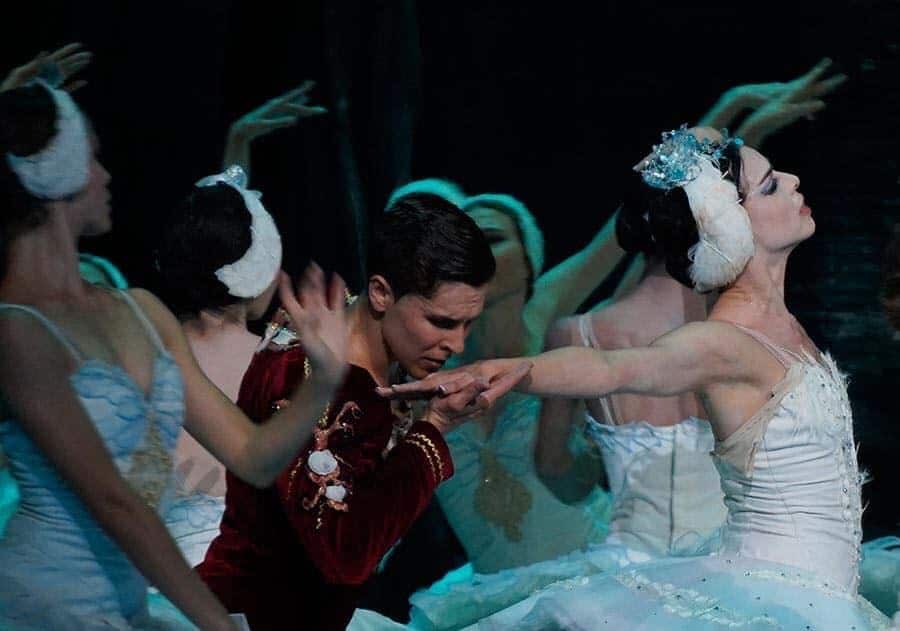
Her fouettés have become her signature. She executes them with a particular slowness, almost suspended, that forces juries and spectators alike to hold their breath. This technique, honed over many years, has earned her invitations to major international companies, including the Washington Ballet, Ballet Concierto de Puerto Rico, Joburg Ballet, Bolshoi and Mariinsky. She remains principal dancer with Cuba’s National Ballet. Unlike many of her contemporaries, she never left the island.


Loyalty comes at a price
This loyalty comes at a price. Between 2000 and 2010, several leading Cuban dancers left the island for Miami and Europe. The Ballet National de Cuba was hemorrhaging talent. Viengsay Valdés stays. She has often explained this choice as a form of indebtedness to the system that trained her for free, and her attachment to the Cuban ballet school.
After Alicia Alonso, a historic responsibility
In 2019, Alicia Alonso dies at 98. The succession is one of the most delicate in the world of dance. Alicia Alonso was not just a director: she was a political, cultural and feminist icon. To lead the Ballet National de Cuba after Alicia Alonso is to carry a massive symbolic burden. Viengsay Valdés was appointed sub-artistic director in January 2019, before being named general director of the Ballet National de Cuba in January 2020. She takes up her post against the backdrop of Cuba’s severe economic crisis, compounded by the pandemic and the power cuts that affect the capital several times a week.

Maintaining the Cuban school while opening up the repertoire
Her strategy? Maintain Cuban technical excellence – the famous “Cuban school of ballet” – while opening up to new repertoires. It commissions choreographies from young Latin American authors. It invites foreign dancers to take up residencies. It is gradually restoring international collaborations. The “Alicia Alonso” Havana International Ballet Festival, an emblematic event founded in 1960, should hold its 29th edition in autumn 2026 under her direction, if the announced schedule is maintained. This will be its great public test.

Art direction under pressure
Running a world-class ballet company on the budget of a country in crisis is as much an administrative feat as an artistic one. Costumes have to be mended, studios sometimes lack electricity or equipment, and trips abroad have to be negotiated one by one. Yet the Ballet National de Cuba continues to produce full seasons, training dancers who go on to work for the world’s leading companies, and maintaining a technical quality that many in the ballet world consider to be intact.
A Cuban woman at the head of a global institution
One particular dimension of this portrait is worth mentioning. Viengsay Valdés is a Cuban woman at the head of a world-class ballet institution. This situation, in a world of international classical ballet long dominated by major European and North American institutions, remains rare. Cuba, since Alicia Alonso, is an exception. This singularity, in the global landscape, is one of the legacies that Viengsay Valdés carries with her.

The 2026 rendezvous
In autumn 2026, therefore, the 29th Havana International Ballet Festival “Alicia Alonso” is due to be held in Havana under her direction, if the announced schedule is confirmed. Guest companies, former stars, young premieres – everyone who counts in international ballet is expected to attend. For Viengsay Valdés, it will be a demonstration. For Cuba, an affirmation. And for the Caribbean, perhaps a reminder that excellence does not depend on hard currency. If Viengsay Valdés holds, then a certain idea of Caribbean culture holds with her.
📸 Photo credit: Instagram account of Viengsay Valdés – @Viengsay_v
Viengsay Valdés is a Cuban dancer born in Havana in 1976. Trained at the Cuban Ballet School, she joined the Cuban National Ballet in 1994, became principal ballerina in 2001, and took over the company’s general management in 2020, after being appointed artistic subdirector in 2019.
Viengsay Valdés follows in the artistic footsteps of Alicia Alonso, founder of the Ballet National de Cuba in 1948. After Alicia Alonso’s death in 2019, Viengsay Valdés becomes one of the figures responsible for preserving the excellence of the Cuban ballet school, while opening up the company to new repertoires.
Viengsay Valdés embodies a form of Caribbean artistic excellence often less visible than the region’s music, carnivals or popular heritage. At the helm of Cuba’s National Ballet, she shows that the Caribbean is also a place of classical training, choreographic discipline and international cultural influence.