A capital city with no residents
On official maps of the United Kingdom, the capital of Montserrat still bears a name: Plymouth. But in Plymouth, there are no longer any neighbors, no longer an open town hall, no longer a bustling harbor. The town has been within the exclusion zone since 1997. In some places, it is buried under several meters of volcanic deposits—ash, mud, and lahars. And yet it remains linked, both legally and symbolically, to the capital of this British Overseas Territory in the Eastern Caribbean.
The Awakening of Soufrière Hills
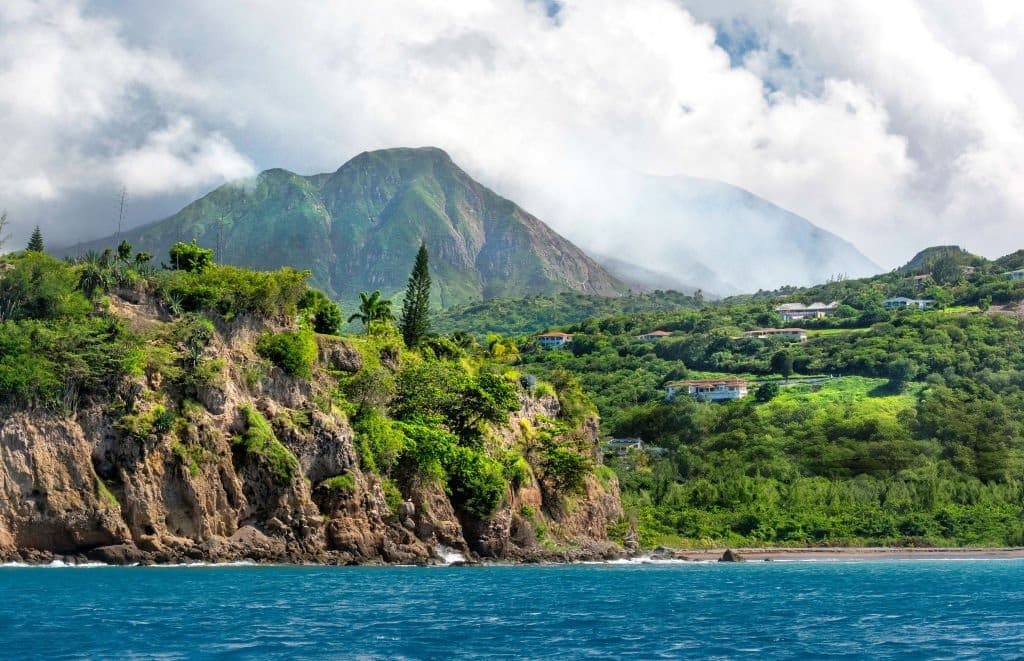
On July 18, 1995, after centuries of dormancy, the Soufrière Hills volcano erupted. The first phreatic eruption, consisting of steam and ash, took the people of Montserrat by surprise. No one was killed. But scientists at the Montserrat Volcano Observatory, established as an emergency measure, quickly realized that this episode would not be brief. On August 21, 1995, Plymouth, the island’s capital and economic hub, located just a few kilometers from the summit, was evacuated for the first time. The residents returned. Then left again. The cycle would last for years.
In local lore, its name retains a special resonance. It evokes at once an ancient capital, a tangible loss, and a testament to resilience. To speak of Plymouth, then, is not to gaze at a ruin from afar. It is to return to a place that continues to shape the memory of an entire island, despite the silence of its streets today.
The Day There Is No Turning Back
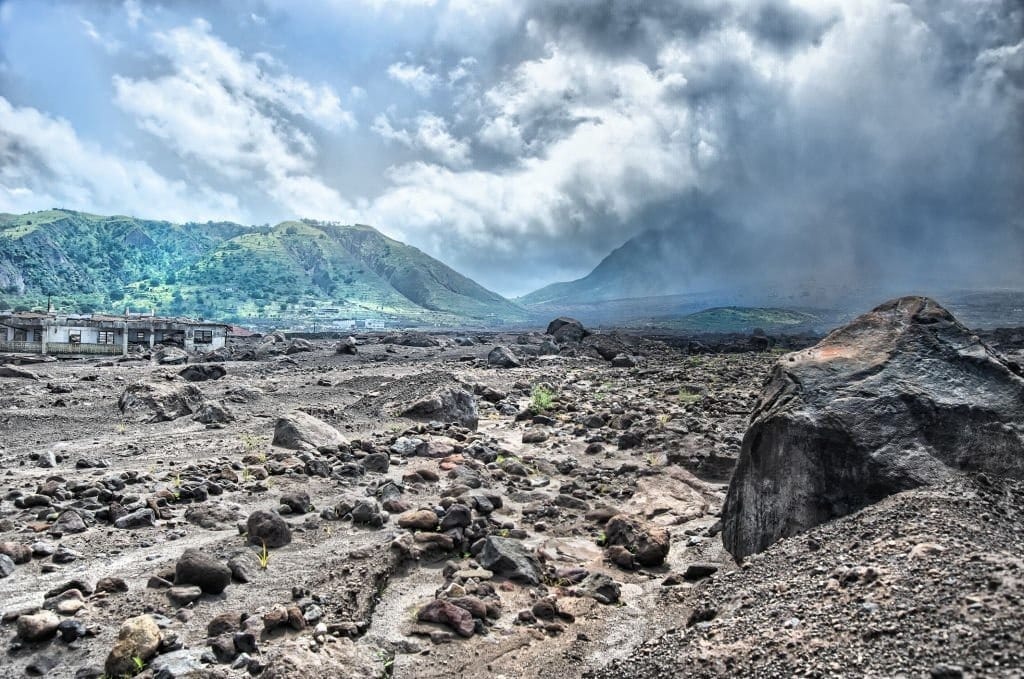
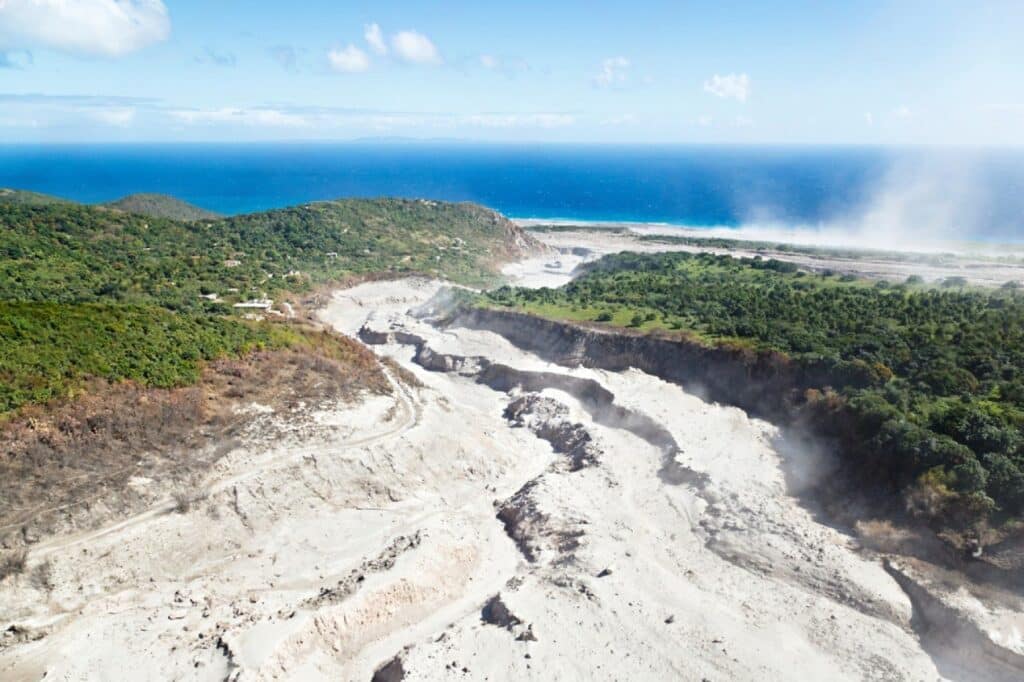
The turning point came on June 25, 1997. Pyroclastic flows raced down the volcano’s flanks. These avalanches of gas, rock, and ash can reach extreme temperatures and move at high speeds. Nineteen people died that day in the danger zones. It was the only directly fatal event of the crisis. But it was also the tipping point. In August 1997, new flows covered a large part of Plymouth. Not all the buildings disappeared. Some roofs and walls remained visible. But the capital became uninhabitable. It ceased to be a city of daily life and became a city at a standstill.


An island that has shifted northward
What makes Montserrat unique is a set of statistics. The island covers approximately 102 square kilometers. Before the eruption, it had a population of over 10,000. The 2023 census recorded 4,386 residents. Between these two realities lie departures to the United Kingdom, Antigua, North America, and other Caribbean territories. There are also abandoned homes, papers saved in too much of a hurry, and families who have learned to live elsewhere.
The southern two-thirds of the island remain subject to strict restrictions. The area around the volcano no longer has any ordinary homes. The north, on the other hand, is home to schools, government offices, businesses, and new infrastructure. Montserrat hasn’t just rebuilt itself. It has moved.


Brades Takes the Helm, Little Bay Looks to the Future
The government has set up its headquarters in Brades, in the north. This town serves as the de facto capital. A new airport, now known as John A. Osborne Airport, opened in 2005 in Gerald’s to replace the former W. H. Bramble Airport, which was lost within the exclusion zone. In Little Bay, new port and administrative facilities are creating another hub.
But Plymouth remains the name that lingers in the memory. This anomaly is not merely administrative. It shows that a capital city can leave its buildings behind without leaving the collective imagination of a people. For many Montserratians who have moved to the United Kingdom—to London, Manchester, or elsewhere—Plymouth remains a place close to their hearts.
Look without entering freely
Unsupervised access to Plymouth is prohibited. Guided tours are available, led by certified guides and with the necessary permits, from the hills or along certain controlled routes. You can see the old bell tower, facades weathered by deposits, and the bay where ships used to arrive. The silence is far from a simple attraction. It forces you to look at things differently.
The Soufrière Hills volcano is not dormant. Since 2010, it has been in a long period of calm, but it remains active and under surveillance. The Montserrat Volcano Observatory continues its work. This, too, is the strength of Montserrat: living with the volcano without reducing its history to disaster. Plymouth is now uninhabited, but it still poses a question. What becomes of a capital city when its people must leave, yet refuse to erase it?
Plymouth became a ghost town following the eruptions of the Soufrière Hills volcano, which began in 1995. The capital of Montserrat was gradually evacuated and then rendered uninhabitable by pyroclastic flows, ash, mud, and volcanic deposits. Much of the southern part of the island remains under restrictions today, and the city lies within the exclusion zone. This makes Plymouth a rare case in the Caribbean: a former capital still present in official memory, but devoid of daily life.
Unrestricted access to Plymouth is not permitted, as the city is located in Zone V, a volcanic hazard exclusion zone. However, certain guided tours are available with a certified guide, subject to strict safety conditions. Visitors can view the buried city, its partially visible buildings, and the landscapes scarred by the eruption, but the experience remains controlled. Plymouth is therefore not a typical tourist destination: it is a place of remembrance, vigilance, and respect.
Plymouth remains significant because it represents the former political, economic, and social heart of Montserrat. Even though government operations have moved to Brades and new projects are taking shape in Little Bay, Plymouth continues to preserve the island’s memory of the time before the eruption. For Montserratians who remained on the island as well as those who left for the United Kingdom, Antigua, or elsewhere, the buried town serves as a reminder of a collective loss, but also of a territory’s ability to rebuild itself without erasing its history.