Caribbean Connect: linking, opening up and connecting the French West Indies and French Guiana

Caribbean Connect

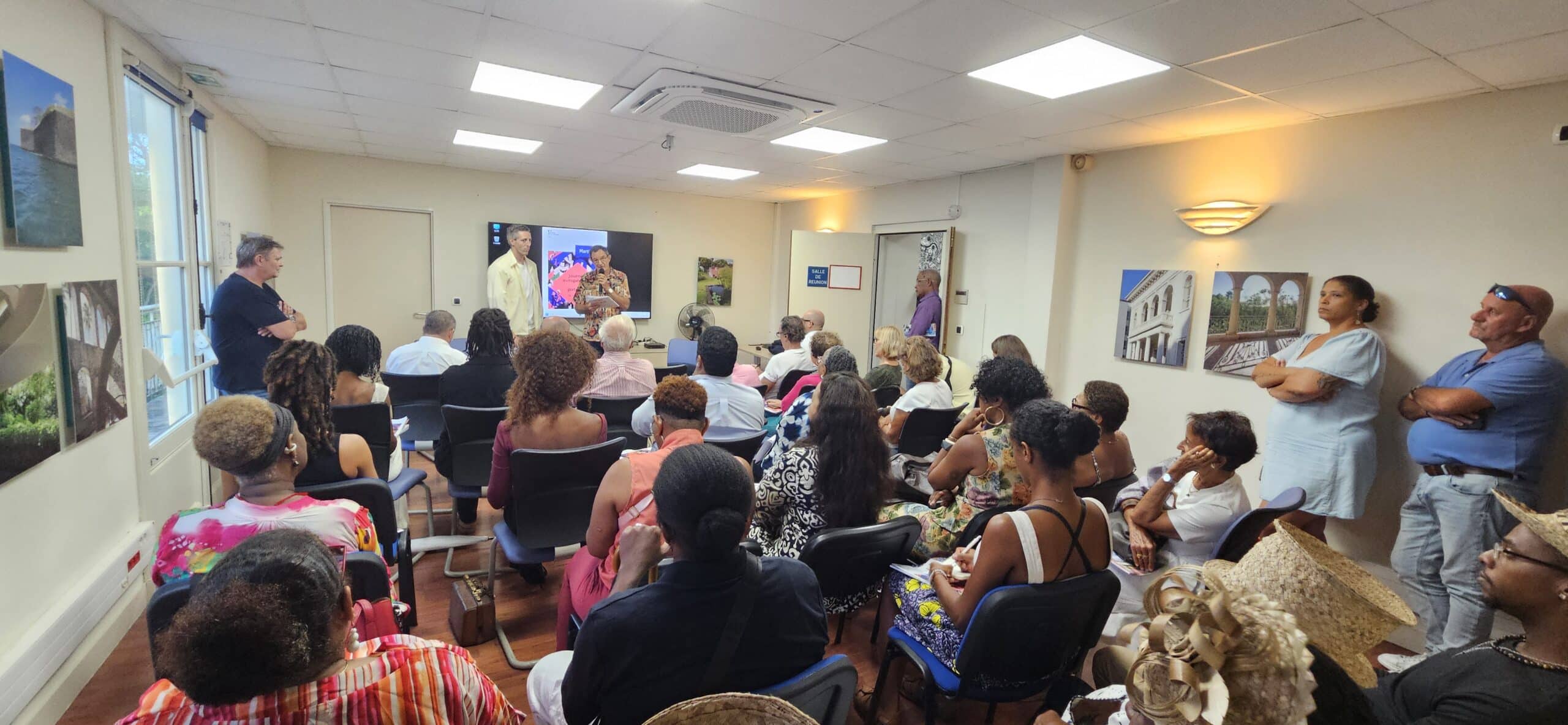
The Caribbean Connect project marks a decisive step forward for Guadeloupe, Martinique and Puerto Rico. Officially presented on October 15 at the Canal Média building in Baie-Mahault, this new ultra-high-speed submarine infrastructure, supported by the CANAL+ Group, aims to strengthen the connectivity of the Antilles-Guyane territories and secure their place in the great global digital network.

An urgent need for modernization

Behind this technical name, this project responds to an essential challenge: connecting to the world.
Until now, Guadeloupe and Martinique have depended on an aging submarine cable, which has become inadequate to cope with the rapid growth in demand for connectivity – an increase of over 40% per year.

For Aymé Makuta Mbumba, Managing Director of CANAL+ Télécom, this development had become essential:

“Today, the Internet depends on two things: terrestrial infrastructures and the link with the global Internet. Caribbean Connect is the undersea railroad that links our territories to the rest of the global network.”

With a capacity of 300 Gb/s, it will multiply speeds, reduce latency and ensure a stable, fluid connection for individuals, businesses and public authorities. This cable symbolizes our determination to anchor territories in a sustainable, high-performance digital continuity.

Caribbean Connect
Aymé Makuta Mbumba

European funding for local development

This project is 70% co-financed by the European Union as part of the Connecting Europe Facility (CEF Digital) program, for a total investment of almost 6 million euros.
Present at the conference, Yves Dareau, Secretary General for Regional Affairs, hailed “an emblematic and concrete project, supported by a Europe that connects and invests in the future of its overseas territories”.

This cooperation between public institutions and private players illustrates Europe’s determination to strengthen the digital resilience of its outermost regions.
For her part, Alice Bourrouet, representative of the European executive agency HaDEA, emphasized:

“Financing Caribbean Connect means investing in local communities, their inhabitants and their capacity to innovate.

Caribbean Connect
Alice Bourrouet

An exemplary partnership between Europe and the French West Indies and French Guiana

The Guadeloupe Region, represented by Aurélie Bitufwila, President of the Digital Commission, played a key role in bringing the project to fruition. Its presence at the conference testifies to the strong support of local institutions for this strategic infrastructure.
Caribbean Connect is not just a technological project: it embodies successful cooperation between Europe and the French overseas territories, in the service of inclusion and digital sovereignty.

Caribbean Connect
Caribbean Connect

CANAL+ Antilles-Guyane: connect, create, transmit

The presentation continued with Sébastien Punturello, new General Manager of CANAL+ Antilles-Guyane, who placed Caribbean Connect within the group’s global vision:

“This cable is essential infrastructure, but it’s also a symbol: that of a group that believes in the power of links – those of connectivity as well as those of cultural development.”

At the same time, the group continues to accelerate the rollout of fiber optics, already accessible to 80% of Guadeloupe households, and supports more than twenty local productions each year (Zion, Wish, Toutoune…).
In this way, it is part of a broader approach to transmission, access to culture and regional innovation, serving social cohesion as much as technological progress.

Caribbean Connect
Sébastien Punturello

A lever for the regional digital economy

Caribbean Connect is scheduled to go live progressively in 2025, followed by the arrival of new services from 2026: local hosting, datacenters and regional interconnections.
This infrastructure marks a strategic turning point for the Antilles-Guyane digital economy. By guaranteeing a fast, stable and sovereign connection, it opens up new opportunities for local businesses in the fields of tech, education, health and e-commerce.

Caribbean Connect represents a major technological advance, but also an act of sovereignty. By enabling overseas territories to retain control over their infrastructures, it paves the way for long-awaited digital autonomy in the region.

A symbol of unity and the future

Caribbean Connect connects communities, economies and shared ambitions.
Its launch illustrates our collective determination to build a future where distance is no longer an obstacle, but a driving force for unity and shared development.

By consolidating the position of the French West Indies and French Guiana in the global digital ecosystem, Caribbean Connect proves that connectivity is not just a matter of cables: it’s a shared desire to build the future together, between the islands and the world.

Leave a Reply

Your email address will not be published. Required fields are marked *

More articles from RK

Vol direct entre Saint-Kitts et Nigeria
AIR
Tolotra

Direct flight between Saint Kitts and Nigeria: a new strategic route for the Caribbean and Africa

Direct flight between Saint Kitts and Nigeria is part of a more profound evolution in relations between the Caribbean and the African continent. On March 21, 2026, a charter flight left Robert L. Bradshaw International Airport with over 100 passengers from eight Caribbean territories. The aircraft landed the next day in Abuja, Nigeria, marking a concrete break with traditional travel routes. This journey is more than just a logistical feat. It embodies a political will: to reduce dependence on European and North American hubs, and to structure direct connections between two regions that have historically been linked, but are still poorly connected in practice. A break with imposed routes Until now, travelling to Africa from the Caribbean involved long and costly detours. Multiple stopovers, long journey times, administrative complexity: these constraints limited exchanges, particularly economic ones. This direct flight between St. Kitts and Nigeria changes all that. It doesn’t just

Read More »
Patrimoines en Lumières
EVENT MANAGEMENT
Tolotra

Patrimoines en Lumières 2026: Basse-Terre confirms its cultural ambitions in Guadeloupe

From April 29 to May 3, 2026, the city of Basse-Terre will host the second edition of the festival Patrimoines en Lumières 2026is now a fixture on the Guadeloupean cultural calendar. After a highly acclaimed first edition in 2024, this biennial event has established itself as a structuring initiative, at the crossroads of heritage enhancement and contemporary artistic creation. Conceived as a truly immersive journey, the festival transforms the capital into a living space where monuments, public spaces and emblematic sites become the mediums for a renewed artistic narrative. For five days, residents and visitors alike will rediscover Basse-Terre through a rich, accessible program deeply rooted in the region’s identity. A festival that gives new meaning to Basse-Terre’s heritage With Patrimoines en Lumières 2026, the City of Basse-Terre is asserting a clear vision: to make heritage a lever for cultural, social and territorial development. The Guadeloupean capital has been awarded

Read More »
Traité de Concordia
HISTORY & HERITAGE
Tolotra

Treaty of Concordia: how was Saint-Martin partitioned in 1648?

March 23, 1648 occupies a special place in Caribbean history. On that day, the French and Dutch signed the Concordia Treaty an agreement organizing the division of the island of Saint-Martin. More than three centuries later, this particularity remains one of the Caribbean’s most striking historical facts: the same island, two administrations, a land border that has become one of the region’s most singular. A strategic island at the heart of European rivalries Before it was divided, Saint-Martin was a coveted island. Its position in the north of the Lesser Antilles made it an important foothold, but it was above all its natural saltworks that attracted Europeans in the 17th century. At the time, salt was an essential resource for preserving foodstuffs, and thus a major economic issue. The Spanish, French and Dutch followed in their footsteps. In 1633, Spain imposed its control over the island to secure its maritime

Read More »

conTACT RK

we'd love to have your feedback on your experience so far

Join The List

Join our Richès Karayib community!  Sign up for our newsletter.

Want To Maximize Your Business Presence On Riches Karayib?

Complete the form to start the application