Merengue: the rhythm that tells the story of the Dominican Republic

Merengue

Merengue, the living legacy of Dominican culture, brings together music, dance, memory and identity. Every November 26, the people of the Dominican Republic dedicate a national day to it, reminding us of the importance of this rhythm that accompanies moments of collective joy as much as intimate moments. But behind its solar energy lies a rich, deeply Caribbean history, which continues to evolve and assert itself on the international scene.

A popular symbol turned cultural heritage

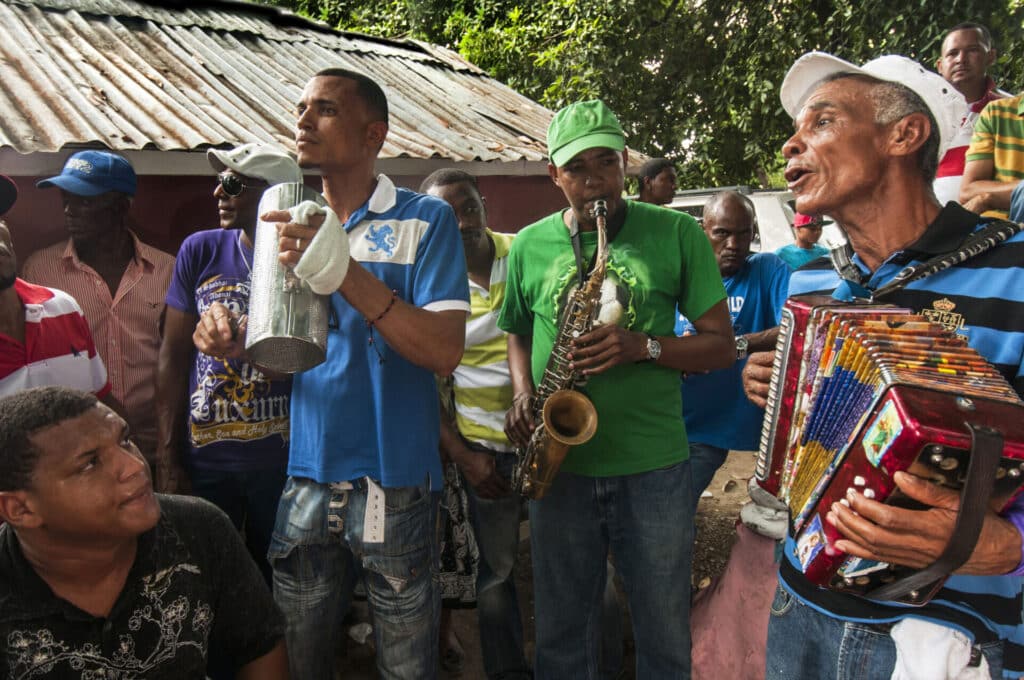
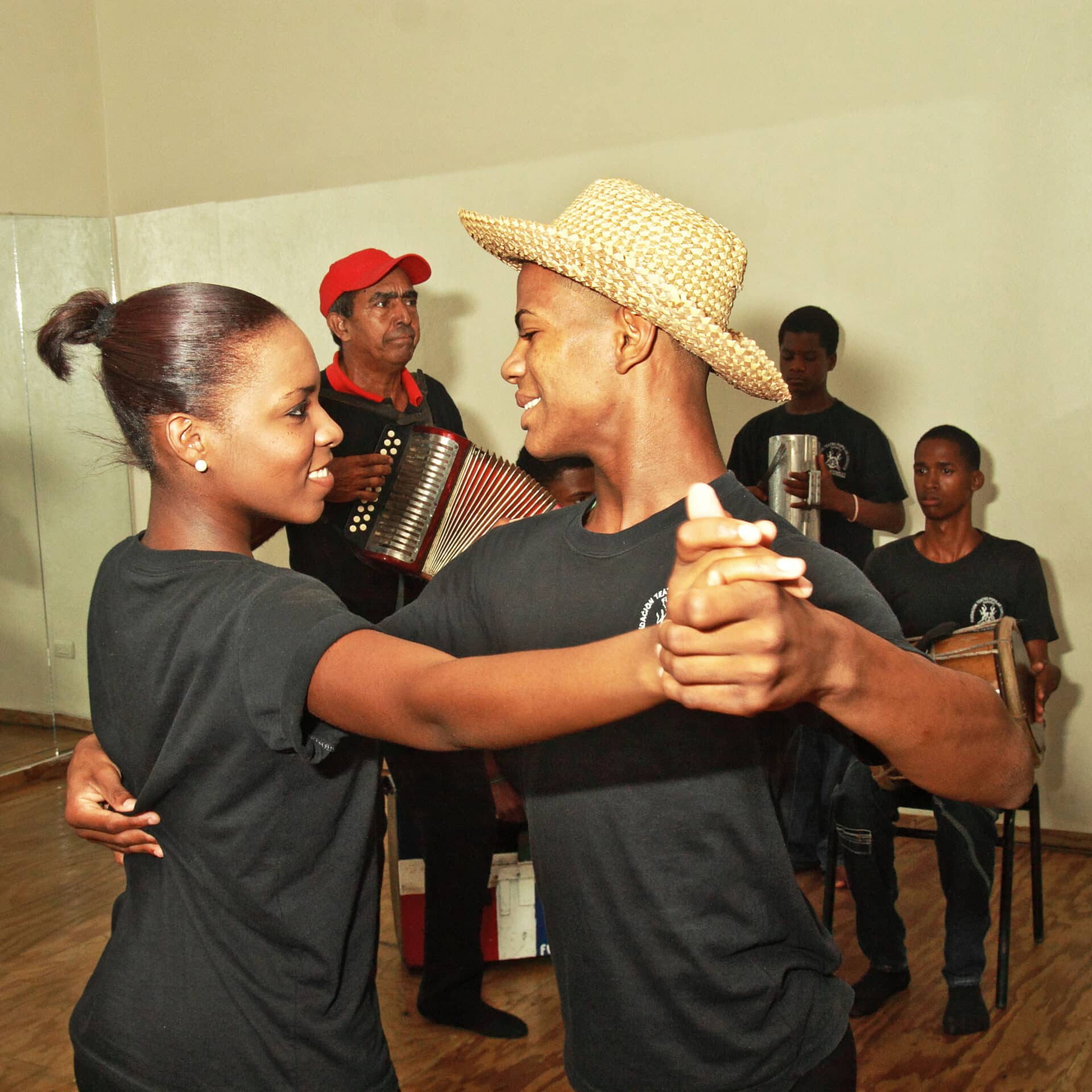
Before it became a UNESCO World Heritage Site, Merengue was already the heartbeat of the country. You can hear it at village parties, carnivals, family gatherings or Santo Domingo clubs. A few gliding steps are all it takes to get into the dance: its accessibility explains its popularity and its ability to bring together all generations.

Over time, it has established itself as a marker of identity. In the diaspora, it has become an intimate link with the island: a shared piece of memory that takes us back to the streets, the voices and that unique way of celebrating life.

Merengue
ยฉMinisterio de Cultura de la Repรบblica Dominicana, 2012

Where does Merengue come from? A history of encounters

Its history takes root in the XIXแต‰ century in the Cibao countryside. From the outset, this rhythm has been distinguished by its multiple influences.

  • – African heritages, visible in the percussion, the body anchoring and the importance of rhythm.
  • – European influences, inspired by ballroom dancing, reinterpreted by local musicians.
  • – Indigenous traces, in the way daily life is told and in the use of instruments from ancient island traditions.

Long considered too rural by the elites of the time, Merengue gradually spread thanks to urbanization and new means of communication: radios, cabarets, modern orchestras. In the XXแต‰ century, it became a respected genre, adopted in schools, balls, official events and major national celebrations.

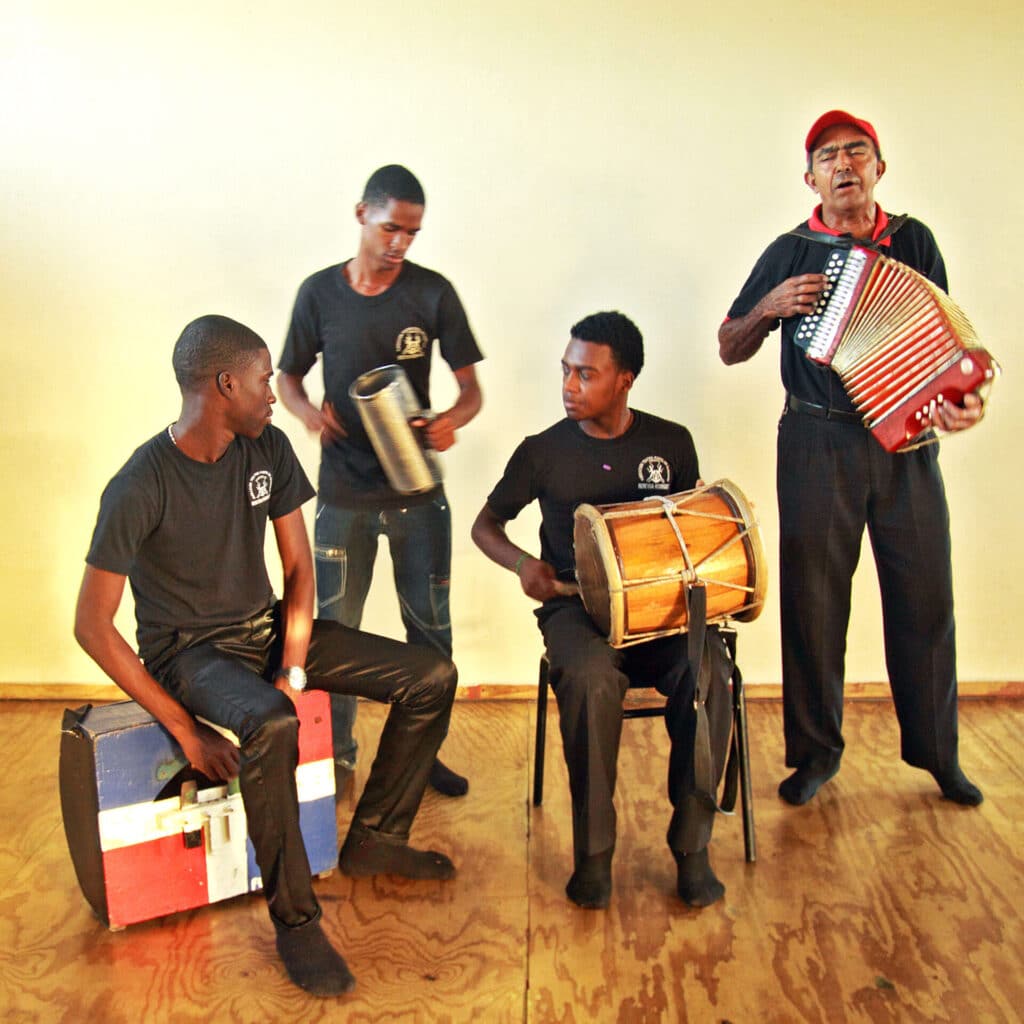
Tambora, gรผira, accordion: the sound soul of Merengue

Merengue can only be fully understood by listening to its flagship instruments, each of which has its own story to tell.

The tambora

This two-skinned drum, inherited from African traditions, sets the pulse of the piece. Its continuous rhythm immediately incites the listener to dance.

La gรผira

A metal cylinder rubbed at regular intervals, the gรผira gives the rhythm its characteristic texture. It is one of Merengue’s most recognizable signatures.

Merengue
ยฉMinisterio de Cultura de la Repรบblica Dominicana, 2012

The accordion

Introduced by European settlers, it carries the main melody. Its rapid, light phrases give the genre its singular vitality. As orchestrations evolved, saxophones, electric bass and keyboards were added to the original trio, modernizing Merengue without altering its essence.

Merengue
ยฉMinisterio de Cultura de la Repรบblica Dominicana, 2012

A living heritage, handed down from generation to generation

It was passed on informally: family celebrations, religious celebrations, community gatherings. This mode of transmission has shaped a living heritage, continually reinvented.

Today, many artists are fusing it with pop, urban or electronic influences, without breaking with the traditional structure. This ability to evolve while preserving its foundations explains not only its cultural importance in the Dominican Republic, but also its impact on the rest of the Caribbean. The fact that Merengue has been declared a UNESCO World Heritage Site has helped to highlight this dynamic: Merengue is not set in stone. It breathes, adapts and exports.

Merengue
ยฉMinisterio de Cultura de la Repรบblica Dominicana, 2012
Merengue
ยฉMinisterio de Cultura de la Repรบblica Dominicana, 2012

National Merengue Day: a tribute that transcends borders

Every November 26, the streets of Santo Domingo and the country’s main cities come alive with free concerts, dance workshops, tributes to the pioneers of the genre and special broadcasts.

Traditional orchestras rub shoulders with new generations of artists, offering a complete panorama of the evolution of Merengue.

The Dominican diaspora also plays an essential role. In New York, Miami, Madrid or Montreal, community events are organized to celebrate this day, reminding us that it is part of the cultural expressions that travel with their peoples.

In this way, National Day is not just a local celebration: it embodies the enduring attachment of a worldwide community to a rhythm that has become a symbol of identity.

Merengue
ยฉMinisterio de Cultura de la Repรบblica Dominicana, 2012
Merengue
ยฉMinisterio de Cultura de la Repรบblica Dominicana, 2012
Merengue
ยฉMinisterio de Cultura de la Repรบblica Dominicana, 2012

A rhythm that tells the story of an entire country

Merengue is more than just festive music. It’s a language that expresses a way of understanding the world, an intimate relationship with joy, sharing and memory. It tells the story of a people, its migrations, its struggles, its celebrations.

Thanks to its roots in everyday life and its ability to bring people together, it remains one of the Dominican Republic’s strongest cultural expressions. Its energy, recognizable from the very first bars, bears witness to a culture that lives, breathes and crosses generations.

FAQ

Merengue has its origins in the XIXแต‰ century in the Cibao countryside, where African, European and native influences mingle.

Because it embodies the country’s cultural identity, accompanies major celebrations and reflects the social history of the Dominican people.

The tambora, gรผira and accordion form the sound basis of Merengue, to which saxophones, bass and keyboards have now been added.

Leave a Reply

Your email address will not be published. Required fields are marked *

More articles from RK

Marcus Garvey
HISTORY & HERITAGE
Tolotra

Jamaica – Marcus Garvey, Jamaican hero of international renown

Marcus Garvey remains one of the most influential figures to emerge from the Caribbean. Born in Jamaica at the end of the 19th century, he transformed a local experience into a political and cultural project of international scope. At a time when black populations faced deeply rooted systems of exclusion, Marcus Garvey proposed a structured vision based on dignity, organization and autonomy. Recognized today as a national hero in Jamaica, he is much more than a historical symbol. His story helps us understand how the Caribbean helped shape major intellectual and political movements on a global scale. His name continues to circulate in contemporary debates on identity, memory and the development of societies born out of colonial history. From Jamaican origins to the formation of a committed conscience He was born on August 17, 1887 in St. Ann’s Bay, Jamaica, into a modest family. Very early on, he developed a

Read More ยป
BlueSeas Festival
EVENT MANAGEMENT
Tolotra

BlueSeas Festival: in Curaรงao, Pietermaai becomes the epicenter of Caribbean blues in 2026

From April 2 to 4, 2026, Curaรงao hosts another edition of the BlueSeas Festival a musical event that is gradually establishing itself as one of the most unique cultural events in the Caribbean. Free, open and rooted in the urban space, the festival goes far beyond simple musical programming to become a genuine territorial experience. Right from the opening night, Thursday April 2 at Kura Hulanda Village, the mood is set: the blues settle into a heritage setting, before taking full possession of the Pietermaai district on April 3 and 4. This two-stage format structures an immersive experience in which music, architecture and local life are seamlessly interwoven. A free festival that transforms the city into an open-air stage The BlueSeas Festival is based on the principle of offering free concerts in public spaces. This choice is not insignificant. It widens access to live music, while creating direct interaction between

Read More ยป
Le vodou : Haรฏti au cล“ur dโ€™une candidature patrimoniale majeure avec le Bรฉnin
COOPERATION
Tolotra

Vodou: Haiti at the heart of a major heritage bid with Benin

The vodou is entering a new phase in its international history. The joint candidacy of Haiti and Benin for inscription on the Representative List of the Intangible Cultural Heritage of Humanity places centuries of memory, transmission and creation at the heart of a global heritage debate. The deadline set by UNESCO for applications to be examined in 2027, and submitted before March 31, 2026, places this initiative within a precise and structured institutional calendar, but the stakes go far beyond the administrative procedure. For the Caribbean, and Haiti in particular, this candidacy is no mere cultural formality. It’s about recognizing a living heritage, often misunderstood, sometimes caricatured, but deeply rooted in the country’s social, artistic and spiritual history. Vodou is not a fixed folklore; it is a cultural matrix, a way of organizing the link between generations, communities and the sacred. To place it within an international heritage dynamic is

Read More ยป

conTACT RK

we'd love to have your feedback on your experience so far

Join The List

Join our Richรจs Karayib community! ย Sign up for our newsletter.

Want To Maximize Your Business Presence On Riches Karayib?

Complete the form to start the application