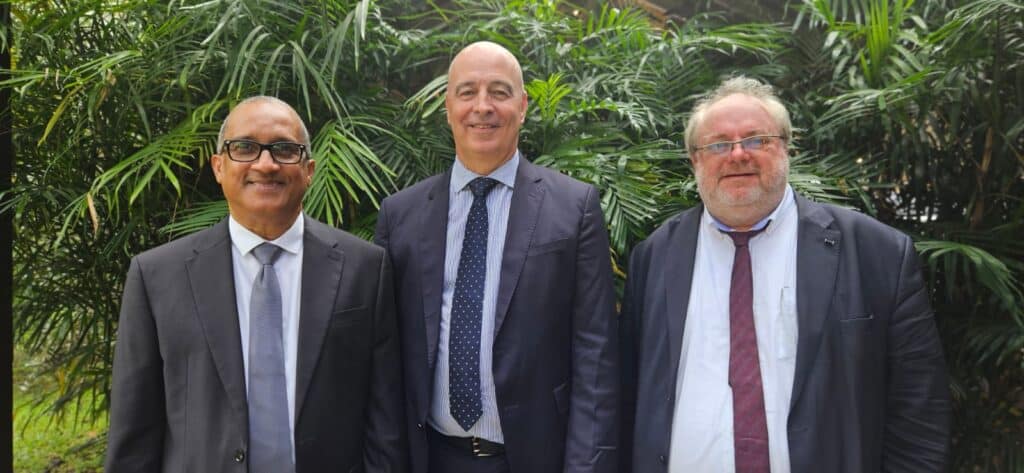
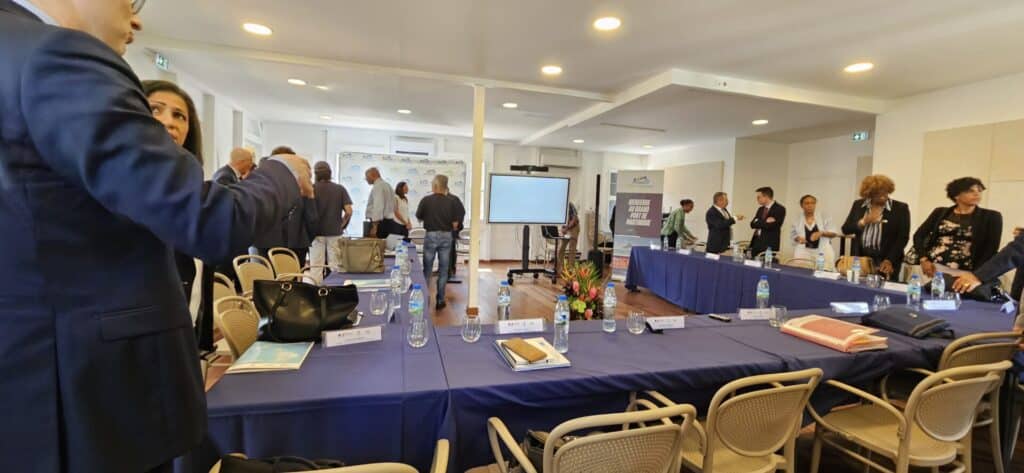
The Conseil de Coordination Interportuaire Antilles-Guyane (CCIAG ) met on December 12, 2025 at Habitation Le PALM in Martinique. This annual meeting, provided for in the French Transport Code, has become a major lever for inter-territorial governance between Guadeloupe, Martinique and French Guiana.
Supported by the French State and the three Grands Ports Maritimes, the CCIAG aims to reinforce the coherence of port policies, support the economic resilience of the territories and ensure the long-term inclusion of the South-Caribbean axis in a dynamic of regional cooperation.
Collegial governance at the service of territories
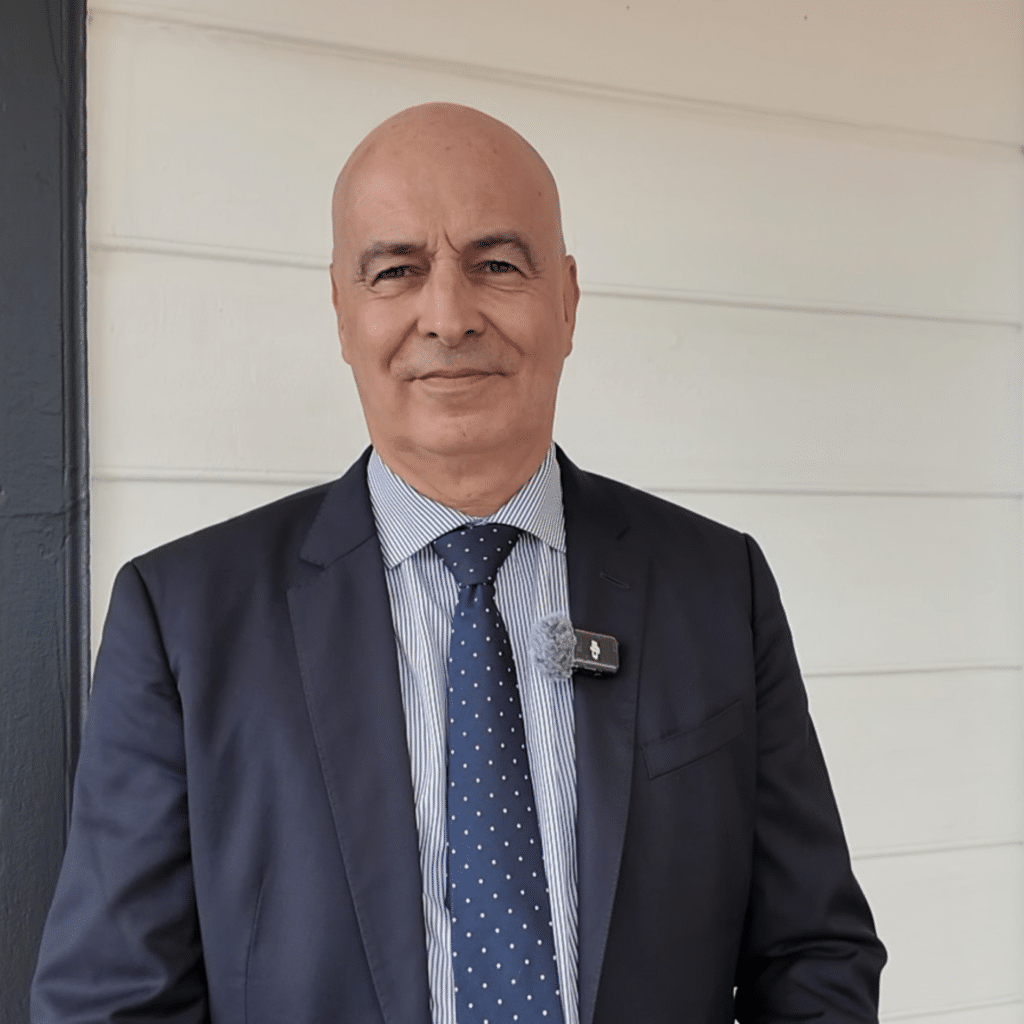
“The CCIAG is more than a technical body: it’s a forum for strategic dialogue with representatives of the State, local authorities and ports,” emphasizes Bruno Mencé, Chairman of the Board of the Grand Port Maritime de la Martinique.
The CCIAG ensures that port policies are regularly aligned with national guidelines and local needs. Each year, the three ports pool their experience and define joint priorities: safety, connectivity, ecological transition and logistics competitiveness.

Jean-Pierre Chalus, Chairman of the Board of the Port of Guadeloupe, insists that this shared governance allows for concrete monitoring of progress and difficulties:
“Every year, we have an update on the orientations voted collectively, which enables us to point out our progress, our difficulties, and to continue on our way.”
He also emphasizes the growing mobilization of teams around environmental issues:
“There is a lot of enthusiasm from all the ports to invest in energy, ecological and other transitions, serving the sustainable development of our territories.”
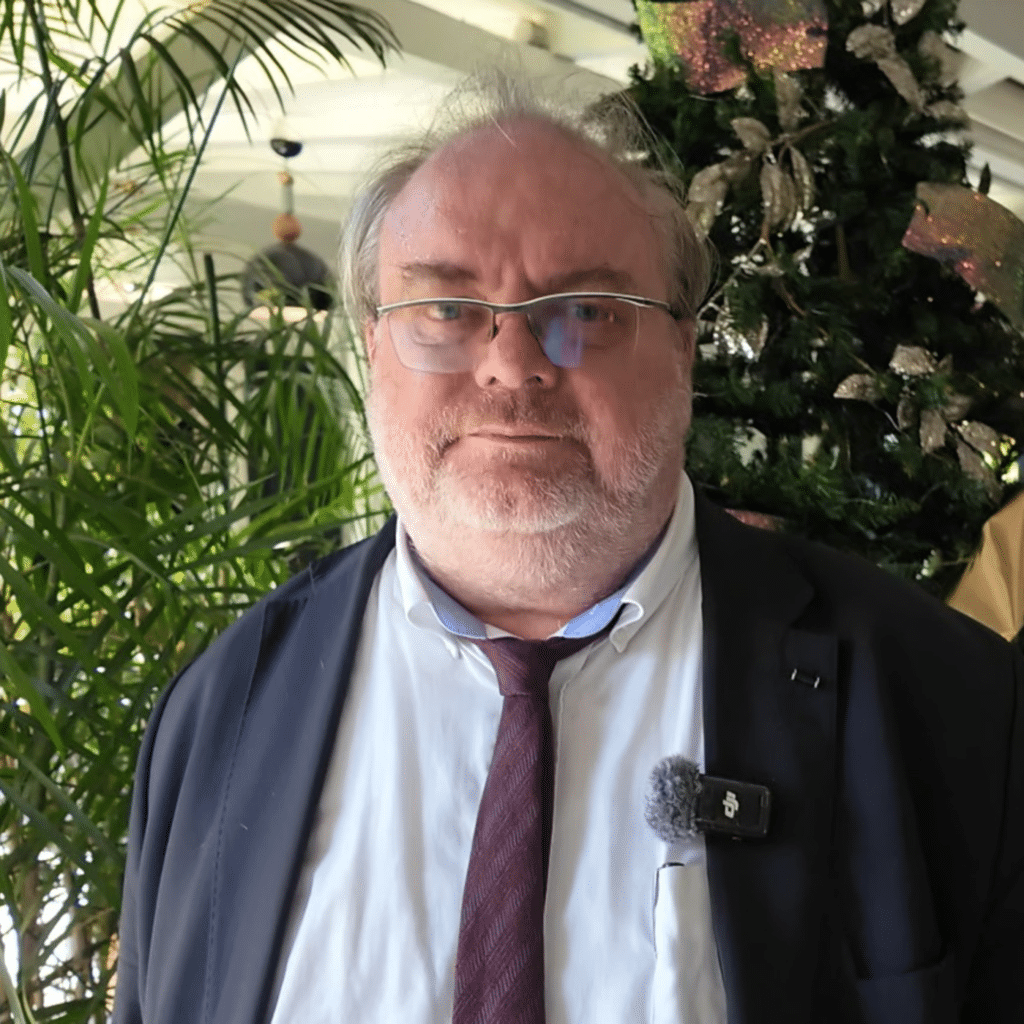
Stéphane Tant, Chairman of the Board of the Grand Port Maritime de la Guyane, stresses the importance of this annual meeting:
“It’s a meeting that enables us to exchange views not only between ports, but also with elected representatives, the DGOM (Direction Générale des Outre-mer) and the DGITM (Direction Générale des Infrastructures, des Transports et de la Mer), on our common challenges, our development needs and our roadmap.
He emphasizes that the CCIAG is about more than just the port, it’s about economic development and regional connectivity.
A common roadmap and concrete actions
The 2025-2029 roadmap, defined collectively by all the players within the CCIAG, focuses on major areas such as decarbonization, port safety, innovation and adaptation to climate change. Bruno Mencé explains:
“We have to guarantee an identical level of safety and security in our three ports, corresponding to the needs of our customers and the territories.”
He also stresses the importance of regional cooperation with PMAC (Port Management Association of the Caribbean) to create a Caribbean economic observatory:
“It’s a truly Caribbean project that we’re working on with PMAC, i.e. with all Caribbean ports,” explains Bruno Mencé.
The aim is to gain a better understanding of how shipping lines work, and to identify ways of developing trade with neighboring islands.
Jean-Pierre Chalus points out that this roadmap makes it possible to deal with strategic subjects such as inter-territorial services:
“Regular service to French Guiana, Guadeloupe and Martinique is an important factor for our territories, for both economic and political players.”
He also emphasizes the role of technical meetings held throughout the year between port departments, to ensure continuous progress.
Among the concrete actions already undertaken, he cites the joint signing of a commitment with the IUCN (International Union for Conservation of Nature) on the management of invasive exotic species, reflecting the ports’ involvement in shared environmental issues.
Stéphane Tant, highlights the prospects for enhanced cooperation with the The Guianas, within the framework of a biannual conference between French Guiana, Guyana, Suriname and two Brazilian states (Amapá and Pará):
“We are leading a cooperation conference of the ports of The Guianas.”
This initiative complements the work of the CCIAG by extending regional connections to South America.
A shared vision: overcoming insularity
The CCIAG has a shared ambition that goes beyond mere coordination between ports. By bringing together port directors, government representatives, local authorities and the chairmen of supervisory boards, this body promotes a global approach to logistics and territorial development.
All participants agreed on one thing: port performance can no longer be thought of in isolation. It depends on broader governance, capable of connecting public policies, economic issues and environmental imperatives. This common framework will enable us to lay the foundations for more resilient, better integrated logistics, geared towards the Greater Caribbean as a whole.
In 2026, this dynamic will continue in French Guiana, at the next plenary session. An eagerly-awaited meeting to deepen this multi-stakeholder cooperation and consolidate the foundations of regional logistical sovereignty.
FAQ
The Conseil de Coordination Interportuaire Antilles-Guyane (CCIAG) is a body set up under the French Transport Code, bringing together the French government, local authorities and the three Grands Ports Maritimes of Guadeloupe, Martinique and French Guiana. Its aim is to coordinate port policies, reinforce regional logistics coherence and support regional economic development.
The 2025-2029 roadmap focuses on several priorities: decarbonizing port activities, safety and security, adapting to climate change, logistics innovation and strengthening regional connectivity, particularly with the Caribbean and the Guyana Plateau.
By promoting shared governance between ports, the French government and local authorities, the CCIAG enables us to move beyond a strictly insular approach. It contributes to structuring more resilient logistics, improving the regularity of maritime services, and placing the Antilles-Guyane territories in a broader regional cooperation dynamic.