
Tobago, a Caribbean island that chooses to measure up

Tobago

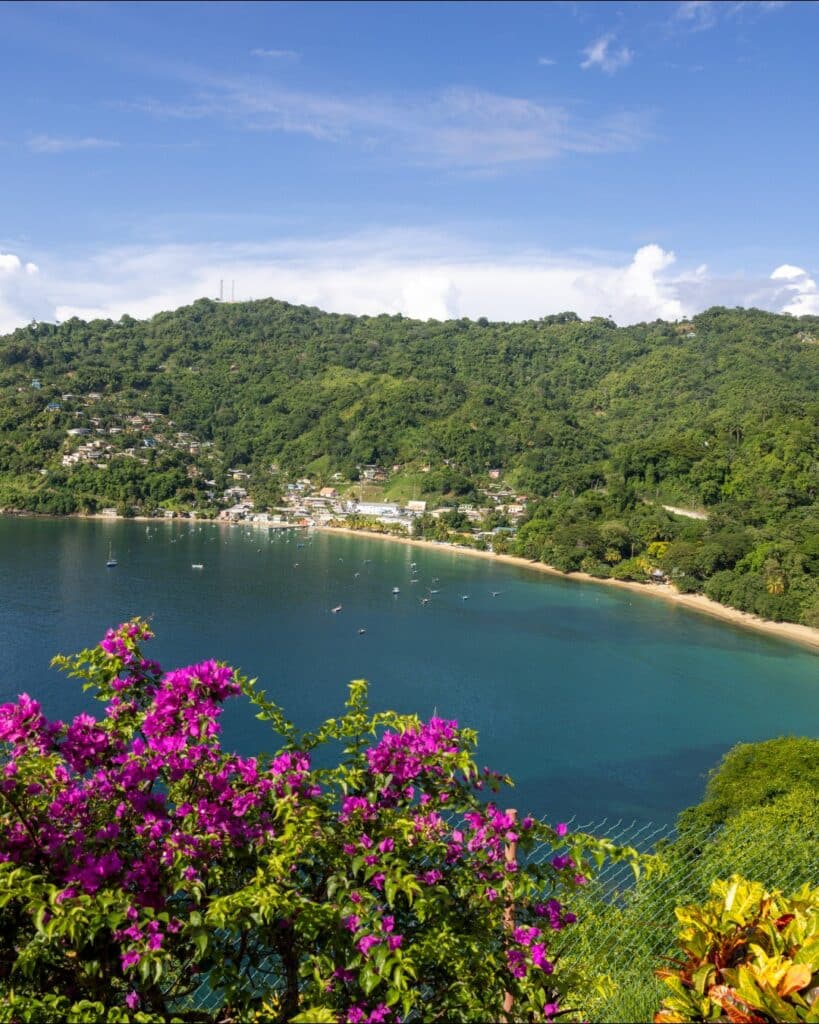
Tobago is often summed up in a few words: beaches, reefs, nature. Yet the island deserves more than a quick summary. Small in size but dense in what it has to offer, the island embodies a thoughtful Caribbean, where the territory has never yielded to excess. Here, tourism has developed without overshadowing local life, and nature remains a structuring framework.

Tobago
©Tobago
Tobago
Tobago

A separate island within Trinidad and Tobago

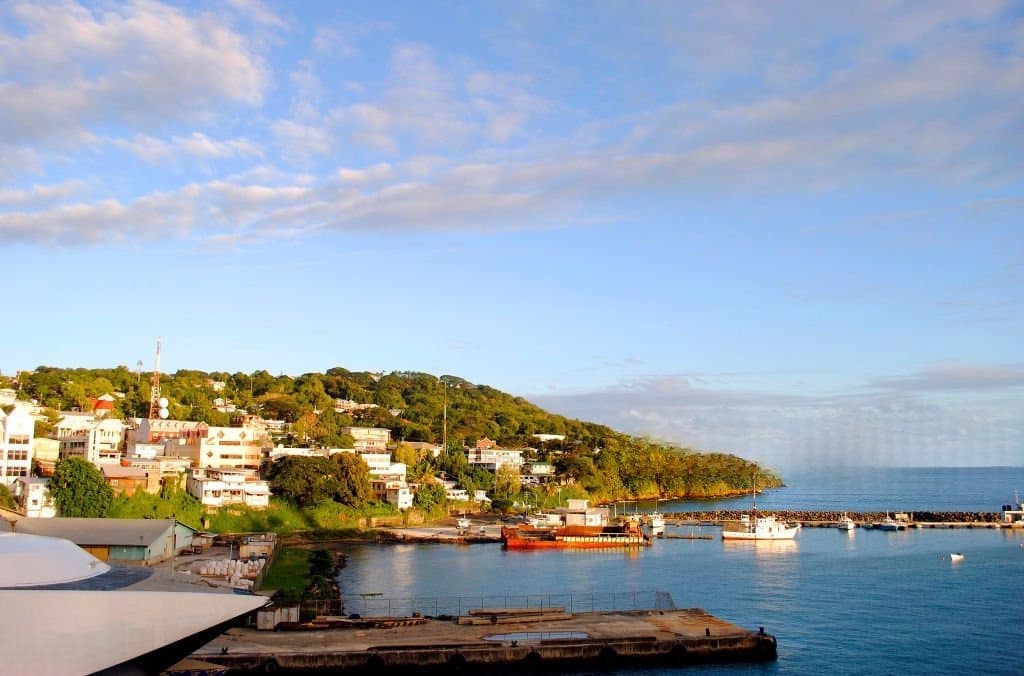
Situated in the south of the Caribbean arc, it has formed an independent state with Trinidad since 1962. Unlike its big industrial sister, the island has retained a resolutely insular profile. The island covers just over 300 km² and has a population of around 60,000. This small scale has a direct influence on the visitor experience: short distances, limited traffic, simple human relationships.

Scarborough, the capital, concentrates the administration and part of the commercial activity. Elsewhere, coastal villages and rural areas structure daily life. It’s not trying to compete with the big seaside destinations; it’s asserting a different logic, based on continuity and stability.

Tobago

Nature protected for centuries

One of Tobago’s strong points is its long-standing commitment to environmental protection. Buccoo Reef Marine Park officially created in the 1970s, is one of the oldest protected marine areas in the Caribbean. This shallow reef plays a central role in the coastal ecosystem and in the local economy, notably through artisanal fishing and supervised nautical activities.

Tobago
©Buccoo Reef Trust
©Buccoo Reef Trust

Inland, the Main Ridge Forest Reserve established in 1776, is often cited as the world’s oldest protected forest reserve. This forest covers a large part of the island’s backbone, helping to regulate the climate, preserve the soil and feed watercourses. For visitors, it offers a distinct counterpoint to the beaches: shady paths, gentle slopes, wildlife observation.

Tobago
©Stephen Kangal
Tobago
©Stephen Kangal
Tobago
©Stephen Kangal

Open, unstaged beaches

The island’s beaches are numerous and varied. Some, like Pigeon Point and Store Bay, are easily accessible and well developed. Others, on the east coast, are more exposed to the wind and less frequented. What they all have in common is the absence of massive beachfront constructions. Beaches remain public spaces, integrated into daily life.

This configuration attracts family tourism, independent travelers and visitors looking for extended stays. The island is not a quick stopover destination; it can be discovered over several days, sometimes weeks.

Tobago
©Tobago
Tobago

A culture rooted in continuity

The culture is the result of a long mixing of African heritage, British influences and Caribbean contributions. The English language structures the public space, but cultural practices remain profoundly local. Music, cuisine and community festivities are first conceived for the locals before being shared with visitors.

The Tobago Heritage Festival organized each year, illustrates this approach. It showcases villages, oral histories, dances and skills, without excessive staging. For the visitor, it’s an opportunity to observe a living culture, not a static one.

Tobago
Tobago
©Tobago
Tobago
Tobago Tourism Agency
Tobago
©Tobago heritage Festival

Controlled tourism

Accommodation on the island is deliberately modest. There are medium-sized hotels, guest houses and independent rentals. Large resorts are rare and concentrated in specific areas. This strategy limits pressure on infrastructure and natural resources.

Local authorities, including the Tobago House of Assembly. The local authorities play a central role in regional planning. Decisions relating to tourism, the environment and transport are often taken on an island-wide basis, which reinforces the coherence of the choices made.

A clear destination for travellers

Tobago is accessible by regional and international flights via A.N.R. Robinson International Airport. Entry formalities are straightforward for many travelers, and the island has sufficient infrastructure for a comfortable stay without excess.

For tourists, it represents a well-balanced destination: beaches, nature, culture and services are all present, without permanent competition between these elements. The island doesn’t seek to surprise, but to last.

Tobago
©Tobago

Highlighting the island today means underlining that another trajectory is possible in the Caribbean. That of an island that has chosen protection, moderation and continuity. It’s not spectacular for its accumulation, but for the coherence of its model.

For travelers with an eye for how a territory develops, the island offers a rare example: an island that welcomes visitors without transforming itself excessively.

Tobago lies to the south of the Caribbean arc. Together with Trinidad, it forms the independent state of Trinidad and Tobago, off the coast of Venezuela.

Tobago is characterized by deliberately limited tourism, strong protection of its reefs and forests, and local life that is still very much alive.

Yes, the island offers a stable environment, sufficient infrastructure and a pace of life conducive to stays of several weeks, without excessive tourist pressure.

Leave a Reply

Your email address will not be published. Required fields are marked *

More articles from RK

NEWS
Tolotra

Philippe Faure-Brac at Habitation Clément: Martinique rum as seen by a great sommelier.

Philippe Faure-Brac had never visited Habitation Clément before. World’s Best Sommelier 1992, member of the Meilleurs Ouvriers de France with honorary status since 2015, he came to Martinique to look at rhum agricole from its very place of production: the cane, the cellars, the bottling and the tasting. A first visit to Habitation Clément AtHabitation Clément, in Le François, this visit had a special significance. Philippe Faure-Brac was already familiar with Clément rums, their quality positioning and their universe. He had also contributed to the book Rhum Clément, une histoire de famille, bringing his insight into the house’s aromatic precision, balance and tradition of excellence. But he lacked the experience of the place. That of the light, the temperature, the atmosphere of the winery and the exchanges with the teams. “The first time in Martinique? I was going to say finally,” he confided, recalling that he had been hoping for

Read More »
Boiling Lake
TOURISM
Tolotra

Boiling Lake: 92 °C, 63 m wide, the 2nd largest bubbling lake in the world

Just 8 kilometers east of Roseau, the capital of Dominica, it’s a three-hour walk from Laudat to Boiling Lake. Three hours of humid forest, desolate valley, soil-heated rocks and sulfurous fumes. At the end of the path, a 63-metre-wide pool. Inside, the water bubbles almost continuously, with temperatures measured up to 91.6°C at the edges. It’s the second largest bubbling lake in the world. A rare phenomenon in a UNESCO park The world’s first is Frying Pan Lake in New Zealand’s Waimangu Valley. But the Dominican Boiling Lake is in a class of its own. Firstly, because it can only be reached on foot, after a demanding hike. Secondly, because it is part of a national park that has been a UNESCO World Heritage Site since 1997: Morne Trois Pitons National Park. This makes it one of the most singular geothermal phenomena protected in a world-renowned natural site. A flooded,

Read More »
Tourisme 3.0
TOURISM
Tolotra

Tourism 3.0: Jamaica wants to keep its tourist wealth

At the Montego Bay Convention Centre, the image speaks for itself. Local entrepreneurs showcase their products, hotel representatives circulate, meetings follow one another. Behind these rapid exchanges, one question weighs heavily: when tourism makes money, how much really stays in Jamaica? This is at the heart of Tourism 3.0, the new direction championed by Jamaica’s Minister of Tourism, Edmund Bartlett. At the Tourism Enhancement Fund’s 11th Speed Networking Event, he set out a clear ambition: to make tourism a more direct driver for Jamaican producers, artisans, manufacturers and suppliers. Tourism that no longer just wants to attract Jamaica knows how to welcome visitors. But the challenge is no longer just to fill hotels or increase arrivals. The real challenge is to retain more value in the territory. Edmund Bartlett has recognized a structural weakness: a large proportion of the goods and services consumed by the tourism industry are still imported.

Read More »

conTACT RK

we'd love to have your feedback on your experience so far

Join The List

Join our Richès Karayib community!  Sign up for our newsletter.

Want To Maximize Your Business Presence On Riches Karayib?

Complete the form to start the application