Dominican Republic: Latin America’s second-biggest destination by 2025

République dominicaine

With almost 12 million visitors by 2025, the Dominican Republic is set to become Latin America’s second-largest tourist destination, just behind Mexico. The announcement was made on February 27, 2026 by Luis Abinader during his State of the Nation address on the occasion of Independence Day.

Behind this figure – over 11.7 million visitors to be precise – lie major economic, geopolitical and structural challenges for a region of 11.5 million inhabitants. Tourism performance contrasts with a slowdown in economic growth, from 5.1% in 2024 to 2.1% in 2025.

11.7 million visitors: a performance on a national scale

According to the Dominican Head of State, 2025 will see annual growth of 4.3%, i.e. almost 500,000 more visitors than in 2024, and over 4 million more than in 2019. One indicator is particularly striking: the country now receives more than one visitor per inhabitant. Few destinations achieve this ratio. In the Caribbean and Latin American space, this places the Dominican Republic in the category of the world’s major tourist powers. The country, which shares the island of Hispaniola with Haiti, thus confirms its position as a major hub for regional tourism.

République dominicaine

Cruises: over 3 million passengers

This performance is not based solely on air tourism. The Dominican Republic welcomed over 3 million cruise passengers in 2025, representing 6% growth over 2024. This maritime dynamic consolidates the country’s position on Caribbean itineraries. It also boosts indirect economic spin-offs: excursions, catering, port services and logistics.

Dominican tourism thus relies on a double strength:

  • – seaside resorts with high hotel capacity,
  • – the rise of cruise ports.
République dominicaine

Punta Cana and Santo Domingo: two structuring pillars

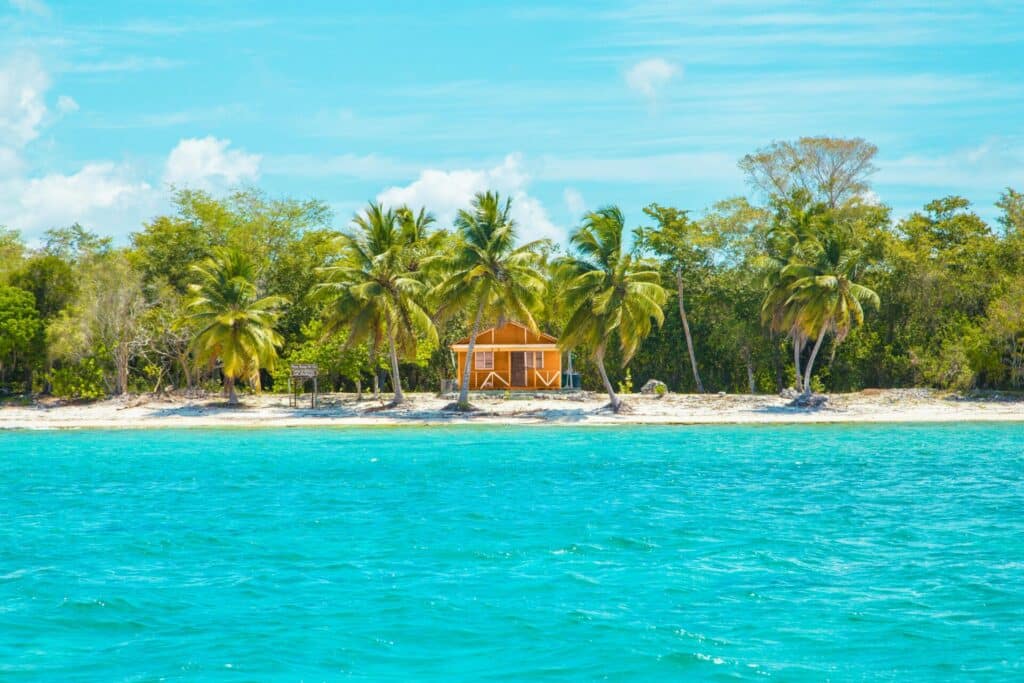
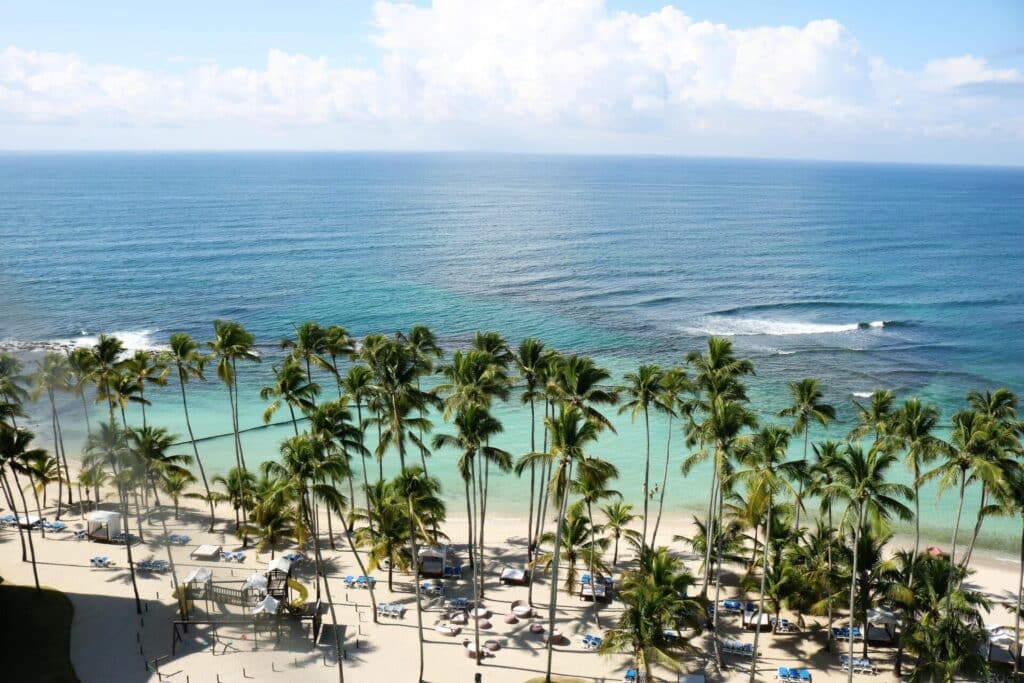
The Dominican Republic’s international reputation remains closely linked to its beaches, particularly those of Punta Cana in the east of the country. The all-inclusive model remains dominant, structured around large hotel complexes. Conversely, Santo Domingo offers a different view of the country, based on its colonial architecture and World Heritage-listed historic center. This seaside/heritage duality enables the destination to diversify its appeal.

It is precisely this combination that explains the resilience of the Dominican model: a massive offer, but also a cultural dimension that can be exploited.

République dominicaine

Economic growth slows sharply

While tourism is posting record figures, the Dominican economy is marking time. Growth has fallen to 2.1% in 2025, from 5.1% in 2024, below even the 2.5% forecast by the central bank. However, the President noted that by January 2026, growth had already reached 3.5%, with a projection of 4.5% for the current year.

This discrepancy between tourism performance and the global slowdown raises a central question: can tourism alone sustain national growth?

République dominicaine

The technological gamble: agreement with Google and space ambitions

During his speech, Luis Abinader mentioned an agreement worth over 500 million dollars signed with Google for the construction of the first international digital exchange port in Latin America. This project positions the Dominican Republic in the strategic field of digital infrastructures.

Even more symbolic was the announcement that no rocket or satellite would be launched from Dominican territory before 2028. This statement reflects the country’s determination to pursue a path of technological innovation that goes beyond tourism.

French market: a strategic objective

Around 150,000 French people visit the Dominican Republic every year. The French market is considered a priority, with a target of 260,000 French visitors by 2026. The resumption of direct flights by Air France reinforces this ambition. The country is also counting on the presence of the world’s largest Club Med on its territory to attract European customers.

For the wider Caribbean, this orientation confirms a strategic repositioning: consolidating Europe as a stable issuing market in the face of North American fluctuations.

Latin America's second-biggest destination: a strategic turning point

Becoming Latin America’s second-largest tourist destination is not just a political slogan. It’s a structural marker. With over 11.7 million visitors, annual growth of 4.3%, more than 3 million cruise passengers and an exceptional visitor/inhabitant ratio, the Dominican Republic has confirmed its status as a Caribbean powerhouse. But the year 2025 also shows that tourism performance does not automatically guarantee equivalent economic expansion.

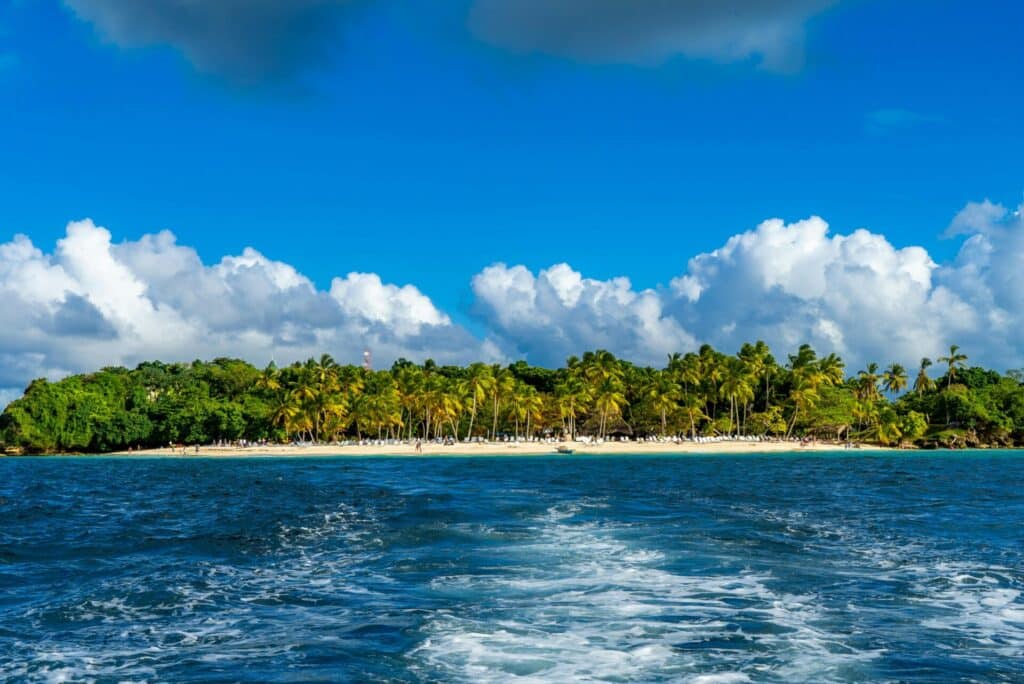
San Cristóbal Province, Dominican Republic
République dominicaine

The Dominican Republic welcomed over 11.7 million visitors in 2025, representing annual growth of 4.3%. This volume places the country just behind Mexico and confirms its status as a regional tourism powerhouse.

The country has registered over 3 million cruise passengers in 2025, up 6% on 2024. Marine tourism is a major pillar of the country’s tourism economy.

Despite record tourism performance, economic growth is forecast at 2.1% in 2025, compared with 5.1% in 2024. Projections for 2026 point to a rebound to around 4.5%.

Leave a Reply

Your email address will not be published. Required fields are marked *

More articles from RK

Marcus Garvey
HISTORY & HERITAGE
Tolotra

Jamaica – Marcus Garvey, Jamaican hero of international renown

Marcus Garvey remains one of the most influential figures to emerge from the Caribbean. Born in Jamaica at the end of the 19th century, he transformed a local experience into a political and cultural project of international scope. At a time when black populations faced deeply rooted systems of exclusion, Marcus Garvey proposed a structured vision based on dignity, organization and autonomy. Recognized today as a national hero in Jamaica, he is much more than a historical symbol. His story helps us understand how the Caribbean helped shape major intellectual and political movements on a global scale. His name continues to circulate in contemporary debates on identity, memory and the development of societies born out of colonial history. From Jamaican origins to the formation of a committed conscience He was born on August 17, 1887 in St. Ann’s Bay, Jamaica, into a modest family. Very early on, he developed a

Read More »
BlueSeas Festival
EVENT MANAGEMENT
Tolotra

BlueSeas Festival: in Curaçao, Pietermaai becomes the epicenter of Caribbean blues in 2026

From April 2 to 4, 2026, Curaçao hosts another edition of the BlueSeas Festival a musical event that is gradually establishing itself as one of the most unique cultural events in the Caribbean. Free, open and rooted in the urban space, the festival goes far beyond simple musical programming to become a genuine territorial experience. Right from the opening night, Thursday April 2 at Kura Hulanda Village, the mood is set: the blues settle into a heritage setting, before taking full possession of the Pietermaai district on April 3 and 4. This two-stage format structures an immersive experience in which music, architecture and local life are seamlessly interwoven. A free festival that transforms the city into an open-air stage The BlueSeas Festival is based on the principle of offering free concerts in public spaces. This choice is not insignificant. It widens access to live music, while creating direct interaction between

Read More »
Le vodou : Haïti au cœur d’une candidature patrimoniale majeure avec le Bénin
COOPERATION
Tolotra

Vodou: Haiti at the heart of a major heritage bid with Benin

The vodou is entering a new phase in its international history. The joint candidacy of Haiti and Benin for inscription on the Representative List of the Intangible Cultural Heritage of Humanity places centuries of memory, transmission and creation at the heart of a global heritage debate. The deadline set by UNESCO for applications to be examined in 2027, and submitted before March 31, 2026, places this initiative within a precise and structured institutional calendar, but the stakes go far beyond the administrative procedure. For the Caribbean, and Haiti in particular, this candidacy is no mere cultural formality. It’s about recognizing a living heritage, often misunderstood, sometimes caricatured, but deeply rooted in the country’s social, artistic and spiritual history. Vodou is not a fixed folklore; it is a cultural matrix, a way of organizing the link between generations, communities and the sacred. To place it within an international heritage dynamic is

Read More »

conTACT RK

we'd love to have your feedback on your experience so far

Join The List

Join our Richès Karayib community!  Sign up for our newsletter.

Want To Maximize Your Business Presence On Riches Karayib?

Complete the form to start the application