
Dominican Republic: Latin America’s second-biggest destination by 2025

République dominicaine

With almost 12 million visitors by 2025, the Dominican Republic is set to become Latin America’s second-largest tourist destination, just behind Mexico. The announcement was made on February 27, 2026 by Luis Abinader during his State of the Nation address on the occasion of Independence Day.

Behind this figure – over 11.7 million visitors to be precise – lie major economic, geopolitical and structural challenges for a region of 11.5 million inhabitants. Tourism performance contrasts with a slowdown in economic growth, from 5.1% in 2024 to 2.1% in 2025.

11.7 million visitors: a performance on a national scale

According to the Dominican Head of State, 2025 will see annual growth of 4.3%, i.e. almost 500,000 more visitors than in 2024, and over 4 million more than in 2019. One indicator is particularly striking: the country now receives more than one visitor per inhabitant. Few destinations achieve this ratio. In the Caribbean and Latin American space, this places the Dominican Republic in the category of the world’s major tourist powers. The country, which shares the island of Hispaniola with Haiti, thus confirms its position as a major hub for regional tourism.

République dominicaine

Cruises: over 3 million passengers

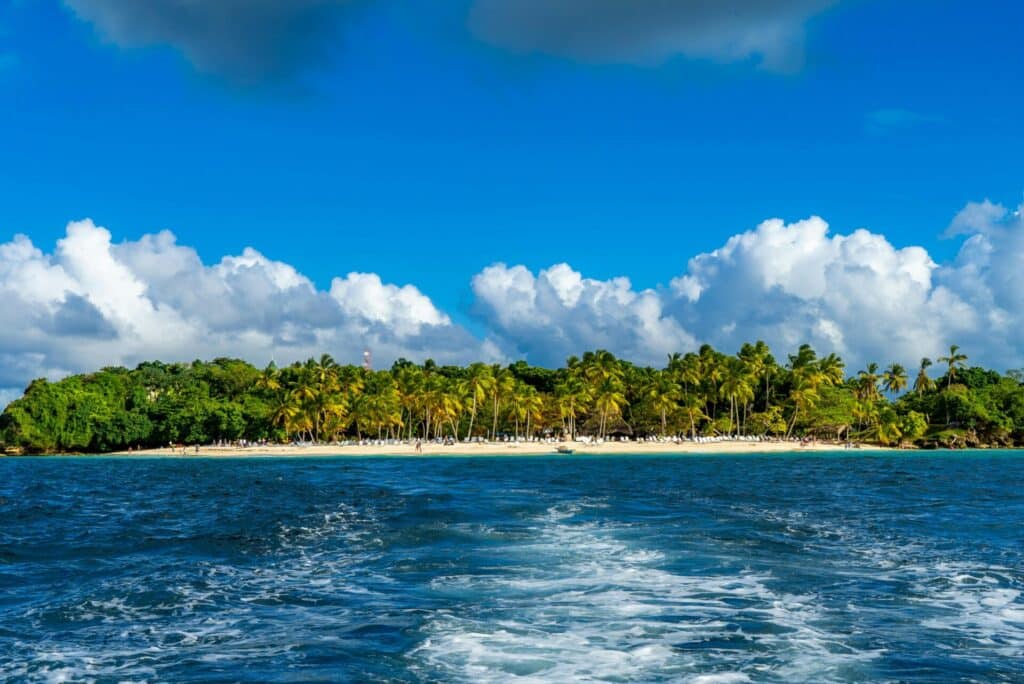
This performance is not based solely on air tourism. The Dominican Republic welcomed over 3 million cruise passengers in 2025, representing 6% growth over 2024. This maritime dynamic consolidates the country’s position on Caribbean itineraries. It also boosts indirect economic spin-offs: excursions, catering, port services and logistics.

Dominican tourism thus relies on a double strength:

  • – seaside resorts with high hotel capacity,
  • – the rise of cruise ports.
République dominicaine

Punta Cana and Santo Domingo: two structuring pillars

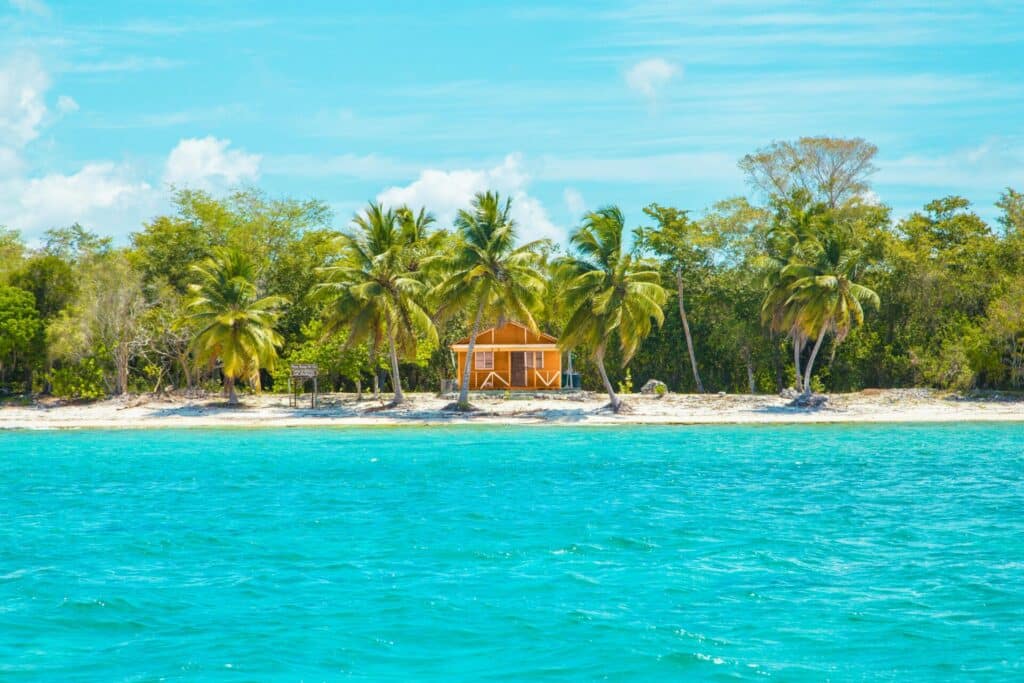
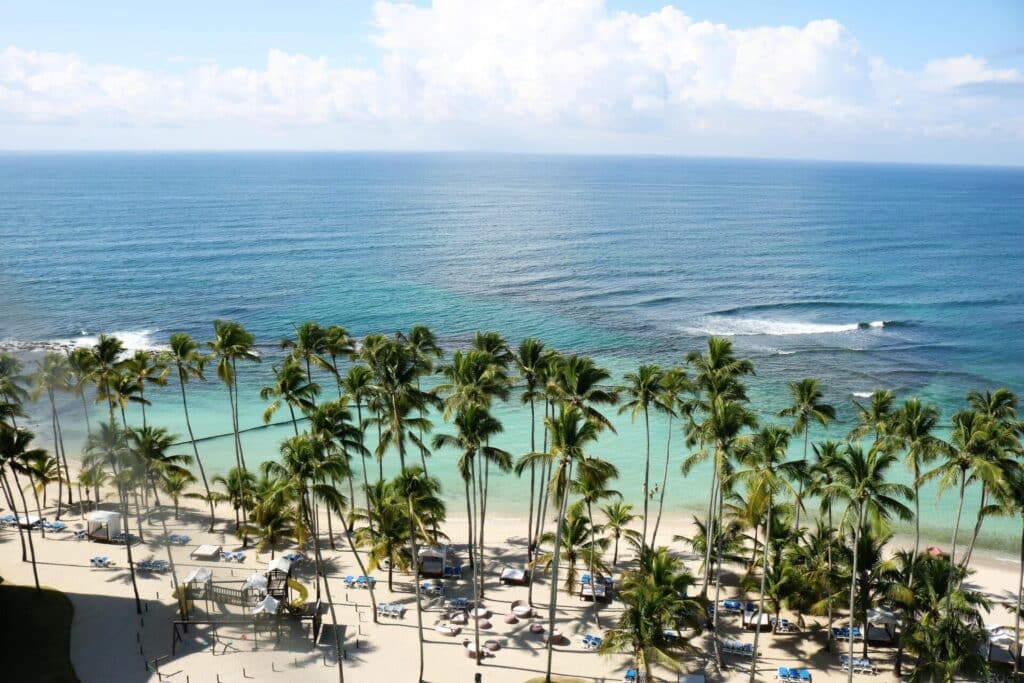
The Dominican Republic’s international reputation remains closely linked to its beaches, particularly those of Punta Cana in the east of the country. The all-inclusive model remains dominant, structured around large hotel complexes. Conversely, Santo Domingo offers a different view of the country, based on its colonial architecture and World Heritage-listed historic center. This seaside/heritage duality enables the destination to diversify its appeal.

It is precisely this combination that explains the resilience of the Dominican model: a massive offer, but also a cultural dimension that can be exploited.

République dominicaine

Economic growth slows sharply

While tourism is posting record figures, the Dominican economy is marking time. Growth has fallen to 2.1% in 2025, from 5.1% in 2024, below even the 2.5% forecast by the central bank. However, the President noted that by January 2026, growth had already reached 3.5%, with a projection of 4.5% for the current year.

This discrepancy between tourism performance and the global slowdown raises a central question: can tourism alone sustain national growth?

République dominicaine

The technological gamble: agreement with Google and space ambitions

During his speech, Luis Abinader mentioned an agreement worth over 500 million dollars signed with Google for the construction of the first international digital exchange port in Latin America. This project positions the Dominican Republic in the strategic field of digital infrastructures.

Even more symbolic was the announcement that no rocket or satellite would be launched from Dominican territory before 2028. This statement reflects the country’s determination to pursue a path of technological innovation that goes beyond tourism.

French market: a strategic objective

Around 150,000 French people visit the Dominican Republic every year. The French market is considered a priority, with a target of 260,000 French visitors by 2026. The resumption of direct flights by Air France reinforces this ambition. The country is also counting on the presence of the world’s largest Club Med on its territory to attract European customers.

For the wider Caribbean, this orientation confirms a strategic repositioning: consolidating Europe as a stable issuing market in the face of North American fluctuations.

Latin America's second-biggest destination: a strategic turning point

Becoming Latin America’s second-largest tourist destination is not just a political slogan. It’s a structural marker. With over 11.7 million visitors, annual growth of 4.3%, more than 3 million cruise passengers and an exceptional visitor/inhabitant ratio, the Dominican Republic has confirmed its status as a Caribbean powerhouse. But the year 2025 also shows that tourism performance does not automatically guarantee equivalent economic expansion.

San Cristóbal Province, Dominican Republic
République dominicaine

The Dominican Republic welcomed over 11.7 million visitors in 2025, representing annual growth of 4.3%. This volume places the country just behind Mexico and confirms its status as a regional tourism powerhouse.

The country has registered over 3 million cruise passengers in 2025, up 6% on 2024. Marine tourism is a major pillar of the country’s tourism economy.

Despite record tourism performance, economic growth is forecast at 2.1% in 2025, compared with 5.1% in 2024. Projections for 2026 point to a rebound to around 4.5%.

Leave a Reply

Your email address will not be published. Required fields are marked *

More articles from RK

Roots and Future
COOPERATION
Tolotra

Roots and Future 2026: in Ouagadougou, Africa and the Caribbean build a new cultural and entrepreneurial dialogue

Culture in Ouagadougou recently took on a special international dimension. From February 28 to March 3, 2026, the capital of Burkina Faso hosted Roots and Future 2026a meeting dedicated to the development of cultural and creative industries and cooperation between Africa and its diaspora. Conceived as a forum for dialogue and structuring of the cultural sector, the event brought together artists, entrepreneurs, institutions and players in the creative economy around a single ambition: to strengthen bridges between African territories and diasporic communities, particularly in the Caribbean. For many observers, Roots and Future 2026 marks a milestone in the construction of an international cultural network where artistic and entrepreneurial exchanges become a lever for development. A vision: linking Africa and its cultural diasporas Under the theme “Authentic Africa and the Africa of the Diasporas”, the first edition of Roots and Future 2026 is part of a global movement to promote black

Read More »
Exuma
TOURISM
Tolotra

Bahamas – Exuma, a Bahamian archipelago shaped by sea and islets

In the Bahamas archipelago, Exuma occupies a special place. This territory is not a single island, but a long chain of islets and cays stretching over 200 kilometers into the Caribbean Sea. For travelers, it represents a strong image of the Caribbean: shallow waters, sandbanks, small scattered islands and a constant relationship with the ocean. The Exuma archipelago is made up of more than 360 islands and caysThe largest is Great Exuma, home to the main town of George Town. Great Exuma is linked by a bridge to Little Exuma, the second largest island in the district. This territorial configuration gives the whole area a clear organization: a few inhabited areas, surrounded by a multitude of largely unspoilt islets. An area built around the sea In Exuma, the sea isn’t just a landscape: it structures the whole of local life. The locals have historically made their living from fishing, sailing

Read More »
Riské
HISTORY & HERITAGE
Tolotra

Riské: the 100% all-female Haitian konpa band that made history in Haiti

In January 1991, a new group appeared on the Haitian konpa scene. Fourteen musicians decided to form Riskéan all-female orchestra in a male-dominated field. At a time when women are rarely present behind the instruments in konpa bands, this initiative represents a major breakthrough in the organization of the Haitian music scene. The project is the brainchild of two singers, Sandra Jean and Sabrina Kolbjornsensoon joined by Gina Rouzeau and Maguy Limage. Around them, ten instrumentalists complete the ensemble: bassists, keyboardists, drummers and percussionists. From the outset, the objective was clear: to demonstrate that female musicians can perform all the functions of an orchestra, from writing to interpretation, and not be confined to the role of singer or chorister. Sandra Jean sums up this ambition in an interview with the newspaper La Presse in 1992: Riské was created to encourage Haitian women to break out of the traditional roles often

Read More »

conTACT RK

we'd love to have your feedback on your experience so far

Join The List

Join our Richès Karayib community!  Sign up for our newsletter.

Want To Maximize Your Business Presence On Riches Karayib?

Complete the form to start the application