Bonaire, a Caribbean island built around the sea and conservation

Bonaire

In the southern Caribbean, off the coast of Venezuela, Bonaire is a territory in a class of its own. Less publicized than its neighbors Aruba and Curaçao, the island has built its identity around one central principle: the protection of its environment. Here, the sea structures the economy, landscapes and customs, while tourism development has been gradual and controlled. For travelers, Bonaire offers a clear picture: a compact island, visible natural areas, an accessible coastline and an organization geared towards sustainability.

Bonaire

An island structured by its marine park

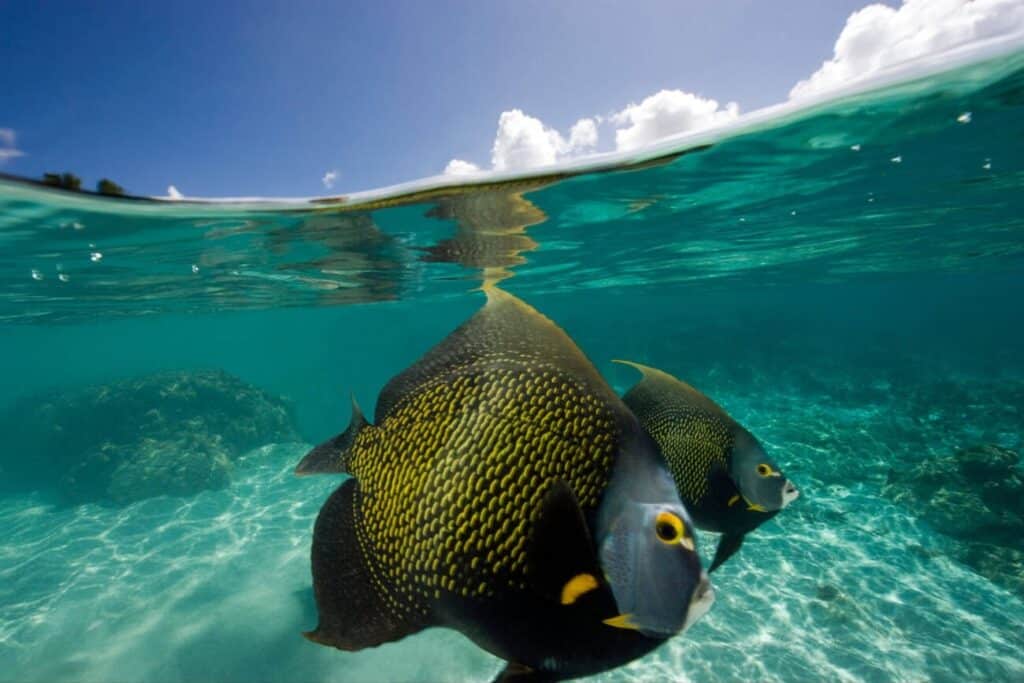
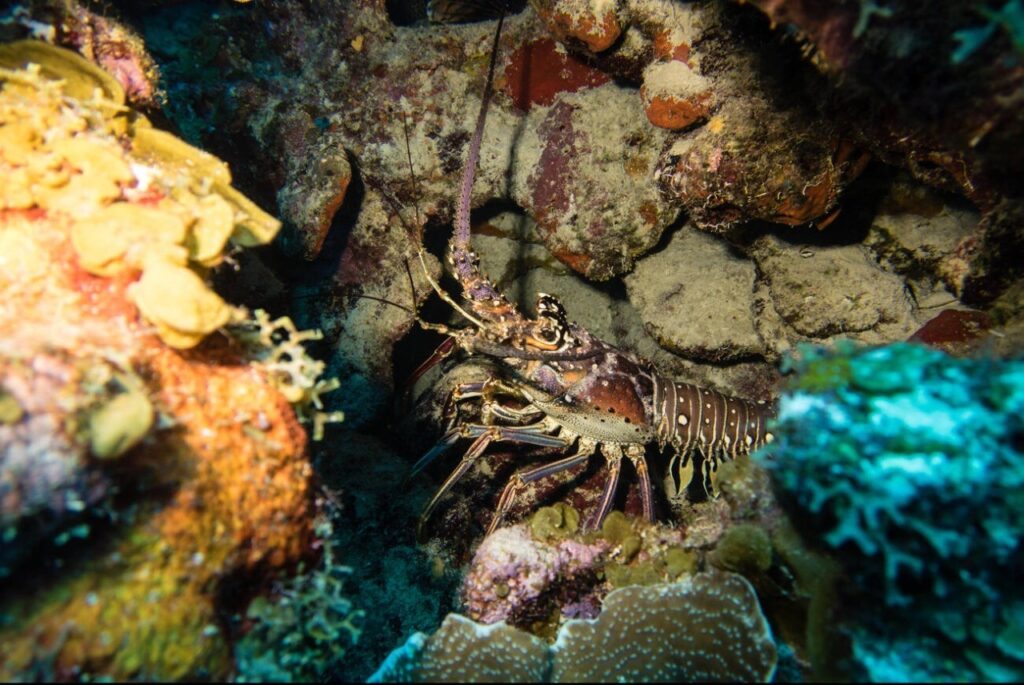
Since 1979, Bonaire’s entire coastline has been protected by the Bonaire National Marine Park which completely surrounds the island. This marine area regulates nautical activities and aims to preserve the coral reefs, considered among the best preserved in the Caribbean. One of the island’s special features is the direct accessibility of its marine sites. Diving and underwater observation can be carried out from the coast, without the need for a boat. Marked access points allow visitors to enter the water without disturbing protected areas. This model of environmental management has made it an international benchmark for marine conservation. It attracts a specific public, attentive to the quality of ecosystems and the regulation of uses.

Bonaire
Bonaire

An arid, contrasting landscape

Contrary to the classic image of the tropical Caribbean, Bonaire has a drier landscape. The island is characterized by semi-arid vegetation, modest relief and vast open areas. This is due to its position south of the hurricane belt and a more stable climate, with limited rainfall. To the north, the Washington Slagbaai National Park covers a large part of the territory. This terrestrial reserve protects a diversity of environments: hills, rocky coasts, wetlands and habitats for numerous bird species. It offers a different view of the island, one that complements that of the coastline.

Bonaire
Bonaire
Bonaire
Bonaire

The saltworks, an emblematic landscape

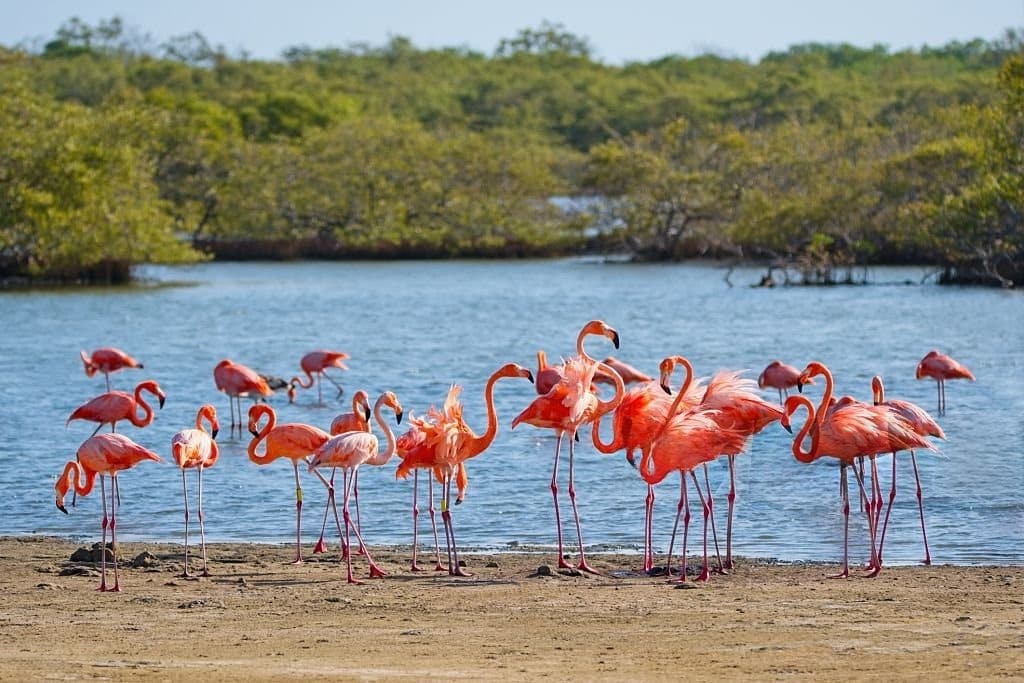
To the south of Bonaire, the salt pans are a striking feature of the landscape. Exploited for centuries, they form vast basins where seawater is evaporated to produce salt. The colors vary from pink to white, depending on the concentration of salt and the micro-organisms present. These areas also attract colonies of pink flamingos, which find favorable conditions in these environments. Their presence reinforces the ecological interest of the site and contributes to the island’s visual identity.

Bonaire
Bonaire

A capital on a human scale

Kralendijk, Bonaire’s capital, concentrates administrative, commercial and tourist activities. The town is characterized by its colorful buildings, open waterfront and simple organization. The town’s limited infrastructure means that traffic flows smoothly and there’s a direct link to the coast. Daily life is visible: local shops, markets, services and interaction between residents and visitors. This proximity contributes to a more direct experience of the area.

Bonaire
Bonaire

Supervised, specialized tourism

Tourism has developed around specific niches, notably diving and nature observation. The island does not rely on large, massive complexes, but on human-scale structures: hotels, apartments and villas. Visitors generally come for longer stays, with a focus on the environment. This orientation limits tourist pressure and favors a more stable economic model.

Access and organization

Bonaire is accessible via Flamingo International Airport, with connections to North America, Europe and the Caribbean. Locally, travel is mainly by car, making it easy to explore the whole island. The organization of your stay is often based on an alternation between marine activities, exploration of natural areas and rest periods. The island lends itself to progressive discovery, without excessive concentration of sites.

Bonaire
©Bonaire International Airport

A different Caribbean

Highlighting Bonaire means proposing a different interpretation of the Caribbean. The island’s approach is not based on volume, but on the preservation and rational use of resources. For travelers, Bonaire offers a coherent experience: a clear territory, an accessible sea, distinctive landscapes and environmental management. It is for those who seek to understand the territory as much as to enjoy it, in a Caribbean where nature remains central.

Bonaire lies in the southern Caribbean, off the coast of Venezuela, alongside Aruba and Curaçao. The island is part of the Dutch Caribbean and is a special municipality of the Netherlands. It is accessible via Flamingo International Airport, with regular flights from Amsterdam, the USA and several Caribbean islands. Once on the island, travel is mainly by car, making it easy to cover the entire territory.

Bonaire is internationally renowned for the quality of its coral reefs and for its model of environmental management. Since 1979, the Bonaire National Marine Park has protected its entire coastline. One of its key features is direct access to dive sites from the coast, without the need for a boat. More than 80 marked dive sites enable you to observe coral, tropical fish and other marine species, often in very favorable conditions. This accessibility, combined with strict regulations, contributes to the preservation of the island’s ecosystems and its reputation.

Bonaire mainly attracts travelers looking for an unspoilt environment and a quieter form of tourism. The island is particularly popular with lovers of diving, nature and wildlife observation. It is also ideal for those wishing to avoid the big seaside resorts and opt for a more autonomous stay, with a more relaxed pace. Tourism is deliberately kept to a minimum, allowing a more direct experience of the territory.

Leave a Reply

Your email address will not be published. Required fields are marked *

More articles from RK

Bandi saison 2
FILM & VIDEO
Tolotra

Martinique – Bandi season 2: why is Netflix stopping the Martinique series?

Barely a month after the first season went online, the possibility of a Bandi season 2 is now closed. Netflix will not be extending the series, which was filmed in Martinique, despite the popularity of this family and social drama with French and Caribbean audiences. For Martinique, the decision goes beyond the simple fate of a series. It raises questions about the place of Caribbean stories in the global platform economy. Martinique series axed after just one season Launched on April 9, 2026, Bandi immediately attracted attention for its Martinique roots. The series follows a group of siblings confronted with the death of their mother and the need to stay together, in a context where precariousness pushes some characters towards illegality. In the space of eight episodes, the series has created a world rarely seen on this scale: a contemporary Martinique, family-oriented, working-class and rife with social tensions. Created by

Read More »
Redonda
TOURISM
Tolotra

Antigua & Barbuda – Redonda: since 2017, the island returned from the desert

Redonda of Antigua and Barbuda has no village, no road and no hotel. Yet this uninhabited volcanic island tells the story of one of the Caribbean’s strongest ecological restorations. Since 2017, this long-deserted rock has once again become a haven for birds, endemic reptiles and native vegetation. An isolated rock off the coast of Antigua Seen from the sea, Redonda first appears to be a mineral mass. An abrupt relief, set between Antigua, Montserrat and Nevis, off the beaten tourist track. It measures around 1.3 km² and rises to almost 305 meters above sea level. It is the smallest of the three islands that make up Antigua and Barbuda, but its recent history far exceeds its size. 2017, the year of changeover The fact that changes everything comes down to one date: 2017. That year, teams from the Redonda Restoration Programme removed invasive black rats and relocated wild goats to

Read More »
Rita Indiana
LITERATURE
Tolotra

Dominican Republic – Rita Indiana: the Dominican writer who turned merengue into a cry

Rita Indiana published La Mucama de Omicunlé in 2015, unaware that she had just written one of the most influential Caribbean novels of her generation. Two years later, in 2017, the Association des Écrivains de la Caraïbe awarded her the Grand Prix Littéraire Région Guadeloupe. The story didn’t make the headlines in Santo Domingo. But within the Caribbean literary world, it was a turning point. An artist born in Santo Domingo, out of the box Rita Indiana was born in Santo Domingo in 1977. Her tall figure, deep voice, writing and free spirit have given rise to a now-famous nickname: “La Monstra”, sometimes rendered in Dominican Spanish as “La Montra”. The word expresses both singularity and strength. She has two simultaneous and intertwined careers. The first is literary. Several collections of short stories, six novels, translations into several languages and a body of work studied in universities beyond the Dominican

Read More »

conTACT RK

we'd love to have your feedback on your experience so far

Join The List

Join our Richès Karayib community!  Sign up for our newsletter.

Want To Maximize Your Business Presence On Riches Karayib?

Complete the form to start the application