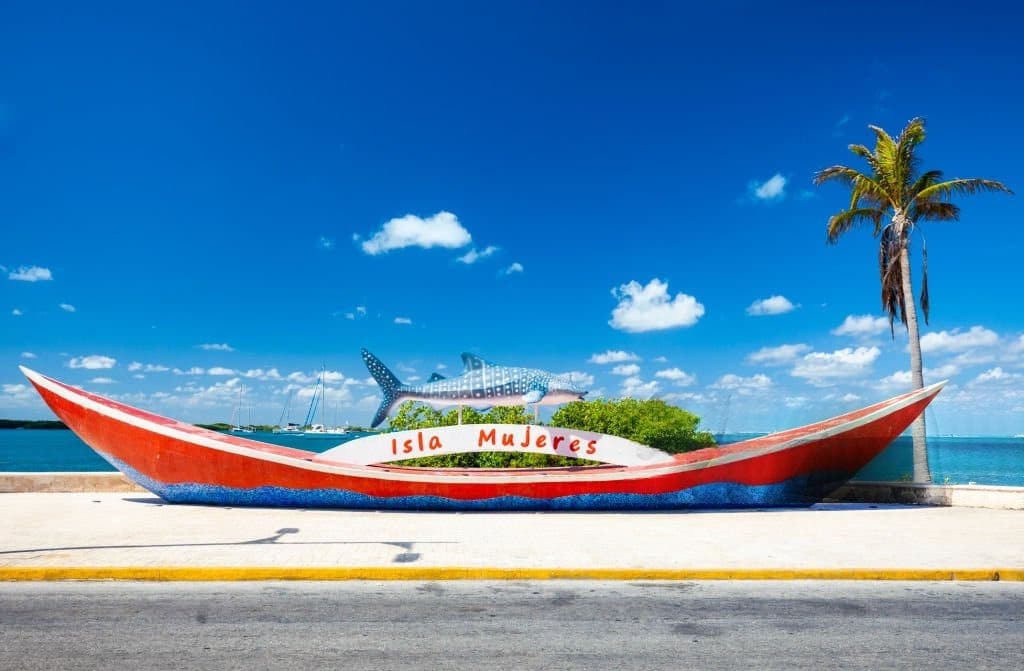
Opposite Cancún, in the state of Quintana Roo, Isla Mujeres occupies a special place in the Mexican Caribbean. The island is short, narrow and easy to navigate, but its appeal goes far beyond its size: there’s a lively seafront, a more exposed east coast offshore, quiet beaches to the north, an archaeological site associated with the Mayan goddess Ixchel and a clear relationship between tourism, local life and landscape.
An island that's close to Cancún, but distinct in its operation
Just 13 kilometers off the Yucatán coast, Isla Mujeres can be reached by ferry from Cancún in around 20 minutes, depending on the departure point and operator. This proximity explains its international reputation, but it should not obscure what makes it so unique: the island functions as a small-scale autonomous territory, with its own center, beaches, residential neighborhoods and areas more open to the sea. The island is some 7 kilometers long and 650 meters wide at its narrowest point, reinforcing the impression of a space that is easy to read, almost immediate, from the moment you arrive.
This accessibility is one of the area’s strengths for tourists. Visitors can spend several days here without having to rely on cumbersome logistics, while enjoying a distinct change of atmosphere from the mainland coast. Where Cancún relies on a more vertical, dense and fast-paced organization, Isla Mujeres maintains a more horizontal rhythm, centered on walking, short trips and a direct relationship with the seaside. It’s this difference in pace that partly explains Isla Mujeres’ appeal to travellers looking for a clearer stay.
A coastal territory organized between Playa Norte village and Punta Sur
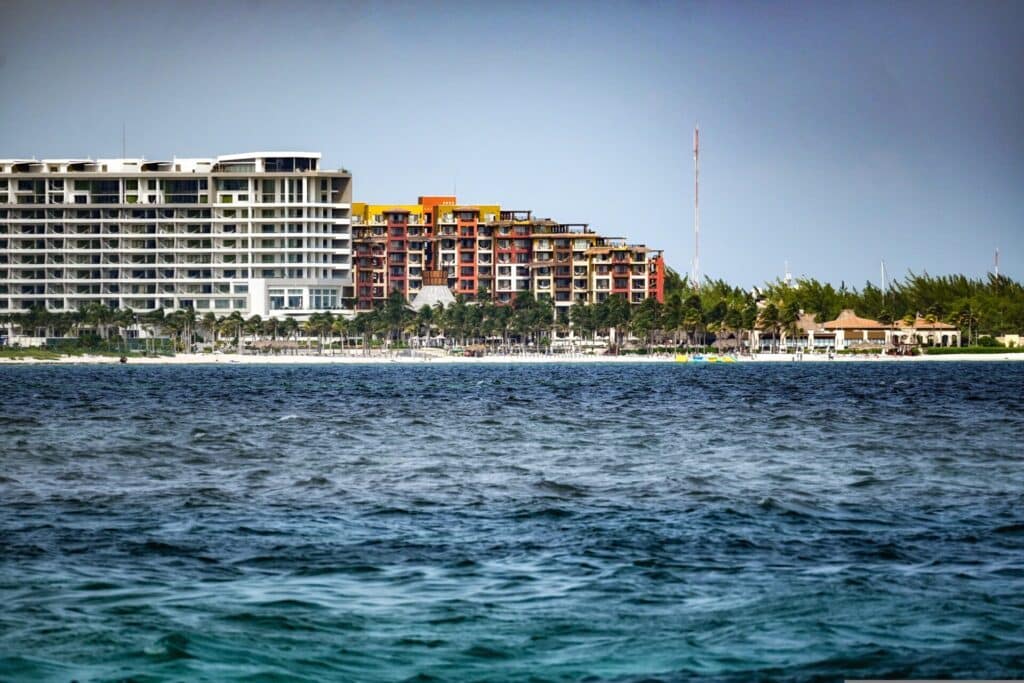
The north of Isla Mujeres concentrates most of the tourist traffic. This is where you’ll find the main ferry terminal, the shopping streets and, above all, Playa Norte, the island’s best-known beach. Its reputation rests on several concrete elements: clear sand, shallow waters, generally calm areas and easy access from the center. For families, travellers who want to swim without difficulty, or simply stay a long time at the water’s edge, this area functions as an immediately understandable seaside heart.
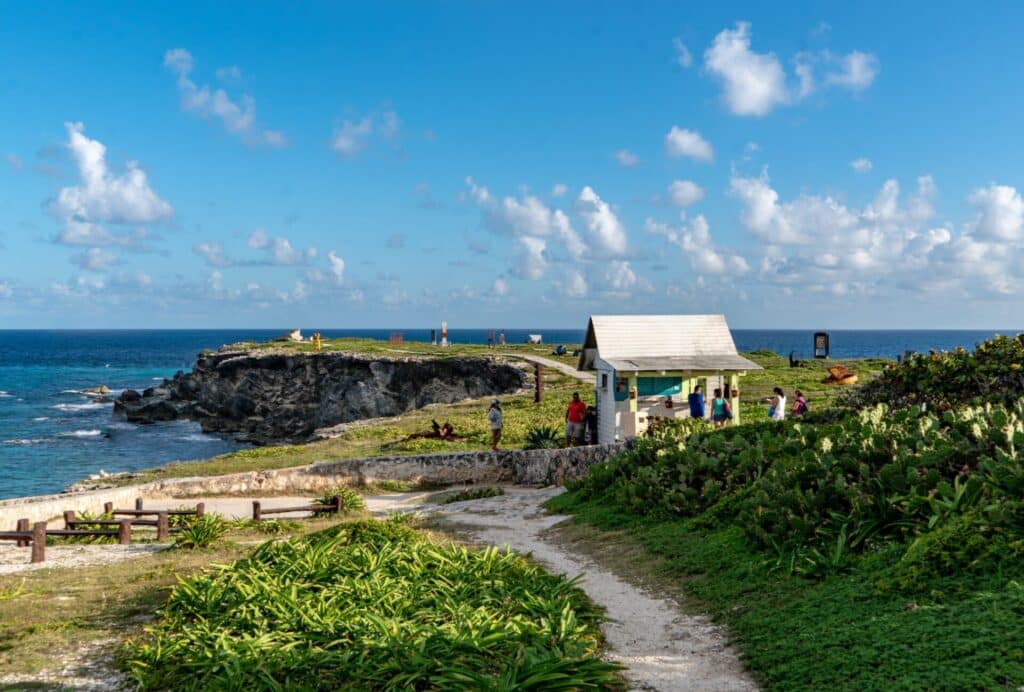
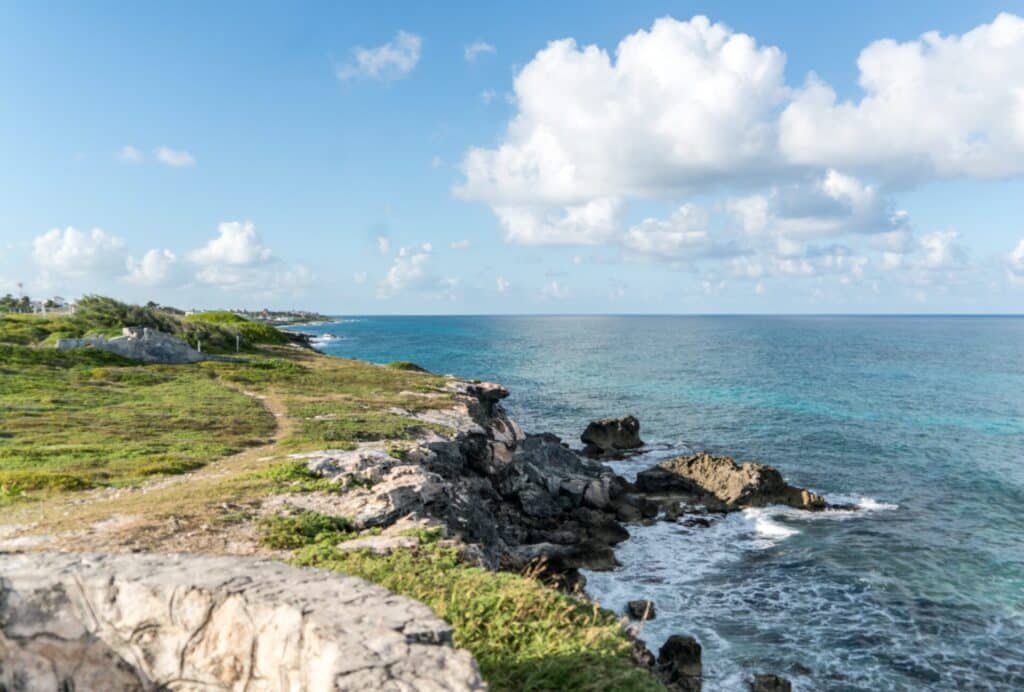
But it would be a mistake to reduce Isla Mujeres to Playa Norte. The further south you go, the more the face of the island changes. The relief becomes a little more pronounced, the eastern coast faces a more open sea, and Punta Sur introduces a different reading of the territory. This promontory is home to the remains of a Mayan sanctuary linked to Ixchel, a goddess associated with fertility, medicine and the moon in the Mayan world. This archaeological presence gives the island a real historical depth, often overlooked in purely seaside narratives.


A Caribbean identity between Mayan heritage and local life
The name Isla Mujeres refers precisely to this heritage. According to commonly accepted historical and archaeological accounts, the Spaniards found female figures on the island associated with the cult of Ixchel, which helped establish the name “Island of Women”. This is no mere detail of toponymy: it is a reminder that the territory already existed as a place of circulation, worship and landmark in the Caribbean before the structuring of contemporary tourism.
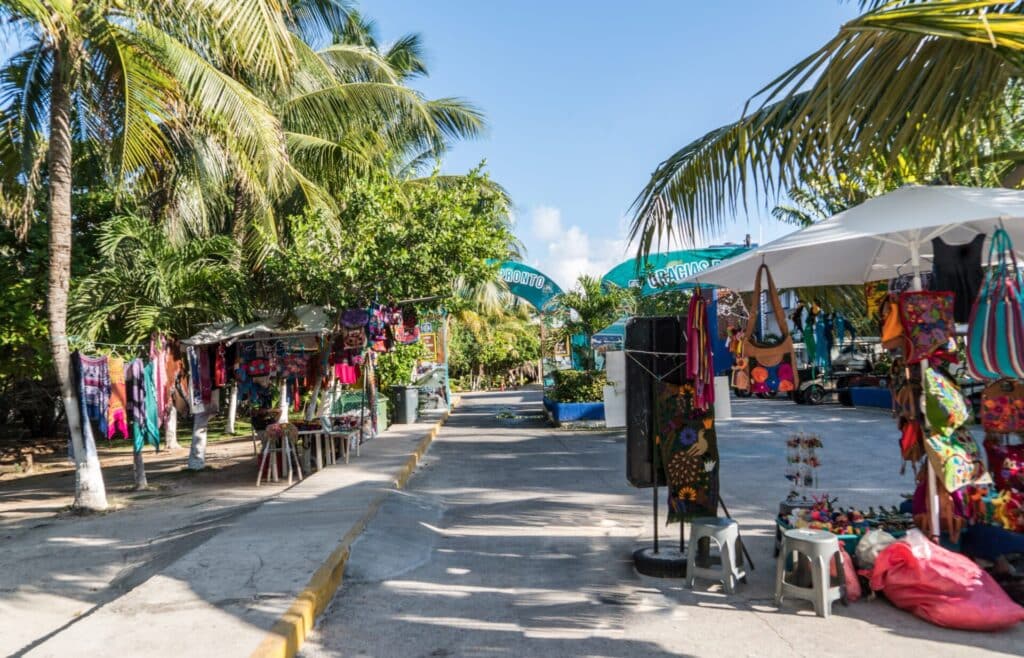
Even today, this memory coexists with a visible local life. The streets in the center of the town are a mix of restaurants, stores, accommodation and everyday services. Fishermen, shopkeepers, locals and visitors often use the same spaces. This is what makes Isla Mujeres particularly interesting for a feature article: the island doesn’t function as a showcase isolated from reality, but as a small inhabited territory where tourist activity remains integrated into the urban fabric. For your readers, this is a real added value, because it enables them to think about the destination beyond the images of the beach.

A strong tourist destination, but still easy to understand
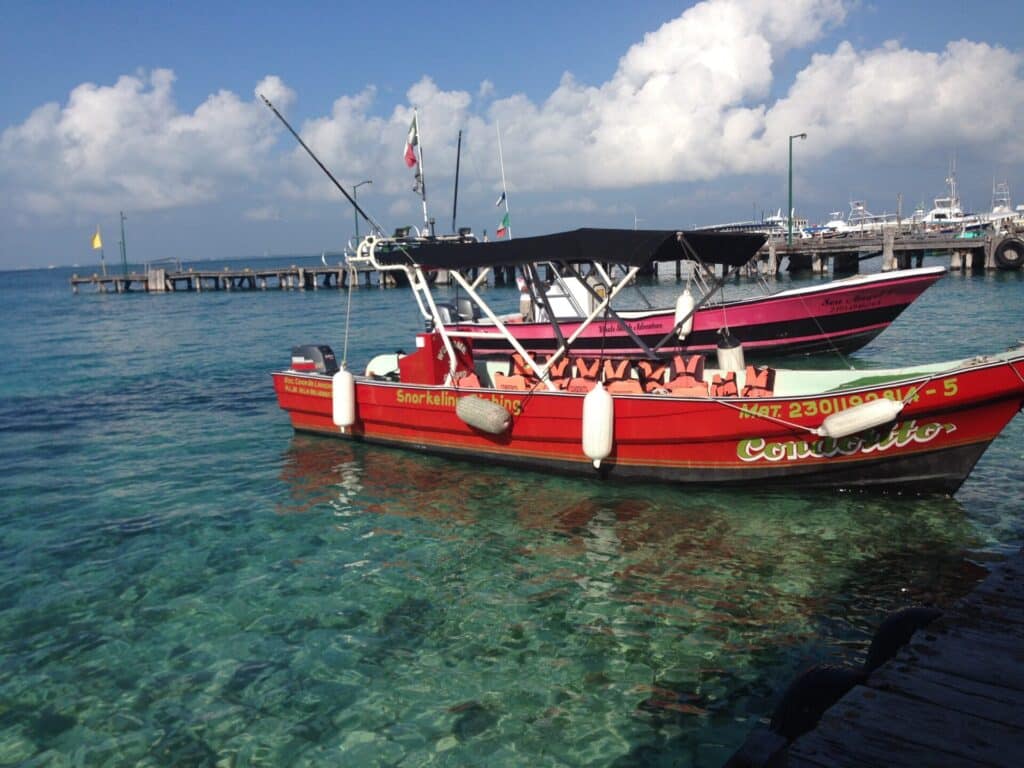
For tourists, Isla Mujeres offers a clear advantage: everything is close without looking the same. You can alternate between a day on the beach, a visit to Punta Sur, a stroll through the center, a more leisurely coastal route and marine activities linked to the island’s clear waters. The short crossing from Cancún further enhances this flexibility.
It’s also a destination that works well for different profiles: couples, families, solo travelers or visitors who want to extend a stay in Quintana Roo with a quieter stopover. The island is still a tourist destination, and sometimes very busy, but its size means that you can still get a clear sense of the space. And that’s precisely where its strength lies: Isla Mujeres isn’t just a pretty getaway from Cancún, it’s a coherent territory, with a history, an identifiable geography and a real capacity to offer a different relationship with the Caribbean coastline.

Another way to enter the Mexican Caribbean
Highlighting Isla Mujeres today means offering your readers a famous destination, but approached with a more territorial eye. The island doesn’t just rely on the beauty of its northern seaside resort; it benefits from being understood in its entirety, between rapid sea access, Mayan heritage, coastal contrasts and local life that is still present.
In the highly competitive landscape of the Mexican Caribbean, Isla Mujeres holds a special place: that of a small but structured area, where the relationship between sea, history and contemporary uses can still be clearly seen.
Isla Mujeres lies in the Caribbean Sea, some 13 kilometers off Cancún, on the northeast coast of Mexico’s Yucatán Peninsula. The main access is by ferry, with regular departures from Puerto Juárez, the Cancún hotel zone or Punta Sam. The crossing generally takes between 15 and 25 minutes, depending on the point of departure. This proximity makes it easy to organize a multi-day stay or an excursion, while benefiting from an island environment distinct from the mainland coast.
Unlike Cancún, which has developed around a dense hotel zone structured for mass tourism, Isla Mujeres retains a much smaller scale. The island functions as a compact territory where local life remains visible. Travel is short, often on foot, by bike or in a buggy, and spaces are shared between residents and visitors. This configuration creates a more legible atmosphere, with a direct link to the sea, shops and residential areas. For travelers, this means a calmer, less segmented experience, more rooted in the island’s everyday life.
Isla Mujeres is not limited to its beaches, although Playa Norte remains one of the major attractions for swimming and relaxing. The island also offers the chance to discover Punta Sur, home to the remains of an ancient Mayan site dedicated to the goddess Ixchel, adding a historical dimension to your stay. It’s also possible to explore the more exposed and less crowded eastern coastline, or stroll through the city center, with its lively streets, restaurants and markets. Water sports, such as snorkeling, are available in several areas. Last but not least, the island’s size means you can enjoy a wide variety of experiences without logistical constraints, making it an ideal destination for both short and extended stays.