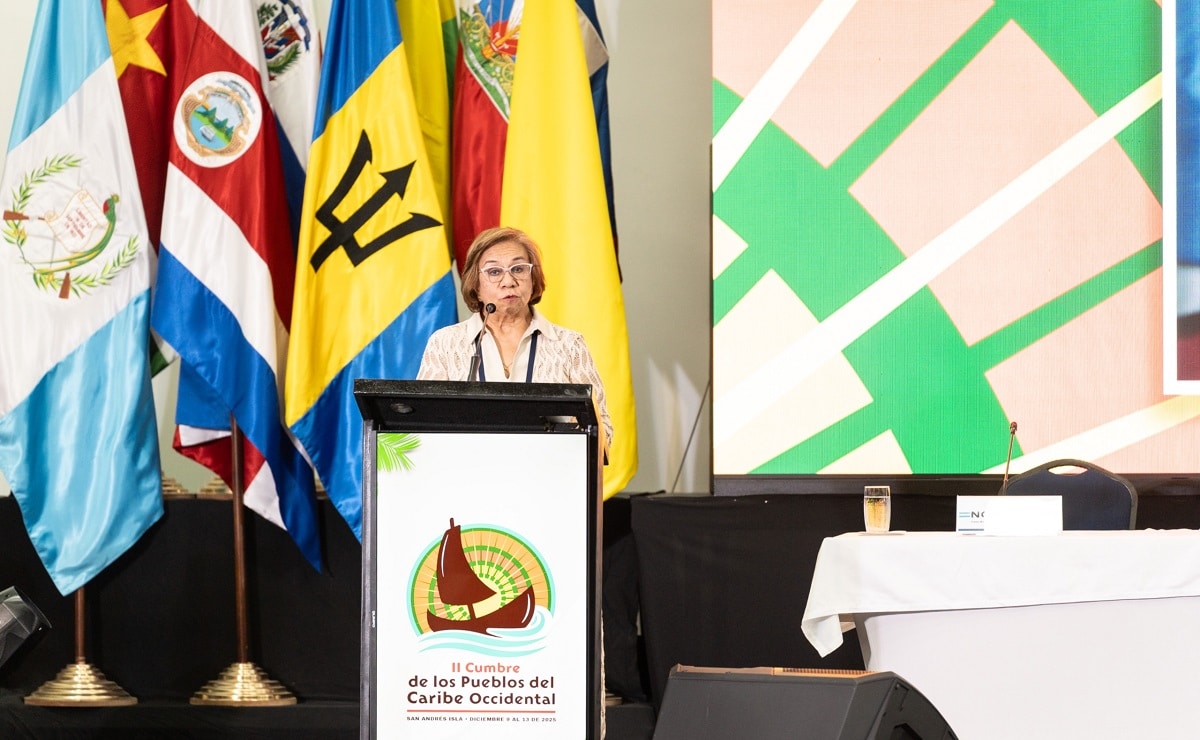
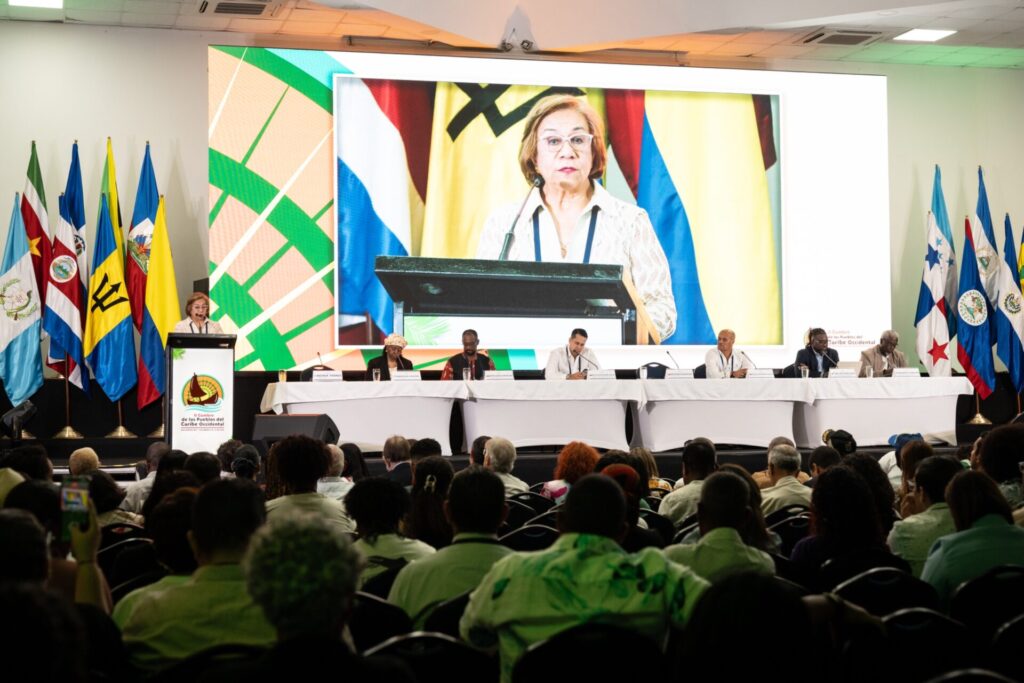
The 2ᵉ Summit of the Peoples of the Western Caribbean marked an important milestone for several Afrodescendant and indigenous communities in the region. Meeting in San Andrés, the summit resulted in the official handover of the San Andrés Declaration, the Constitutional Act and the Action Plan of the Confederation of the Peoples of the Western Caribbean. This step forward provides a more solid political framework for a regional dynamic driven by representatives of the Raizal, Garifuna, Miskito, Creole and other peoples of the Western Basin.
With this confederation, the 2ᵉ Summit of the Peoples of the Western Caribbean reaches a milestone. The San Andrés meeting is no longer confined to speaking collectively. It establishes a common structure designed to carry regional priorities on connectivity, rights, culture, the economy, education, the environment and governance.
The 2ᵉ Summit of the Peoples of the Western Caribbean: a regional organization taking shape
The significance of the summit lies first and foremost in what it formalizes. The creation of the Confederation of the Peoples of the Western Caribbean gives greater continuity to a process that has been underway since the first edition. It also strengthens the political weight of communities that share similar realities: marginalization, economic fragility, pressure on territories, cultural invisibilization and the need for regional representation.
San Andrés is a highly symbolic place. The archipelago occupies a strategic position in the Western Caribbean and is a central space for the Raizal people. The choice of this territory gives the summit a strong historical and regional significance, recalling the ancient links between the islands, the coasts and the peoples who live in this maritime space.
The 2ᵉ Summit of the Peoples of the Western Caribbean thus puts forward a reading of the region based on the communities themselves. This approach puts the focus back on languages, maritime circulation, shared heritages, local exchanges and forms of organization specific to the territories concerned.
A roadmap focused on traffic, the economy and the regions
One of the strengths of the 2ᵉ Summit of the Peoples of the Western Caribbean lies in its concrete content. The declaration identifies several priorities: strengthening sea and air routes, reducing logistics costs, facilitating regional trade, supporting community businesses and consolidating local production chains. Artisanal fishing, subsistence farming, the bioeconomy and sustainable tourism all feature prominently in this vision.
This orientation gives the summit a very practical scope. Regional issues are addressed from the angle of the movement of people, goods, know-how and opportunities. For regions that are often faced with isolation, high costs and strong external dependencies, this economic roadmap carries real weight.
The declaration also provides for more advanced cooperation mechanisms on trade, investment, logistics and institutional coordination. The 2ᵉ Summit of the Peoples of the Western Caribbean thus gives a central place to economic autonomy and the ability of communities to better master their own exchange circuits.

Ancestral languages and collective memory: a major focus of the summit
The question of language plays an important role in the decisions taken at San Andrés. Creole, Miskito, Garifuna and other regional languages are presented as essential components of the identity of the peoples of the Western Caribbean. Their intergenerational transmission, their presence in education and their institutional recognition are among the objectives selected. The 2ᵉ Summit of the Peoples of the Western Caribbean gives a strong signal here. In this region, language directly affects memory, culture, collective dignity and the relationship with the territory. Its preservation is therefore a key political and cultural choice.
The declaration also raises the possibility of wider recognition of ancestral languages as intangible heritage. This perspective reinforces the role of culture in the structuring of the San Andrés regional project.

Climate, historical justice and artificial intelligence in the regional program
The 2ᵉ Summit of the Peoples of the Western Caribbean also articulates historical issues and very current challenges. The communities gathered in San Andrés recall the lasting effects of structural racism, political exclusion, territorial dispossession and violence suffered in several territories of the region. The declaration clearly places the issue of historical reparation and the protection of collective rights on the regional agenda.
The environment is also one of the summit’s key issues. The peoples of the western Caribbean are presented as the historical guardians of fragile territories, exposed to hurricanes, ecosystem degradation and the effects of climate disruption. The response defended in San Andrés is based on biodiversity, traditional knowledge, community resilience and forms of production compatible with local balances.
Another key topic is technology. The declaration devotes several passages to artificial intelligence, algorithmic bias, data mining and new digital inequalities. It introduces the notion of ethnocodification, presented as a regional approach designed to adapt technologies to the cultural, linguistic and territorial realities of the peoples concerned. This section gives the 2ᵉ People’s Summit of the Western Caribbean a particularly contemporary dimension.

San Andrés opens a new phase
The main political outcome of the 2ᵉ Summit of the Peoples of the Western Caribbean lies in this desire for lasting organization. With the confederation, the peoples gathered in San Andrés now have a more structured framework to carry their positions on connectivity, territories, languages, trade, rights and regional governance. The summit also gives greater visibility to a Western Caribbean often relegated to official narratives. Here, communities are speaking out about their future, their priorities and how they can have a greater say in regional debates. This development gives San Andrés a special place in the recent history of Caribbean cooperation.
The next edition, scheduled to take place in Bocas del Toro, Panama, confirms this desire for continuity. The 2ᵉ Summit of the Peoples of the Western Caribbean thus leaves a clear political signal: the Western Caribbean is getting organized, specifying its priorities and intends to count more in defining its regional future.
📸©GOV.CO
The 2ᵉ People’s Summit of the Western Caribbean is a regional meeting bringing together representatives of Afrodescendant and indigenous communities, as well as institutional and academic players, around the issues of integration, culture, economy and governance in the region.
The 2ᵉ Summit of the Peoples of the Western Caribbean led to the creation of the Confederation of the Peoples of the Western Caribbean, accompanied by an official declaration and an action plan structuring regional cooperation.
The 2ᵉ Summit of the Peoples of the Western Caribbean marks a step forward in the political structuring of the region’s peoples, giving them a common framework to carry their economic, cultural, environmental and institutional priorities.
The 2ᵉ Peoples Summit of the Western Caribbean addressed key topics such as regional connectivity, local economic development, preservation of ancestral languages, historical justice, climate management and issues related to technology and artificial intelligence.
The next step announced after the 2ᵉ Summit of the Peoples of the Western Caribbean is the organization of a third edition, planned for Bocas del Toro in Panama, to continue structuring and cooperation between the peoples of the region.