There are words that say political strategy without sounding like it. “Bouladjèl” is one of them. In Guadeloupean Creole, the word refers to a vocal percussion technique: superimposed throat sounds, rhythmic onomatopoeia, chanted gasps and hand clapping. On first listen, it’s music. On second listen, it’s a memory of resistance.
Bouladjèl is a traditional musical expression unique to Guadeloupe. It is described by the Inventaire national du patrimoine culturel immatériel as a polyrhythmic superposition of percussive vocalizations and hand clapping, used in particular to accompany certain traditional songs at funeral wakes in mainland Guadeloupe, i.e. Grande-Terre and Basse-Terre.
The "Code Noir", but with caution
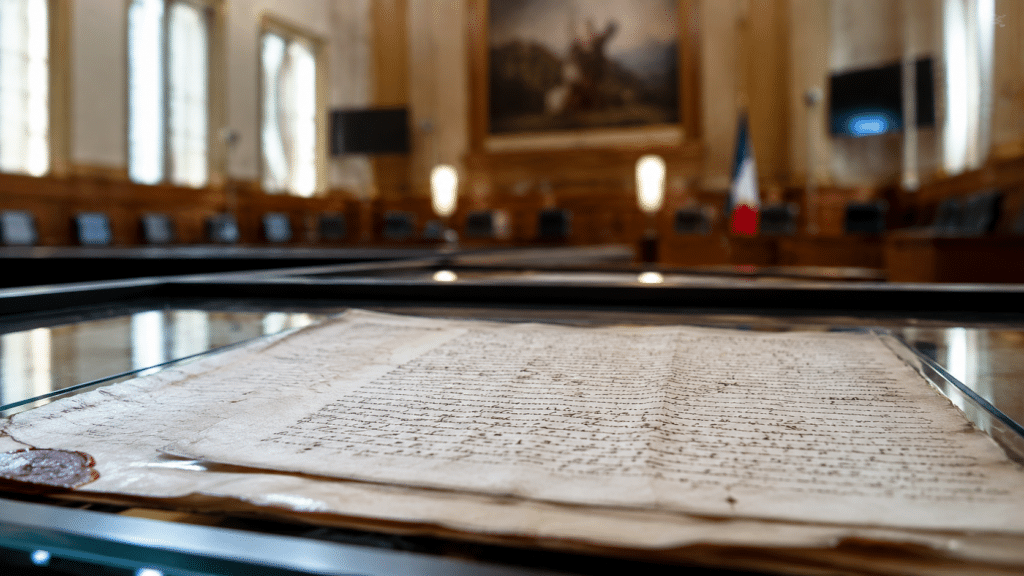
Bouladjèl is often presented as a response to the prohibitions of the slave era. However, we must be precise. The “Code Noir”, promulgated in 1685 under Louis XIV, provided a legal framework for the condition of slaves in the French colonies. Article XVI prohibited slaves belonging to different masters from gathering, day or night, on the pretext of marriage or otherwise. However, to say that the text explicitly forbade drumming would be too affirmative.
Oral tradition nevertheless retains a central element: the drum was not just a musical instrument. It could be used to gather, warn, transmit and accompany rituals. Colonial authorities kept a close eye on it, as it could become a tool of collective communication. The slaves knew this too. It is in this context that the Bouladjèl takes on its full meaning.
When the body becomes a drum
Deprived of instruments, or placed in contexts where drumming was controlled, enslaved Guadeloupeans would have found a substitute: their own bodies. The heritage sheet remains cautious about the exact origin of the practice, but it does specify that, in representations of its history, the prohibitions of the slavery period play a primordial role.
The Bouladjèl reproduces, with voice and hands, a rhythmic power that the drum could have carried. Throat sounds imitate the bass. Hand claps mark the tempo. Rapid onomatopoeia replaces high-pitched clapping. The result is a complete human orchestra, dependent on no single instrument, which no one can confiscate. In this format, each voice keeps its place, but none really dominates the whole, over time and without external scenery.


A wake practice
The practice survived abolition. Today, Bouladjèl is mainly associated with funeral wakes. It accompanies mourning songs and mobilizes boulariens, the name given to Bouladjèl participants. In these moments, the voice is not only used to produce a rhythm. It helps the group to hold on, to watch over and to surround the loved ones of the deceased.
Bouladjèl belongs to the gwoka music family, but its binary rhythmic pattern does not correspond directly to the seven traditional gwoka rhythms. Gwoka, on the other hand, was inscribed on UNESCO’s Representative List of the Intangible Cultural Heritage of Humanity in 2014. This proximity says a lot: we’re in the same Guadeloupean universe, but with a singular, more discreet form, often transmitted by listening, family, neighbors and imitation.

A Guadeloupean singularity
The uniqueness of Bouladjèl lies in this relationship between constraint, voice and invention. It should not be seen as a fixed legend, nor as simplified historical evidence. Rather, it should be understood as a transmitted memory: that of a society that transformed the mouth, throat and hands into instruments of cultural survival.
Several Guadeloupean artists and groups have continued to record, style or teach Bouladjèl. Bouladjèl can be found outside wakes, on stage, in musical encounters, sometimes mixed with ka drum, bass or jazz. Yet its core remains the same: a vocal polyrhythm born of a human circle.
When a boularien raises a multi-voiced rhythm, he’s not just making music. He’s reactivating a collective intelligence. Through Bouladjèl, Guadeloupe reminds us that a culture can survive by transforming constraint into language. And next week, we cross the sea to Jamaica, with “irie”, the Rastafarian word that’s often mistranslated.
Bouladjèl is a traditional Guadeloupean musical practice based on voice, throat, rhythmic onomatopoeia and hand-clapping. It is not based on a material instrument, but on the human body. This vocal percussion instrument is mostly associated with funeral wakes and the world of gwoka, even if it has its own rhythmic and cultural singularity.
Bouladjèl is often presented as a response to the constraints imposed during the slavery period. The Code Noir strictly regulated the lives of enslaved people, particularly gatherings. In this context, rhythmic practices using the voice and hands would have made it possible to maintain collective expression without depending on a drum or instrument that could be controlled or confiscated.
Bouladjèl is an integral part of Guadeloupe’s musical and oral culture, particularly at funeral wakes in Grande-Terre and Basse-Terre. It’s part of a living heritage passed on through listening, repetition and presence at community events. Its strength lies in its local roots: it recounts a Guadeloupean way of creating rhythm, memory and social ties through the voice.