
Repeal of the “Code Noir”: behind this legal formula lies a much deeper issue than the vote on an old text. On May 20, 2026, the National Assembly’s Law Commission adopted the proposal put forward by Max Mathiasin, MP for Guadeloupe. The text is due to be examined in a public session on May 28, 2026. The aim is not to abolish slavery a second time – it was definitively abolished in 1848 – but to expressly remove from the French legal system a text that organized enslavement in the French colonies.
Before repeal, understanding the Code Noir
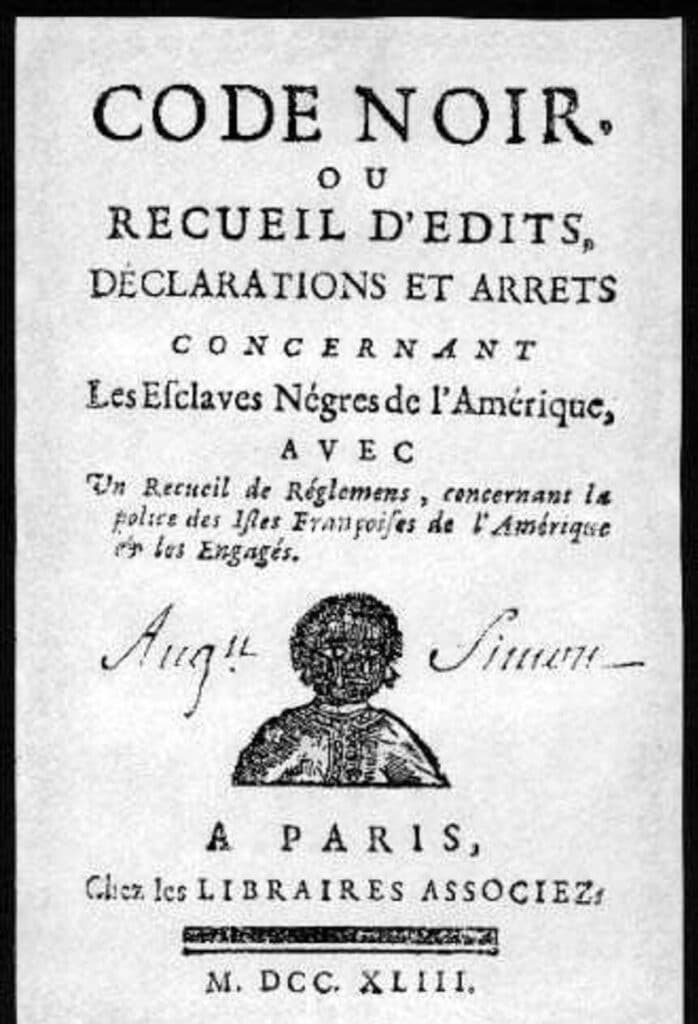
The “Code Noir” is not simply a dusty document reserved for legal historians. It refers first and foremost to the royal decree of March 1685 on slaves in the American islands, and then to all the texts that extended it, notably in 1723 and 1724.
The “Bibliothèque nationale de France” presents it as a law concerning relations between masters and slaves in the French colonies of America, with the creation of a derogatory colonial law.
This text did not invent colonial slavery.
But it gave it a legal framework. It provided a framework for the condition of enslaved people, imposed religion, work, family, sanctions, relations with masters and daily life on plantations.
In other words, the “Code Noir” made slavery administrable.
He transformed economic and social violence into a system governed by royal law.
This is why the Abrogation of the “Code noir” cannot be read as a simple technical operation.
It concerns the way in which a state looks at the texts it has produced, even when these texts no longer govern present-day life.
The Comité national pour la mémoire et l’histoire de l’esclavage (National Committee for the Memory and History of Slavery) points out that for over a century and a half, this body of law organized slave society in the French colonies of the Caribbean, the Indian Ocean and Louisiana.
A text without effect, but not without weight
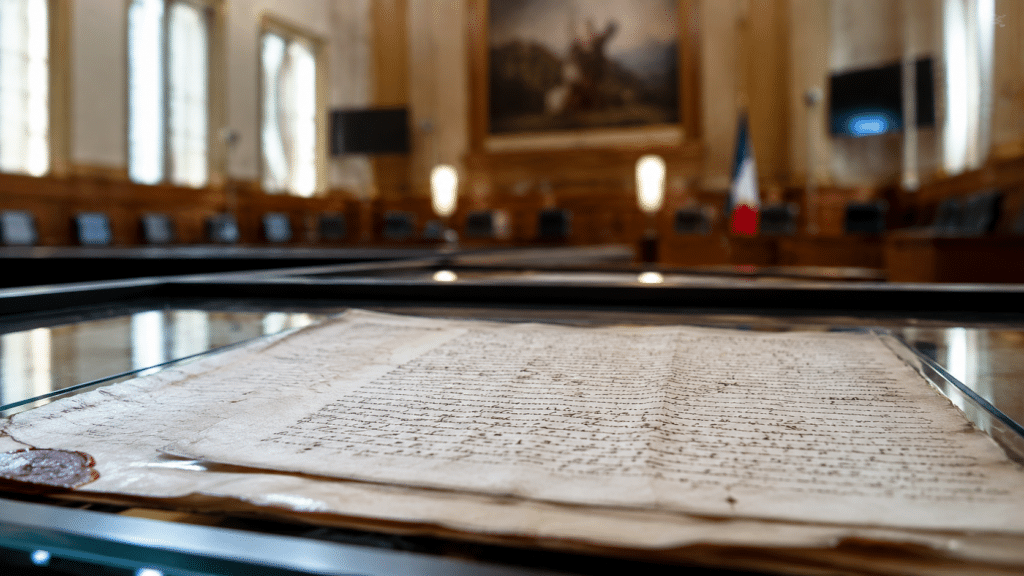
Since its abolition in 1848, the “Code Noir” no longer has any legal effect. None of its articles can be applied today. The danger would therefore be to make people believe that it still existed as an active rule. This is not the case. The issue lies elsewhere: the ordinance of 1685 and the texts that extended it were not expressly repealed in the terms covered by the current proposal.
It is this paradox that gives current events their force. A text can be legally dead and still be symbolically powerful. It may no longer produce law, but continue to wound through its presence in national legal history. On the 25th anniversary of the Taubira law, the Élysée supported its repeal, stating that it was not a question of erasing history, but of making it clear that this text is contrary to equal human dignity.
Why does this news speak to the French West Indies and French Guiana?
The roots are to be found in Guadeloupe, Martinique, French Guiana and La Réunion, but also in the families that still bear the traces of a history handed down sometimes without archives, sometimes without words.
The “Code Noir” is not an abstraction for these territories. It refers to imposed names, severed lineages, dwellings, registers and incomplete family accounts. It reminds us that slavery was not just an exploitation of bodies. It was also a fabrication of statuses, silences and inequalities inscribed over time.

The fact that this proposal was put forward by Max Mathiasin, MP for Guadeloupe, is no detail. The Law Commission unanimously adopted the text, after its author presented it as an additional milestone for the memory of slavery. A voice from the French overseas territories is thus bringing to parliament a demand that goes beyond the symbolic: to name, to remove, to pass on.

What repeal can really open up
The Abrogation of the “Code noir” does not in itself repair the violence of slavery. It does not settle the question of reparations, which Max Mathiasin did not wish to include in the text so as not to blur its message. But it can open up a more concrete avenue: that of education, archives and places of remembrance.
The text under review calls for a report to be submitted to Parliament. The report will cover not only the provisions stemming from colonial law, but also the place given to the history of slavery, the slave trade and its abolition in school curricula. The commission also added elements on memorial sites and historical research.
Removing the text is not enough. We still need to explain what it enabled, how it shaped colonial societies, why its effects can still be read in memories, and how younger generations can receive this history without it being reduced to a commemorative date.


Remove text, keep memory open
The Abrogation of the “Code Noir” does not close the book on history. On the contrary, it forces it to return to the public arena with greater clarity. To repeal does not mean to forget. It means officially removing from French law a text that gave legal form to enslavement, while leaving historians, teachers, museums and families with the responsibility of passing it on.
For the French West Indies, French Guiana and the other territories concerned, the stakes are twofold: obtain an official act, but refuse to let this act become an end in itself. After the Abrogation of the Code Noir, the real question remains: how can we teach this history without softening it, without freezing it, and without letting future generations discover it only at the bend of a parliamentary news item?
Abrogation of the Code Noir means the formal withdrawal of this text from the French legal system. The Code Noir has had no legal effect since the definitive abolition of slavery in 1848, but had not been expressly repealed. This step does not therefore change the current legal life of citizens, but it does carry a strong memorial value. It marks the official withdrawal of a text that organized colonial slavery in the former French colonies.
The Abrogation of the Code Noir directly concerns the territories inherited from French colonial slavery, notably Guadeloupe, Martinique, French Guiana and Reunion Island. In these territories, the Code Noir refers to a family, social and memory history that is still sensitive: imposed names, incomplete archives, plantation societies, colonial hierarchies and sometimes difficult transmission. For the French West Indies and French Guiana, this repeal is not just a legal act. It involves the recognition of a history that has long been written into texts, places and memories.
No, the Abrogation of the Code Noir does not erase the history of slavery. On the contrary, it can reinforce the need to teach it better, document it better and pass it on better. Repealing a text does not mean removing it from archives or historical works. It means that the State officially recognizes that this text, which gave legal form to enslavement, no longer has a place in the symbolic order of law. The next challenge is to keep this memory alive in schools, museums, research centers and families.