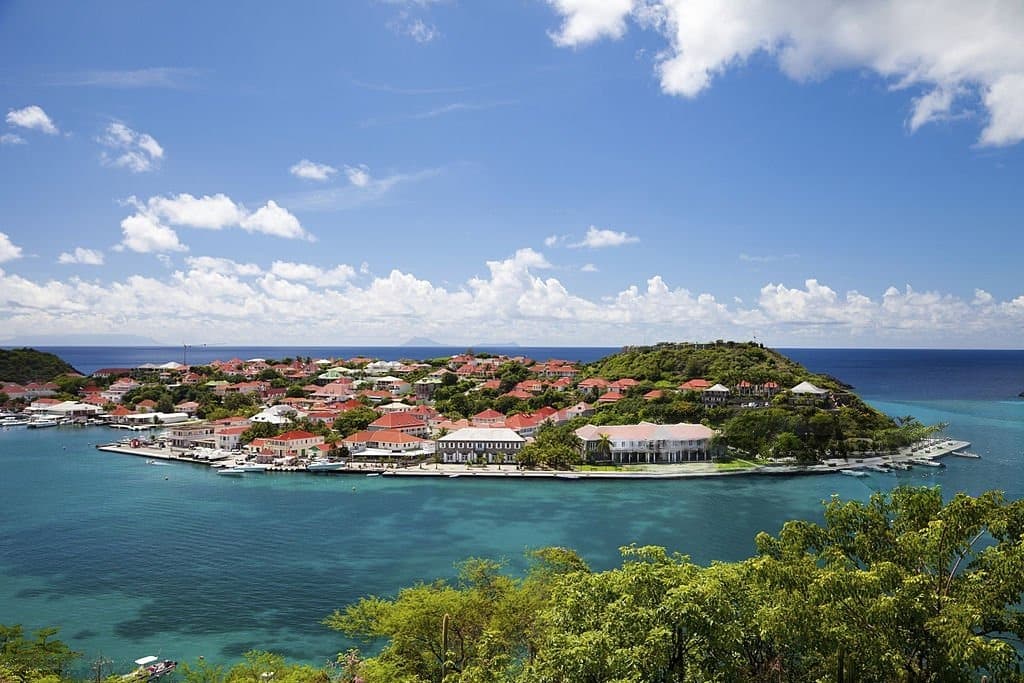
When you arrive in Saint-Barthélemy, the first thing you see as you disembark is the name of the capital: Gustavia. Not Sainte-Anne, not Saint-Jean, not a French name. Gustavia. This name marks the beginning of one of the Caribbean’s most unique colonial chapters: that of a French island that became Swedish for nearly a century.
A small island long considered unprofitable
With an area of 21 square kilometers and a population of 10,660 according to INSEE’s reference population figures as of January 1, 2023, Saint-Barthélemy has a multi-layered history. Christopher Columbus was the first known European navigator to report sighting the island in 1493, during his second voyage. He named it after his brother Bartolomeo.
The French established a permanent settlement there in 1648. Philippe de Longvilliers de Poincy, lieutenant general of the American Islands, sent Jacques Gante there with 52 men. Conditions were difficult. There was a shortage of fresh water, and the limited land available prevented the development of a large-scale sugar industry comparable to that of the neighboring islands. The inhabitants primarily cultivated cassava, yams, indigo, and tobacco, while also engaging in fishing and livestock farming.
However, this economy was not immune to the Caribbean slave system. The 1671 census already attests to the presence of enslaved Black men, women, and children, who were employed alongside free residents.
Saint-Barthélemy comes under Swedish sovereignty
The turning point came on July 1, 1784. The France of Louis XVI and the Sweden of Gustav III signed an agreement transferring the island to the Swedish kingdom. In exchange, France obtained trade privileges in the port of Gothenburg. The transfer took effect in March 1785, with the arrival of the Swedish governor Salomon von Rajalin.
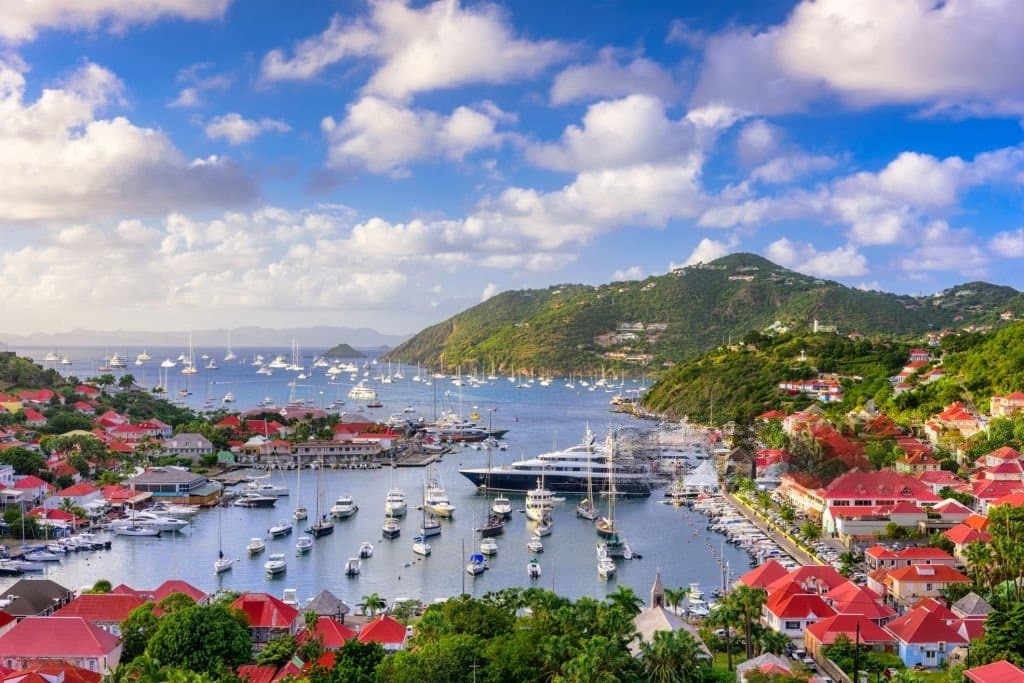
The town of Carénage was then renamed Gustavia, in honor of King Gustav III. On September 7, 1785, it was granted free port status. The economic landscape changed rapidly: thanks to its neutrality and strategic regional location, the port welcomed ships from several powers involved in the conflicts in the Atlantic. The island was briefly occupied by the British from 1801 to 1802, before being returned to Sweden.
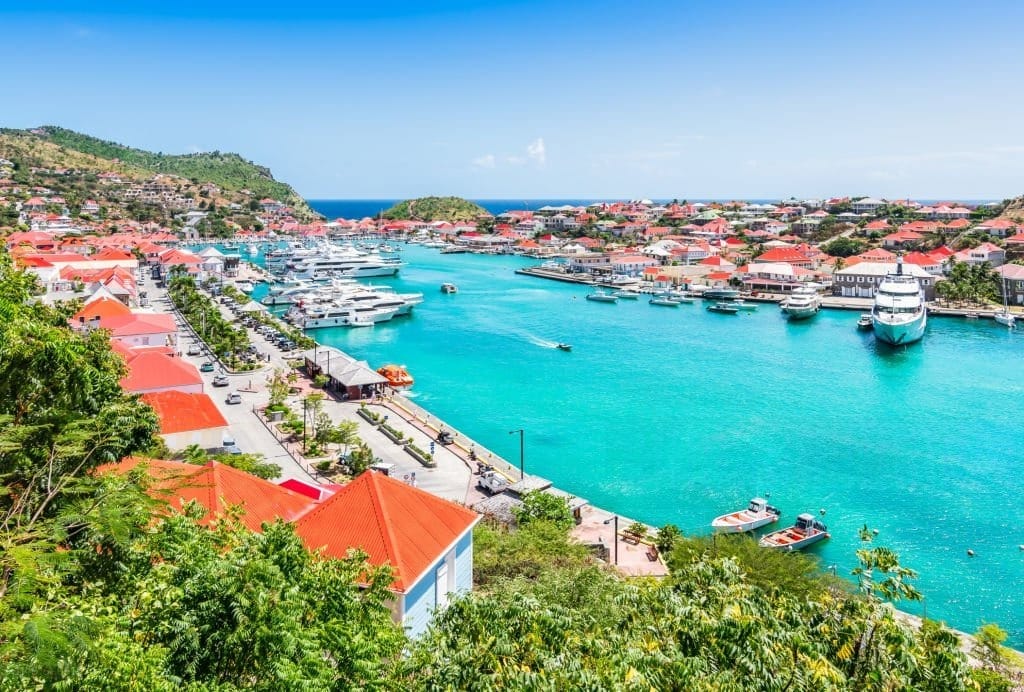
Around 1800, Saint-Barthélemy had a population of about 6,000, including nearly 5,000 in Gustavia. Stone and wooden buildings lined the streets, while Forts Gustaf, Karl, and Oscar protected the harbor. French and English were the dominant languages in everyday communication. Swedish remained primarily associated with the administration and a community of immigrants from the kingdom, which, according to the local museum, never exceeded 127 people at any one time.
But this prosperity was also built on slavery. As early as 1787, Swedish authorities enacted legislation governing enslaved people, and enslaved workers helped build Gustavia. Slavery was not abolished until October 9, 1847.

From Commercial Decline to a Return to France
Beginning in the 1820s, trade in Gustavia began to decline. The end of major European conflicts reduced the importance of the neutral port. Droughts, hurricanes, and epidemics further worsened the situation. On March 2, 1852, a fire destroyed 135 houses and much of southern Gustavia.
By the end of the 19th century, the administration of the island had become an increasing burden for Stockholm. A local referendum was held in 1877: of the 351 votes cast, 350 supported a return to France. On March 16, 1878, the Swedish flag was lowered, and Saint-Barthélemy officially became part of France once again.
A Swedish legacy that remains visible to this day
This period has not disappeared from the landscape. The name Gustavia, the forts, certain buildings, and several urban landmarks still serve as reminders of Swedish rule. The main archival collection from this period is now held at the National Overseas Archives in Aix-en-Provence, while the SweCarCol university project has digitized a significant portion of it.
The island subsequently underwent further institutional changes. Following the 2003 referendum, it left the departmental and regional framework of Guadeloupe in 2007 to become an overseas collectivity. Since 2012, it has been an overseas country and territory associated with the European Union, while retaining the euro.
Today, with its focus on luxury tourism, Saint-Barthélemy also stands as a testament to a history where trade, sovereignty, slavery, and urban memory intersect. Behind the name Gustavia, how many visitors still grasp the full story this capital city tells?


Saint-Barthélemy came under Swedish sovereignty following a treaty signed in 1784 between the France of Louis XVI and the Sweden of Gustav III. In exchange for the island, France secured trade privileges in the port of Gothenburg. The transfer took effect in March 1785. For Sweden, this possession served as a commercial foothold in the Caribbean.
Saint-Barthélemy remained under Swedish sovereignty from 1784 to 1878—nearly a century. Swedish administration took effect in 1785, while the official return to France occurred on March 16, 1878. A referendum held in 1877 had overwhelmingly approved this return.
The capital of Saint Barthélemy is named Gustavia in honor of King Gustav III of Sweden. Under Swedish rule, the former Carénage was transformed into a free port and became an important regional commercial center. The name Gustavia, the Gustaf, Karl, and Oscar forts, and several other urban landmarks still serve as reminders of this period.