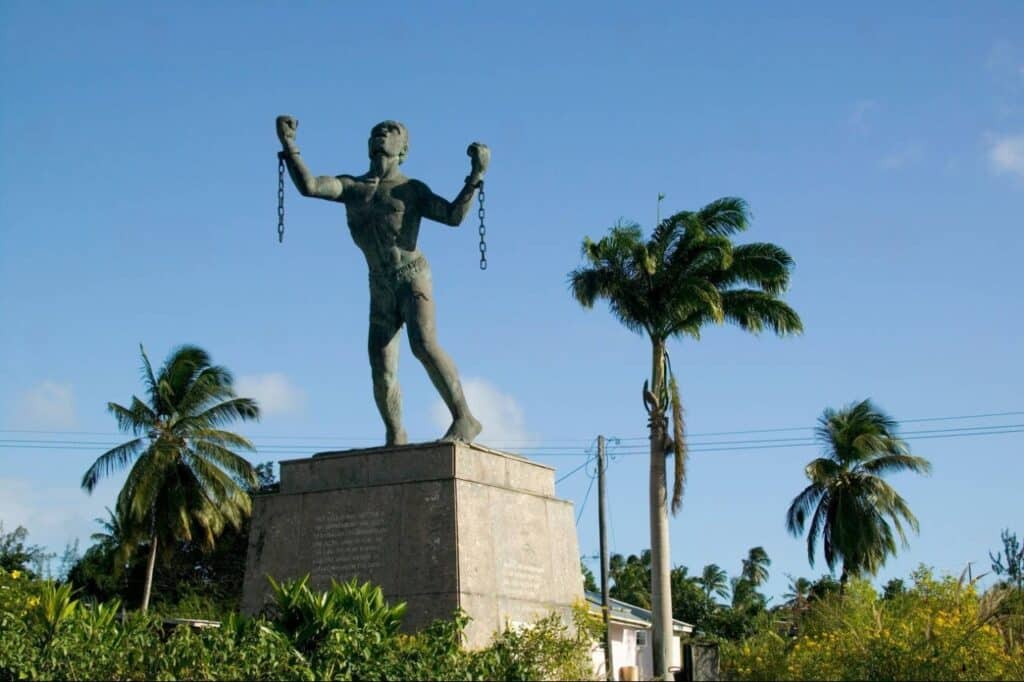
In Barbados, two bronze arms rise up, their wrists still encircled by broken chains. Sculptor Karl Broodhagen imbued this figure with a power that is immediately apparent: that of a body that now refuses enslavement. Often referred to as the Bussa statue, the work has become one of the most visible symbols of emancipation on the island. As August 1 approaches, this image serves as a reminder that Emancipation Day is more than just a holiday. In several former British colonies in the Caribbean, the date provides an opportunity for reflection. It invites us to consider the struggles, the suffering, and the freedoms won, but also what today’s societies choose to pass on.
Emancipation Day: What Does August 1 Actually Commemorate?
The Slavery Abolition Act was passed by the British Parliament in 1833 and took effect on August 1, 1834. However, that date did not mark complete freedom for everyone. A large proportion of formerly enslaved people were subjected to an “indentured servitude” system, which kept them working for their former masters.
This system came to an end in 1838 in the relevant British colonies. This timeline is crucial. It serves as a reminder that legal abolition and the actual exercise of freedom do not always coincide. Emancipation Day, therefore, has a more complex history than simply a break between slavery and freedom.
In Barbados, Bussa embodies resistance
The statue known as the Bussa Statue commemorates the revolt that broke out in Barbados in April 1816. The British National Archives describe it as an insurrection organized by enslaved women and men. Bussa, himself a slave, became one of its leading figures.
In Barbados, Emancipation Day also highlights the resistance movements that preceded abolition. The monument, therefore, does not merely recount a decision made in London; it places Caribbean action at the center of the narrative. The broken chains serve as a reminder that enslaved people were not merely beneficiaries of an imperial decision. They challenged the system, organized revolts, and defended their own vision of freedom.
In Jamaica, freedom looks up to the sky
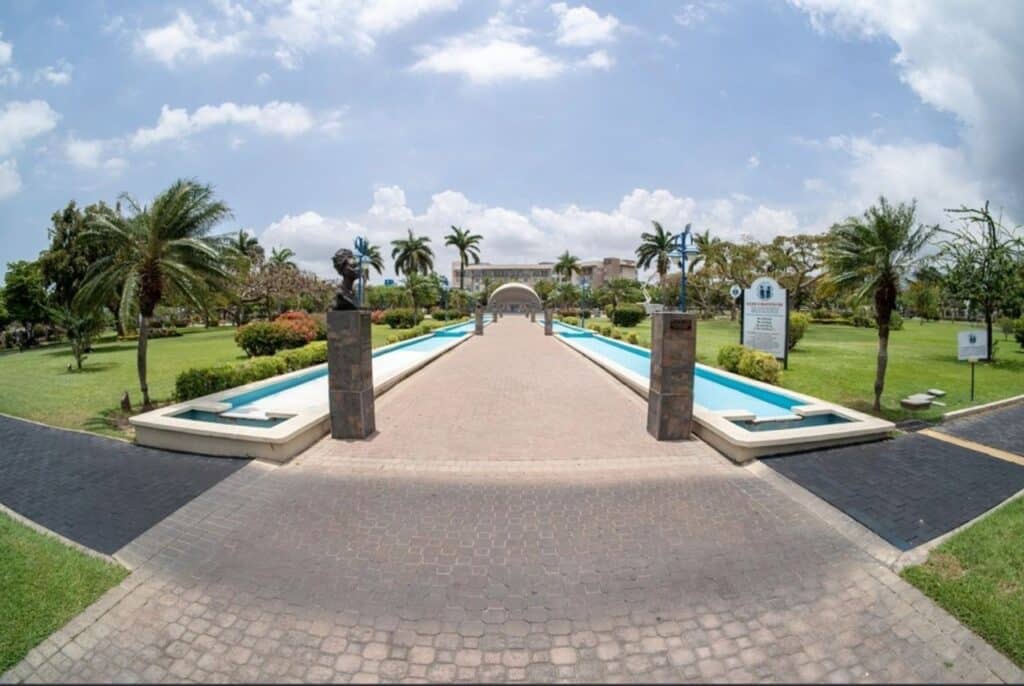
In Kingston, Emancipation Park is hosting “Redemption Song”, a sculpture by Laura Facey unveiled in 2003. Two black bronze figures—a woman and a man—stand naked, gazing toward the sky. The artist sought to depict a sense of elevation following the violence of slavery. In Jamaica, Emancipation Day thus finds a contemporary expression in the public sphere. The work does not seek to recreate a historical scene. Rather, it offers a symbolic language composed of bodies, water, and gazes. In a popular park in the heart of the capital, emancipation is no longer just a chapter in a textbook: it becomes an everyday presence.

In Dominica, Neg Mawon commemorates the freedom that was won
In Roseau, the Neg Mawon monument pays tribute to the Maroons and those who resisted the slave system. The Dominican government has presented it as a place intended to commemorate their role in the struggle for freedom. In Dominica, Emancipation Day recalls that the history of freedom was also shaped by marronage and resistance. The symbol affirms that emancipation began before 1834. It was also forged through escapes to the mountains, maroon communities, acts of defiance, and confrontations. This memory engages with sites associated with the history of slavery, such as the former market in Roseau.

One Date, Many Caribbean Memories
Barbados, Jamaica, and Dominica all commemorate a history tied to the British Empire, but they do not tell that story in the same way. One highlights a revolt and its heroes. Another turns to contemporary art to express liberation. The third emphasizes the Maroon legacy and sites of resistance. This diversity prevents the Caribbean from being reduced to a single narrative. Emancipation Day thus becomes a meeting point for distinct regional histories. Monuments, ceremonies, conferences, music, and community gatherings extend this memory beyond the archives.
The real challenge, however, remains the transmission of this history. Emancipation Day retains its power only if the commemoration helps us understand what was abolished, what has survived, and what continues to influence Caribbean societies. When the August 1 ceremonies come to an end, what place does this history hold in the lives and concerns of the younger generations?
Emancipation Day commemorates the abolition of slavery in several former British colonies. It is primarily celebrated on August 1 in various Caribbean territories.
August 1 marks the effective date of the Slavery Abolition Act in 1834. However, the “indentured servitude” system kept many formerly enslaved people in a form of forced labor until 1838.
Emancipation Day is celebrated with ceremonies, cultural activities, lectures, and community gatherings. Monuments such as the statue of Bussa in Barbados or “Redemption Song” in Jamaica also help to preserve this memory.