Tourism in the Dominican Republic: 1,083,448 Visitors in July—What Are the Economic Benefits?

Tourisme en République dominicaine

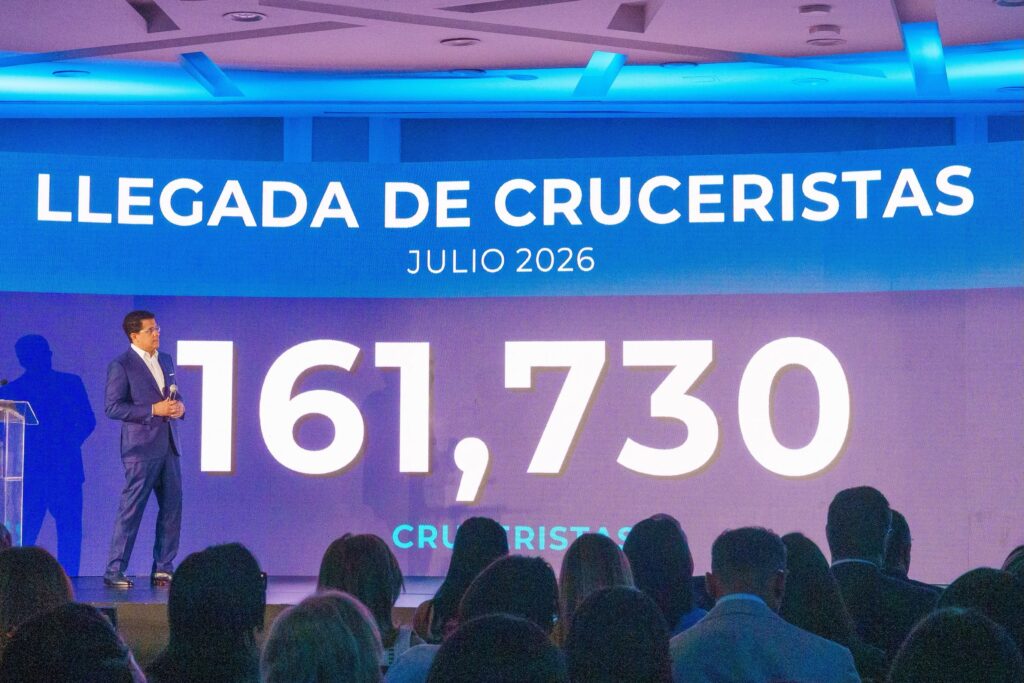
Standing in front of a screen displaying 1,083,448 visitors, Minister David Collado presented the results for July 2026. Behind this record-breaking tourism figure in the Dominican Republic, authorities want to highlight concrete impacts on employment, suppliers, and government revenue. But the figures also reveal a concentration of arrivals in just a few regions.

A New Milestone Reached in July

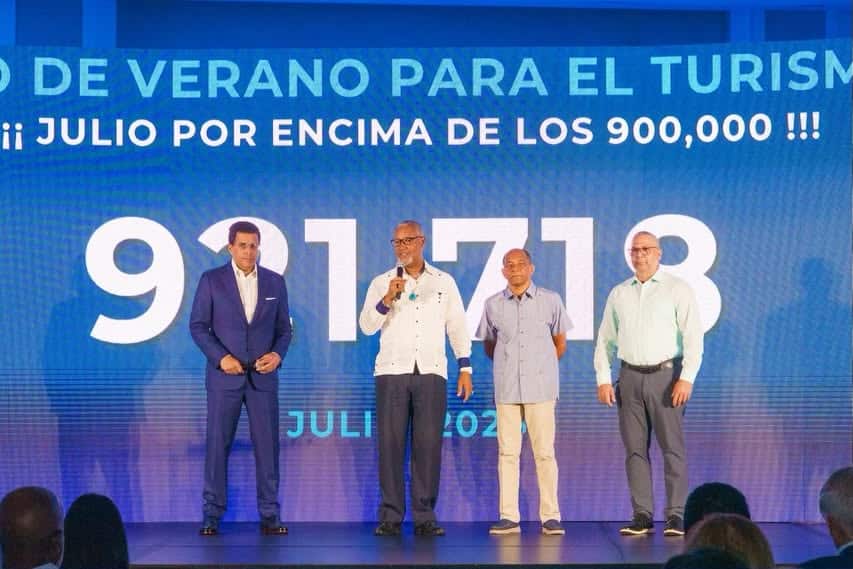
The Dominican Republic welcomed 921,718 tourists arriving by air and 161,730 cruise ship passengers in July, for a total of 1,083,448 visitors. This figure represents a 2.9% increase compared to July 2025, a 6.4% increase compared to 2024, and a 60.6% increase compared to 2019.

In the first seven months of 2026, the country welcomed a total of 7,700,118 visitors: 5,885,259 arrived by air and 1,814,859 by sea. The cumulative total is 7% higher than in 2025 and 10.4% higher than in 2024. Tourism in the Dominican Republic thus confirms a growth trend that is not based on a single exceptional month.

Dominican Republic
Dominican Republic

Punta Cana accounts for 58% of air arrivals

This is a national record, but the distribution remains uneven. In July, Punta Cana Airport handled 537,204 passengers, accounting for 58% of all air arrivals. Las Américas received 219,494 passengers, or 24%, while Cibao handled 119,662, or 13%. Puerto Plata accounted for 3%, compared with 1% each for La Romana and Samaná.

This breakdown highlights Punta Cana’s significance to tourism in the Dominican Republic. However, other destinations are also experiencing strong activity. Nationwide hotel occupancy reached 76%, with 92% in Bayahíbe, 83% in La Romana, 82% in Miches, and 80% in the Bávaro–Punta Cana area.

Dominican Republic

183,000 jobs generated by occupied rooms

Authorities estimate that hotels support more than 183,000 direct jobs and that approximately 605,000 people depend economically on the tourism industry. The kitchen is the largest source of hotel jobs, with 42,460 positions. Restaurants account for 28,991, and bars for 14,443.

In addition to these occupations are services, maintenance, security, tours, transportation, and retail. Yanira Eusebio, a beverage vendor on Guayacanes Beach, explained that the renovation of her sales stand and customer service training had helped her increase her income. Her story serves as a reminder that tourism in the Dominican Republic is not limited to hotel resorts.

Dominican Republic
Dominican Republic

Salaries, Suppliers, and Taxes

In July, the total payroll for hotels reached 4.77 billion Dominican pesos. Purchases from suppliers totaled 11.59 billion, or more than 374 million pesos per day. The sector also paid 8.729 billion pesos in taxes, according to data presented by the ministry.

The supply chain amplifies these benefits. According to Deputy Minister Jacqueline Mora, 92% of the farmland that supplies hotel kitchens is located outside the Eastern Region. Consequently, a portion of the spending generated by tourism in the Dominican Republic benefits producers located far from the popular beaches.

Dominican Republic
Dominican Republic
Dominican Republic

Do visitors leave the hotels?

Six out of ten tourists reportedly participated in activities outside their accommodations, including excursions, tours, snorkeling, or buggy rides. This tourism activity can support tour guides, transportation providers, restaurant owners, and small businesses. It also allows visitors to explore regions and cultural heritage sites beyond the scope of an all-inclusive vacation. Satisfaction levels remain high: an average of 4.4 out of 5, with 91% of respondents saying they would like to return and 59% stating they would recommend the destination.

Dominican Republic

What the record doesn't show yet

These results illustrate the sector’s economic strength, but not its full distribution. They do not specify job stability, wages by occupation, or the share of revenue retained in each municipality. Nor do they measure the impacts on housing, water, waste management, or coastal areas. The next challenge for tourism in the Dominican Republic will therefore be to transform record visitor numbers into sustainable value. After 1,083,448 visitors in July, the question is no longer just how many people are arriving, but how many local communities, workers, and businesses are thriving alongside them.

Dominican Republic

The Dominican Republic welcomed 1,083,448 visitors in July 2026. This total includes 921,718 tourists arrived by air and 161,730 cruise passengers.

According to data from the Ministry of Tourism, hotels support more than 183,000 direct jobs. In July 2026, they are said to have paid 4.77 billion pesos in wages, purchased 11.59 billion pesos in goods and services from suppliers, and generated 8.729 billion pesos in taxes.

Punta Cana remains the country’s main gateway for tourists. In July 2026, its airport welcomed 537,204 passengers, or 58% of air arrivals, ahead of Las Américas with 24% and Cibao with 13%.

Leave a Reply

Your email address will not be published. Required fields are marked *

More articles from RK

Tourisme en République dominicaine
TOURISM
Tolotra

Tourism in the Dominican Republic: 1,083,448 Visitors in July—What Are the Economic Benefits?

Standing in front of a screen displaying 1,083,448 visitors, Minister David Collado presented the results for July 2026. Behind this record-breaking tourism figure in the Dominican Republic, authorities want to highlight concrete impacts on employment, suppliers, and government revenue. But the figures also reveal a concentration of arrivals in just a few regions. A New Milestone Reached in July The Dominican Republic welcomed 921,718 tourists arriving by air and 161,730 cruise ship passengers in July, for a total of 1,083,448 visitors. This figure represents a 2.9% increase compared to July 2025, a 6.4% increase compared to 2024, and a 60.6% increase compared to 2019. In the first seven months of 2026, the country welcomed a total of 7,700,118 visitors: 5,885,259 arrived by air and 1,814,859 by sea. The cumulative total is 7% higher than in 2025 and 10.4% higher than in 2024. Tourism in the Dominican Republic thus confirms a

Read More »
Walk good
HISTORY & HERITAGE
Tolotra

“Walk Good”: Why Doesn’t Jamaica Just Say Goodbye?

On the eve of Jamaica’s Independence Day, celebrated on August 6, two words capture a unique way of saying goodbye. “Walk good” means more than just “goodbye”: the phrase wishes the person leaving to stay safe, travel safely, and continue on their way under favorable conditions. A few words spoken as we set off Imagine a late afternoon in Jamaica. A visit is coming to an end. The door opens. Someone walks down the steps and heads out onto the road. Behind him, a voice simply calls out: “Walk good!” The person doesn’t just receive a greeting. They take a gesture of care with them. This short phrase conveys the idea of setting off safely, taking care of oneself, and arriving safely at one’s destination. The Jamaica Tourist Board also presents “Walk good” as a farewell greeting that can mean “goodbye,” “take care,” or “have a safe trip.” It is

Read More »
Indigenous Peoples' Days
EVENT MANAGEMENT
Tolotra

Indigenous Peoples’ Days 2026: Nine Days to Pass on a Living Heritage

From August 6 to 14, 2026, French Guiana will host the 2026 Indigenous Peoples’ Days, featuring conferences, ceremonies, workshops, exhibitions, gatherings, and film screenings in several municipalities. Behind this program lies a key objective: to enable Indigenous peoples to pass on their memories, languages, traditional knowledge, and connection to the land in their own way. A program led by Indigenous voices In Rémire-Montjoly, the first events will focus on life stories, spirituality, and literary creation. The conference dedicated to Alwin Manewamo-Karwofodi will be led by his daughter, Mikke Manewamo, alongside several other speakers. The following day, authors, organizations, and community leaders will present books and resources dedicated to the Indigenous cultures of French Guiana. This choice matters. It avoids discussing Indigenous peoples solely from an outside perspective. Instead, the 2026 Indigenous Peoples’ Days highlight those who are currently creating, passing on, teaching, and defending their cultural heritage. Literature, personal accounts,

Read More »

conTACT RK

we'd love to have your feedback on your experience so far

Join The List

Join our Richès Karayib community!  Sign up for our newsletter.

Want To Maximize Your Business Presence On Riches Karayib?

Complete the form to start the application