Annalee Davis: Transforming a Former Plantation into a Place of Healing

Annalee Davis

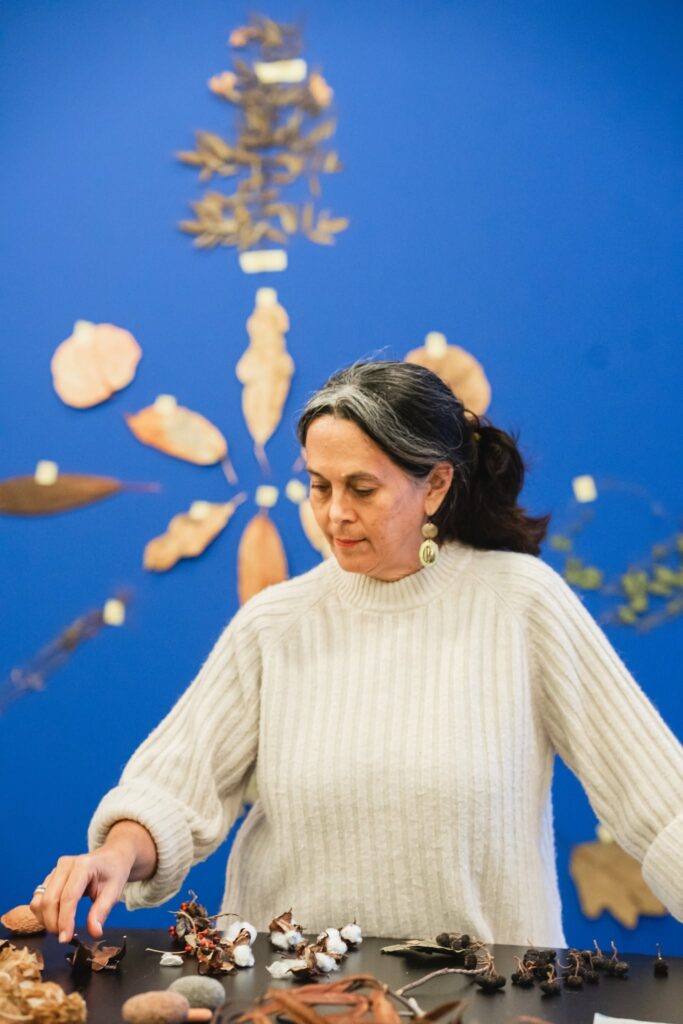
In Venice, Annalee Davis did not bring any abstract images of Barbados. For the 2026 Art Biennale, the artist brought plants from her garden, textiles, drawings of palm trees, and a life-size reproduction of a bird now believed to be extinct to the Arsenale. Behind this installation, a single question runs through her work: what to do with a land whose history remains steeped in plantation culture?

Creating from the very heart of history

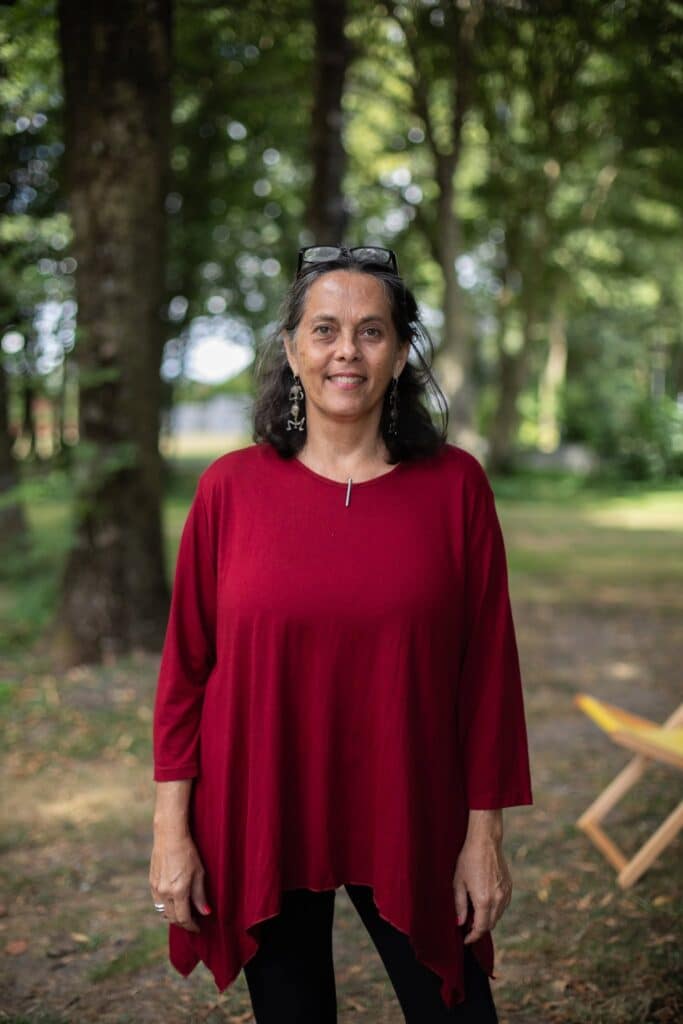
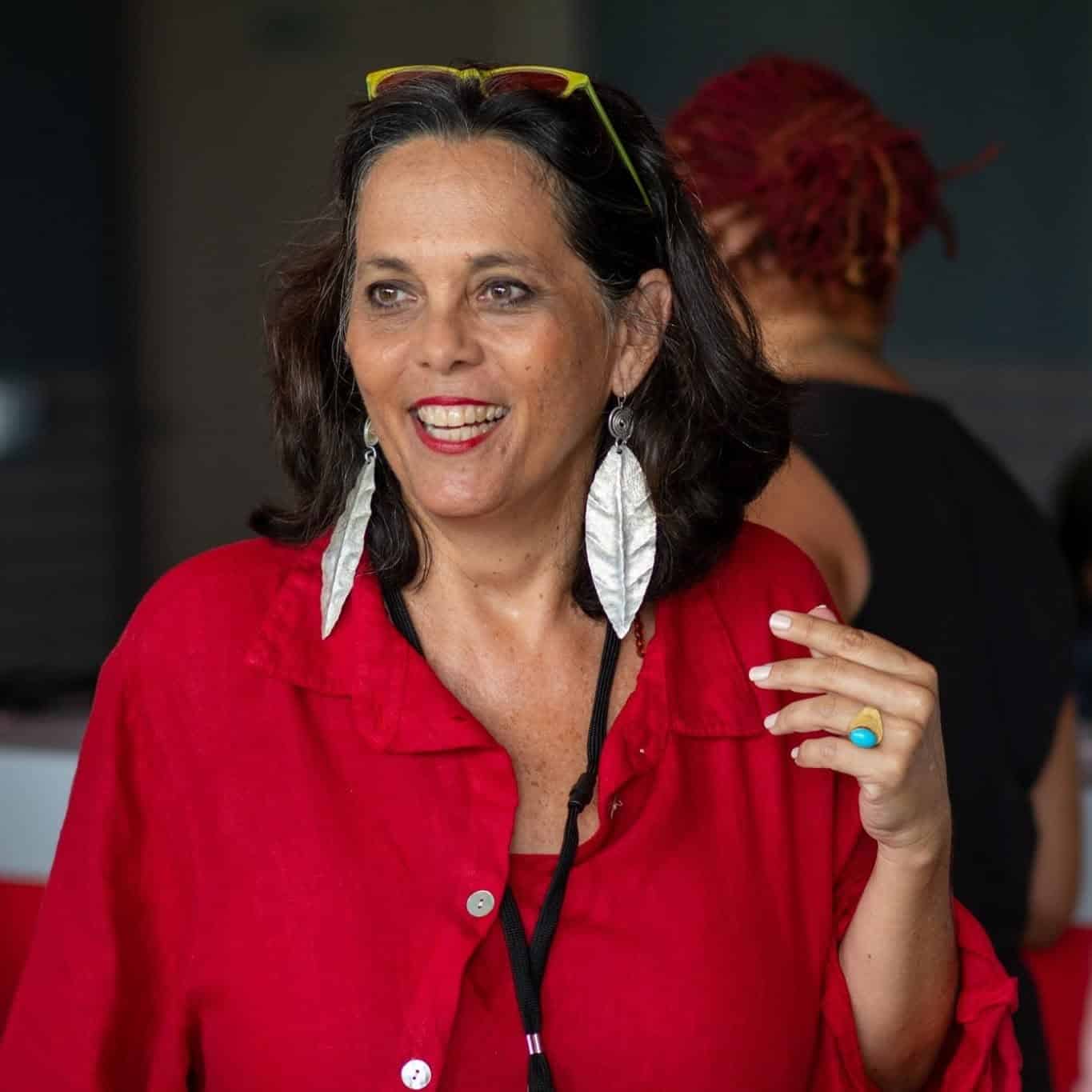
Annalee Davis was born in 1963 in Saint Michael and now lives in Saint George, in the Barbados. Her studio is located at Walker’s Dairy, on a former sugar plantation where her Creole family has lived for several generations. The place is not merely a backdrop: it shapes her practice. Her family history adds a special depth. The estate, a former sugarcane plantation, was acquired by her paternal great-grandmother before being converted into a dairy farm. Annalee Davis has lived and worked there for over twenty years. The land thus becomes at once a family archive, a trace of the colonial system, and a space of the present.

An Artist at the Intersection of Biography, History, and Place

A visual artist, author, educator, and cultural organizer, Annalee Davis explores the intersection of biography and history. She is interested in “post-plantation economies” and the ways in which colonial legacies continue to shape Caribbean landscapes and societies. Her commitment extends beyond her own studio. She is the founding director of Fresh Milk and has co-founded several pan-Caribbean artistic initiatives, including Caribbean Linked, Tilting Axis, and Sour Grass. For her, creating is not just about producing artworks, but also about building spaces where artists from the region can meet, circulate, and think together.

Annalee Davis
Annalee Davis

After planting, what will happen to the soil?

For more than a decade, Annalee Davis has been exploring what she calls post-plantation restoration. The idea isn’t to erase the past. Rather, it’s about examining what it has left behind in the soil, in customs, in social relationships, and in memories—and then imagining new ways of relating to the place. At Walker’s Dairy, she walks, observes, cultivates, and works with plants. Gardens, medicinal herbs, and living plots become ways to reflect on healing, care, and passed-down knowledge. Her work thus reimagines planting: from an inherited economic system, it becomes a terrain to be reinterpreted, challenged, and transformed.

Annalee Davis
Annalee Davis

Repair Without Deleting

This is what makes Davis’s approach unique. She does not seek to transform a former plantation into a static heritage site. Instead, she works with its inherent contradictions. The site was once a sugar plantation, then a dairy farm; the artist notes that it is now in the process of transitioning to a business related to alternative energy. This succession of uses already tells the story of several lives within the same territory. Davis adds another possibility: that of a space capable of preserving traces of the past while generating new uses, new knowledge, and new forms of care. Here, “reparation” is therefore not synonymous with “forgetting.”

From Barbados to Venice

With “Let This Be My Cathedral”, presented at the 2026 Arte Biennale, this reflection takes on a particularly concrete form. The installation includes, among other things, a wall herbarium made up of plants grown in her Barbadian garden, a hand-embroidered textile, drawings of palm trees on the floor, and a life-size reproduction of the Eskimo curlew. The bird has a specific history: it was last sighted in Barbados in 1963, the year of the birth of Annalee Davis, and the species is now presumed extinct. In this way, the artist connects ecological memory, colonial history, and extinction. Venice does not erase Barbados: it becomes the place where a very local fragment of its landscape takes on a broader significance.

Annalee Davis
Annalee Davis
Annalee Davis
Annalee Davis

The Earth as an archive, but also as a possibility

Annalee Davis’s portrait ultimately tells less of a story about the conversion of a plantation than it does of a different way of looking at the land. The same soil can bear the violence of a system, the stories of a family, medicinal plants, agricultural practices, and contemporary artworks. This is where her work becomes distinctly Caribbean without seeking to speak on behalf of the entire Caribbean: it starts from a specific place and embraces its complexity. If former plantations are archives of the past, can they also become spaces where we can invent other futures?

Annalee Davis is a Barbadian visual artist, author, educator, and cultural organizer. Her work explores, among other things, the connections between colonial history, memory, territory, ecology, and the legacy of plantations in the Caribbean.

Annalee Davis lives and works at Walker’s Dairy, a former sugar plantation in Barbados linked to her family history. She uses this place to reflect on the legacies of the plantation and to envision new relationships between land, memory, creation, and healing.

Let This Be My Cathedral is the installation presented by Annalee Davis at the 2026 Venice Art Biennale. It combines plants from her Barbadian garden, textiles, drawings of palm trees, and ecological memory to explore the history and transformation of territories.

Leave a Reply

Your email address will not be published. Required fields are marked *

More articles from RK

Association des États de la Caraïbe (AEC)
NEWS
Tolotra

Association of Caribbean States (ACS): Martinique joins the Executive Board on Trade.

Martinique is taking on a new role within the Association of Caribbean States. For 2026–2027, it will join the Executive Bureau of the Special Committee on Trade Development and External Economic Relations as Rapporteur. Behind this institutional role lies a very concrete challenge: better integrating transportation, logistics, and access to markets in the Greater Caribbean. Sandra Casanova at the center of this new phase Sandra Casanova, a member of the Martinique Assembly and chair of the territory’s Committee on Logistics Strategy, Research, and Innovation Policy, will assume this responsibility. The Executive Bureau consists of the Dominican Republic as chair, Colombia and Guatemala as vice-chairs, and Martinique as rapporteur. In this role, the territory helps to formalize the Committee’s work and to document the positions and decisions resulting from its discussions. The Executive Committee held its first meeting on August 13, at the invitation of the ACS’s Directorate of Transportation, Trade,

Read More »
Annalee Davis
HISTORY & HERITAGE
Tolotra

Annalee Davis: Transforming a Former Plantation into a Place of Healing

In Venice, Annalee Davis did not bring any abstract images of Barbados. For the 2026 Art Biennale, the artist brought plants from her garden, textiles, drawings of palm trees, and a life-size reproduction of a bird now believed to be extinct to the Arsenale. Behind this installation, a single question runs through her work: what to do with a land whose history remains steeped in plantation culture? Creating from the very heart of history Annalee Davis was born in 1963 in Saint Michael and now lives in Saint George, in the Barbados. Her studio is located at Walker’s Dairy, on a former sugar plantation where her Creole family has lived for several generations. The place is not merely a backdrop: it shapes her practice. Her family history adds a special depth. The estate, a former sugarcane plantation, was acquired by her paternal great-grandmother before being converted into a dairy farm.

Read More »
Maisons cunucu
HISTORY & HERITAGE
Tolotra

Cunucu Houses: How Did Aruba Build Them Using the Trade Winds?

In Aruba, an old house can tell more than just the story of a building. It speaks of the wind, the heat, the cultivated land, and a way of life on the island before air conditioning. The Cunucu houses demonstrate how local architecture could work in harmony with its environment. A home, a family, a landscape In Pos Abou, Cas Tan Tin preserves the memory of Mario and Johanna Tromp. Built around 1900, the house was where their nine children grew up. Mario grew fruits and vegetables around the house for the family. In 2019, the Stichting Monumentenfonds Aruba acquired this home to help preserve it. Cas Tan Tin offers a glimpse into the history of cunucu houses through everyday life. These buildings evoke a rural Aruba, where the home, crops, and land formed a single living space. The word “cunucu” refers to the island’s rural and agricultural areas. The

Read More »

conTACT RK

we'd love to have your feedback on your experience so far

Join The List

Join our Richès Karayib community!  Sign up for our newsletter.

Want To Maximize Your Business Presence On Riches Karayib?

Complete the form to start the application