
Stories of Caribbean Cinema – Texts by Guillaume Robillard. Ciclic, 2026.

cinémas caribéens

Thus, the history of Caribbean cinema did not begin until the 1960s, even though films had been shot in the Caribbean since the early 20th century—notably two short films by the Lumière brothers in Martinique in 1902. In fact, it is common to make a clear distinction between films shot in the Caribbean and films made by filmmakers from the various islands of this archipelago.

Clearly, this overview begins with Cuban cinema, whose professionalism, richness, and diversity—which have already inspired an extensive body of literature—set it apart within this geographic region.
As for productions from Jamaica, Trinidad and Tobago, and the Dominican Republic, they display a certain consistency punctuated by pleasant surprises, while in Haiti, a semi-professional film industry was long prolific and enjoyed a large audience.

On the other hand, across the region, a few small countries produce films on a limited scale (Saint Lucia, Grenada) or infrequently (Barbados, Puerto Rico) produce films whose themes overlap with those of other regional film industries, reflecting a shared “Caribbean spirit” despite the obvious diversity of these productions.

As for “Caribbean cinema”—specifically from Guadeloupe and Martinique—it now comprises some forty films, most of whose plots are set on these two islands.
Finally, it should be noted that this timeline focuses on the insular Caribbean, and thus does not include films from the mainland, such as those from French Guiana or Mexico. It’s worth noting that most Caribbean films are available on free or paid streaming platforms for everyone to enjoy.

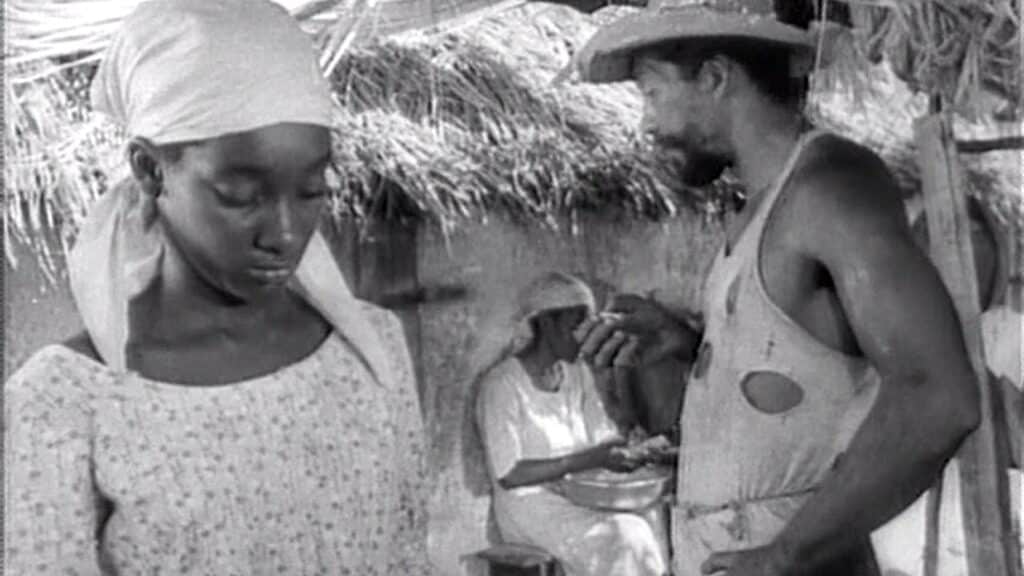
1964: CUBA - *Cumbite*, by Tomás Gutiérrez Alea

The third feature film by the renowned Cuban director Tomás Gutiérrez Alea, one of the co-founders of the ICAIC (Instituto Cubano del Arte e Industria Cinematográficos), the renowned Cuban film school that has trained generations of Latin American professionals, is an adaptation of one of the classics of Haitian literature, *Gouverneurs de la rosée* by Jacques Roumain. After leaving for the island of Cuba, where he worked in the sugarcane fields, the protagonist, Manuel, returns to his small rural village in Haiti, which has been ravaged by drought.

The hero then sets out in search of water and finds a hidden spring. He will only succeed in the mission he has set for himself—a mission that will cost him his life—without his beloved Annaïse and his mother Délira. Thanks to them, the villagers come to realize the need to come together as a community through “coumbite”—a Creole word meaning collective work based on mutual aid—and bring water to the village. Addressing the issue of rampant deforestation, which has left a deep mark on Haitian history, the book has a strong ecological dimension that is generously reflected in its film adaptation.

A worthy heir to Italian neorealism (the director studied film in Italy), this film oscillates between grand visual classicism (composition of light and framing, photogenic portraits, fluid editing) and cinéma du réel, particularly in a striking voodoo sequence (an African religion still practiced in Haiti) that rivals the famous documentary *Divine Horsemen* by the Russian filmmaker Maya Deren (shot between 1947 and 1951), which is considered a seminal work on the subject. Last but not least: *Cumbite* is one of the very first—and exceptionally beautiful—adaptations of a work from Caribbean literature.

cinémas caribéens
Cumbite de Tomás Gutiérrez Alea ,1964 ©ICAIC – Cuba

1966: CUBA – THE DEATH OF A BUREAUCRAT (LA MUERTE DE UN BUROCRATA), BY TOMÁS GUTIÉRREZ ALEA

At the very beginning of the film, we witness the funeral of a man who is buried with his worker’s ID card to honor his commitment to the working class. However, this card turns out to be an essential document for his widow if she is to receive a pension. Needing to recover this precious item but unable to have the body exhumed, a nephew of the deceased goes so far as to illegally dig up his uncle’s grave, triggering a cascade of administrative dead ends…

This film, influenced by 1960s Italian comedy, captivates with its formal freedom (including the use of photographs and time-lapse editing, among other techniques), which is rare in Caribbean cinema. Furthermore, it exhibits strong intertextuality with a group of filmmakers, credited in the opening credits (typed on a typewriter onto a piece of official paperwork, in keeping with the film’s subject matter): a montage of various archival footage to depict the life of the deceased (echoing *Citizen Kane* by Orson Welles), and stop-motion animation featuring a “human shredder” machine (a nod to Modern Times by Charlie Chaplin), and a dream sequence referencing *Un Chien Andalou* by Luis Buñuel, etc.

This interplay of references, a sign of a deep knowledge of cinema, does not, however, make it a European or American film. Indeed, deeply rooted in Cuban society, the plot explores how a regime (in this case, Fidel Castro’s) can itself become an “absurd” bureaucracy despite its stated intention to do away with bureaucracy (“Muerte a la burocracia,” as stated several times in the film).

Furthermore, the Native American heritage of the protagonist—who faces the wrath of the administration, the majority of whose representatives are of European descent—may subtly suggest a “racialized” Cuban social hierarchy. This critical examination of the limitations of a regime—or, more broadly, of the exercise of power—is continued in the equally famous *Memoirs of Underdevelopment* (1968), the director’s next film, which takes a more overtly political stance and was honored with a screening at Cannes Classics in 2016.

cinémas caribéens
UN BUROCRATA), DE TOMÁS GUTIÉRREZ ALEA 1966 Au tout début du film, on assiste à la cérémonie funéraire d’un homme qui est enterré avec sa carte de travailleur afin d’honorer son engagement pour le prolétariat. Cependant, cette carte s’avère être un document essentiel pour sa veuve si elle veut obtenir une pension. Devant récupérer ce précieux objet et ne pouvant faire exhumer le corps, un neveu du défunt ira jusqu’à déterrer illégalement son oncle, impliquant une série d’impasses administratives en cascade… Ce film, influencé par la comédie italienne des années 1960, fascine par sa liberté formelle (utilisation de photos et de montages accélérés, entre autres), rare dans les cinémas caribéens. Par ailleurs, il manifeste une forte intertextualité avec un ensemble de réalisateurs, cités au générique (inscrit à la machine à écrire sur un papier administratif, en adéquation avec le sujet du film) : montage d’archives diverses pour présenter la vie du défunt (en écho à Citizen Kane d’Orson Welles), animation en stop motion avec une machine « broyeuse » d’hommes (en clin d’oeil aux Temps Modernes de Charlie Chaplin), une séquence de rêve faisant référence au Chien andalou de Luis Buñuel, etc. Ce jeu de références, signe d’une grande culture cinéphilique, n’en fait pourtant pas un film européen ou étasunien. En effet, fortement ancrée dans la société cubaine, l’intrigue interroge comment un régime (en l’occurrence de Fidel Castro) peut à son tour devenir une bureaucratie « absurde » malgré ses intentions de mise à mort de la bureaucratie (« Muerte a la burocracia » comme indiqué à plusieurs reprises dans le film). Par ailleurs, l’origine amérindienne du protagoniste qui subit les foudres de l’administration, dont la majorité des représentants est d’origine européenne, indique peut-être discrètement une hiérarchie sociale cubaine « racialisée ». Cette charge critique sur les limites d’un régime, ou plus largement de la pratique du pouvoir, sera poursuivie dans le non moins célèbre Mémoires du sous-développement (1968), le film suivant de ce réalisateur, aux accents plus frontalement politiques et qui eut l’honneur d’une projection à Cannes Classics en 2016.

1972: JAMAICA – *THE HARDER THEY COME*, BY PERRY HENZELL

This film marks the beginning of Jamaican cinema and would establish a “formula” that has since been widely emulated: a focus on Jamaican music—primarily reggae, whose international fame is well established—as seen through the journey of the young singer Ivan (played by the famous Jimmy Cliff) in search of a producer, but also of Jamaican Creole (a mixed form of English with a distinctive accent and phrasing) as a Caribbean “linguistic anchor,” and, finally, the figure of the rebellious hero standing up against a “system” deemed unjust or repressive.

The potential of the urban landscape (in this case, Kingston) is also highlighted: the film’s opening features some of the most beautiful images capturing the city’s energy at that time, paired with stunning portraits. Furthermore, the “baroque” and “fragmented” architecture of the impoverished neighborhoods is given extensive screen time. Against the backdrop of religion’s heavy influence, a love story unfolds, marked by flirtation and a bit of nudity.

Confrontations with law enforcement—particularly in the form of gunfights—and prison scenes are also featured, including a notable sequence of physical punishment. All of these elements—with the exception of the figure of the rebel (or resistance fighter)—were virtually absent from French West Indian cinema (for example) for nearly thirty years, with very few exceptions. While being pursued by a police officer on a motorcycle, the protagonist shoots at the officer as an act of defiance against the established order: a multi-stage chase ensues, ending in the mangroves and concluding on a beach where he attempts to reach Cuba (an island considered revolutionary) by boarding a boat.

On the city’s walls, you can see graffiti that says things like ” I was here but I disappeared ” (“I was here but I disappeared”), all of which evoke the image of a maroon (a slave fleeing the plantation) “modern” maroon who stands in opposition to a society where the wealthy (producers, for example) and those in authority (police commissioners) are subtly mixed-race or white, while the impoverished Black population yearns for comfort (“ You can get it if you really want it; you’ll succeed in the end / “You can have it if you really want it; you’ll finally succeed,” says a song from the movie as Ivan drives down a golf course in a stolen luxury car: a “racialized” social hierarchy that strangely echoes the colonial past.

cinémas caribéens
Tout, tout de suite (The Harder They Come) de Perry Henzell , 1972 ©Perry Henzell-International Films Ltd/Agnès B/Potemkine – Jamaïque

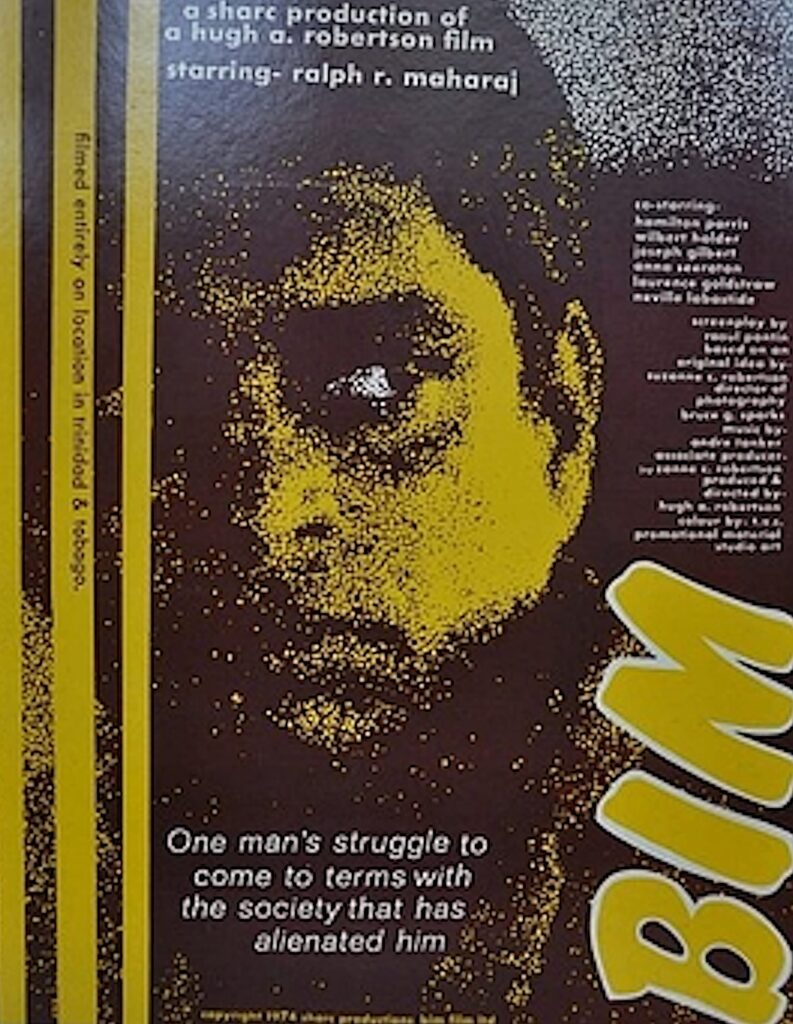
1974: TRINIDAD AND TOBAGO – BIM, BY HUGH A. ROBERTSON

Hugh A. Robertson has had an unconventional career path among Caribbean filmmakers. A New Yorker born to Jamaican parents, he got his start in the film industry at a very young age and held various positions, including that of editor on films such as the famous *Macadam Cowboy* (John Schlesinger, 1969), starring Dustin Hoffman and John Voight, and one of the classics of Blackploitation, *Shaft: The Red Nights of Harlem* (Gordon Parks, 1971), starring Richard Roundtree.

For his first film, he was nominated for an Oscar for Best Film Editing (a first for a Black person) and won the BAFTA that same year. After directing a few television projects and the feature film *Melinda* (1972)—a “Black Film,” as the poster put it—he moved to Trinidad and Tobago with his wife and children, where he directed Bim and then *Obeah* (1987), his second film, which was released upon the director’s death. Bim, modeled after the classic plot of a gangster movie, follows the life of a Trinidadian of Indian descent who, after enduring years of bullying from childhood onward, becomes a crime boss who eventually enters politics.

What is striking about this film is the direct nature of the interethnic conflicts—particularly between people of African and Indian descent (each group accounting for about 40 percent of the island’s population)— from schools to the political arena (where the white minority seems to be “pulling the strings”) and even into married life. Some sequences have a strong ethnographic dimension: for example, the film begins with a traditional Hindu wedding. While this wedding is predominantly urban, much like *The Harder They Come* (Perry Henzell, 1972), Trinidad and Jamaica, which have major historic cities—Port-of-Spain and Kingston, respectively, work in the sugarcane fields—the historical foundation of most Caribbean societies—is highlighted in a plot set during the colonial era, amid the fervor for independence in the 1950s and 1960s.

The strong political consciousness of this film echoes certain Trinidadian films that preceded it, such as *The Right and the Wrong* (1970) by Indian director Harbance Kumar, which depicts a revolt on a plantation at an unspecified time. Furthermore, Bim stands out for its energy and Ralph Maharaj’s impressive performance in the lead role. Given Robertson’s standing in the U.S. film industry, it’s not unreasonable to think that Brian De Palma might have seen his film, given Al Pacino’s brilliantly over-the-top performance in Scarface (1983) is so strongly reminiscent of Bim on several occasions.

cinémas caribéens
Bim de Hugh A. Robertson, 1974 ©Filmco – Trinidad-et-Tobago

1976: CUBA - THE LAST SUPPER (LA ÚLTIMA CENA), BY TOMÁS GUTIÉRREZ ALEA

This classic is a must-see film about the portrayal of slavery in the Caribbean, just as *Twelve Years a Slave* is for the southern United States, *Twelve Years a Slave* (Steve McQueen, 2013). Inspired by the novel *El Ingenio* (*The Plantation*) by Manuel Moreno Fraginals (which itself is based on true events), the plot of La Última Cena takes place on a slave plantation in Cuba in the 18th century, during Holy Week.

A wealthy landowner, a devout Catholic nobleman, decides to reenact the Last Supper around a lavishly set table, in the presence of twelve of his slaves. The group eats and drinks to their hearts’ content. The next day, the foreman wakes the slaves to send them to work in the sugarcane fields. A revolt breaks out… In a cinema that, at first, rarely addressed the “Black Question” (to borrow the title of a book by the Trinidadian intellectual C.L.R. James), this film confronts the history of slavery—shared by the vast majority of Caribbean countries—through a visual and auditory portrayal of rare meticulousness regarding the “racialized” hierarchy specific to plantations: white and Black bodies do not occupy the same space (both literally and figuratively) nor do they have the same right to speak.

The banquet sequence (the famous reenactment of the Last Supper), which lasts nearly 45 minutes, displays great mastery both in terms of theater (dialogue and the actors’ performances) and cinema (technical editing, in which changes in camera angles reflect the power dynamics between characters). As for the final third of the film, it is one of the most beautifully staged depictions—through both camera movements and the framing of bodies and landscapes—of a slave revolt followed by a mass escape (the slaves’ flight from the plantation) ever made. A true masterpiece!

cinémas caribéens
La Dernière Cène (La Última Cena) de Tomás Gutiérrez Alea,1976 ©ICAIC – Cuba

1979: GUADELOUPE - "COCO LA FLEUR," DIRECTED BY CHRISTIAN LARA

This film by the most prolific director from the French Antilles—who achieved the remarkable feat of directing nearly 25 films (even if it was sometimes under challenging technical conditions)—heralds the arrival of Antillean cinema. Two years earlier, in Martinique, the feature film *Dérives ou la femme-jardin* (1977), directed by Jean-Paul Césaire—one of the sons of the poet, politician, and champion of Négritude, Aimé Césaire—had not been given the chance for a commercial theatrical release.

Loosely based onAn Island in the Sun by Robert Rossen (1957), starring the famous Harry Belafonte, *Coco la Fleur, Candidate* is a political comedy that follows the journey of Coco, a so-called “apolitical” candidate controlled by technocrats from the prefecture, who decides during the campaign to take an interest in the future of his “country.” The demand—at the very least—for autonomy for Guadeloupe and Martinique is directly raised by the lead protagonist of this emerging cinema, who repeatedly takes on the role of the traditional Creole storyteller, a central figure in this body of films.

Furthermore, this film makes extensive use of the Creole language. It was a resounding success, drawing more than 100,000 viewers in Guadeloupe and Martinique, according to various sources, and remained in the lineup at the Louxor cinema in Paris for several years. An effective blend of lightheartedness and political statements that the director would brilliantly revisit in his third film, *Mamito* (1980), another classic of this cinematic tradition, whose main character is a Creole mother (a single mother raising her children), played by the indispensable Lucrèce Saintol (who also plays Coco’s mother), clearly illustrating the “femifocality” of Caribbean cinema—namely, the near-systematic presence of strong women (fanm doubout) in this cinema. This significant presence of women was foreshadowed in *Dérives ou la femme-jardin*, a film loosely based on the short story Alléluia pour une femme-jardin by Haitian author René Depestre, featuring its enigmatic protagonist Isa.

cinémas caribéens
Coco la fleur, candidat de Christian Lara, 1979 ©Rush Distribution – Guadeloupee

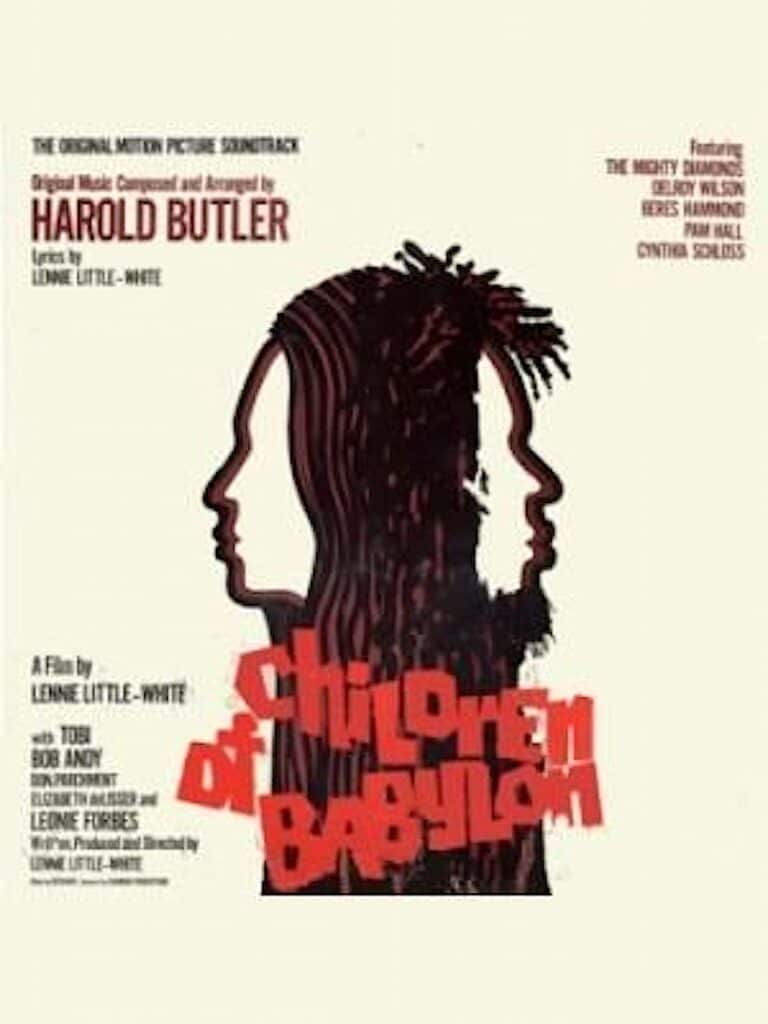
1980: JAMAICA – *CHILDREN OF BABYLON*, BY LENNIE LITTLE-WHITE

This film is unique in Jamaican cinema and, more broadly, in Caribbean cinema as a whole. Far from the social deprivation of Kingston’s ghettos, in a villa in the countryside (complete with a swimming pool, champagne, and a gourmet buffet), we follow the adventures of Rick and Penny—a Black man and a white woman—as they discuss art (he’s a painter) and sexuality (she’s conducting research on the subject among rural women—whom we never see on screen).

The film is structured as a “closed-door” drama: a single setting and time counted down on a calendar. The two protagonists experience a passionate romance marked by multiple sexual encounters, parallel to those of a strangely silent maid and Luke, a Rastafarian henchman, who maintain the villa. This film embodies the free-spirited tone of the rise of erotic cinema as well as the emergence of pornographic movie theaters in the 1970s.

Nevertheless, it stands out in Caribbean cinema, where depictions of the sexual act remain rare, with foreplay (kissing, in particular) or the moment afterward often taking center stage, just as nudity is almost always partial—at least in the early decades of these film traditions. Here, however, the nudity is full-frontal—particularly for comedic effect—in a beach sequence where, while swimming naked, the couple finds themselves temporarily without clothes after they’re stolen by mischievous children. Two “romantic” threesomes will complicate the plot, all under the curious gaze of the servants: Rick with Penny and another white woman—a situation that will cause the couple to break up—and then Penny with Luke, the Rastafarian employed by Rick.

As we’ve seen, in addition to the issue of sexuality, there is a surprising freedom of expression regarding interracial couples (“domino couples,” as they’re called in Guadeloupe and Martinique), in a sexuality liberated from the drama of the colonial past. This is a breakthrough that other Caribbean film industries have yet to achieve—particularly those of Guadeloupe and Martinique—where a certain modesty still prevails.

cinémas caribéens
Les Enfants de Babylone (Children of Babylon) de Lennie Little-White, 1980 ©Mediamix Ltd – Jamaïque

1980: GUADELOUPE – LIVE FREE OR DIE, BY CHRISTIAN LARA

Live Free or Die is one of four films Christian Lara shot in just two years. This timeless courtroom drama features characters from various historical periods taking the stand, such as Christopher Columbus, Victor Schoelcher, Pèdre (one of the first slave rebels in Guadeloupe), and the Napoleonic general Richepanse, to determine whether or not Commander Ignace’s legacy should be restored.

This debate refers to the “Guadeloupe War” of 1802—namely, three weeks of fighting between Napoleonic troops sent to reestablish slavery following the first abolition of 1794 enacted by the First Republic, and those who resisted the reinstatement of slavery—namely, in addition to Ignace, the famous Colonel Delgrès, the mulatto woman Solitude (who was at one time considered for induction into the Panthéon), and Marthe-Rose.

Her impassioned testimony clearly highlights the important role women played in this resistance. The narrative structure adopted reveals an important characteristic of Caribbean cinema: the past is irrevocably part of the present, and the present is (almost) always intertwined with the past, in a circular or “spiral” conception of time that differs from the Western linear conception (the famous timeline).

The director, grandson of Guadeloupe’s first Black historian, Oruno Lara (with *Guadeloupe in History* in 1921), will revisit this historic event in *Sucre amer* (1998), an unofficial remake of *Vivre libre ou mourir* (once again featuring the excellent actor Robert Liensol, who had previously appeared in *Coco la Fleur, Candidate*), and the historical reenactment 1802, the Guadeloupean Epic (2002), which highlights the character of the mulatto woman Solitude in a surprising battle sequence by the river pitting Guadeloupean women against Napoleonic soldiers. Christian Lara has made this period in history the major defining moment (to date) of Guadeloupean cinema.

cinémas caribéens
Vivre libre ou mourir de Christian Lara, 1980 ©Rush Distribution – Guadeloupe

1981: MARTINIQUE — *The Blood of the Flamingo*, by François Migeat

This film is unique in Caribbean cinema. Indeed, its director is a “Metropolitan” (that is, a white man from mainland France who had no deep-rooted ties to the French West Indies) who married the Martinican actress Émilie Benoît and was invited by the poet and politician Aimé Césaire to lead the first audiovisual training program in the Antilles at the SERMAC (Municipal Cultural Action Service) in the city of Fort-de-France.

Unlike *Dérives* or *The Garden Woman* (1977), *Le Sang du flamboyant*, which received strong support from Césaire, was commercially released in theaters and even had the honor of being screened at the renowned Columbia University in New York. It is based on a historical event, namely the “marronage” (originally, a slave’s escape from the plantation) of Monsieur Beauregard (renamed Alban in the film), who eluded the police in the southern part of the post-slavery colony of Martinique from 1942 to 1949, making him one of the last historical Maroons in the Caribbean.

This feature film is characterized by the central role of the “Nègre marron,” one of the recurring characters in Caribbean cinema as well as in traditional Creole storytelling, who drives most of the plot in a cinematic tradition where oral storytelling continues to thrive. Furthermore, it is one of the first films to incorporate a “magical dimension” into the plot, which poses a challenge for the Béké (a descendant of a slave-owning family), generously portrayed by the famous actor and producer Jacques Perrin.

“Femifocality” is also prominent in the character of Élia (played with gravitas by Émilie Benoît, who was the lead actress in *Dérives* or *La Femme-Jardin*), a “woman who stands tall” who narrates the film’s story alongside her storytelling partner Gélus—a female presence that defies the historical tradition that Creole storytellers are exclusively men.

cinémas caribéens
Le Sang du flamboyant de François Migeat, 1981 ©Films Molière/CINUCA – Martinique

1983: MARTINIQUE—RUE CASES-NÈGRES, BY EUZHAN PALCY

To date, this is undoubtedly the best-known Caribbean film in the world. It is an adaptation of one of the classics of Caribbean literature, the autobiographical novel *La Rue Cases-Nègres* by Joseph Zobel, a close associate of the “Négritude” poet Aimé Césaire. The film won the Silver Lion and the Volpi Cup for Best Actress, awarded to Darling Légitimus (grandmother of the famous Pascal Légitimus of the comedy trio “Les Inconnus”), marking the culmination of her fifty-year career at the Venice Film Festival in 1983.

In addition, the director won the César Award for Most Promising Newcomer in 1984. Her subsequent career has been exceptional: after moving to Hollywood, she became the first Black woman to direct Hollywood studio films, with works such asA Dry White Season (1989)—a film about apartheid in South Africa that marked Marlon Brando’s return to the big screen—and the Walt Disney production Ruby Bridges’ Struggle (1998), based on the true story of the first Black girl to attend a school for white children in the southern United States.

His career was recently recognized with an Honorary Oscar in 2022. As for *Rue Cases-Nègres*, it brought young Caribbean cinema to international attention, from the United States to Japan. By following the journey of young José (Garry Cadenat) in the post-slavery colony of Martinique in the 1930s, the film actually addresses the harsh conditions faced by sugarcane workers and the lingering legacy of the era of slavery. As in *Coco la Fleur, Candidate* (1979) and *Le Sang du flamboyant* (1981) features the figure of the Creole storyteller—here embodied by old Médouze—as well as the influence of Négritude.

Furthermore, this child’s educational journey reflects both his social emancipation and the process of “cultural assimilation” through the nature of the courses taught, Grandmother Man Tine (Darling Légitimus), a true embodiment of the traditional “female-centered” perspective of Caribbean cinema, tells her grandson: “You’ll go to their school!” A true classic of Caribbean cinema!

cinémas caribéens
Rue Cases-Nègres d’Euzhan Palcy, 1983 ©NEF Diffusion/JMJ Productions – Martinique

1986: Curaçao – Almacita di Desolato, by Felix de Rooy

After her first feature film, shot in Brooklyn, *Désirée* (1984)—based on the true story of a woman who killed her baby because she was convinced it was possessed by the Devil— the gay couple Felix De Rooy and Norman de Palm shot their second film on the island of Curaçao, where they are from, drawing inspiration from a Caribbean folktale. The landscapes of this small Dutch island of 444 km² off the coast of Venezuela—ranging from caves to desert—serve as the setting for a fusion of magical rituals and the dire reality of an isolated village in an unspecified era.

This legend highlights the African component of Caribbean identities (which can be seen in the village’s architecture, the women’s clothing, the traditional knowledge passed down orally, etc.) through a plot that recounts, via a remarkable fictional detour, the transatlantic slave trade and slavery—a history “etched into the skin,” as the film’s voice-over explains. In addition to its more pronounced fictional nature compared to many Caribbean films that remain rooted in a certain social or historical reality, this feature film stands out for the multidisciplinary nature of its references, drawn from the director Felix De Rooy’s background as a poet, theater artist, and visual artist (among other roles), endowing this work with a talented stylistic flair that sets it apart within Caribbean cinema.

Shortly thereafter, the De Rooy-De Palm duo would release another surprising film: Ava & Gabriel (1990), one of the first major stories of romantic desire set within an interethnic love triangle during the colonial era (a “taboo” combination, if ever there was one), one of those films tinged with homosexuality (a very rare subject in the region) through secondary characters and accompanied by a generous exploration of Caribbean arts.

As in Almacita di desolato, the entire work is steeped in the musicality of Papiamento (Papiamentu), a creole language born from the fusion of Dutch, Portuguese, Spanish, English, and words of African and Native American (Arawak) origin, as well as by magical-religious beliefs that lend the film an effective sense of magical realism. Shortly thereafter, this duo of effusive talent would burst onto the scene, giving this second film the air of a precious artistic testament.

cinémas caribéens
Almacita di Desolato de Felix de Rooy, 1986 ©Hungry Eye Pictures – Curaçao

1992: MARTINIQUE/GUADELOUPE - SIMÉON, BY EUZHAN PALCY

Following his early work in Hollywood, Euzhan Palcy returned to the Caribbean with a film rooted in Caribbean magical-religious folklore, told in the style of a fairy tale and shot in Guadeloupe. In the first twenty minutes, music teacher Siméon—majestically portrayed by Jean-Claude Duverger—passes away. Unable to ascend to heaven, Siméon’s ghost (known as “the spirit of music”) remains with his friends, who have formed a band called “Jacaranda”—whose members are played by the real-life band Kassav’ (led by Jacob Desvarieux and Jocelyne Béroard), who invented zouk.

He’ll help them promote their music to producers in Paris. Partly narrated by the young Orélie (Lucinda Messager), the film’s plot presents the French capital (recreated in studios) as imagined by a young woman from Guadeloupe—in the style of an Épinal print—as a “shift” in perspective: it is now the French mainland (and no longer the overseas territories) that is to be seen as a “postcard.”

Above all, this film cinematographically develops a marvelous realism—a sort of Caribbean fantasy in which supernatural events are experienced without surprise and in which the characters interact quite naturally with a ghost they cannot see (unlike in most ghost movies) but can hear (in a clear celebration of oral tradition). A few years later, *Nord-Plage* (2004)—the only film to date directed by a Béké from the French Antilles (a descendant of a slave-owning family), based on a screenplay by Patrick Chamoiseau (1992 Goncourt Prize winner), would brilliantly continue this tradition, which has been tentatively emerging since the earliest films of Caribbean cinema. Siméon, a blend of joy and originality!

cinémas caribéens
Siméon d’Euzhan Palcy, 1992 ©AMLF/JMJ Productions – Martinique/Guadeloupe

1993: HAITI – *The Man on the Quay*, by Raoul Peck

Defining Haitian cinema is no easy task. Indeed, unlike other Caribbean film industries that are more “structured,” such as in Cuba or Jamaica, for example, or those with limited production, like Antigua and Barbuda, in Haiti, many films are made—sometimes under precarious technical conditions—and are highly popular with the public despite their semi-professional nature.

One might think, in particular, of films such as Does the President Have AIDS? (2006), starring the famous Jimmy Jean-Louis, who played “the Haitian” in the American series Heroes (2006–2010), and A Zombie’s Love (2010) by Arnold Antonin, starring the future director of Freda (2021), Gessica Généus—a must-see filmmaker best known for his documentaries and his relentless commitment to chronicling everyday life in Haiti.

One date is often mentioned: the release of the medium-length film Anita by Rassoul Labuchin in 1980. As for feature-length fiction films, *L’Homme sur les quais* is a must-see, if only for its international cast and Raoul Peck’s career: among other works, the fictional film *Lumumba* (2000), and the documentaries *I Am Not Your Negro* (2016) about the intellectual James Baldwin, and Orwell: 2+2 = 5 (2025) or the documentary series Exterminate All These Brutes (2021), not to mention his tenure as director of the prestigious FÉMIS film school (2010–2019).

Selected for the official competition at the Cannes Film Festival, *The Man on the Docks* is a rare film in Caribbean cinema due to its reliance on numerous slow-motion effects, achieved through the actors’ performances and frequent camera movements (starting with the very first sequence), which capture the constant tension that existed during the dictatorship of François Duvalier (1957–1971)—a tension that, at times, erupts without warning within a consistently understated visual style.

Seen through the eyes of a young girl whose father opposes the regime—and who is staunchly defended by her grandmother, played with dignity by the famous singer Toto Bissainthe (who passed away shortly after the film was released)— the film’s plot concludes with the child’s voice-over: “even as my story ceases to be just my own and becomes everyone’s…” A major film about dictatorship.

cinémas caribéens
L’Homme sur les quais de Raoul Peck,1993 ©Acteurs Auteurs Associés – Haïti

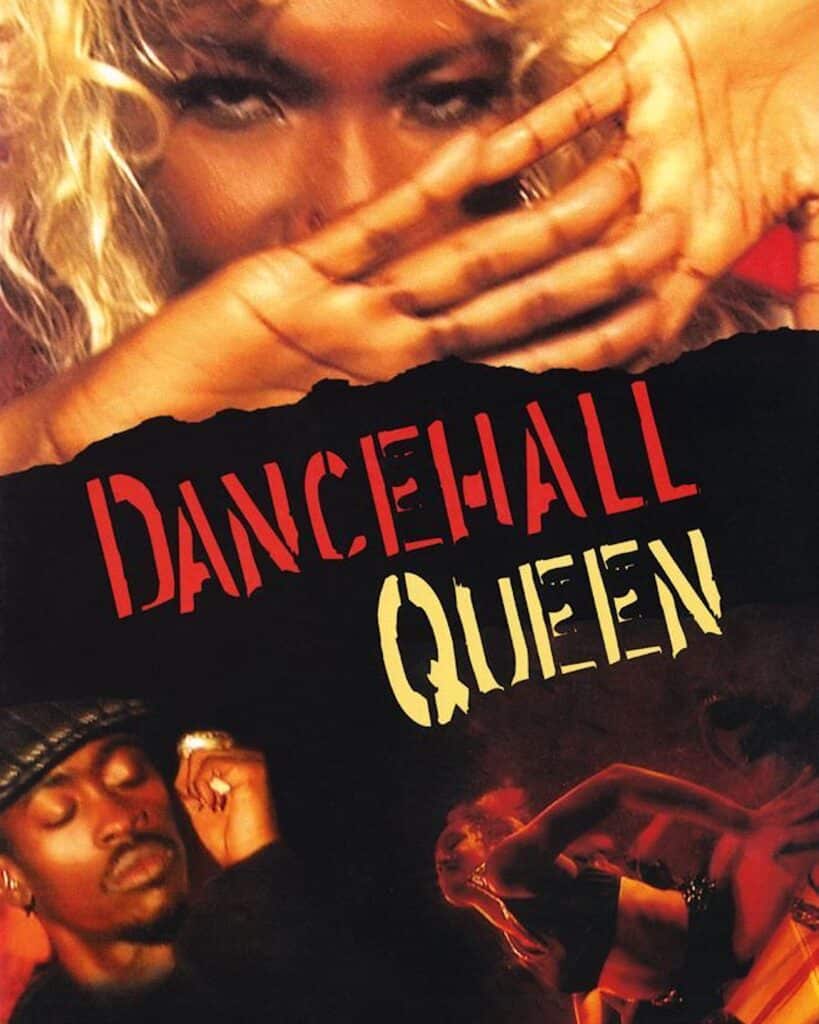
1997: JAMAICA - "DANCEHALL QUEEN" BY RICK ELGOOD & DON LETTS

Dancehall Queen is one of many Jamaican films that follow the formula established by *The Harder They Come* (Perry Henzell, 1972): Jamaican music (reggae or dancehall), known internationally; sexualized dance (as seen in the closing credits of Henzell’s film, with a close-up of a woman’s hips as she dances, like an invitation to what comes next); violence in the ghetto, and sporadic police interventions.

This is true of some major films in this genre, including *Rockers* (1978) by Greek director Theodoros Bafaloukos, considered by some to be the film that best captured the rebellious spirit of reggae and Rastafarian philosophy (a community presence that plays a central role in *Countryman* by Dickie Jobson in 1982), and which sparked a riot during its screening at the Cannes Film Festival in 1979; or, more recently, *Better Mus’Come* by Storm Saulter (2011), which takes on a more overtly political dimension by drawing inspiration from actual riots that occurred during an election period.

So, *Dancehall Queen* opens with a “music video”-style sequence featuring the famous Beenie Man, who plays a supporting role, singing—just as in the film’s final act, several performances take place on stage during a dance competition. However, one major difference stands out: the main character is a woman. Marcia is a street vendor who decides to enter a dance competition as a way to break free.

At the same time, one of his daughters is being hit on by her uncle Larry, who provides financial support to the family. When she tells her mother about this, her mother downplays her own brother’s behavior and points to her financial difficulties. As she gradually realizes the true nature of her brother Larry—who, in the meantime, has slept with his own niece—she manipulates one of his henchmen to turn against him.

The issue of violence against women is a recurring theme in English-language Caribbean cinema, particularly in the semi-professional productions of Mathurine Emmanuel (St. Lucia) and Anderson Quarless (Grenada), whereas this subject remains taboo in Guadeloupean and Martinican cinema, with a few rare exceptions. The directness with which the issue of rape—and, more specifically, incest—is addressed sets *Dancehall Queen*.

cinémas caribéens

2000: MARTINIQUE - "PASSAGE DU MILIEU" BY GUY DESLAURIERS

To mark the turn of the 21st century, director Guy Deslauriers and his screenwriter Patrick Chamoiseau (winner of the 1992 Prix Goncourt for his famous novel Texaco) invite us to relive the Atlantic crossing aboard a slave ship, which during the era of slavery was known as the “ Middle Passage ” (meaning the “Middle Passage”), as a necessary act of remembrance.

Three-quarters of the film takes place in the hold, among the slaves torn from Africa. Several flashbacks “take us back” to that continent—to the villages, rivers, and vast plains—all accompanied by the voice-over of an anonymous slave whose face constantly changes (often looking directly at the camera) throughout the film, as if he were representing each and every one of them.

This lost Africa is, quite clearly, embodied by a woman who stares directly into our eyes—the eyes of the audience—while the voice-over says: “Woman, you are the earth, violated twice. You are the mother from whom her children are snatched. Of all our Africas, you are the most real. ” In the first feature film directed by Deslauriers and Chamoiseau, *The Exile of King Béhanzin* (1996), the film depicted the imprisonment (a historically verified event) of King Ahydjéré of the Kingdom of Dahomey (present-day Benin), in Martinique, following his defeat at the hands of Alfred Dodds’ French troops: a way for Caribbean cinema to reestablish a connection with the “Pays d’avant” (the “Land of Before”), to borrow an expression from the poet and philosopher Édouard Glissant.

A few years after *Amistad* by Steven Spielberg (1997), *Passage du milieu* was widely acclaimed for its meticulous portrayal of this chapter of colonial history. As a result, it won an award at the renowned Sundance Film Festival and was broadcast and later released on DVD by HBO in the United States.

cinémas caribéens
Passage du milieu de Guy Deslauriers, 2000 ©Les Films du Raphia/Kreol Productions – Martinique

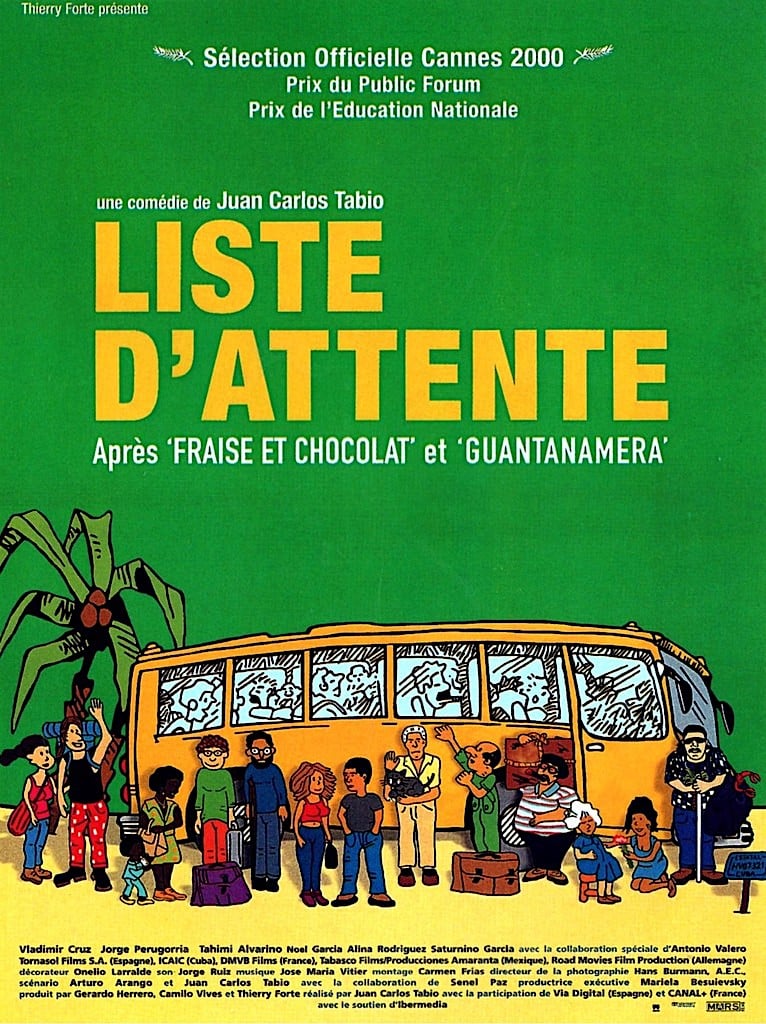
2000: CUBA – WAITING LIST (LISTA DE ESPERA), BY JUAN CARLOS TABÍO

A close friend of Tomás Gutiérrez Alea, Juan Carlos Tabío co-directed with him the last two films by the famous director, known in Cuba as “El Titón” (“The Titan”), namely Strawberry and Chocolate / Fresa y Chocolate (1993) and Guantanamera (1995). The first is a comedy about the lives of gay people and the state’s control over them in Cuba, based on a screenplay co–written by Senel Paz, an author who has frequently addressed the place of homosexuality in Cuban society in his various writings, and who was honored with an Oscar nomination for Best Foreign Language Film—a first for a Cuban film.

The second is a fast-paced, offbeat road movie that, like *Strawberry and Chocolate*, does not shy away from casting a critical eye on the Cuban regime and stands as Alea’s true cinematic testament. As for Juan Carlos Tabío, this is by no means his first attempt, since his debut feature film, *Se permuta*, dates back to 1985. In the satirical vein of Alea’s films, Waiting List follows the journey of a group of characters waiting for a bus—sometimes bound for Havana, sometimes for Santiago—at an isolated bus stop.

Between the buses that never show up and those that are so worn out they break down, the station manager repairs a battered bus himself in the absence of spare parts—parts that cannot come from either the communist regime of the former USSR, which has collapsed, nor from the United States, which has imposed an economic embargo on the island—waiting passengers will have to learn to live together and overcome all the current difficulties, including finding food…

In addition to being a film that offers a critical view of Cuba, this bittersweet comedy with multiple plot twists, carried by an exceptional cast that highlights the immense professionalism of Cuban cinema, is a subtle reflection on the difficulty of overcoming individualism and coming together as one—that is, of functioning in a communist manner. The final section, blurring the lines between dream and reality, establishes a beautiful political utopia with infectious cheerfulness. A pinnacle of Cuban cultural refinement.

cinémas caribéens
Liste d’attente (Lista de espera) de Juan Carlos Tabío, 2000 ©ICAIC/DMVB – Cuba

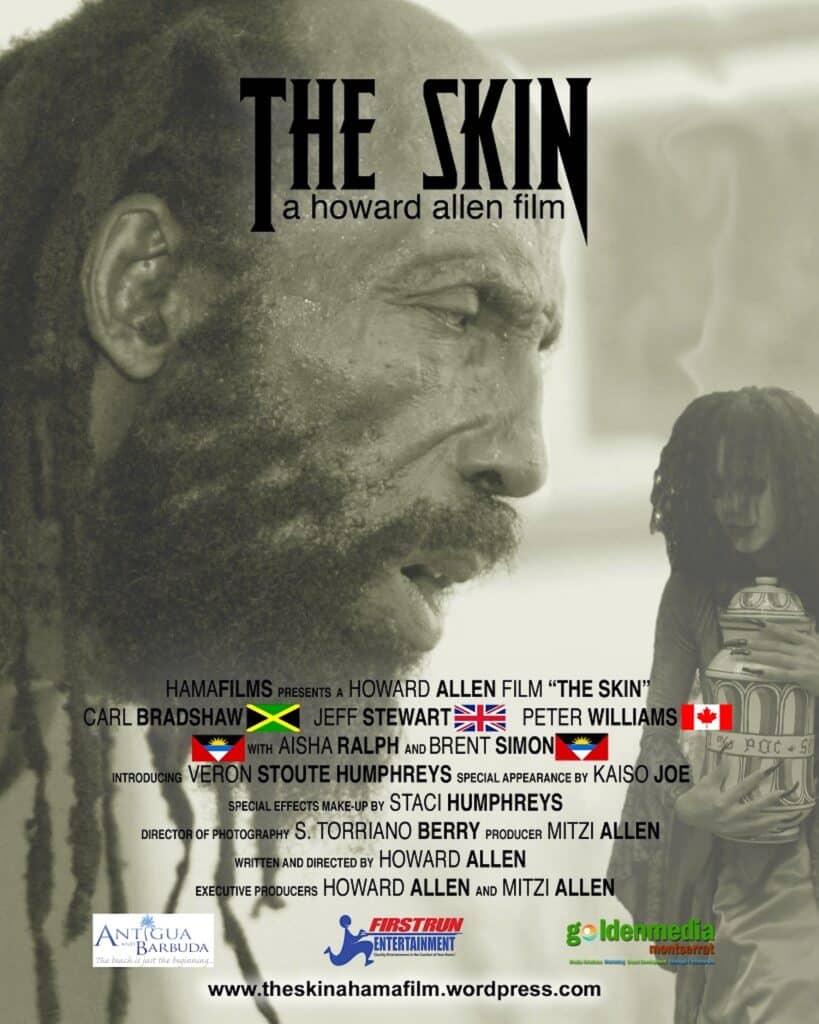
2001: ANTIGUA AND BARBUDA – “THE SWEETEST MANGO, THE SKIN” BY HOWARD ALLEN

The Skin is the second feature film by the Allen couple—Howard directing and Mitzi producing. In 2001, they directed *The Sweetest Mango* (2001) so that their country would have its first “local” feature film to mark the dawn of the 21st century. The film is clearly inspired by their own love story: Lovelyanne “Luv ” Davies, returning after several years living in Canada, struggles to readjust to her home country, given the small size of the archipelago (440 km²) and the limited professional opportunities, while one of her colleagues woos her and eventually marries her.

Based on a classic plot, this film—which was, unfortunately, technically flawed (shot with first-generation digital cameras)—already stood out in several ways: it lacked any social or historical dimension, unlike other Caribbean films, a title referencing mango season (from April through the end of summer), which created a temporal marker firmly rooted in the landscape; and the assertion that even small spaces can be the setting for grand stories (of love, among others).

For The Skin, this ambitious couple—struggling to make a film on an island with fewer than 100,000 residents—received support from a technical crew from the prestigious African American university Howard University as well as an international cast that included the famous Jamaican actor Carl Bradshaw and British comedian Jeff Stewart.

While catering to a tourist-oriented vision of the island (aerial shots of the coastline, pleasure boats, sensuous dances and accompanying music, etc.), this film is firmly rooted in Caribbean magical-religious folklore through the story of a cursed vase linked to the era of slavery and features some particularly unsettling nighttime sequences in the woods, where the Creole language mischievously blends with English. An effective film with lofty ambitions.

cinémas caribéens
The Skind d’Howard Allen, 2011 ©Hama Films – Antigua-et-Barbuda

2004: MARTINIQUE – BIGUINE, BY GUY DESLAURIERS

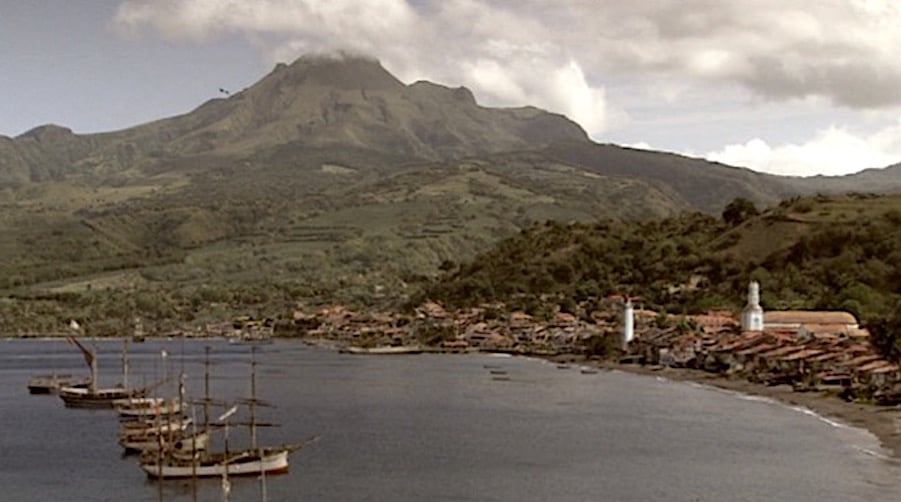
The third feature film from the Chamoiseau-Deslauriers duo—a collaboration that remains, to this day, unique in the history of Caribbean literature and cinema—this musical comedy (or, more precisely, musical drama) about the invention of the famous “biguine” music in the city of Saint-Pierre (then the world capital of sugar and rum) in Martinique during the second half of the 19th century provides an opportunity to portray the process of creolization—an accelerated and unpredictable cultural blending (as proposed by the author Édouard Glissant)—through musical creation. Hermansia (Micheline Mona, daughter of the famous Eugène Mona, a specialist in the “flûte des mornes”) and Tiquitaque (Max Télèphe), coming from the countryside, settle in the city, where they will live for nearly 30 years.

The music they play, of African origin, held no appeal for bourgeois dance halls. It was then, upon coming into contact with European music— ballets (Saint-Pierre had an opera house, a streetcar, and gas lighting) or mazurkas, and European instruments—which were largely unfamiliar to them—they began to blend different musical styles. In particular, Hermansia made a major decision by giving her partner a clarinet.

The clash between rhythms of African origin (music from the Martinican countryside) and European instruments (clarinet, violin, piano, etc.) gave rise to the biguine—much like so many other forms of Caribbean music, from reggae to steel bands to compas. In this film, the Caribbean woman is thus at the heart of the process of cultural creolization: Biguine complements the various aspects of “femifocality”—that is, the importance of women in Caribbean cinema. Finally, in addition to the numerous musical sequences featuring legendary biguine songs with strong political undertones, the film concludes with a depiction of the famous 1902 eruption of Mount Pelée, which leveled the city of Saint-Pierre and claimed nearly 30,000 lives.

cinémas caribéens
Biguine de Guy Deslauriers, 2004 ©Kreol Productions - Martinique

2005: GUADELOUPE - *NÈG MARON*, BY JEAN-CLAUDE BARNY

Nèg Maron is the film of a generation. Starring two Guadeloupean dancehall stars, Daly and Admiral T, who play the lead roles of Silex and Josua, alongside Pedro (Stomy Bugsy), it marked a turning point in Caribbean cinema in the early 2000s. Similarly, Tèt grenné by Christian Grandman (2001), it focuses on contemporary urban space in a film industry that is still predominantly rural (unlike Jamaican cinema, which has been set in the city from its very beginnings) with an aesthetic inspired by music videos (shoulder-mounted camera, sharp movements, rapid cuts, jump cuts) set to hip-hop and rap beats: a new generation of filmmakers is emerging. We follow a group of idle youths in the “ghetto,” caught up in petty theft and cannabis use, whose codes of behavior—gestures, expressions, clothing, and cultural references—are perfectly mastered and create a powerful mirror effect among young viewers.

The Creole mother (a single mother raising her children) remains steadfast in her role, brilliantly portrayed here by Jocelyne Béroard (of the group Kassav’) in scenes that have gone down in the annals of this cinema. As for the Creole language, it is vibrant and prominently featured, following a decade during which it had declined (perhaps in an effort to reach a wider audience beyond the Caribbean and Guyanese public), and the film is also characterized by a musical score that is fully in tune with its time.

Political awareness is not left out: one of the very rare physical confrontations between a Black character and a Beké character (descendant of a slave-owning family) opens the film and sets the tone against a backdrop of disputes linked to the colonial past, while the film’s title refers to the Maroon movement. It is as if the injustice of the economic system—based on a “racialized” social hierarchy—highlights elements of continuity with the Caribbean’s past.

Blending references to the past with early 21st-century cultural codes, this film broke all box office records in Guadeloupe and, backed by a strong distribution network in mainland France, made an unexpected breakthrough in several French cities, particularly in the Île-de-France region. Following the undeniable success of *Rue Cases-Nègres* (Euzhan Palcy, 1983), Caribbean cinema once again demonstrated its potential on a national level.

cinémas caribéens
Nèg Maron de Jean-Claude Barny, 2005 ©Mars Distribution – Guadeloupe

2011: DOMINICAN REPUBLIC — *La Hija Natural* (*The Natural Daughter*), by Leticia Tonos

Although its film output is modest, the Dominican Republic boasts a steady stream of filmmaking that is full of little surprises. *La Hija natural* follows the journey of a young woman who, after the death of her mother—whose house was struck by a bus (which is not the only “whim” in the film’s screenplay)—sets out to meet her father, whom she has never known.

He agrees to take her in despite the fears that this unknown girl’s arrival stirs up in him. Not surprisingly, various events will bring them closer together. However, while the plot may seem commonplace, it is firmly rooted in Caribbean reality. First of all, the absence of acknowledged paternity—sometimes without official recognition of the children—is a reality that strongly shapes certain Caribbean societies: even today, more than one in two families in the French West Indies are single-parent households.

A related phenomenon is the risk of falling in love with an unidentified half-sister or half-brother—a dramatic device used to great effect in this film. Furthermore, the characters dream of the dead and check to see if their ghosts are in the garden (in all the obviousness of the “magical” everyday life of magical realism found in both Haitian and Latin American literature) by sticking a machete into the ground to see which way it tilts.

Following a Voodoo ritual, a mesmerizing nighttime sequence in a banana plantation shows the young protagonist possessed by the spirit of her father’s late wife, with the past and present blending seamlessly (a secondary character in his sixties is then transported back to childhood), without this shocking anyone. Furthermore, while remaining discreet, this film highlights the “racialized” social hierarchy deeply rooted in the Caribbean as a result of its colonial past: the father has white skin while his daughter is mixed-race—which may explain the lack of official recognition from this prominent figure—and his handyman is Black.

In a scene that seems harmless at first glance, it is indeed the Black man who must take a basket of eggs—which are clearly rotten—to the landfill on the other side of town, while the residents—mostly white and mixed-race—go about their business, attending Mass or shopping. The most recent *Sugar Island* (Johanne Gomez Terrero, 2024), which has garnered international acclaim, revisits some of the themes from *La Hija natural*, ranging from voodoo to early motherhood, but this time set in an Afro-Caribbean community.

cinémas caribéens
La Hija natural (La Fille naturelle) de Francisco Montas & Leticia Tonos, 2011 ©Producciones Linea Espiral/Isla Films – République dominicaine

2011: GUADELOUPE — ELZA’S HAPPINESS, BY MARIETTE MONPIERRE

There are very few female directors of feature-length fiction films in Caribbean cinema. The most famous is Euzhan Palcy from Martinique, known for the must-see film *Rue Cases-Nègres* (1983), which earned her numerous awards and an international career. However, it is important to note that the very first Caribbean woman to direct a feature film was Sarah Maldoror from Guadeloupe, with *Sambizanga* (1972), a film dealing with Angola’s national liberation movement, which is considered a classic of African cinema.

As such, the film underwent restoration carried out by theAfrican Film Heritage Project of the Film Foundation founded by American director Martin Scorsese in 2021. Furthermore, with this film, Sarah Maldoror officially became one of the first French female directors, following in the footsteps of Alice Guy, Musidora, Germaine Dulac, and Agnès Varda. With *Le Bonheur d’Elza* (2011), Mariette Monpierre, a native of Guadeloupe with an international career (particularly in the United States), became the third woman from the Caribbean to direct a feature film; after screening at festivals in New York, the film was honored with the New York Times’ “Critics’ Choice” award.

This film follows the journey of a young woman who, with great determination and against her own mother’s wishes, decides to return to Guadeloupe to meet her father, whom she has never known. Furthermore, at one point, Elza (Stana Roumillac) is the victim of an attempted rape in a shower. With the increased prominence of female characters in certain recent films, the fragility of their situation is more directly highlighted in the midst of their daily lives, thereby challenging the image of the unflappable, resilient Caribbean woman (the “woman who stands tall”).

With *Elza’s Happiness*, Mariette Monpierre asserts women’s right to be vulnerable as well as to have sexual desires—something that cinema had “forbidden” her until then. This film is part of a movement in Caribbean cinema that began in 2010 and, with films such as *Retour au Pays* (Julien Dalle, 2010), allows characters—whose psychology is now more deeply explored—to be individuals, in contrast to the first thirty years of this cinema, characterized by figures who shaped the destiny of the collective (the neighborhood, culture, identity). The female characters in this cinema play a full part in this development.

cinémas caribéens
Le Bonheur d’Elza de Mariette Monpierre, 2011 ©Gwada Films – Guadeloupe

2015: MARTINIQUE – BATTLEDREAM CHRONICLE, BY ALAIN BIDARD

This film is an exception in this chronology: in fact, it is one of only two animated feature films from the Caribbean film industry. A remarkable feat: both were created entirely—both visually and in terms of sound (particularly the voice acting for several characters)—by Alain Bidard of Martinique. *Battledream Chronicle*, heavily influenced by manga aesthetics, is set in a futuristic world in the year 2100, in which real-world nations compete against one another through a virtual game called Battledream.

The losers see their nation (in this film, Martinique is one such nation) completely dominated by the victors, and their collective memory erased. Reduced to slavery, the inhabitants of the conquered nations must regularly bring a certain amount of credits (“1,000 XP”)—just as, in times past, a certain number of bundles of sugarcane had to be cut—to the Inquisitors, on pain of seeing their community wiped out.

As we can see, this film offers numerous references to the history of slavery and colonialism through subtle allusions. Martinique managed to resist within the Battledream will be the last nation to stand against the Empire—known as Mortemonde—and will defeat it. Notably, the great final battle will be led by two female protagonists, who at times wear Creole earrings and at other times a headdress made of madras cloth (“ maré-tèt ” in Creole), as quintessential Caribbean women. They are clearly the center (“ poto-mitan ” in Creole) of the film’s action: the “femifocality” of Caribbean cinema is gaining momentum. As for Alain Bidard’s second film, *Opal* (2021), it tackles the difficult issue of incest with great sensitivity.

Opal, the daughter of the king and queen of a futuristic kingdom, struggles to escape from her castle and is regularly subjected to visits from her father—whose face is dominated by a horn (an obvious phallic extension)—who takes “her magic” from her. Through the imaginative lens of animated film, Alain Bidard tackles the thorny issue of sexual violence against children—and, more specifically, young girls. More than ever before, women are taking the reins in Caribbean cinema.

cinémas caribéens
Battledream Chronicle d’Alain Bidard, 2015 ©Pagod Films – Martinique

2020: CURAÇAO – BULADÓ, BY ECHÉ JANGA

Buladó is one of those films that truly embody the Caribbean cinema’s capacity to surprise. We follow a teenage girl haunted by the premature death of her mother, whom she never knew, caught between her naturally authoritarian police officer father, Ouira, and her eccentric grandfather, Weljo, who speaks with spirits, teetering on the edge of madness. Drawing on a familiar plot and relatively conventional conflicts, Eché Janga crafts a spellbinding film by highlighting the distinctive landscape of the small Dutch island of Curaçao—which resembles a desert where a Western might be filmed—as well as the high caliber of its cast and the beauty of Papiamento (Papiamentu), a creole language born from the fusion of Dutch, Portuguese, Spanish, English, and words of African and Native American (Arawak) origin, found on various Dutch islands in the Caribbean.

The conflict between the father and the grandfather effectively embodies the everyday duality between European rational thought and magical thinking, of African or Native American origin, which still permeates many Caribbean societies today, where rituals are regularly practiced in a surprising syncretism of beliefs often noted by ethnologists. Young Kenza (played by the remarkable Tiara Richards) goes so far as to tell her father—who, like her, is of mixed race—that he is “desecrating” the bed of her recently deceased dog: “You’re really a white man!”—meaning that he is behaving like a Westerner.

The young girl’s gradual grieving process, as her mother “speaks” to her, is intertwined with the unapologetic irrationality of her grandfather, superbly portrayed by Felix De Rooy, the father of Dutch-speaking Caribbean cinema. Indeed, he converses with the spirits of the Indigenous peoples dispossessed of their lands, whose anger seems far from extinguished. We find ourselves doubly immersed in a mysticism of rich visual power, where dreams and reality often blur. This film, a superb cinematic reflection on grief, concludes with these words in voiceover: “Death is always there. Those who learn to live with it are as free as the wind.” Buladó was selected by the Netherlands to represent the country at the 2021 Oscars.

cinémas caribéens
Buladó d’Eché Janga, 2020 ©Kepler Films/Les Films du Préau – Curaçao

2021: HAITI – FREDA, BY GESSICA GÉNÉUS

Female filmmakers are rare in Caribbean cinema. In addition to those already mentioned in this timeline, we can cite the Afro-Cuban Sara Gómez from Cuba, known for the docudrama *De cierta manera* (In a Certain Way), released in 1977—the very first film directed by a woman in that country, shortly before the director’s death. Also from the Cuban regime, the famous epic film series *Lucía* (1968) and Cecilia (1982) by Humberto Solás, which consistently support the Cuban regime, feature female protagonists through whose eyes the island’s history is explored.

In Haiti, Gessica Généus, known for her roles in several Haitian films such as *Moloch Tropical* (Raoul Peck, 2009) and Les Amours d’un zombi (Arnold Antonin, 2010), and, more recently, *Kidnapping Inc.* (Bruno Mourral, 2024), makes a strong impression with his debut film, Freda, selected for the “Un Certain Regard” section at the 2021 Cannes Film Festival. With great sensitivity, it follows the journey of Freda (whose first name subtly echoes that of the famous Mexican feminist painter Frida Kahlo), a young woman who lives with her mother and sister in the back of the modest street shop they own, while she studies anthropology at the university.

This film deserves credit for showing us the real Port-au-Prince today, even though it is very difficult to film there for obvious security reasons. Indeed, it effectively alternates between, on the one hand, political discussions among students, social protests (through candid documentary footage) and gunfire in the streets, and, on the other, moments of relaxation, laughter, and enjoyment (dancing in the streets or at nightclubs)—all despite the hardships of a country where many citizens are wondering whether or not they should leave.

As for those who remain, Freda’s highly sought-after mixed-race sister (brilliantly portrayed by Nehemie Bastien) hastily marries a senator while her mother watches in silence, the self-serving game of seduction her daughter plays, moving from man to man, with her family’s social advancement seemingly the sole goal. Amid domestic violence, the threat of rape, and abandoned pregnant women, the fragility of women’s lives in Haiti is addressed with restraint through an impeccable cast and a camera that delicately captures the raw emotions. More recently, with *The Last Meal* (2024), a stunning film about the Duvalier dictatorship (1957–1986) that has won numerous international awards, Haitian-Quebecois filmmaker Maryse Legagneur has joined the ranks of talented female directors from the world’s first black republic.

cinémas caribéens
Freda de Gessica Généus, 2021 ©Nour Films – Haïti

2025: GUADELOUPE – ZION, BY NELSON FOIX

The release of Magma, a film by French director Cyprien Vial heavily inspired by the 1976 eruption of La Soufrière, which raised fears that the capital city of Basse-Terre (Guadeloupe) would be destroyed, followed by two films directed by Guadeloupeans, namely Fanon (Jean-Claude Barny), about the famous anti-colonialist intellectual during his time in Algeria, and *Zion*, in less than a month, succeeded in drawing the attention of the French media (Le Monde, Libération, etc.) to the potential of Caribbean cinema and, more broadly, of films dealing with the French overseas territories.

Indeed, audiences beyond the Caribbean and its diaspora turned out in force: nearly 50,000, 250,000, and 500,000 admissions, respectively. In particular, by focusing on the social deprivation of the “ghetto” and the reality faced by some Caribbean youth—amid drug deals, motorcycle rides, and daily drug use— Zion strongly opposes a “postcard” representation of the Caribbean. In doing so, it continues a process of deconstructing an exoticized view (an “outsider’s gaze”) of these islands, a process that began with the very first feature film in this cinematic tradition *Coco la Fleur*, a film by (Christian Lara, 1979), which was already heavily focused on social deprivation and the daily hardships of the population, and which has been a defining characteristic of this film industry for more than thirty years.

As for its urban character, it is a direct continuation of Nèg Maron (2005) by Jean-Claude Barny, with the necessary updating of the conventions to suit a new generation. It also marks the widespread return of the Creole language in a feature-length fiction film: a choice characteristic of Caribbean cinema from the 1970s and 1980s and, following a decline in the language’s presence during the 1990s and 2010s (with the exception of a few films such as *Nèg Maron*), a confident resurgence in virtually all of the short films of the past decade.

One last point: as we follow the story of young Chris (played by the surprising Sloan Descombes), a resourceful young delinquent with little respect for women (with the exception of his neighbor, convincingly portrayed by Axelle Delisle), who finds himself literally with a baby on his hands—left anonymously on his doorstep— Caribbean cinema is asserting more strongly than ever the right to the presence of fathers in societies where the majority of families remain single-parent households—a trend initiated and sustained in this cinema since the early 2000s. This film, with its infectious energy set against the backdrop of social upheaval during Carnival season and supported by solid direction, production, and casting, has cemented among a wide audience the distinctive qualities of Caribbean cinema that have been patiently developed over several decades.

cinémas caribéens
Zion de Nelson Foix, 2025 © The Jokers Films– Guadeloupe

Text: @Guillaume Robillard. Production: Ciclic, 2026.

Leave a Reply

Your email address will not be published. Required fields are marked *

More articles from RK

cinémas caribéens
FILM & VIDEO
Tolotra

Stories of Caribbean Cinema – Texts by Guillaume Robillard. Ciclic, 2026.

Thus, the history of Caribbean cinema did not begin until the 1960s, even though films had been shot in the Caribbean since the early 20th century—notably two short films by the Lumière brothers in Martinique in 1902. In fact, it is common to make a clear distinction between films shot in the Caribbean and films made by filmmakers from the various islands of this archipelago. Clearly, this overview begins with Cuban cinema, whose professionalism, richness, and diversity—which have already inspired an extensive body of literature—set it apart within this geographic region.As for productions from Jamaica, Trinidad and Tobago, and the Dominican Republic, they display a certain consistency punctuated by pleasant surprises, while in Haiti, a semi-professional film industry was long prolific and enjoyed a large audience. On the other hand, across the region, a few small countries produce films on a limited scale (Saint Lucia, Grenada) or infrequently (Barbados, Puerto
Read More »
Barbuda
TOURISM
Tolotra

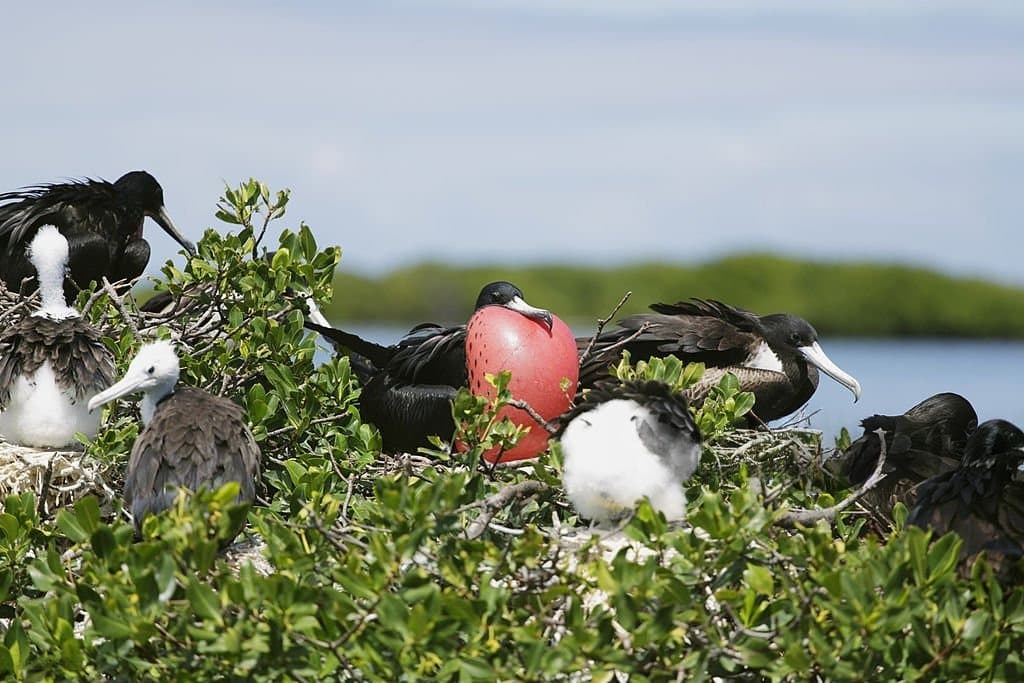
Barbuda: More than 5,000 frigatebirds in an extraordinary lagoon.

In Barbuda, the show begins even before you spot the birds. There is no road leading to the Codrington Lagoon sanctuary. You have to board a boat, travel across the water through the mangroves, and then watch as the black silhouettes of the magnificent frigatebirds (Fregata magnificens) come into view—their colony is one of the largest in the Caribbean. This fact alone is enough to reveal another side of Barbuda. Beyond its pink beaches, the island is home to a lagoon where more than 5,000 of these birds have been recorded, in a colony where a scientific survey counted 1,743 nests. Here, you discover the destination by looking up and understanding the role this lagoon plays in the balance of the entire island. A Ramsar-designated lagoon, nestled between mangroves and reefs The Codrington Lagoon covers 3,600 hectares and has been recognized as a wetland of international importance under the Ramsar

Read More »
Man Mélé
VISUAL ARTS
Tolotra

Martinique – Cécile Vernant: Behind the Scenes of “Man Mélé!” at the Senate’s Orangerie.

At the Senate Orangery, Man Mélé! took on a dimension that Cécile Vernant could not have fully anticipated before the doors opened. As the days went by, the exhibition became a space for encounters, conversations, and exchanges between artists and visitors. Surrounding the artworks, discussions revolved around Martinique and nature, but also memories, cultures, and sensibilities from far beyond the island. The calm before the crowd arrives Every morning, Cécile Vernant arrived before the park opened at 11 a.m. The garden was quiet. She would pass joggers, watch the tai chi groups among the chestnut trees, and enjoy the scent of the flowers. She loved this “calm before the storm.” A few hours later, the atmosphere would change. Cécile Vernant estimates that the Orangerie, which is about 600 m², could accommodate up to 400 visitors at its peak over the course of three to four hours. The busiest day reportedly

Read More »

conTACT RK

we'd love to have your feedback on your experience so far

Join The List

Join our Richès Karayib community!  Sign up for our newsletter.

Want To Maximize Your Business Presence On Riches Karayib?

Complete the form to start the application