Peter Minshall, the man who invented the Olympic Tube Man

Peter Minshall, Trinidad and Tobago carnival costume designer, in portrait

On July 16, 1941, Peter Minshall was born in Georgetown, British Guyana, and grew up in Port of Spain, Trinidad and Tobago, where he became the greatest carnival costume designer of his time. In 1996, for the Atlanta Olympics, he collaborated with Israeli artist Doron Gazit to create an inflatable figure that sways in the wind—a design now visible in front of thousands of gas stations around the world, though almost no one knows it originated on the streets of Trinidad’s carnival.

This Thursday, September 24, 2026—the day Trinidad and Tobago celebrates Republic Day—we profile an artist who has taken the “mas” far beyond his island.

Peter Minshall, the boy who brings a fabric hummingbird to life in Port of Spain

yIn 1974, in Port of Spain, Peter Minshall made a hummingbird costume for his adoptive sister, Sherry-Ann Guy, to be worn at the Trinidad and Tobago Carnival. Twelve people work for five weeks to assemble this costume, titled From the Land of the Hummingbird, covered with hand-crafted feathers. This costume marked a turning point for him; until then, he had been known for winning—at the age of thirteen—first prize for originality at a children’s carnival with a costume of an African witch made from cardboard, Christmas decorations, and dried herbs. He would later say that his work had always had a single goal: to marry structure with the dancing human body, to make the fabric dance, and, through that dance, to speak.

Carnival costume created by Peter Minshall for Trinidad and Tobago Carnival
He created some of the most iconic costumes in Trinidad and Tobago Carnival history. © Peter Minshall - Instagram

A Guyanese Man Who Became a Legend of the Trinidadian Carnival

Peter Minshall was born on July 16, 1941, in Georgetown, British Guyana, and arrived in Trinidad and Tobago at the age of twelve, when his father took a job there as a draftsman. He attended Queen’s Royal College in Port of Spain before moving to London at the age of twenty-one, where he studied theater set design at the Central School of Art and Design. His dual heritage remains an integral part of his identity.

In an interview published in February 2026 by the Guyanese newspaper *Stabroek News*, Peter Minshall describes himself as a rare hybrid, a multifaceted creature as precious as a pearl. This dual identity—born in Guyana and shaped by a lifetime of creative work in Trinidad and Tobago—explains why some people, even today, call for him to receive official recognition from Guyana. NIHERST, the Trinidadian Institute for Scientific and Cultural Heritage, now counts him among its great national figures.

Peter Minshall Invents the "Total Carnival," from *Paradise Lost* to the *River* trilogy

In 1976, Peter Minshall presented *Paradise Lost* in Trinidad and Tobago, his first large-scale band, featuring five hundred masqueraders divided into four sections. Photographer Roy Boyke would write that no other artist’s work had made such an immediate and powerful impact.

He then went on, in the 1980s, to create a trilogy centered on the river, featuring characters who became famous, such as Mancrab, a half-man, half-mechanical-crab creature that threatens the river. To give these costumes movement, he introduced materials previously unseen in Trinidadian mas—fiberglass rods, fishing rods, acrylic tubes, and reflective polyester film. He would one day sum up his vision of Carnival in a single sentence: “The masman depends on a family and a tribe, and the family and the tribe depend on the masman.”

On the Road to the Olympics: From the Trinidad and Tobago Carnival to the World Stage

Olympic opening ceremony staged by Peter Minshall in a stadium
He served as artistic director for several Olympic opening ceremonies. © Peter Minshall - Instagram

Barcelona 1992: The Mediterranean Takes Center Stage

In 1992, Peter Minshall spent a year in Spain working with the Catalan artist Miralda to design the segment dedicated to the Mediterranean Sea for the opening ceremony of the Barcelona Olympic Games—his first international project of such magnitude as an artistic director.

Sequence from the 1992 Barcelona Olympics opening ceremony designed by Peter Minshall
In 1992, he designed the Mediterranean-themed sequence for the Barcelona opening ceremony. © Peter Minshall - Instagram

Atlanta 1996: The Unexpected Birth of the Tube Man

In 1996, for the opening ceremony of the Atlanta Olympic Games, Peter Minshall collaborated with Israeli artist Doron Gazit to design an inflatable figure initially named “Tall Boy.” This invention, born of decades of research on fabric and movement in Trinidadian mask dance, would become the Tube Man that can be found today in front of stores around the world.

Inflatable Tube Man figure designed by Peter Minshall for the 1996 Atlanta Olympics opening ceremony
The Tube Man, his most famous creation for Atlanta 1996, is now recognized around the world. © Peter Minshall - Instagram
Second view of Peter Minshall's Tube Man at the 1996 Atlanta Olympics opening ceremony
The Tube Man in motion during the 1996 Atlanta Olympics. © Peter Minshall - Instagram

Salt Lake City 2002: An Emmy Award for Peter Minshall

In 2002, Peter Minshall served as artistic director for the opening ceremony of the Salt Lake City Winter Olympics, a role that earned him an Emmy Award. Throughout his career, he also received a Guggenheim Fellowship in 1982, the Silver Chaconia Medal in 1987, an honorary doctorate from the University of the West Indies in 1991, the Trinity Cross in 1996—then the highest national honor in Trinidad and Tobago—the Prince Claus Award from the Netherlands in 2001, and a Republic Day Award in 2005, an honor presented annually on the occasion of the Trinidad and Tobago Republic Day, celebrated on September 24.

Peter Minshall receiving an Emmy Award for the 2002 Salt Lake City Winter Olympics opening ceremony
He received an Emmy Award for the 2002 Salt Lake City Winter Olympics opening ceremony. © Peter Minshall - Instagram

Peter Minshall, Still Out on the Carnival Streets

In 2020, in Trinidad and Tobago, Peter Minshall returned to present Mas Pieta, a band dedicated to what he calls the power of love in the face of the love of power, which was awarded the title of Band of the Year. In an interview with the Trinidadian daily Newsday, he explained that the title borne by his king and queen sums up where humanity stands today.

In that same interview, he warns against the risk of Carnival losing its Caribbean identity in the face of globalization and commercialization. In February 2026, the Guyanese newspaper Stabroek News publicly revived the idea of an official tribute from Guyana to this native of Georgetown who, in Port of Spain, became one of the most imitated and most decorated artists in the history of the Caribbean carnival. Will recognition ever come from the country where it all began?

The Trinidadian carnival continues to keep this legacy alive—from Machel Montano and the Road March to the “doubles,” the street stars of the Trinidadian carnival, whom Richès Karayib is also highlighting this same week.

Peter Minshall is an artist and carnival costume designer who was born on July 16, 1941, in Georgetown, British Guyana, and is considered one of the greatest mas designers in the history of the Trinidad and Tobago carnival.

Peter Minshall was born in Georgetown, Guyana, but moved to Trinidad and Tobago at the age of twelve, where he built his entire career as a mas designer. He describes himself as a rare hybrid of these two cultural backgrounds.

In 1996, Peter Minshall co-designed, with artist Doron Gazit, the inflatable “Tall Boy” figure for the opening ceremony of the Atlanta Olympic Games—a design that has since become the “Tube Man,” now used worldwide for advertising purposes.

Leave a Reply

Your email address will not be published. Required fields are marked *

More articles from RK

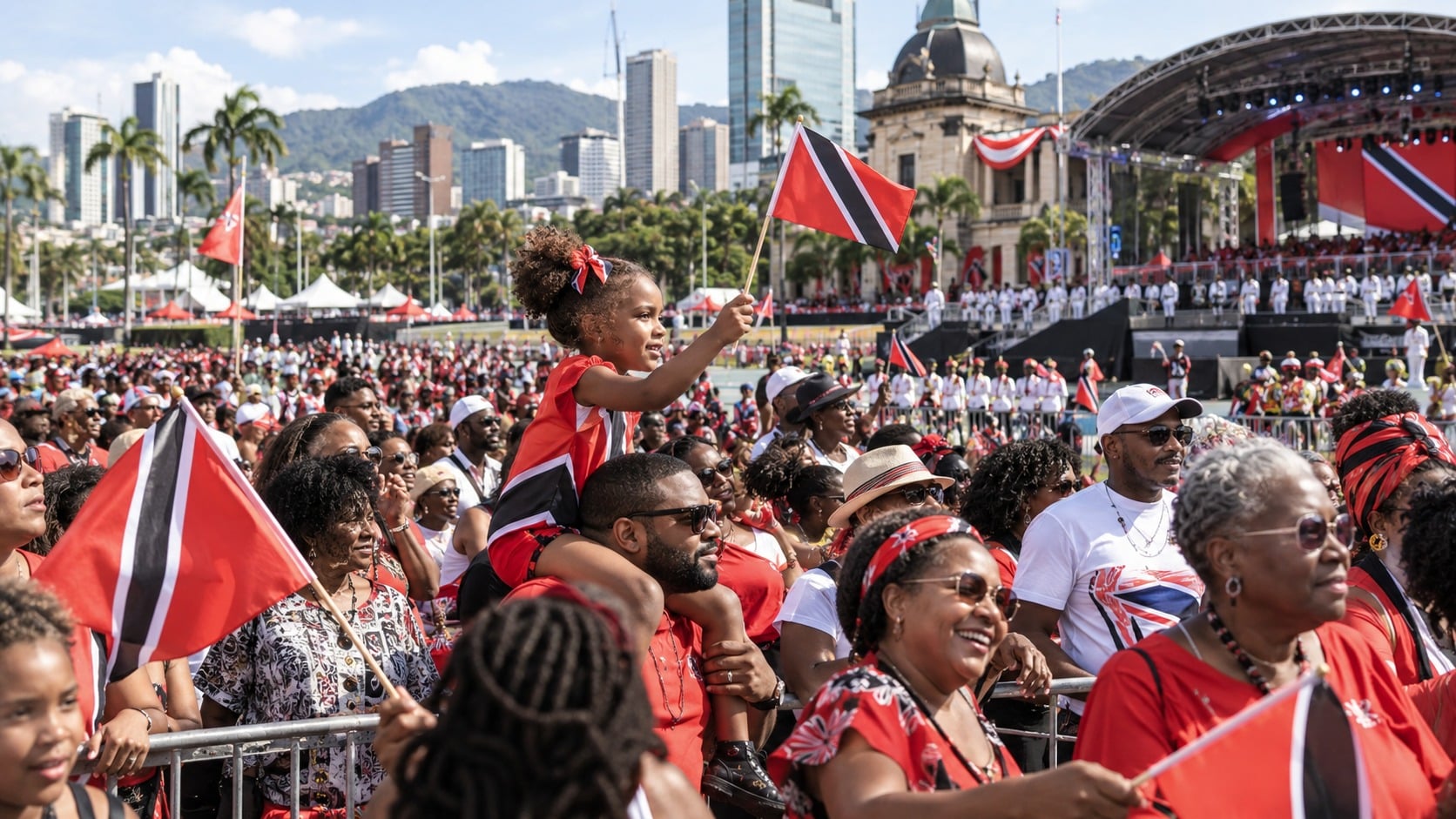
Crowd celebrating Republic Day in Port of Spain, Trinidad and Tobago
HISTORY & HERITAGE
Tolotra

Trinidad and Tobago is celebrating the 50th anniversary of its Republic on September 24

On September 24, Trinidad and Tobago celebrates its 50th anniversary as a republic. In 1976, fourteen years after gaining independence, the country replaced the British crown with a fully national presidency. Fifty years later, this day tells the story of a nation that has chosen to govern itself and that continues to grapple with what that autonomy truly means. On September 24, 1976, inside the Parliament building in Port of Spain, Sir Ellis Clarke took the oath of office. He no longer swore allegiance to a distant monarch, but to Trinidad and Tobago itself. He was no stranger to the public eye. A native of Port of Spain, he had won a scholarship to study mathematics at Saint Mary’s College before studying law in London and being called to the bar at Gray’s Inn.  Returning to the country in 1941, he rose through the ranks of the colonial administration, eventually

Read More »
Peter Minshall, Trinidad and Tobago carnival costume designer, in portrait
THEATER & PERFORMANCE
Tolotra

Peter Minshall, the man who invented the Olympic Tube Man

On July 16, 1941, Peter Minshall was born in Georgetown, British Guyana, and grew up in Port of Spain, Trinidad and Tobago, where he became the greatest carnival costume designer of his time. In 1996, for the Atlanta Olympics, he collaborated with Israeli artist Doron Gazit to create an inflatable figure that sways in the wind—a design now visible in front of thousands of gas stations around the world, though almost no one knows it originated on the streets of Trinidad’s carnival. This Thursday, September 24, 2026—the day Trinidad and Tobago celebrates Republic Day—we profile an artist who has taken the “mas” far beyond his island. Peter Minshall, the boy who brings a fabric hummingbird to life in Port of Spain yIn 1974, in Port of Spain, Peter Minshall made a hummingbird costume for his adoptive sister, Sherry-Ann Guy, to be worn at the Trinidad and Tobago Carnival. Twelve people
Read More »
Caribbean Cinema
FILM & VIDEO
Tolotra

Stories of Caribbean Cinema, Maroon Culture, Transmission, and the Imagination. Texts by Guillaume Robillard. Ciclic, 2026

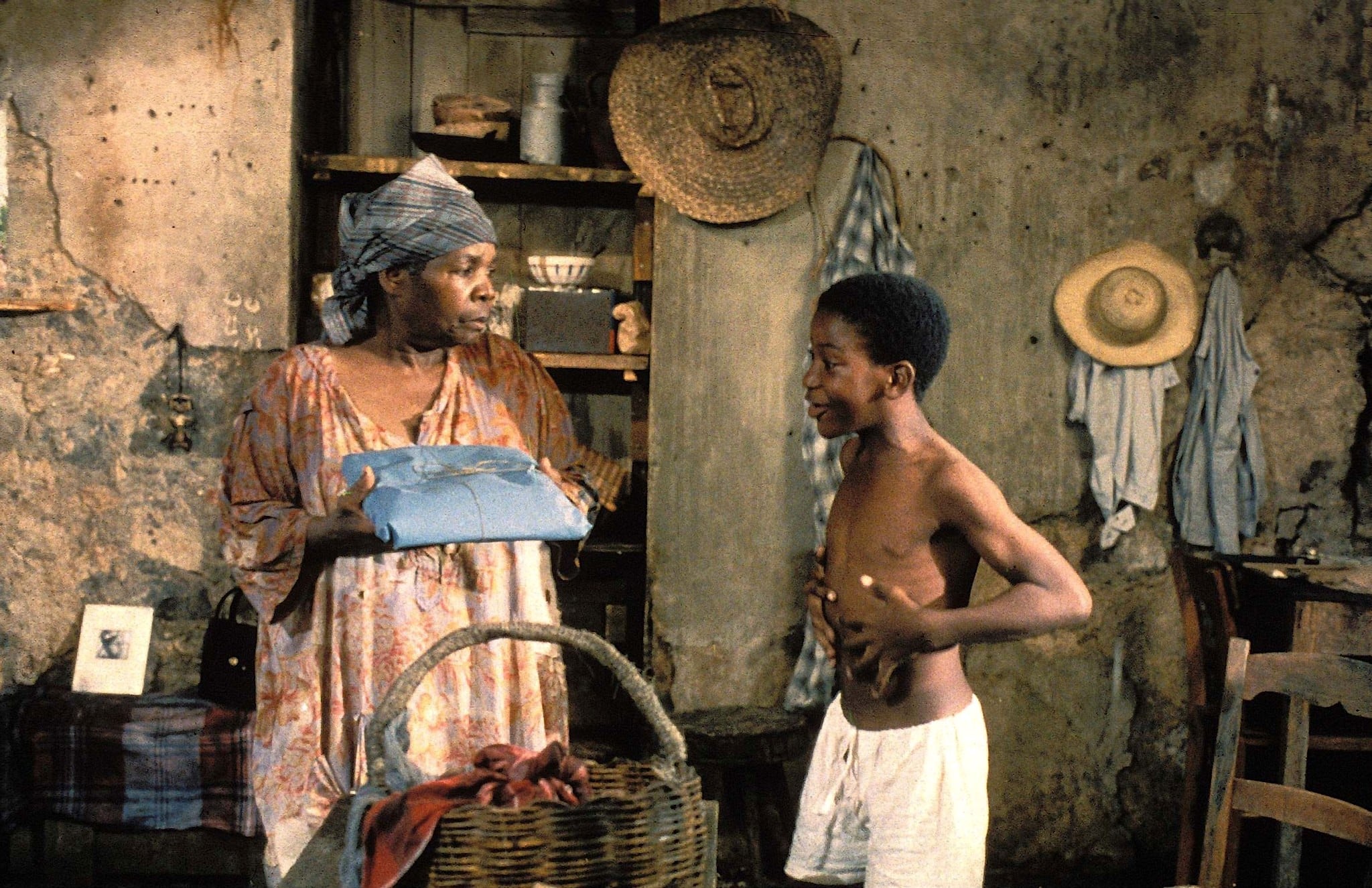
The history of Caribbean cinema continues its journey through the 1980s. After three episodes devoted to the early developments of several cinematic movements in the region, this fourth installment brings together two films from Martinique and one from Curaçao. From the “marronnage” in *Le Sang du flamboyant* to the international trajectory of *Rue Cases-Nègres*, and on to the unique worldof *Almacita di Desolato*, these three works explore different relationships to memory, oral tradition, Africa, and Caribbean imaginaries. This article is the fourth installment in a series of ten. The first three are already available on Richès Karayib, and six more will continue this story through the 2020s. 1981: MARTINIQUE — *The Blood of the Flamingo*, by François Migeat This film is unique in Caribbean cinema. Indeed, its director is a “Metropolitan” (that is, a white man from mainland France who had no deep-rooted ties to the French West Indies) who

Read More »

conTACT RK

we'd love to have your feedback on your experience so far

Join The List

Join our Richès Karayib community!  Sign up for our newsletter.

Want To Maximize Your Business Presence On Riches Karayib?

Complete the form to start the application